Global leaders, led by France under its G7 presidency, are accelerating efforts to cut methane emissions from the fossil fuel sector—seen as the fastest and most cost-effective way to reduce near-term warming. Methane is ~80 times more potent than CO₂ over 20 years, yet emissions from oil and gas remain near record highs despite available solutions.
According to the International Energy Agency, cutting methane leaks and eliminating flaring could unlock up to 200 billion cubic metres (bcm) of natural gas annually, easing supply shortages worsened by Middle East disruptions.
The push comes as the world remains far off track from the Global Methane Pledge to cut emissions by 30% by 2030, highlighting a critical gap between commitments and implementation.
Key Overview
- Methane is ~80x more potent than CO₂ over 20 years
- ~60% of methane emissions are human-driven
- Fossil fuels account for 35% of human methane emissions
- Emissions remain near record highs (2025)
- Up to 200 bcm of gas could be unlocked annually
- 110 bcm LNG (20%) flows through Strait of Hormuz
- Target: 30% methane reduction by 2030 (Global Methane Pledge)
A Renewed Global Push to Cut Methane Emissions
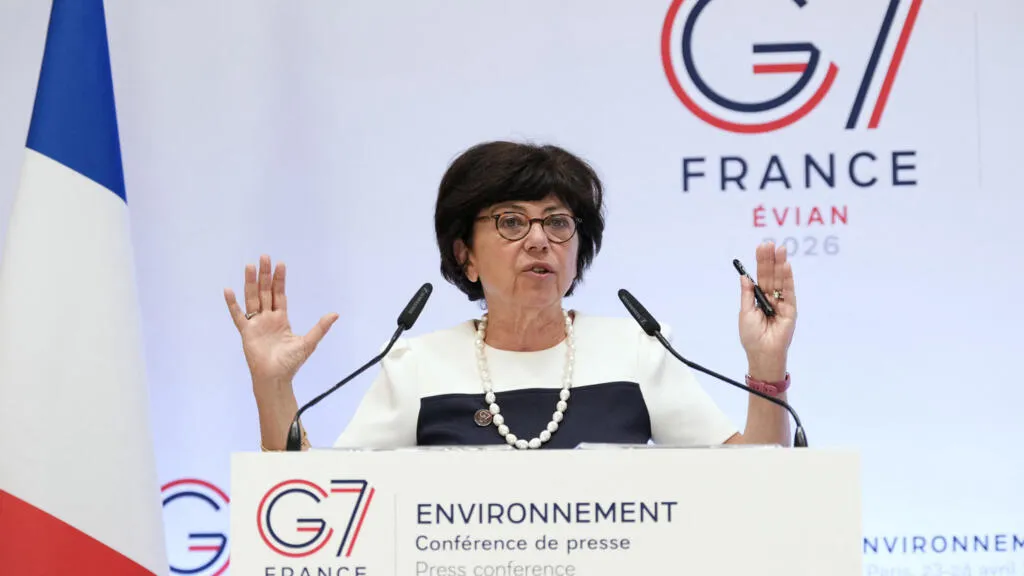
Global leaders are intensifying efforts to curb methane emissions, with France leveraging its role as the rotating chair of the G7 to convene policymakers, industry leaders, and technical experts ahead of the upcoming COP31 climate summit. The initiative reflects a growing consensus that methane reduction represents one of the fastest, most cost-effective, and highest-impact levers available to slow global warming in the near term.
This renewed push comes at a time when geopolitical tensions and energy market disruptions are reshaping global priorities, creating a unique window where climate action and energy security objectives are increasingly aligned. By targeting methane emissions—particularly from the fossil fuel sector—countries can simultaneously address environmental risks and improve energy system efficiency.
Methane is the second-largest contributor to global warming, but its impact is disproportionately large relative to its concentration in the atmosphere. While methane has a shorter atmospheric lifespan than carbon dioxide, its warming potential is approximately 80 times greater over a 20-year period, making it a critical driver of near-term temperature increases. This means that rapid reductions in methane emissions can deliver immediate climate benefits, helping to slow warming while longer-term CO₂ reduction strategies take effect.
Despite its importance, progress has been limited. Under the Global Methane Pledge, launched at COP26 in 2021, nearly 160 countries committed to reducing methane emissions by 30% by 2030 compared to 2020 levels. However, officials warn that the world remains “very far” from meeting this target, underscoring a persistent gap between policy commitments and real-world implementation.
This gap highlights the need for stronger enforcement, greater investment in monitoring technologies, and more coordinated international action to translate commitments into measurable outcomes.
Markets move fast; don’t get left behind. We’ve paired the Serrari Group Market Index with a curated Marketplace and a comprehensive Wealth Builder Course to ensure you have the data—and the skills—to act on it.
Fossil Fuel Sector: A Critical Target
A significant share of methane emissions is directly linked to human activity, accounting for approximately 60% of total global methane emissions. Within this, the fossil fuel sector—encompassing oil, gas, and coal—represents around 35% of human-caused methane emissions, according to the International Energy Agency.
These emissions primarily arise from operational inefficiencies and infrastructure issues, including:
- Leaks from pipelines, wells, and processing facilities
- Venting during routine maintenance and operational procedures
- Flaring of excess gas, often due to inadequate infrastructure or economic constraints
Despite the availability of well-established and proven mitigation technologies—such as leak detection and repair (LDAR) systems, improved infrastructure maintenance, and gas capture solutions—methane emissions from fossil fuel operations have remained near record highs in 2025, according to the IEA’s Global Methane Tracker.
This persistent trend points to a critical disconnect between technical feasibility and implementation. Many methane reduction measures are relatively low-cost and, in some cases, economically beneficial, as captured gas can be sold or reused rather than wasted. This creates a compelling case for action, where emissions reduction can be aligned with financial returns and operational efficiency.
As a result, the fossil fuel sector represents one of the most immediate and scalable opportunities for methane mitigation, offering the potential for rapid emissions reductions with minimal technological barriers.
Methane Cuts as a Tool for Energy Security
Beyond its climate benefits, methane reduction is increasingly being framed as a strategic tool for enhancing global energy security, particularly in the context of ongoing geopolitical disruptions and supply constraints.
The current global energy crisis—intensified by conflict in the Middle East and the closure of the Strait of Hormuz—has significantly tightened energy markets. Approximately 20% of global liquefied natural gas (LNG), equivalent to around 110 billion cubic metres, flows through this critical chokepoint annually, making it a key vulnerability in global energy supply chains.
In this context, methane abatement presents a largely untapped opportunity to increase available energy supply without new production. According to the IEA:
- Reducing methane leaks from oil and gas operations could unlock approximately 100 billion cubic metres (bcm) of natural gas annually
- Eliminating non-emergency flaring could provide an additional ~100 bcm
Combined, these measures could deliver up to 200 bcm of additional gas supply per year, representing a substantial volume that could help offset supply disruptions and stabilize global markets.
European policymakers have emphasized that methane abatement and energy security are not competing priorities, but rather mutually reinforcing strategies. By reducing waste and improving system efficiency, countries can simultaneously:
- Increase available energy supply, easing shortages
- Lower greenhouse gas emissions, contributing to climate targets
- Reduce dependence on volatile global markets, enhancing resilience
This dual benefit makes methane reduction one of the few policy areas where climate action and economic interests are strongly aligned, offering immediate gains while supporting long-term sustainability goals.
Context is everything. While you follow today’s updates, use the Serrari Group Market Index and Marketplace to spot emerging shifts. Need to sharpen your edge? Our Wealth Builder Course turns these insights into a professional-grade strategy.
Beyond Energy: Agriculture and Waste Emissions
While the fossil fuel sector offers some of the fastest and most cost-effective opportunities for methane reduction, a significant share of global emissions also originates from agriculture and waste systems—sectors that present more complex and diffuse mitigation challenges.
Agriculture remains one of the largest contributors, particularly through:
- Livestock digestion (enteric fermentation), where animals such as cattle and sheep release methane during digestion
- Manure management, which produces methane when organic waste decomposes under anaerobic conditions
In addition, rice cultivation is a major source of methane emissions. Flooded rice paddies create oxygen-poor environments that promote the growth of methane-producing microorganisms, making rice farming one of the most significant agricultural contributors to global methane output.
Waste management is another critical source. Landfills generate methane as organic waste—such as food and biodegradable materials—breaks down over time. In many regions, inadequate waste management systems and limited gas capture infrastructure mean that large volumes of methane are released directly into the atmosphere.
Together, these sectors account for a substantial share of global methane emissions, reinforcing the need for a multi-sector, systems-based approach to mitigation. Unlike the fossil fuel sector—where emissions are often concentrated and easier to detect—agricultural and waste emissions are more dispersed, requiring behavioral changes, improved practices, and technological innovation.
To address these challenges, the United Nations Environment Programme is expanding its satellite-based methane detection system, enhancing global monitoring capabilities. The system will now track emissions not only from oil and gas operations but also from coal mines and waste facilities, improving transparency and enabling more accurate identification of emission hotspots.
This expansion represents a significant step toward data-driven climate governance, where real-time monitoring can support enforcement, accountability, and targeted mitigation efforts across sectors.
Outlook: Methane as the Fastest Climate Lever
The renewed global focus on methane reflects a growing consensus that it represents the most immediate and effective lever for slowing global warming. Unlike carbon dioxide, which accumulates in the atmosphere over centuries, methane has a much shorter lifespan—meaning that reductions can deliver measurable climate benefits within decades.
This makes methane mitigation uniquely valuable in the context of urgent climate targets, as it offers a pathway to rapidly reduce warming in the near term, buying time for longer-term decarbonization strategies to take effect.
In the near term, key priorities include:
- Accelerating the deployment of methane detection and monitoring technologies, including satellite systems and advanced sensors
- Strengthening regulations on leaks, venting, and flaring, particularly in the fossil fuel sector
- Scaling international cooperation and policy alignment, especially in the lead-up to COP31
These actions are critical for translating existing commitments into tangible emissions reductions.
Over the longer term, sustained progress will depend on aligning policy frameworks, financial incentives, and industry practices. This includes:
- Increasing investment in methane mitigation technologies
- Integrating methane targets into national climate strategies
- Encouraging private sector participation through market-based mechanisms
Closing the gap between ambition and implementation will be essential for achieving global climate goals.
Ultimately, the push to reduce methane highlights a critical insight: many of the solutions needed already exist. The challenge lies not in technological innovation alone, but in scaling and deploying proven measures more rapidly and effectively.
By acting decisively, countries have the opportunity to achieve a rare “triple win”:
- Lower greenhouse gas emissions, slowing climate change
- Improved air quality and public health, particularly in urban and industrial regions
- Enhanced energy security, through reduced waste and more efficient resource use
In this sense, methane mitigation stands out as one of the most practical, immediate, and impactful strategies in the global climate response—offering both short-term gains and long-term benefits for economies and ecosystems alike.
Your financial future isn’t something you wait for—it’s something you build.
The real question is: when do you begin?
Move beyond simply staying informed.
Navigate the markets with clarity—track trends through the Serrari Group Market Index, uncover opportunities in the Serrari Marketplace, and build practical knowledge with our Curated Wealth Builder Course.
Stay connected to what truly matters.
Get daily insights on macro trends and financial movements across Kenya, Africa, and global markets—delivered through the Serrari Newsletter.
Growth opens doors.
Advance your career through professional programs including ACCA, HESI A2, ATI TEAS 7 , HESI EXIT , NCLEX – RN and NCLEX – PN, Financial Literacy!🌟—designed to move you forward with confidence.
See where money is flowing—clearly and in real time.
Track Money Market Funds, Treasury Bills, Treasury Bonds, Green Bonds, and Fixed Deposits, alongside global and African indexes, key economic indicators, and the evolving Crypto and stablecoin landscape—all within Serrari’s Market Index.