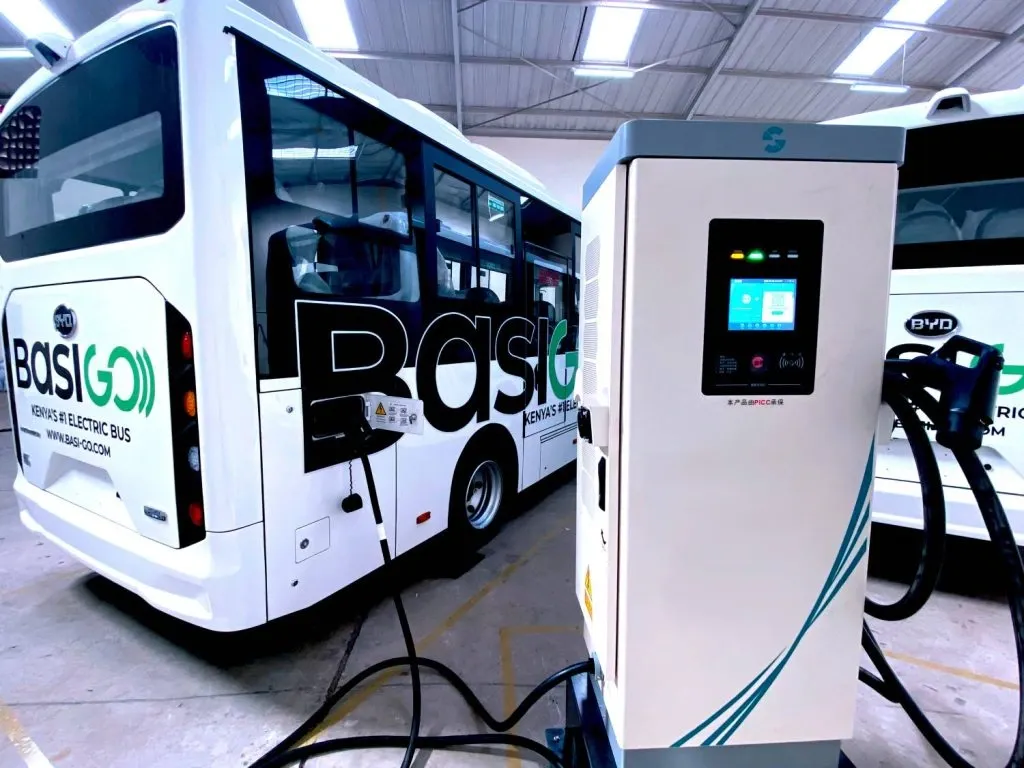
Electric bus manufacturer BasiGo is expanding Kenya’s electric vehicle (EV) charging network with three new fast-charging stations in Meru, Nanyuki and Nyeri. The rollout, developed in partnership with Rubis Energy Kenya, aims to make intercity electric transport more practical by providing reliable charging infrastructure along key transport corridors while supporting Kenya’s growing transition to electric mobility.
Key Overview
- BasiGo will launch EV charging stations in Meru, Nanyuki and Nyeri.
- The stations are part of a partnership with Rubis Energy Kenya.
- Chargers will support buses, trucks, vans and passenger EVs.
- Charging will cost an indicative KES 48 per kWh.
- The expansion strengthens Kenya’s intercity EV infrastructure.
BasiGo Expands EV Charging Network Beyond Nairobi
Kenyan electric mobility company BasiGo is accelerating the country’s transition to electric transport by expanding its charging infrastructure beyond Nairobi.
The company plans to open three new public EV charging stations in Meru, Nanyuki and Nyeri this month, improving access to charging services along major transport corridors and making long-distance electric travel increasingly practical.
The expansion follows the commissioning of a new charging station in Sabaki, Athi River, developed in partnership with Rubis Energy Kenya, marking another milestone in Kenya’s rapidly growing e-mobility ecosystem.
Supporting Electric Transport Across Kenya
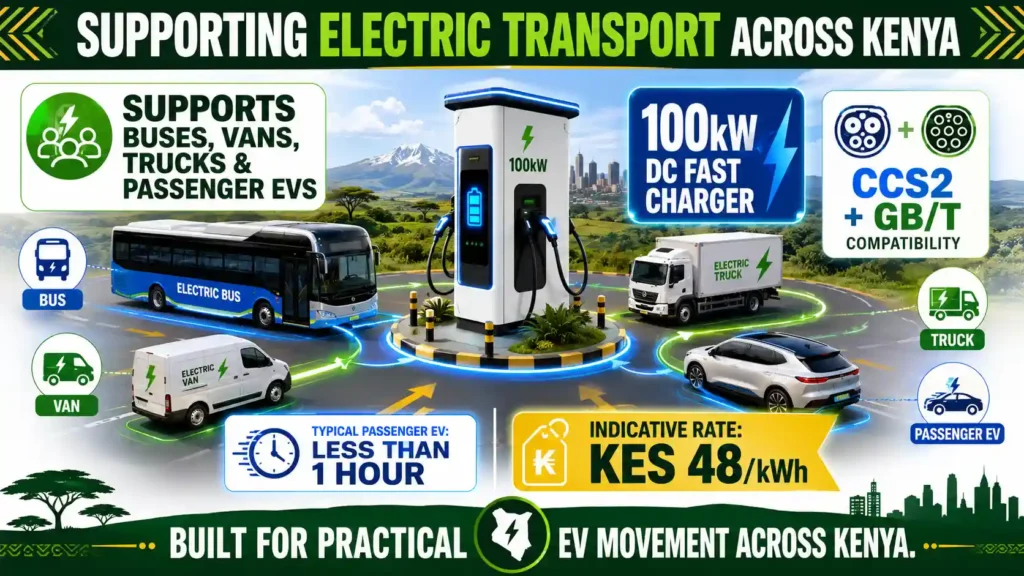
Unlike many charging facilities designed primarily for passenger vehicles, BasiGo’s new stations are intended to serve a broad range of electric vehicles.
The charging hubs will support:
- Electric buses
- Electric vans
- Electric trucks
- Passenger electric vehicles
- Other compatible commercial EVs
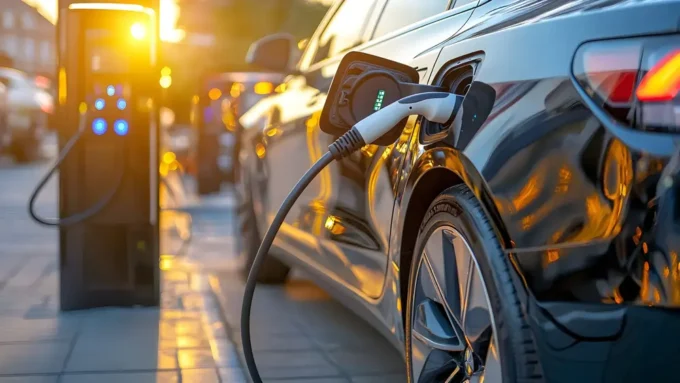
Each location will feature CCS2 and GB/T DC 100kW fast chargers, allowing compatibility with most electric vehicles currently operating in Kenya.
According to BasiGo, a typical passenger vehicle can be charged in under an hour, helping reduce charging times and improve operational efficiency for commercial fleet operators.
Charging services across the network will be offered at an indicative rate of KES 48 per kWh, providing consistent pricing for customers.
Building Kenya’s Intercity Charging Network
BasiGo says expanding charging infrastructure is essential to making electric mobility commercially viable beyond urban centres.
Speaking during the commissioning of the Sabaki charging station, Jit Bhattacharya, BasiGo’s Chief Executive Officer and Co-founder, said the company is creating the infrastructure needed to connect communities across Kenya while supporting the country’s growing electric transport sector.
He noted that the partnership with Rubis Energy Kenya represents a significant step in enabling reliable EV operations outside Nairobi and forms part of a model that the company intends to replicate across East Africa.
Moses Nderitu, BasiGo’s Managing Director for Kenya, said the key challenge for electric mobility is no longer consumer interest but ensuring sufficient charging infrastructure is available to support large-scale adoption.
He added that every new charging station deployed along major transport corridors strengthens the business case for electric mobility while making intercity transport more reliable for commercial operators.
Partnership with Rubis Energy Kenya
The collaboration gives BasiGo access to Rubis Energy Kenya’s nationwide network of more than 300 service stations, significantly accelerating the rollout of charging infrastructure without requiring the company to build standalone facilities from scratch.
For Rubis, the partnership forms part of a broader strategy to diversify beyond conventional fuel retailing.
Frederic Maupetit, Managing Director of Rubis Energy Kenya, said integrating EV charging into the company’s retail network demonstrates its commitment to supporting Kenya’s energy transition and making electric travel more practical along major highways.
Meanwhile, Olivier Sabrie, CEO of Rubis Energy East and Southern Africa, described Kenya as an important market demonstrating how the company is evolving from a traditional fuel distributor into a broader energy solutions provider.
He added that similar initiatives are expected to expand across Rubis’ operations in East and Southern Africa.
Context is everything. Stay ahead of shifting trends with today’s market updates, and uncover emerging opportunities using the Serrari Group Market Index and Marketplace. Then, take control of your own financial future by exploring our Money & Life Reset Transformation Blueprint ™ to build stronger habits, create better systems, and design a path toward lasting wealth.
Expanding Charging Infrastructure
The latest rollout builds on BasiGo’s continued investment in Kenya’s charging network.
In November 2025, the company opened three charging depots in the Nairobi metropolitan area at Taj Mall, Komarock and Riruta, strengthening support for its growing fleet of electric buses.
Earlier, BasiGo also launched a pilot programme for intercity electric minibuses operating routes linking Nairobi, Thika, Nyeri, Nakuru and Nyahururu, demonstrating the viability of electric public transport beyond city operations.
The addition of charging stations in Meru, Nanyuki and Nyeri helps address one of the biggest barriers to wider EV adoption—the availability of reliable charging infrastructure along long-distance routes.
Supporting Kenya’s Clean Mobility Transition
Kenya has emerged as one of Africa’s fastest-growing electric mobility markets, driven by supportive government policies, rising fuel costs and increasing investment from private sector companies.
While most early charging infrastructure has been concentrated around Nairobi, expanding stations into regional towns is expected to encourage greater adoption among passenger vehicle owners, public transport operators and commercial logistics companies.
Reliable charging networks are considered essential for reducing “range anxiety”—the concern that vehicles may run out of power before reaching a charging point—which remains one of the biggest obstacles to widespread EV adoption.
By combining BasiGo’s expertise in electric mobility with Rubis’ extensive retail footprint, the partnership aims to create a scalable charging network capable of supporting Kenya’s transition toward cleaner and more sustainable transport.
Outlook
BasiGo’s partnership with Rubis Energy Kenya represents an important step in expanding Kenya’s electric vehicle ecosystem beyond major cities. As more charging stations are deployed along key transport corridors, operators are expected to gain greater confidence in adopting electric buses, trucks and passenger vehicles for long-distance travel. The collaboration also demonstrates how partnerships between clean mobility companies and established fuel retailers can accelerate the rollout of charging infrastructure while supporting the country’s transition to low-emission transport. With additional charging sites planned across Kenya and the wider East African region, the network is expected to play a key role in enabling scalable and reliable electric mobility.
FAQs
1. Where will BasiGo open its new charging stations?
The company plans to open public EV charging stations in Meru, Nanyuki and Nyeri.
2. Who is BasiGo partnering with?
BasiGo is partnering with Rubis Energy Kenya to expand EV charging infrastructure across the country.
3. What types of vehicles can use the charging stations?
The stations will support electric buses, trucks, vans, passenger vehicles and other compatible electric vehicles.
4. How much will charging cost?
BasiGo says charging will be available at an indicative rate of KES 48 per kilowatt-hour across the network.
Sources: Capital FM Kenya, Bus – News, Ecofin Agency, BasiGo
Your financial future isn’t something you wait for—it’s something you build.
The real question is: when do you begin?
Move beyond simply staying informed.
Navigate the markets with clarity—track trends through the Serrari Group Market Index, uncover opportunities in the Serrari Marketplace, and build practical knowledge with our Curated Wealth Builder Platform.
Stay connected to what truly matters.
Get daily insights on macro trends and financial movements across Kenya, Africa, and global markets—delivered through the Serrari Newsletter.
Growth opens doors.
Advance your career through professional programs including ACCA, HESI A2, ATI TEAS 7 , HESI EXIT , NCLEX – RN and NCLEX – PN, Financial Literacy!🌟—designed to move you forward with confidence.
See where money is flowing—clearly and in real time.
Track Money Market Funds, Treasury Bills, Treasury Bonds, Green Bonds, and Fixed Deposits, alongside global and African indexes, key economic indicators, and the evolving Crypto and stablecoin landscape—all within Serrari’s Market Index.