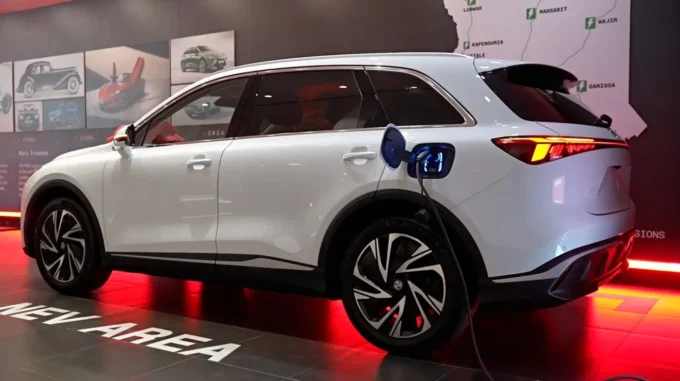
Hyundai Motor Group has unveiled a standardised electric vehicle (EV) slow-charging system designed for apartment complexes in South Korea and residential garages in overseas markets. The chargers will be available in 7-kilowatt (kW) and 11-kW versions, with wall-mounted and freestanding configurations. They will feature Plug & Charge technology, enabling automatic user authentication and payment when an EV is connected. Hyundai plans to introduce the system in South Korea in 2027 before gradually expanding into major overseas markets, including the United States, Europe and India. The initiative targets residential charging convenience, particularly for EV owners who lack access to fast public charging facilities.
Key Takeaways
- Hyundai Motor Group unveiled its standardised EV slow-charging system on 25 November 2026.
- The chargers are designed for apartment complexes in South Korea and residential garages overseas.
- The lineup includes 7kW and 11kW versions, available in wall-mounted and freestanding designs.
- Plug & Charge technology will automate user authentication and payment when a vehicle connects.
- The South Korean rollout is planned for 2027, followed by gradual expansion into the United States, Europe and India.
- Pricing and installation costs have not been disclosed.
Hyundai Motor Group Unveils Standardised EV Charging System
Hyundai Motor Group has announced plans to introduce a standardised electric vehicle charging system in South Korea next year, as part of its broader effort to improve charging efficiency and convenience across global markets.
Unveiled on 25 November 2026, the system is designed for slow charging at apartment complexes in South Korea and residential garages in overseas markets.
The new chargers will be available in 7-kilowatt (kW) and 11-kW versions, with both wall-mounted and freestanding configurations.
The group plans to launch the system in South Korea in 2027 before gradually expanding its availability to major overseas markets, including the United States, Europe and India.
The announcement adds residential charging infrastructure to Hyundai Motor Group’s wider electric mobility activities, with the new system focused on making everyday charging more convenient for EV owners.
Why Hyundai Is Targeting Residential Slow Charging
The new charging system addresses a practical challenge for electric vehicle owners who do not have convenient access to fast public charging facilities.
For people living in apartment complexes and multi-unit housing, access to charging can be more complicated than it is for homeowners with private garages. Residential charging infrastructure therefore plays an important role in making EV ownership more convenient.
The system is designed specifically for these environments, with apartment complexes in South Korea and residential garages overseas identified as its intended applications.
Rather than focusing on high-speed public charging, Hyundai is targeting the charging needs of people who want to charge their vehicles where they live.
This matters because the convenience of charging is part of the overall EV ownership experience. Access to a suitable residential charger can make it easier for drivers to incorporate charging into their everyday routines rather than depending entirely on public charging locations.
However, the announcement does not provide installation figures, the number of chargers planned or details on how apartment residents will access and share the charging facilities.
Plug & Charge Technology Automates Authentication and Payment
One of the main features of the new system is Plug & Charge technology.
The technology enables automatic user authentication and payment upon connection, removing the need for drivers to complete these steps separately each time they connect their vehicles.
This is intended to simplify the charging process by making the connection between the vehicle and charging system more seamless.
For EV owners, automated authentication and payment could reduce the steps involved in accessing residential charging facilities. It could also make the charging experience more straightforward for users who regularly charge their vehicles at home or within apartment complexes.
The feature is particularly relevant to Hyundai’s wider objective of improving charging convenience, as the charging experience involves more than the speed at which electricity is delivered.
The announcement does not specify the payment methods supported, whether the system will be compatible with vehicles from other manufacturers or whether additional subscriptions or service charges will apply.
Context is everything. Stay ahead of shifting trends with today’s market updates, and uncover emerging opportunities using the Serrari Group Market Index and Marketplace. Then, take control of your own financial future by exploring our Money & Life Reset Transformation Blueprint ™ to build stronger habits, create better systems, and design a path toward lasting wealth.
7kW and 11kW Chargers Offer Different Residential Configurations
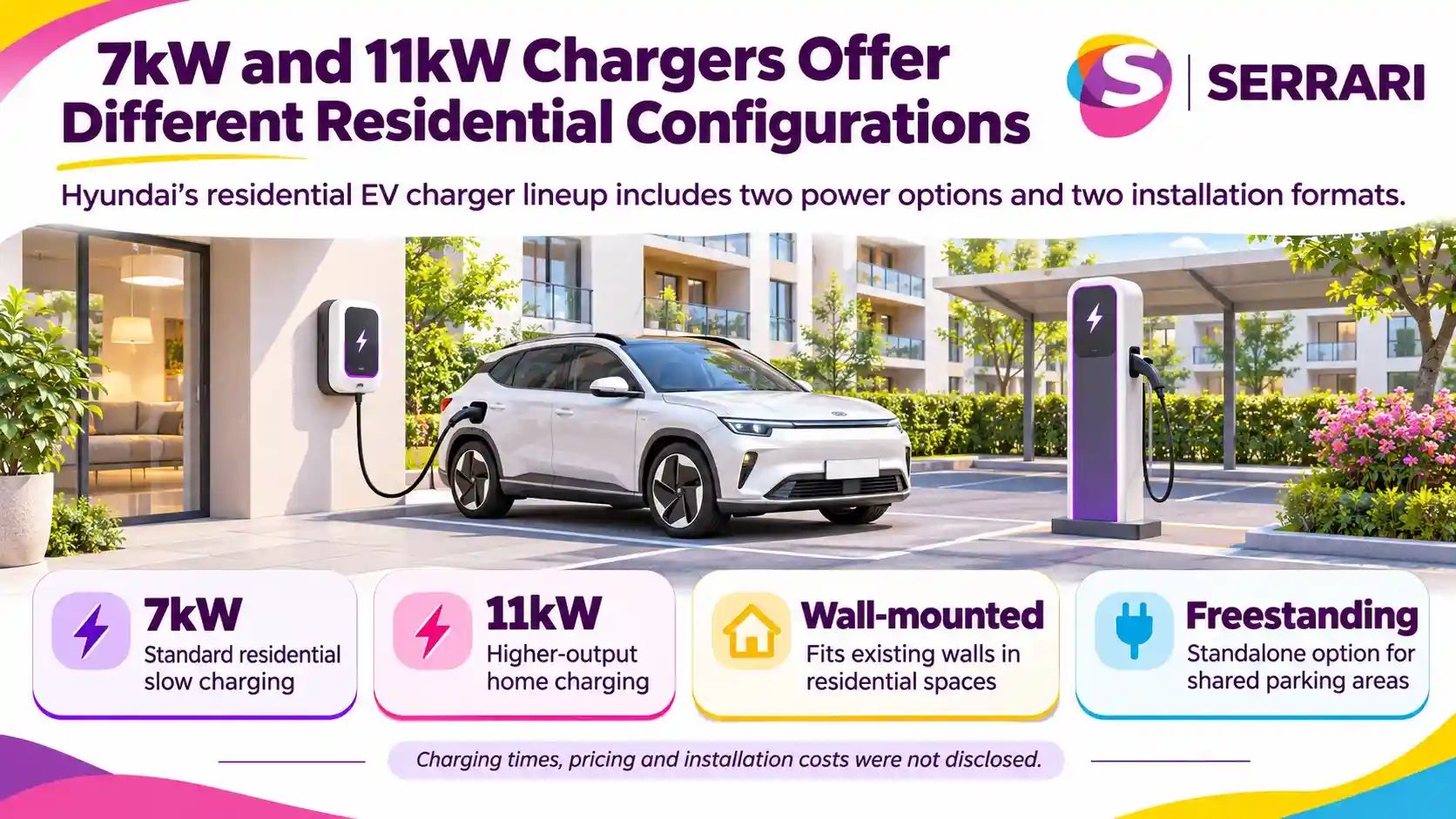
Hyundai’s standardised charger lineup will include two power output options: 7kW and 11kW.
Both versions will be offered in wall-mounted and freestanding configurations, allowing the system to be installed in different residential environments.
The wall-mounted option could suit locations where chargers can be attached to existing structures, while the freestanding configuration provides another installation format for residential charging spaces.
The availability of two power options also gives the group flexibility in addressing different charging requirements.
However, Hyundai has not disclosed charging times, equipment prices or installation costs. It has also not provided a comparison with competing slow-charging products.
These details will be important for prospective users and property operators assessing the practical and financial implications of adopting the system.
South Korea Rollout Planned Before Overseas Expansion
Hyundai Motor Group plans to introduce the standardised charging system in South Korea in 2027.
Following the domestic rollout, the company intends to gradually expand availability to major overseas markets, including:
- United States
- Europe
- India
The phased approach will begin in South Korea before moving into international markets.
The announcement does not provide specific overseas launch dates or identify individual countries within Europe where the chargers will first become available.
Pricing, installation arrangements and the scale of the planned rollout have also not been disclosed.
The Bigger Picture: Residential Charging Is Part of the EV Ownership Experience
Hyundai’s announcement highlights an important part of the electric vehicle transition: expanding charging options beyond public fast-charging stations.
While public charging infrastructure supports drivers travelling longer distances and those without access to private charging, residential charging serves a different need. It provides an option for drivers to charge their vehicles where they live.
This is particularly relevant in apartment complexes, where residents may not have individual garages or dedicated charging facilities.
By developing a standardised system for apartment and residential environments, Hyundai is addressing the infrastructure side of EV ownership rather than focusing exclusively on vehicle development.
The planned expansion into the United States, Europe and India also indicates that the group intends to take the system beyond its domestic market.
However, the announcement alone does not establish how widely the chargers will be adopted or whether they will address residential charging gaps in these markets. Installation costs, property infrastructure, compatibility and access arrangements will all influence their practical use.
Why Does This Matter Now?
As Hyundai continues to expand its electric mobility activities, residential charging convenience is an important part of making EV ownership more accessible.
An electric vehicle can offer drivers an alternative to petrol and diesel vehicles, but the practicality of owning one also depends on where and how it can be charged.
For people living in apartment complexes, limited access to residential charging can make EV ownership more difficult. Hyundai’s new system directly targets this challenge through chargers designed for shared residential environments and overseas garages.
The Plug & Charge feature also addresses another part of the experience by automating authentication and payment.
For the automotive industry, the announcement highlights the importance of developing charging solutions alongside electric vehicles. Expanding vehicle availability without convenient charging options can leave an important part of the ownership experience unresolved.
The real test will be whether the system can be installed affordably, work across different residential settings and provide a convenient experience for EV owners.
Outlook
Hyundai Motor Group plans to launch its standardised EV charging system in South Korea in 2027 before gradually expanding into the United States, Europe and India.
The next developments to watch include the launch timeline, pricing, installation costs, vehicle compatibility and the scale of the planned rollout.
For apartment residents and EV owners, the system could offer another residential charging option, particularly where access to public fast chargers or private charging facilities is limited.
However, its impact will depend on practical deployment, installation arrangements and how widely residential properties adopt the technology.
For now, Hyundai’s announcement represents a move towards addressing the residential charging needs that form an important part of the wider electric vehicle transition.
Frequently Asked Questions
1. What has Hyundai Motor Group announced?
Hyundai Motor Group has unveiled a standardised EV slow-charging system designed for apartment complexes in South Korea and residential garages overseas.
2. What charging options will be available?
The chargers will come in 7kW and 11kW versions, with wall-mounted and freestanding configurations.
3. What is Plug & Charge technology?
Plug & Charge enables automatic user authentication and payment when an electric vehicle is connected to the charger.
4. When will Hyundai launch the new EV charging system?
The group plans to introduce the system in South Korea in 2027 before gradually expanding into major overseas markets, including the United States, Europe and India.
Your financial future isn’t something you wait for—it’s something you build.
The real question is: when do you begin?
Move beyond simply staying informed.
Navigate the markets with clarity—track trends through the Serrari Group Market Index, uncover opportunities in the Serrari Marketplace, and build practical knowledge with our Curated Wealth Builder Platform.
Stay connected to what truly matters.
Get daily insights on macro trends and financial movements across Kenya, Africa, and global markets—delivered through the Serrari Newsletter.
Growth opens doors.
Advance your career through professional programs including ACCA, HESI A2, ATI TEAS 7 , HESI EXIT , NCLEX – RN and NCLEX – PN, Financial Literacy!🌟—designed to move you forward with confidence.
See where money is flowing—clearly and in real time.
Track Money Market Funds, Treasury Bills, Treasury Bonds, Green Bonds, and Fixed Deposits, alongside global and African indexes, key economic indicators, and the evolving Crypto and stablecoin landscape—all within Serrari’s Market Index.