Tesla’s China-made Model 3 and Model Y sales showed continued annual growth in October 2026, according to several reports citing the China Passenger Car Association. The reported increase was 10.3% to 67,829 vehicles, extending year-on-year growth to 12 months. However, another report gave a conflicting figure of 61,497 vehicles, down 9.9% year on year. All accounts indicate a substantial decline from September.
Key Takeaways
- Multiple reports put October China-made Tesla deliveries at 67,829 vehicles, up 10.3% year on year.
- The reported annual increase extended Tesla’s growth streak to 12 consecutive months.
- October deliveries fell sharply from September, with sources reporting monthly declines of 28.9% or 32.3%.
- One report gave a conflicting October figure of 61,497 vehicles, down 9.9% year on year.
- Shanghai-produced Model 3 and Model Y vehicles serve China and export markets, including Europe, Asia-Pacific and Canada.
Tesla Reports Annual Growth in October
Tesla’s China-made electric vehicle sales continued to show year-on-year growth in October, according to several reports citing data from the China Passenger Car Association (CPCA). The reported increase suggests that the automaker’s Shanghai production hub continued to supply domestic and international markets, even as monthly deliveries declined substantially from September.
The most widely reported figure puts October deliveries of China-made Model 3 and Model Y vehicles at 67,829 units, representing an increase of 10.3% year on year. That would accelerate from the 5% annual increase reported for September and extend Tesla’s streak of year-on-year growth to 12 consecutive months.
However, the source material also contains a conflicting report. Another account states that China-made Tesla sales fell 9.9% year on year to 61,497 vehicles in October. The discrepancy means the October annual result cannot be treated as fully reconciled based on the supplied reports alone.
Shanghai production supports domestic and export markets
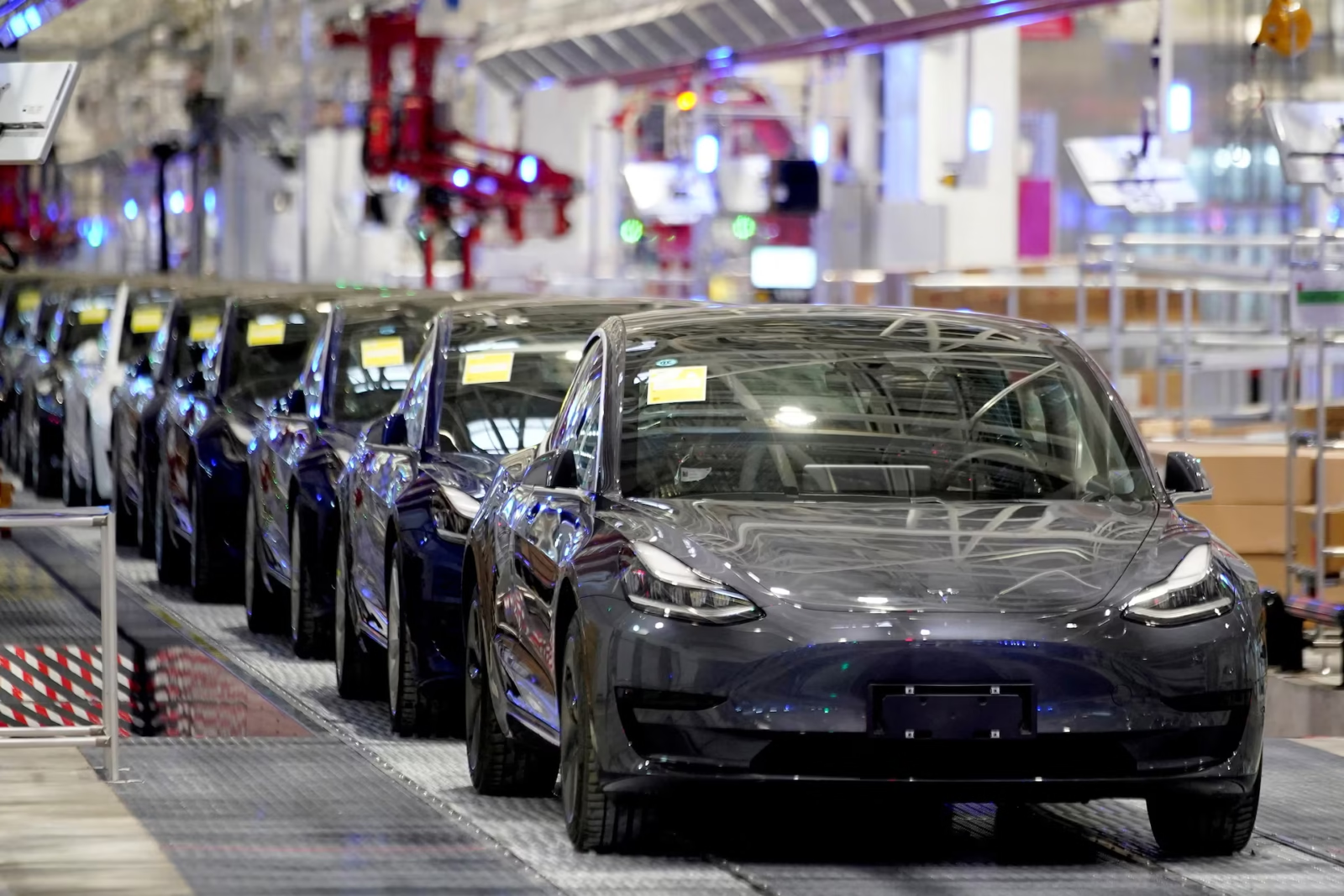
The October figures cover Tesla’s Model 3 sedan and Model Y SUV produced at its Shanghai Gigafactory. The plant supplies vehicles for Chinese customers and exports to overseas markets, with reports identifying Europe, Asia Pacific and Canada among the destinations.
Shanghai is an important production and export hub for Tesla. Its output connects the company’s operations in China with demand across several international markets, while also placing the automaker in direct competition with local manufacturers.
The reported annual increase in October indicates that shipments from the factory remained above the previous year’s level, according to the sources reporting 67,829 vehicles. Yet the conflicting 61,497-unit figure points to uncertainty in the available data. The CPCA figures should therefore be checked against subsequent official releases before being used as a definitive measure of Tesla’s October performance.
Monthly deliveries fall from September
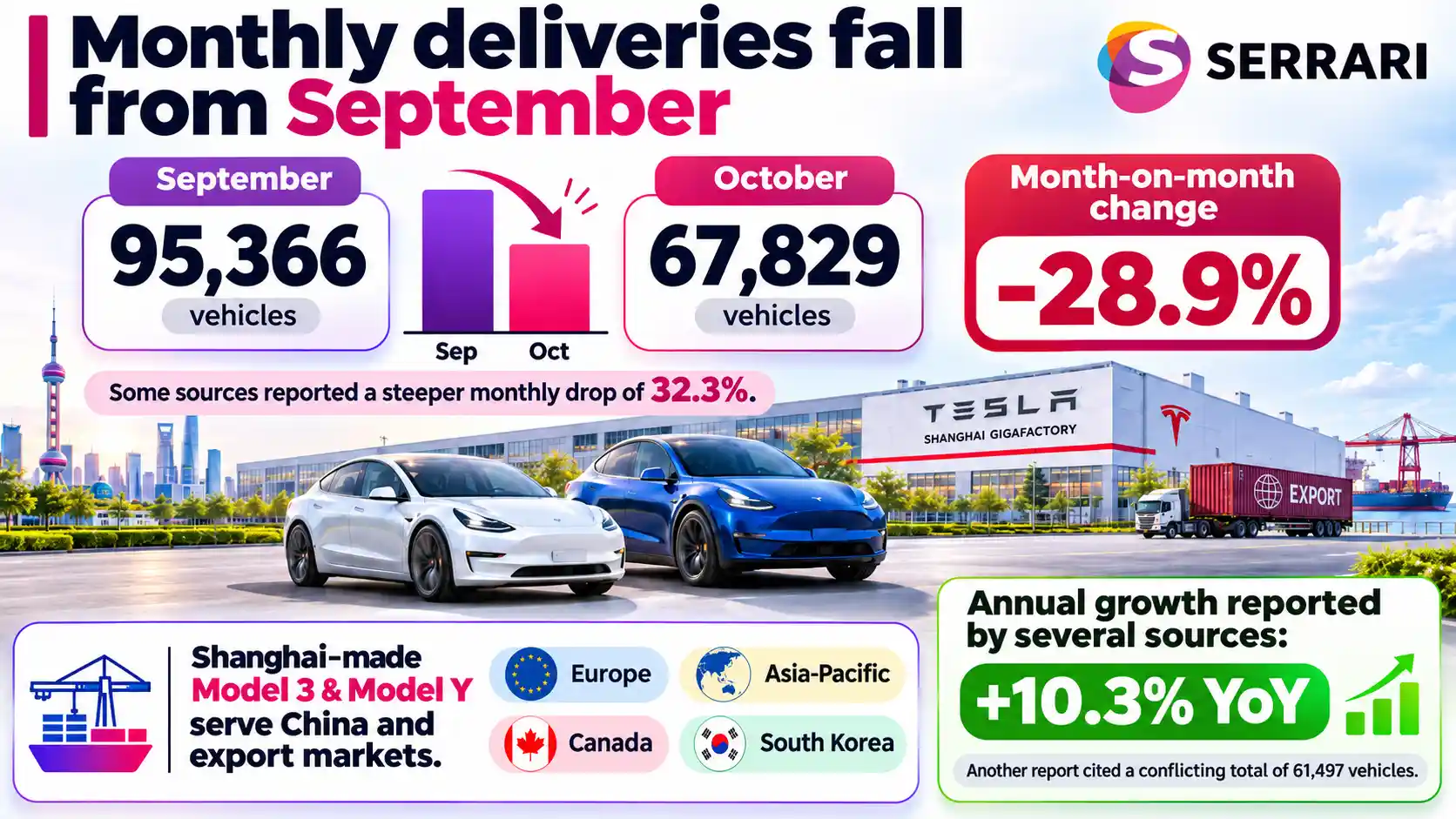
Despite the reported annual growth, October deliveries were considerably lower than September’s total. One source puts September deliveries at 95,366 vehicles and reports a 28.9% month-on-month decline in October. Another account says sales dropped 32.3% from September.
Both figures indicate a substantial monthly slowdown, although the precise size of the decline differs between reports. The change highlights how monthly shipment totals can fluctuate even when year-on-year comparisons remain positive.
The annual and monthly comparisons measure different things. Year-on-year growth compares October with the same month a year earlier, while the month-on-month change compares October with September. A positive annual result can therefore coexist with a sharp decline from the previous month.
For Tesla, the October figures provide a mixed picture: continued annual growth in some reports, alongside a clear reduction in deliveries from September. The conflicting annual figures add another reason to interpret the results cautiously.
European registrations and international demand
The source material also points to signs of improving Tesla demand in parts of Europe. Registrations of new Tesla vehicles reportedly surged across several European markets in October, extending a regional sales rebound.
In South Korea, Tesla led imported car sales. The market reportedly accounted for one-fifth of Shanghai-made Tesla exports during the first nine months of the year, underscoring the importance of overseas buyers to the factory’s distribution network.
These market developments provide context for the Shanghai plant’s role, but they do not resolve the conflicting October delivery totals. Regional registrations, export shipments and factory deliveries are related indicators, yet they are not interchangeable measures.
Context is everything. Stay ahead of shifting trends with today’s market updates, and uncover emerging opportunities using the Serrari Group Market Index and Marketplace. Then, take control of your own financial future by exploring our Money & Life Reset Transformation Blueprint ™ to build stronger habits, create better systems, and design a path toward lasting wealth.
Capital spending and broader company priorities
Tesla’s October sales data arrived alongside developments in its investment plans. The company reportedly reduced its annual capital expenditure outlook by one-fifth and surprised investors with positive third-quarter free cash flow. Spending on its artificial intelligence and robotics initiatives was reported to have come in well below analysts’ expectations.
These developments reflect the broader context in which Tesla is managing vehicle production alongside investments in emerging technology. However, the supplied information does not establish a direct causal relationship between the capital expenditure outlook and October’s delivery changes.
The sources also mention a potential merger involving Tesla and SpaceX. Such a transaction could face regulatory scrutiny in the United States and China, with national security, data and technology-transfer concerns identified as possible obstacles. The proposal remains separate from the October vehicle sales figures.
Competition in China’s EV market
Tesla continues to face intense competition in China, one of the world’s largest electric vehicle markets. The source material reports that BYD’s global vehicle sales fell 12% in October, marking a second consecutive monthly decline and its steepest drop in nearly two years.
The comparison illustrates pressure across the electric vehicle sector, but the figures measure different companies and geographies. Tesla’s reported October data cover vehicles produced in China, while BYD’s cited decline concerns global vehicle sales. They should not be read as a direct market-share comparison.
Outlook
October’s results suggest that Tesla’s Shanghai operations continued to play a major role in supplying domestic and export markets. The reported year-on-year growth would extend a lengthy growth streak, while the steep monthly decline shows that delivery momentum can vary significantly from one month to the next.
The conflicting October totals remain an important limitation. Until the figures are reconciled, the most reliable conclusion is that monthly deliveries fell sharply from September, while the scale and direction of the year-on-year change remain disputed in the supplied reports.
Future data will help clarify whether October represented a temporary shipment fluctuation or a more sustained change in demand. For now, Tesla’s China-made EV performance should be assessed using both annual and monthly comparisons, with careful attention to the differences among factory deliveries, exports and vehicle registrations.
FAQs
How many China-made Tesla vehicles were reported in October?
Several reports cited 67,829 vehicles, while another reported 61,497. The supplied sources conflict.
What models are included?
The figures cover China-made Model 3 and Model Y vehicles.
Why did monthly sales decline?
The supplied sources report the decline but do not establish a specific cause.
Which markets receive vehicles from Shanghai?
Exports include markets in Europe, Asia-Pacific and Canada, with South Korea also identified as an important destination.
Your financial future isn’t something you wait for—it’s something you build.
The real question is: when do you begin?
Move beyond simply staying informed.
Navigate the markets with clarity—track trends through the Serrari Group Market Index, uncover opportunities in the Serrari Marketplace, and build practical knowledge with our Curated Wealth Builder Platform.
Stay connected to what truly matters.
Get daily insights on macro trends and financial movements across Kenya, Africa, and global markets—delivered through the Serrari Newsletter.
Growth opens doors.
Advance your career through professional programs including ACCA, HESI A2, ATI TEAS 7 , HESI EXIT , NCLEX – RN and NCLEX – PN, Financial Literacy!🌟—designed to move you forward with confidence.
See where money is flowing—clearly and in real time.
Track Money Market Funds, Treasury Bills, Treasury Bonds, Green Bonds, and Fixed Deposits, alongside global and African indexes, key economic indicators, and the evolving Crypto and stablecoin landscape—all within Serrari’s Market Index.