















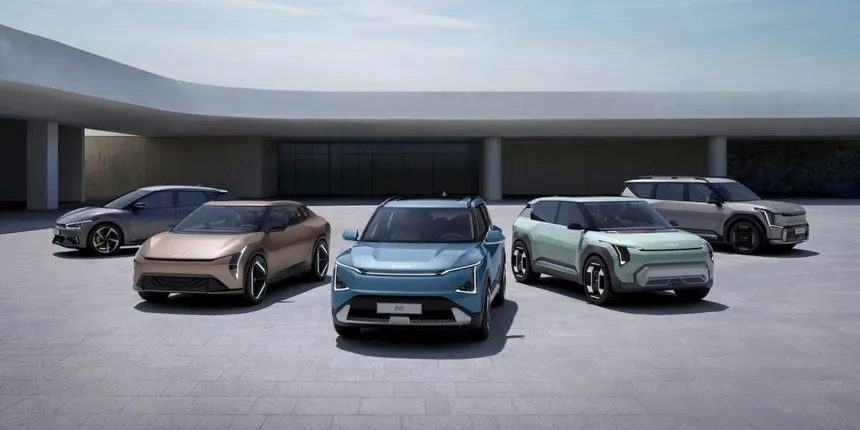
Kia has announced a US$600 million investment in Nuevo Leon to expand its Pesqueria manufacturing plant, add new production lines, introduce electric vehicle capabilities, and roll out sustainability infrastructure including a solar park and water treatment facility. The announcement was made during Governor Samuel García’s working tour in South Korea and is expected to generate at least 300 direct jobs in its first phase. The move reinforces Mexico’s growing centrality in the global automotive electrification transition and deepens the Pesqueria automotive cluster, even as the broader industry navigates trade uncertainty, tariff exposure, and shifting production footprints across North America.
Key Overview
- Investment size: More than US$600 million committed to the Pesqueria plant in Nuevo Leon.
- Focus areas: New vehicle production lines, electric vehicle manufacturing, a solar park, and a water treatment facility.
- Jobs: At least 300 direct jobs expected in the first phase.
- Export diversification: Kia is reducing its reliance on the US market, with US-bound exports falling from 81% in 2024 to 65% in 2025.
- Cumulative commitment: Kia’s total investment in Nuevo Leon now exceeds US$3 billion since the plant opened in 2016.
- Workforce diversity: Women now represent roughly 30% of Kia Mexico’s workforce, above the global automotive average of about 24%.
- Industry context: Kia’s move joins other major automaker investments in Mexico from Volkswagen, Nissan, and General Motors, even as Nissan prepares to close its Civac plant in Morelos.
Markets move fast; don’t get left behind. We’ve paired the Serrari Group Market Index with a curated Marketplace and a comprehensive Wealth Builder Course to ensure you have the data—and the skills—to act on it.
Kia Deepens Commitment to Mexico With US$600 Million Push
Kia will invest more than US$600 million in Nuevo Leon to expand production, advance electric mobility, and implement sustainability projects, state officials announced during a working tour in South Korea led by Governor Samuel García. The investment will support new production lines, renewable energy infrastructure, and water efficiency solutions at the automaker’s operations in Pesqueria.
The announcement followed a meeting between state officials and Young Sam Kim, CEO of Kia Mexico, where the company outlined plans to reinforce industrial operations and integrate environmentally focused initiatives. The project is expected to generate at least 300 direct jobs in its first phase, while strengthening the company’s long-term manufacturing footprint in Mexico.
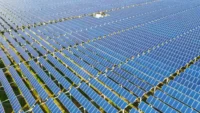
“Today they informed us of a US$600 million investment focused on sustainable materials, new vehicle lines, solar panels, and water treatment plants, along with additional sustainable projects,” García said. Among the key projects are the construction of a solar park to generate clean energy and a water treatment facility to optimize water use under international environmental standards. These efforts are part of a broader strategy to integrate more environmentally sustainable processes into industrial operations while strengthening long-term competitiveness.
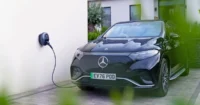
Beyond sustainability, the investment includes the expansion of production capacity at Kia’s plant in Pesqueria. The facility will be upgraded to support new mobility solutions, including electric vehicle production, positioning the site within the company’s global electrification roadmap.
A Decade of Growth in Pesqueria
The move further consolidates Nuevo Leon as a strategic location within Kia’s global manufacturing network and underscores Mexico’s growing role in the transition toward cleaner mobility technologies. The expansion also builds on Kia’s long-standing presence in the state. The Pesqueria plant, inaugurated in 2016, represented an initial investment of more than US$2.196 billion and attracted multiple suppliers, helping establish a regional automotive cluster.
Governor García emphasized the scale of the company’s cumulative commitment during his trip to Seoul. “Kia has been in Nuevo León for 10 years. If we add up the last 10 years, Kia has invested a total of US $3 billion,” he said in a video message shared from South Korea. The latest announcement was part of a broader Asia tour that also included meetings with Panasonic, Mitsubishi, Nissan, and Yazaki in Japan.
Today, the facility is one of the company’s most advanced manufacturing centers, with highly automated processes and production capacity of up to 400,000 units annually. The plant exports vehicles to more than 190 countries and has produced more than 2 million vehicles in less than a decade, a milestone it reached in August 2024 while also earning recognition as the plant with the highest production quality within Kia’s global network.
Context is everything. While you follow today’s updates, use the Serrari Group Market Index and Marketplace to spot emerging shifts. Need to sharpen your edge? Our Wealth Builder Course turns these insights into a professional-grade strategy.
Export Diversification Strategy
Kia Mexico is reshaping its export strategy by reducing reliance on the US market and expanding shipments to Europe, Latin America, and Australia. Vehicles produced at the Pesqueria plant and shipped to the United States accounted for 65% of exports in 2025, down from 81% in 2024. The shift reflects a broader diversification strategy supported by new model launches and expanded market access.
The K4 hatchback, introduced in mid-2025, has enabled entry into European markets. The inaugural shipment of the European-spec K4 Hatchback — the first “Made in Nuevo Leon” model destined for the continent — left the Pesqueria plant in September 2025, with the United Kingdom as the initial destination and future shipments planned for Portugal, Spain, France, and Germany. Meanwhile, Australia received 9,634 K4 sedans following the model’s production ramp-up.
Horacio Chávez, CEO of Kia Mexico, said the company plans to continue increasing production while exploring additional destinations. “We are now reaching the European market with our K4 hatchback,” Chávez said. “There is a strong hatchback segment there, and we intend to continue increasing production volume while exploring additional destinations.”
The K4 has become central to Kia’s European ambitions. The automaker has confirmed that the K4 hatchback and a new estate variant will serve as direct replacements for the Kia Ceed in Europe, with both body styles imported from Mexico. A K4 Sportswagon variant, unveiled in January 2026, will also be produced exclusively in Pesqueria and exported to 16 European countries, including Germany, Spain, France, and Portugal. Kia has also confirmed that a full hybrid version of the K4 will be produced at the Mexican plant in 2026 — the first time Kia will build a hybrid model destined for Europe outside Asia.
The K3 model, which replaced the Kia Rio, has also supported expansion in Latin America. In Colombia, shipments increased from fewer than 2,000 units to 8,750 in the latest reporting period. Production performance has supported this strategy. While Mexico’s overall vehicle production declined 0.9% in 2025, Kia’s output rose 6.4% to 288,110 units. Exports also increased 5.4% to 217,440 vehicles shipped to 70 countries.
Chávez noted that the K3 and K4 models are produced exclusively in Mexico for global markets, reinforcing the country’s role in the company’s global manufacturing network. “K3 and K4 are produced exclusively in Mexico for global markets; Mexico is the sole manufacturing location,” he said.
Record Sales and a Growing Electrified Lineup
Kia closed 2025 with record sales in Mexico, selling 111,172 units, an annual growth of 6.5%, achieving a market share of 7.3%, and consolidating its position within the top five brands in the country. Beyond its current lineup, Kia plans to launch at least three new models in Mexico in 2026, including two hybrids and one fully electric vehicle — marking what the company described as the largest expansion of electrified models in its history in the country.
Kia began commercializing electric vehicles in Mexico at the end of 2023 with the EV6 and intends to introduce more accessible electric models in the coming years. To support its growth targets, Kia is expanding its commercial and service infrastructure, currently operating 123 sales and service points nationwide with plans to increase that number to 131.
Industry Context and Investment Trends
Kia’s expansion comes as Mexico’s automotive industry faces shifting production strategies and investment patterns. The country has an installed capacity of approximately 5 million vehicles annually, though utilization remains constrained by market and trade uncertainties. Several automakers have adjusted production to manage tariff exposure and shifting demand. Some manufacturers have reduced overtime or relocated output, while others have prioritized modernization of existing facilities.
Recent investments include approximately US$763 million by Volkswagen in Puebla — a package originally announced in late 2022 that has gone toward modernization and a new painting facility — as well as US$700 million by Nissan in Aguascalientes and more than US$1 billion by General Motors in Ramos Arizpe to support electric vehicle production. GM’s commitment is aimed at making the Ramos Arizpe Complex the fifth GM North America manufacturing site to produce electric vehicles.
At the same time, restructuring continues across the industry. Nissan Mexicana announced plans to close its Civac plant in Morelos by March 2026 and transfer production to Aguascalientes. The closure, part of the global “Re:Nissan” recovery plan, will end nearly six decades of continuous operations at Nissan’s first manufacturing facility outside Japan and has raised concerns about the future of approximately 2,400 workers. Production of the NP300, Frontier, and Versa models will be consolidated at the more modern Aguascalientes complex.
US trade data also illustrates the pressure Mexican automakers face. Mexico’s exports of passenger cars to the United States were worth US$5.14 billion in the first two months of 2026, down 27.5% from US$7.1 billion in the same period of 2025.
Against this backdrop, Kia’s investment in Nuevo Leon signals continued confidence in Mexico’s manufacturing base and the state’s role in electric vehicle production and sustainable industrial development. Nuevo Leon led state-level growth in automotive exports in 2025, achieving a 10.9% increase and consolidating its position as a key logistics hub for high-value markets.
Workforce Diversity and Talent Development
Alongside its production and sustainability initiatives, Kia Mexico reported progress in workforce diversity, with women now representing approximately 30% of its workforce, above the global automotive industry average of about 24%. The company, which employs more than 2,500 people in Mexico, said the increase reflects a long-term strategy to expand opportunities for women across operational, technical, and leadership roles.
In previous years, women accounted for roughly 10% of the workforce. The shift marks a gradual transformation in a sector traditionally dominated by men. Marianela Calderón, Director of Employee Experience at Kia Mexico, said expanding opportunities for women is part of a broader effort to strengthen workplace culture.
“Creating opportunities for women in the automotive industry motivates us to build a more equitable and inclusive workplace,” Calderón said. “We want everyone who works with Kia Mexico, regardless of gender, to have the tools to grow professionally and achieve their personal and career goals.”
The company has implemented initiatives aimed at supporting employees throughout their careers. One program, Mom To Be, provides guidance during pregnancy, nutritional counseling, and additional benefits designed to support employees during maternity while maintaining professional continuity.
Outlook: Nuevo Leon as a Sustainable Mobility Hub
Kia’s latest commitment comes on the heels of a broader push by the García administration to attract high-value foreign investment to the border state, with Monterrey positioning itself as a host city for the 2026 FIFA World Cup and a magnet for advanced manufacturing. For Kia, the expansion deepens a relationship with a state that already hosts one of the company’s key North American manufacturing facilities.
The combination of new electric vehicle production lines, renewable energy infrastructure, and water stewardship projects signals that Kia is preparing Pesqueria not only as an export factory but as a long-term anchor for sustainable mobility in Latin America. As the global automotive industry continues its transition toward electrification — and as trade dynamics reshape where and how vehicles are built — Kia’s US$600 million bet reinforces Mexico’s position as a pivotal player in the next chapter of global automotive manufacturing.
Your financial future isn’t something you wait for—it’s something you build.
The real question is: when do you begin?
Move beyond simply staying informed.
Navigate the markets with clarity—track trends through the Serrari Group Market Index, uncover opportunities in the Serrari Marketplace, and build practical knowledge with our Curated Wealth Builder Course.
Stay connected to what truly matters.
Get daily insights on macro trends and financial movements across Kenya, Africa, and global markets—delivered through the Serrari Newsletter.
Growth opens doors.
Advance your career through professional programs including ACCA, HESI A2, ATI TEAS 7 , HESI EXIT , NCLEX – RN and NCLEX – PN, Financial Literacy!🌟—designed to move you forward with confidence.
See where money is flowing—clearly and in real time.
Track Money Market Funds, Treasury Bills, Treasury Bonds, Green Bonds, and Fixed Deposits, alongside global and African indexes, key economic indicators, and the evolving Crypto and stablecoin landscape—all within Serrari’s Market Index.