















Kenya has signalled its ambition to become Africa’s leading artificial intelligence hub following a high-level AI roundtable held on the sidelines of the Kenya International Investment Conference (KIICO) 2026 in Nairobi. The session, convened by the Office of the Special Envoy on Technology, the Kenya Investment Authority (KenInvest), and the American Chamber of Commerce Kenya (AmCham Kenya), projected Ksh.38 billion (approximately $250–$300 million) in AI-related investments over the coming year — contingent on clear regulations, enabling policies, and targeted incentives. About 50 senior government and private sector leaders participated, focusing on building Kenya’s full AI ecosystem from renewable-powered data centres and research labs to scalable local AI applications. The roundtable proposed a 90-day regulatory sandbox, advocated for “camel” innovation ecosystems over high-risk unicorn models, and called for sovereign data centres in Special Economic Zones. Kenya’s Special Tech Envoy, Ambassador Philip Thigo, said the discussions reinforced the importance of pro-innovation policies that attract global talent and investment into what participants described as the “Age of Intelligence.”
Key Overview
- Investment projection: Ksh.38 billion (~$250–$300 million) in AI investments projected over the next year.
- Event: High-level AI roundtable at KIICO 2026 in Nairobi, held under the Chatham House Rule.
- Conveners: Office of the Special Envoy on Technology, KenInvest, and AmCham Kenya.
- Participants: Approximately 50 senior government officials, investors, and private sector leaders.
- Key proposals: 90-day regulatory sandbox; sovereign data centres in Special Economic Zones; university-industry AI talent partnerships; diaspora engagement programmes.
- Competitive edge: Kenya’s mostly renewable energy grid (approximately 93% of energy consumption from renewables) positions the country for energy-intensive AI infrastructure.
- Strategic framing: Building “camel” ecosystems (resilient, sustainable) rather than chasing “unicorn” startups.
- Concrete outcomes: Investment signals register, regulatory recommendations, KIICO 2026 AI investment statement, and plans to map Kenya’s AI workforce and workload needs.
Markets move fast; don’t get left behind. We’ve paired the Serrari Group Market Index with a curated Marketplace and a comprehensive Wealth Builder Course to ensure you have the data—and the skills—to act on it.
The KIICO 2026 AI Roundtable: A Defining Moment
The AI roundtable took place during KIICO 2026, Kenya’s flagship investment forum that opened on March 25 with the announcement of investment deals worth over $2.9 billion across agriculture, mining, manufacturing, healthcare, ICT, real estate, and energy. President William Ruto used the conference to unveil a comprehensive catalogue of investment-ready opportunities, pledging reforms including zero-rated VAT in strategic sectors, streamlined refund mechanisms for exporters, and the Business Law Amendments Bill 2026.
Within that broader investment push, the AI-focused roundtable emerged as one of the most forward-looking sessions. Themed “AI & Emerging Technologies: Investing Across the Full Stack,” it was convened jointly by the Office of the Special Envoy on Technology, the Kenya Investment Authority, and the American Chamber of Commerce Kenya. Approximately 50 senior stakeholders from government, industry, and investment circles took part.
Deliberations covered what it will take to position Kenya as a “full-stack” AI destination, spanning energy and compute infrastructure, data systems, research and model development, applications, and governance. Participants warned that the next three years will be critical in determining how AI investments are distributed across the region, cautioning that Kenya must move quickly to secure its position in the fast-evolving global technology landscape.
$250–$300 Million in Near-Term AI Investment Signals
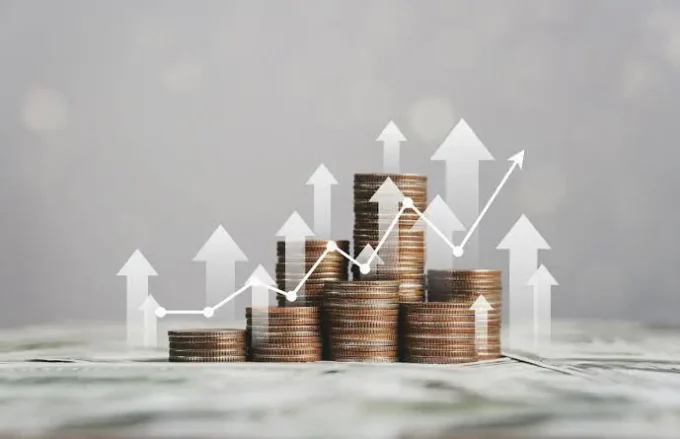
The headline figure to emerge from the roundtable was the projection of Ksh.38 billion — roughly $250 to $300 million — in AI-related investments expected over the next year. According to delegates cited in The Star’s reporting, these early signals reflect growing hyperscaler interest in Kenya’s AI ecosystem, with projected capital flows targeting data centres, research, and AI-driven applications.
However, participants were careful to attach conditions. Such capital will materialise only with regulatory clarity, meaningful policy support, and the right incentives. The investment projection is not a signed commitment but an aggregate of signals gathered through the roundtable discussions, which produced a formal investment signals register alongside regulatory recommendations and a KIICO 2026 statement on AI investment.
This cautious optimism reflects broader trends in Kenya’s investment landscape. KIICO 2026 as a whole mobilised over $2.9 billion in investment deals expected to create more than 63,000 direct jobs, with ICT among the key sectors attracting interest from investors in the United States, United Kingdom, United Arab Emirates, China, India, and South Korea.
Kenya’s Renewable Energy Advantage
Central to Kenya’s pitch as an AI infrastructure destination is its overwhelmingly renewable energy grid. According to data from the Ministry of Energy, renewable sources now account for approximately 82% of the country’s total installed electricity generation capacity and 93% of actual energy consumption, drawn from geothermal, wind, solar, and hydroelectric sources. On a good day, engineers say up to 95% of the national grid’s power comes from renewables, with geothermal contributing roughly a third to half of that total.
This is a significant competitive differentiator for the energy-intensive AI industry. Data centres and AI model training require enormous, continuous power — and global technology companies are increasingly seeking locations where that power comes from clean sources. Kenya’s geothermal assets in the Rift Valley, anchored by the Olkaria complex near Naivasha, have already attracted major international attention. In 2024, Microsoft and Abu Dhabi-based AI company G42 announced a $1 billion investment in a geothermal-powered data centre at Olkaria, designed to run on Microsoft Azure cloud services with a capacity of 1 GW.
Delegates at the KIICO roundtable highlighted this renewable energy base as Kenya’s most compelling asset for attracting AI infrastructure investment. However, experts caution that grid stability and flexibility issues must be resolved before Kenya can fully position itself as a hub for energy-intensive operations at scale. The roundtable’s proposals to align digital infrastructure with national energy strategies speak directly to this challenge.
The Regulatory Sandbox: Innovation Without Stifling Growth
Rather than imposing prescriptive AI regulations, the roundtable proposed a 90-day regulatory sandbox — a controlled environment in which companies can test and develop AI products and services under relaxed regulatory requirements, while government monitors outcomes to inform future policy.
This approach reflects a growing consensus among technology stakeholders in Kenya and across Africa that heavy-handed regulation at this early stage of AI development risks driving investment and talent to more permissive jurisdictions. Ambassador Philip Thigo, Kenya’s Special Tech Envoy — who was recognised in Apolitical’s 2025 list of Global AI Governance Leaders — articulated this philosophy clearly, stating the discussions “reinforced the importance of pro-innovation policies that crowd in investment, enable experimentation, and build trust.”
The sandbox model has precedents in Kenya’s own fintech sector, where regulatory flexibility helped nurture the M-Pesa mobile money revolution that made Kenya a global fintech leader. Delegates are hoping the same enabling approach can be replicated for AI.
Context is everything. While you follow today’s updates, use the Serrari Group Market Index and Marketplace to spot emerging shifts. Need to sharpen your edge? Our Wealth Builder Course turns these insights into a professional-grade strategy.
Camels, Not Unicorns: A New Model for African Innovation
One of the most distinctive ideas to emerge from the roundtable was the call to build “camel” AI ecosystems rather than chasing “unicorn” startups. In Silicon Valley parlance, unicorns are startups valued at over $1 billion — often fuelled by venture capital and rapid growth at the expense of profitability. Camels, by contrast, are companies designed for endurance: they conserve capital, build resilient business models, and are adapted to survive in harsh economic environments.
The analogy resonated strongly with the African context. Participants argued that Kenya’s AI ecosystem should prioritise scalable, sustainable businesses that can withstand the continent’s unique economic and infrastructure challenges, rather than pursuing the high-burn, high-valuation models that have produced mixed results in African tech ecosystems.
This framing is consistent with the broader direction of the National Artificial Intelligence Strategy 2025–2030, which the Kenyan government launched requiring an estimated Ksh.152 billion over five years to position the country as Africa’s leading hub for AI research, innovation, and deployment. Cabinet Secretary for Information, Communications and the Digital Economy, William Kabogo, said at the strategy’s launch that “the question is not whether we shall adopt AI but how we will shape it to keep Kenya future-ready in the global digital economy.”
Sovereign Data Centres and Special Economic Zones
The roundtable’s proposals included establishing sovereign data centres within Kenya’s Special Economic Zones (SEZs) — a move that would address growing concerns about data sovereignty while leveraging the tax incentives and infrastructure advantages that SEZs offer.
Data sovereignty — ensuring that a nation’s data is stored and processed within its own borders — has become an increasingly prominent issue across Africa as governments grapple with the implications of foreign technology companies hosting critical data on overseas servers. By building sovereign data centres powered by Kenya’s renewable energy capacity, the government could simultaneously address data sovereignty concerns, attract infrastructure investment, and create high-skilled employment.
Kenya already has ambitions in this space. The Konza Technopolis project, a planned smart city located 60 kilometres from Nairobi and powered by renewable energy, was designed as a hub for tech startups and innovation. Integrating sovereign AI data centres into the SEZ framework could accelerate the broader Konza vision while providing the physical infrastructure needed for AI model training and deployment.
Talent Development: From Universities to the Diaspora
Recognising that infrastructure alone is insufficient, the roundtable placed significant emphasis on building Kenya’s AI talent pipeline. Plans discussed included forging university-industry partnerships to integrate AI training into academic curricula, establishing research labs linked to commercial AI applications, and creating diaspora engagement programmes to attract Kenyan technologists working abroad back into the domestic ecosystem.
Ambassador Thigo has previously outlined Kenya’s talent strategy in public remarks, describing a four-pronged approach that spans K-12 and tertiary education, public sector and leadership skilling, and investment in real-world use cases. “AI is not a tech issue, it’s a society issue,” he said at Mobile World Congress in March 2026. “So we are skilling cabinet. We are skilling the entire leadership around understanding how to lead in an era of intelligence.”
The diaspora dimension is particularly relevant for Kenya, which has a significant population of highly skilled technology professionals working in Silicon Valley, London, and other global tech hubs. The roundtable’s proposals aim to create incentives — both financial and professional — to encourage these individuals to contribute their expertise to Kenya’s AI ecosystem, whether through direct relocation or remote engagement.
Democratising AI Access and Government Procurement Reform
Delegates also stressed the need to democratise access to AI, drawing inspiration from telecom-sector AI deployment models in India that have successfully lowered barriers for youth and small businesses. The goal is to ensure that Kenya’s AI ecosystem does not merely serve large corporations and international technology firms but creates practical tools and services accessible to the country’s millions of small and medium enterprises, farmers, healthcare workers, and students.
To complement this, the roundtable proposed procurement reforms that would enable the Kenyan government to become a significant customer of locally developed AI solutions. Government procurement of domestic technology products has long been identified as a critical catalyst for commercialisation in developing economies — it provides predictable revenue for startups, validates products in demanding environments, and creates reference cases that can support international expansion.
These proposals align with the broader Nairobi AI Forum held in February 2026, organised by the governments of Kenya and Italy together with UNDP, which convened more than 500 participants to discuss building scalable AI infrastructure and investment-ready ecosystems. That forum focused on AI adoption in education, agriculture, and energy, and saw commitments including 1.5 million GPU hours distributed through Italy’s Cineca supercomputing centre, alongside credits from AWS and Microsoft.
Concrete Outcomes and the Road Ahead
The KIICO 2026 AI roundtable was held under the Chatham House Rule, limiting direct attribution of individual remarks. However, the session produced a set of tangible deliverables: an investment signals register cataloguing investor interest and capital availability; a package of regulatory recommendations for the government; a KIICO 2026 statement on AI investment; and strategic plans to map Kenya’s long-term AI workforce requirements, computing needs, and a national framework on the future of jobs.
Additional proposals included developing an investor guide to position Kenya competitively in what stakeholders described as the “Age of Intelligence.” The reference reflects a conscious effort to frame Kenya’s AI ambitions not merely in technological terms but as an economic and civilisational transformation — one in which the country positions itself not just as a consumer of AI tools built elsewhere but as a builder of foundational technology infrastructure and homegrown talent.
Whether Kenya can translate these ambitions into reality will depend on execution speed. Regional competition is intensifying, with countries across Africa seeking to attract the same pool of global AI investment. But Kenya’s combination of a largely renewable energy grid, an established tech startup ecosystem centred on Nairobi’s “Silicon Savannah,” a national AI strategy, and proactive government leadership through figures like Ambassador Thigo gives it genuine advantages.
As Thigo himself put it: Kenya aims to shape the future of AI — not as a passive recipient but as an active architect of the intelligence age.
Your financial future isn’t something you wait for—it’s something you build.
The real question is: when do you begin?
Move beyond simply staying informed.
Navigate the markets with clarity—track trends through the Serrari Group Market Index, uncover opportunities in the Serrari Marketplace, and build practical knowledge with our Curated Wealth Builder Course.
Stay connected to what truly matters.
Get daily insights on macro trends and financial movements across Kenya, Africa, and global markets—delivered through the Serrari Newsletter.
Growth opens doors.
Advance your career through professional programs including ACCA, HESI A2, ATI TEAS 7 , HESI EXIT , NCLEX – RN and NCLEX – PN, Financial Literacy!🌟—designed to move you forward with confidence.
See where money is flowing—clearly and in real time.
Track Money Market Funds, Treasury Bills, Treasury Bonds, Green Bonds, and Fixed Deposits, alongside global and African indexes, key economic indicators, and the evolving Crypto and stablecoin landscape—all within Serrari’s Market Index.