

















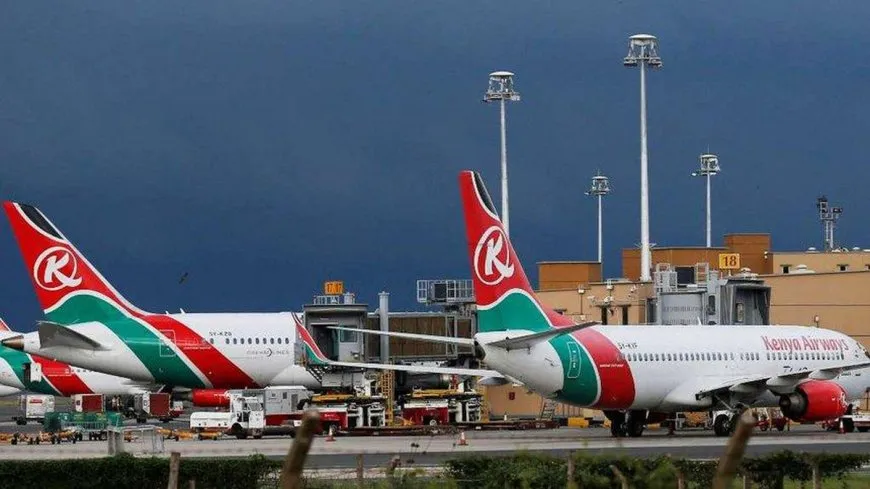
The Kenyan government has secured majority ownership of Kenya Airways following changes in shareholding structure, giving it greater control over the airline’s strategy. This comes as the national carrier reports a significant financial reversal, highlighting deep structural challenges within both the airline and the broader African aviation sector.
A Shift in Control at a Critical Moment
Kenya Airways has entered a new phase in its long and complex recovery journey, with the National Treasury now holding a majority stake of 50.1 percent in the airline. This development is not just a technical adjustment in ownership. It represents a decisive shift in control, one that gives the government direct influence over the carrier’s strategic direction at a time of renewed financial strain.
The increase in Treasury ownership from 48.89 percent to 50.1 percent follows changes in the company’s shareholding structure, including the exit of the Employee Share Ownership Plan. The ESOP had held 142.1 million shares, equivalent to a 2.44 percent stake, and its removal reduced the total issued shares from 5.82 billion to 5.68 billion.
This seemingly technical adjustment had a meaningful consequence. By reducing the total number of shares in circulation, it effectively increased the proportional ownership of remaining shareholders, including the government and other investors who did not sell their positions.
In practical terms, this means the state now has majority control.
Markets move fast; don’t get left behind. We’ve paired the Serrari Group Market Index with a curated Marketplace and a comprehensive Wealth Builder Course to ensure you have the data—and the skills—to act on it.
What Majority Control Really Means
Crossing the 50 percent threshold is more than symbolic. It allows the National Treasury to exert greater authority over key decisions, including strategy, restructuring, and long-term planning.
This raises an important question.
Is this a step toward stabilization, or does it signal deeper structural challenges that require state intervention?
The answer likely lies somewhere in between.
A Changing Shareholder Landscape
While the government’s stake increased, other shareholders adjusted their positions.
Kenyan banks, through their investment vehicle KQ Lenders Company 2017 Limited, reduced their shareholding from 38.09 percent to 37.2 percent. Major institutions such as KCB and Equity Bank cut their holdings by 104.4 million shares, bringing their total to 2.11 billion shares.
Despite this reduction, they remain the second-largest shareholders in the airline.
This shift reflects a subtle but important rebalancing of influence within the company. While private sector participation remains significant, control has now firmly shifted toward the state.
The Financial Reality Behind the Move
The timing of this ownership shift is closely linked to Kenya Airways’ financial performance.
In its official announcement on March 24, 2026, the airline reported a net loss after tax of Ksh17.1 billion for the 2025 financial year. This marks a sharp reversal from the Ksh5.4 billion net profit recorded in 2024.
Such a swing is significant.
It suggests that the airline’s recovery remains fragile and susceptible to operational and market pressures.
Declining Revenue and Operational Pressure
The financial results reveal deeper challenges.
Total income fell from Ksh188.5 billion to Ksh161.5 billion, reflecting reduced cargo volumes and lower flight activity. This decline in revenue highlights the sensitivity of airline performance to both demand conditions and operational capacity.
Airline sales alone dropped by Ksh27 billion to Ksh161.4 billion.
This contraction in revenue had a direct impact on profitability, resulting in an operating loss of Ksh5.6 billion.
While operating costs were reduced by Ksh4.79 billion to Ksh167 billion, these savings were not enough to offset the decline in income.
The result is a business under pressure, where cost reductions are being outpaced by falling revenues.
A Balance Sheet Under Strain
One of the most concerning aspects of Kenya Airways’ financial position is its balance sheet.
The airline reported a negative asset position of Ksh132 billion, worsening from Ksh118.2 billion.
This indicates that liabilities continue to exceed assets by a significant margin.
Such a position limits financial flexibility and increases reliance on external support, including government backing.
Context is everything. While you follow today’s updates, use the Serrari Group Market Index and Marketplace to spot emerging shifts. Need to sharpen your edge? Our Wealth Builder Course turns these insights into a professional-grade strategy.
Operational Challenges Add to the Pressure
Beyond financial metrics, operational issues have also played a role.
In December 2025, at least three of the airline’s wide-body Boeing 787 Dreamliner aircraft were grounded for maintenance.
This had a direct impact on capacity and revenue generation.
For an airline, fleet availability is critical. Grounded aircraft not only reduce operational efficiency but also constrain the ability to capture demand.
The Broader Industry Context
Kenya Airways’ challenges cannot be viewed in isolation.
The broader African aviation sector faces structural limitations that affect profitability.
Industry forecasts indicate that African airlines are expected to generate only about $1.30 in net profit per passenger in 2026.
This stands in stark contrast to nearly $10 in Europe and North America, and close to $29 in the Middle East.
This gap highlights systemic issues within the region, including high operating costs, limited economies of scale, and infrastructure constraints.
The Assumption Behind Government Control
There is a common assumption that increased government control will stabilize the airline.
This assumption deserves scrutiny.
While state ownership can provide financial support and strategic direction, it can also introduce inefficiencies. Decision-making processes may become slower, and commercial priorities may be influenced by political considerations.
The effectiveness of this intervention will depend on execution.
Risks and Challenges
The shift to majority government control introduces a new set of risks, even as it attempts to address existing ones.
One of the most immediate challenges is governance. With the state now holding majority control, the balance between commercial decision-making and political influence becomes critical. There is a risk that strategic decisions may prioritize national interests over financial sustainability, potentially affecting efficiency and profitability.
There is also the issue of financial dependency. The airline’s negative asset position and ongoing losses suggest that it may continue to rely on government support. This creates pressure on public finances and raises questions about long-term sustainability.
Another challenge lies in market competitiveness. Kenya Airways operates in a highly competitive global industry, where efficiency and cost control are essential. Competing with well-capitalized international airlines while managing structural disadvantages is a significant hurdle.
Operational risks remain equally important. Fleet maintenance issues, fluctuating demand, and external shocks such as fuel price volatility can all impact performance.
There is also the broader challenge of restoring profitability. Cost reductions alone are not sufficient. The airline must find ways to grow revenue, improve efficiency, and strengthen its market position.
Finally, there is the risk of investor perception. Increased government control may affect how external investors view the airline, potentially influencing future investment and partnerships.
Why This Matters
The shift in control of Kenya Airways is not just a corporate event. It is a reflection of how a government responds when a strategically important asset reaches a point where market forces alone cannot sustain it.
At one level, this move is about safeguarding connectivity. Airlines are not ordinary businesses. They sit at the center of tourism, trade, investment flows, and global perception. For a country like Kenya, which positions itself as a regional hub, the stability of its national carrier carries broader economic implications. A weakened airline can translate into reduced flight frequencies, higher travel costs, and diminished competitiveness in attracting international business and tourism.
But the deeper significance lies in what this move signals about risk transfer.
By increasing its stake to 50.1 percent, the government is effectively absorbing more of the airline’s financial and operational risk. What was previously shared between public and private investors is now more heavily concentrated on the state. This changes the equation entirely. Losses are no longer just corporate losses. They become, in effect, public-sector exposure.
This raises a critical implication for fiscal management.
Kenya Airways is already operating with a negative asset position and recurring losses. If these challenges persist, the burden of supporting the airline could extend beyond balance sheet adjustments into direct or indirect fiscal commitments. This creates a feedback loop where public resources are used to stabilize a commercial entity, which in turn affects broader budget priorities.
There is also a market signal embedded in this development.
When governments step in to take majority control of a listed company, it often reflects a breakdown—or at least a limitation—of private sector confidence. Investors may interpret this as a sign that the business is no longer able to sustain itself under purely commercial conditions. While the intention is stabilization, the signal can be interpreted as distress.
At the same time, the move highlights a structural reality within African aviation.
The extremely low profit per passenger—just about $1.30—suggests that even under optimal conditions, airlines in the region operate on very thin margins. This is not just a Kenya Airways problem. It is an industry-wide constraint. High operating costs, fragmented markets, and limited scale all contribute to a business environment where profitability is difficult to sustain.
This means that the question is not simply whether Kenya Airways can recover.
The question is whether the current model of national carriers in the region is fundamentally viable without ongoing support.
From an investor perspective, this development also introduces uncertainty around governance and future strategy. Majority government ownership can lead to shifts in priorities, particularly if the airline is expected to serve broader national objectives beyond profitability. This can affect everything from route decisions to pricing strategies.
Ultimately, this moment matters because it redefines the boundaries between the public sector and the market.
It forces a reconsideration of what should be commercially driven and what is deemed too important to fail.
A Critical Perspective
It is easy to frame the government’s increased control as a necessary intervention.
But necessity does not eliminate trade-offs.
One of the key assumptions behind this move is that greater control will lead to better outcomes. This assumption deserves careful examination. Control provides the ability to make decisions, but it does not guarantee that those decisions will be effective or efficient.
In fact, there is a risk that increased state involvement could introduce new inefficiencies.
Government-led entities often operate under different incentives compared to private firms. Profitability may not always be the primary objective. Instead, considerations such as employment, national pride, or political visibility can influence decision-making. While these factors are not inherently negative, they can create tension with the need for financial discipline.
There is also the question of accountability.
When ownership is dispersed among private investors, there is a natural pressure for performance and transparency. Majority state ownership can dilute this pressure, particularly if losses are absorbed over time without immediate consequences.
Another assumption worth challenging is that Kenya Airways’ problems are primarily financial.
The data suggests otherwise.
Declining revenues, grounded aircraft, and structural industry challenges point to operational and strategic issues that go beyond capital structure. Injecting control or even capital without addressing these underlying factors risks treating symptoms rather than causes.
There is also a broader strategic question.
Should governments continue to maintain national carriers in an industry where scale and efficiency increasingly determine success? Globally, many airlines operate within large alliances or under private ownership structures that allow for rapid adaptation and cost optimization. A state-controlled model may struggle to compete in such an environment unless it is paired with strong governance and clear strategic direction.
Additionally, there is the risk of path dependency.
Once the government takes majority control, it becomes more difficult to step back. Future restructuring efforts may be influenced by the need to justify past decisions, rather than by purely forward-looking considerations.
This creates a situation where intervention, even if initially justified, can become entrenched.
From a market standpoint, there is also the concern of signaling.
Investors may view increased government control as a sign that private capital is unwilling to take on the associated risks. This perception can influence not just Kenya Airways, but broader investor sentiment toward similar opportunities.
The key point here is not that the intervention is wrong.
It is that it introduces a new set of challenges that must be managed as carefully as the ones it aims to solve.
Looking Ahead
The path forward for Kenya Airways is now closely tied to how effectively the new ownership structure is utilized.
The immediate priority will likely be stabilization.
This involves addressing operational inefficiencies, improving fleet availability, and ensuring that the airline can maintain consistent service levels. Without this foundation, broader strategic initiatives will struggle to gain traction.
Beyond stabilization, the focus must shift to restoring profitability.
This is where the challenge becomes more complex.
Cost reductions have already been implemented to some extent, but they have not been sufficient to offset declining revenues. The next phase will require a more nuanced approach—one that balances cost control with revenue generation.
This could involve re-evaluating route networks, optimizing capacity, and exploring partnerships that enhance efficiency without compromising market position.
Another key area will be governance.
With majority government ownership, the structure and independence of management will play a critical role. Clear accountability, performance metrics, and decision-making autonomy will be essential in ensuring that the airline operates with a commercial mindset.
Without this, there is a risk that strategic decisions may become reactive rather than proactive.
The broader industry environment will also shape outcomes.
African aviation is expected to remain a low-margin business, which means that Kenya Airways must find ways to operate more efficiently than its peers if it is to achieve sustainable profitability. This may require innovation in cost structures, technology adoption, and operational processes.
There is also the question of long-term strategy.
Will the government aim to eventually reduce its stake once the airline stabilizes, or is this the beginning of a more permanent ownership model? The answer to this will influence investor confidence and the airline’s positioning within the market.
Finally, there is the issue of timing.
Turnarounds in the aviation industry are rarely quick. They require sustained effort, consistent execution, and the ability to adapt to changing conditions. Short-term improvements may create optimism, but lasting success will depend on the ability to deliver results over multiple cycles.
In many ways, this moment represents both an opportunity and a test.
An opportunity to reset the airline’s trajectory.
And a test of whether increased control can translate into meaningful and sustainable progress.
The outcome will not be determined by the ownership change alone.
It will be determined by what is done with it.
Your financial future isn’t something you wait for, it’s something you build.
The real question is: when do you begin?
Move beyond simply staying informed.
Navigate the markets with clarity—track trends through the Serrari Group Market Index, uncover opportunities in the Serrari Marketplace, and build practical knowledge with our Curated Wealth Builder Course.
Stay connected to what truly matters.
Get daily insights on macro trends and financial movements across Kenya, Africa, and global markets—delivered through the Serrari Newsletter.
Growth opens doors.
Advance your career through professional programs including ACCA, HESI A2, ATI TEAS 7 , HESI EXIT , NCLEX – RN and NCLEX – PN, Financial Literacy!🌟—designed to move you forward with confidence.
See where money is flowing—clearly and in real time.
Track Money Market Funds, Treasury Bills, Treasury Bonds, Green Bonds, and Fixed Deposits, alongside global and African indexes, key economic indicators, and the evolving Crypto and stablecoin landscape—all within Serrari’s Market Index.