
















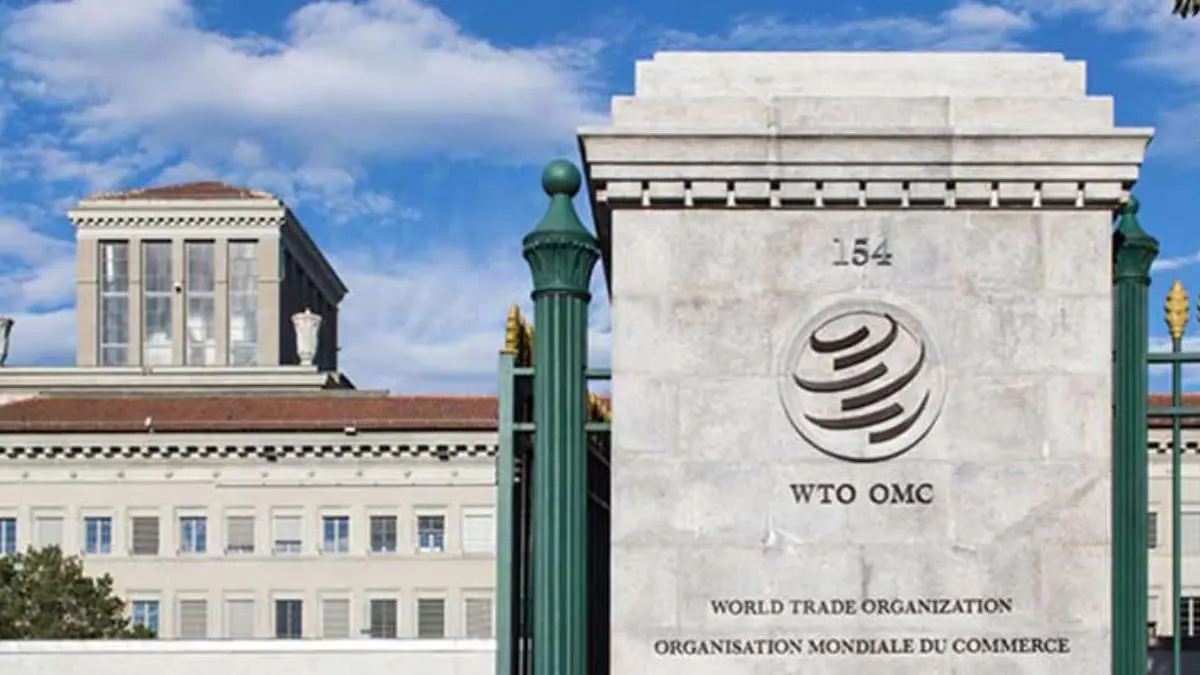
The United States and a coalition of allied nations are moving to establish a plurilateral agreement banning customs duties on cross-border electronic transmissions, after the World Trade Organization’s 28-year-old moratorium on e-commerce duties lapsed following a failed renewal at the MC14 ministerial conference in Yaoundé, Cameroon. A draft text, dated May 1 and proposed by the US ahead of the WTO General Council meeting on May 7, commits co-sponsors to continue refraining from imposing duties among themselves. The initiative builds on an April declaration by 23 countries and has early support from Japan, South Korea, Australia, and New Zealand. The moratorium’s collapse — blocked by Brazil and Turkey — has raised urgent questions about the WTO’s capacity to govern an increasingly digital global economy.
Markets move fast; don’t get left behind. We’ve paired the Serrari Group Market Index with a curated Marketplace and a comprehensive Wealth Builder Platform to ensure you have the data—and the skills—to act on it.
Key Takeaways
- Moratorium Lapsed: The WTO’s e-commerce moratorium, in place since 1998, expired at MC14 in Yaoundé on March 26, 2026, after members failed to agree on a renewal.
- Blocked By: Brazil and Turkey opposed a four-year extension. Brazil sought a two-year renewal; the US pushed for a longer or permanent arrangement.
- US Proposal: A draft plurilateral text proposes that co-sponsors commit not to impose duties on electronic transmissions among themselves starting May 8, 2026.
- Early Backers: Japan, South Korea, Australia, and New Zealand support the initiative. An earlier joint statement by 23 WTO members was issued on April 2.
- Broader E-Commerce Agreement: At MC14, 66 members (covering 70% of world trade) opened a formal e-commerce agreement for signature, including a permanent moratorium provision.
- Revenue Debate: UNCTAD has estimated developing countries forgo roughly $10 billion annually in potential tariff revenue under the moratorium.
- WTO Credibility: The ICC has warned the lapse “sends a clear signal that WTO rules are slowly eroding away.”
A 28-Year Rule Breaks Down
For more than a quarter of a century, a simple rule underpinned the growth of global digital trade: no country would impose customs duties on cross-border electronic transmissions. Agreed at the WTO’s Second Ministerial Conference in 1998, the moratorium covered everything from software downloads and music streaming to cloud computing services and SaaS platforms. It was renewed at every subsequent ministerial conference — until this year.
When the WTO’s 14th Ministerial Conference convened in Yaoundé, Cameroon, in late March 2026, the moratorium was already set to expire on the first day of the meeting. Nearly 2,000 trade officials from 166 member states spent four days trying to hammer out a renewal. They failed. Conference Chair Luc Magloire Mbarga Atangana acknowledged that, on several key issues, “we ran out of time.”
The immediate obstacle was a deadlock between the United States and Brazil, with Turkey aligned alongside Brasilia. The US and its major trading partners — the European Union, Canada, Japan, Australia — had sought a four-year extension plus a buffer year to 2031. Brazil and Turkey wanted a more cautious two-year renewal, consistent with the pattern at previous ministerial conferences. Neither side budged.
A US official framed the standoff bluntly, saying Brazil had opposed a “near-consensus document,” and described the impasse as “Brazil and Turkey versus 164 members.” A Brazilian diplomat, meanwhile, said “the US wanted the sky,” and that Brazil was being prudent given the pace of change in digital commerce. Another diplomat reported that US Trade Representative Jamieson Greer had made delegates “uncomfortable” by suggesting “consequences” if the US did not secure a long-term extension.
WTO Director-General Ngozi Okonjo-Iweala confirmed the moratorium had expired but said the organisation hoped to restore it. “They need more time and we didn’t have the time here,” she said.
The Plurilateral Workaround
With prospects for a multilateral solution fading, the US has moved to a Plan B. A draft text dated May 1, seen by Reuters, proposes a plurilateral arrangement under which participating countries would agree among themselves not to impose customs duties on electronic transmissions for an unspecified period.
“Beginning on May 8, 2026, we, the co-sponsors of this communication, will continue to not impose customs duties on electronic transmissions among ourselves,” the draft states.
The proposal builds on a joint statement issued on April 2 by 23 WTO members pledging to maintain the practice of not imposing duties. The International Chamber of Commerce welcomed that statement as “a pragmatic and constructive response” but emphasised that a temporary, limited arrangement is no substitute for the universality and durability a permanent multilateral moratorium would provide.
The US initiative has early support from Japan, South Korea, Australia, and New Zealand, with Washington pushing to expand the coalition ahead of the WTO General Council meeting on May 7. Joseph Barloon, the US ambassador to the WTO in Geneva, said Washington had already secured commitments from “dozens of countries — and nearly all its major trading partners” — not to impose tariffs on electronic transmissions.
The UK, for its part, confirmed in a parliamentary statement that it had joined the 23-member group as a “stopgap” to reduce uncertainty for British businesses, while also participating in the broader plurilateral e-commerce agreement launched at MC14.
Context is everything. While you follow today’s updates, use the Serrari Group Market Index and Marketplace to spot emerging shifts. Need to sharpen your edge? Our Wealth Builder Platform turns these insights into a professional-grade strategy.
What the E-Commerce Agreement Offers
One of the less-reported outcomes from Yaoundé was the formal launch of a plurilateral E-Commerce Agreement (ECA) — a separate instrument that had been under negotiation since 2017 among a coalition of willing members. At MC14, 66 members covering approximately 70% of global trade opened the agreement for signature. The ECA sets baseline rules for digital trade, including provisions on electronic authentication, consumer protection, cross-border data flows, and — critically — a permanent moratorium on customs duties on electronic transmissions among participants.
The agreement stems from the Joint Statement Initiative on e-commerce, launched at MC11 in Buenos Aires in 2017. Co-convened by Australia, Japan, and Singapore, negotiations eventually grew to involve 91 members before a stabilised legal text was finalised in July 2024. Efforts to incorporate the ECA into the WTO’s formal legal architecture — as a plurilateral agreement under Annex 4 of the Marrakesh Agreement — have been blocked by India and South Africa, which argue that plurilateral deals undermine the WTO’s consensus-based multilateral system.
The Peterson Institute for International Economics has noted that the ECA’s launch, despite the moratorium’s failure, represents a significant step forward — suggesting the world trading system is “better off today than it was before the weekend in Yaoundé,” even as the multilateral framework strains under pressure.
For businesses, the ECA provides a degree of legal certainty among its participants. But it does not cover the full WTO membership, and its relationship to the WTO’s formal rules remains unresolved.
Why Brazil and Developing Countries Push Back
The opposition to the moratorium is not arbitrary. It reflects a long-running debate about who benefits from duty-free digital trade and who bears the cost.
UNCTAD research published in 2019 estimated that developing countries forgo roughly $10 billion annually in potential tariff revenue under the moratorium, using bound duty rates. The estimated loss for least-developed countries was $1.5 billion, while the potential tariff loss for Sub-Saharan African countries was found to be twice that of WTO high-income members. A further UNCTAD estimate suggested that between 2017 and 2020, developing countries and LDCs collectively lost $56 billion in potential tariff revenue.
The argument from Brazil, India, South Africa, and other developing nations is straightforward: when a physical product — a DVD, a textbook, a piece of software on a disc — crosses a border, customs duties can be applied. When the identical content is delivered electronically, the moratorium prohibits any duty. As more goods become digitised, developing countries that are net importers of digital content see a growing gap in their ability to capture revenue from international commerce.
Proponents of the moratorium counter that duties on electronic transmissions would be technically difficult to implement, would raise costs for businesses and consumers across all sectors, and would disproportionately harm SMEs that rely on affordable cloud computing, digital tools, and SaaS platforms to compete internationally. The WTO’s own analysis has estimated the moratorium’s impact on government revenue at less than 0.33% of overall government revenue in developing economies on average, though with higher figures for a handful of states.
The debate is also about policy space. Brazil’s position at Yaoundé was not that it wanted to impose duties immediately, but that it did not want to permanently surrender the right to do so as the digital economy evolves. As a Brazilian diplomat told Reuters, “In four or five years’ time, no one will be able to predict what e-commerce will be about.”
A Fragmented Digital Trade Landscape
The moratorium’s lapse does not mean that duties will be imposed immediately. Diplomats across multiple delegations have said that near-term imposition is unlikely, and no major economy has signalled an intent to apply duties on electronic transmissions in the short term. But the legal and political uncertainty created by the lapse is significant.
As the World Economic Forum’s analysis of the MC14 outcome noted, the expiration removes a baseline that has supported the growth of digital trade for nearly three decades. Even without immediate tariff changes, businesses face increased compliance complexity and planning uncertainty. The shift toward plurilateral arrangements — while practically useful — signals a more fragmented regulatory landscape in which digital trade rules vary depending on which countries are party to which agreements.
Andrew Wilson, deputy secretary-general for policy at the International Chamber of Commerce, warned that failure to restore the multilateral moratorium would damage the WTO’s credibility. “It sends a clear signal that WTO rules are slowly eroding away,” Wilson said, adding that a plurilateral outcome would be “sub-optimal” because it would not apply universally and could add uncertainty for businesses.
ICC Secretary General John W.H. Denton, who presented a global business statement on behalf of 236 business organisations at MC14, described the moratorium’s lapse as “particularly concerning at a time of real strain on the global economy.”
What Happens Next
The immediate test comes at the WTO General Council meeting in Geneva on May 7. If no multilateral breakthrough materialises — and diplomats across five delegations have said prospects are slim — the US plans to move forward with its plurilateral text. The focus will then shift to how many members co-sponsor it, and whether the coalition is broad enough to provide meaningful predictability for digital commerce.
The broader trajectory, however, points to a trading system increasingly governed by coalitions of willing members rather than universal consensus. The E-Commerce Agreement, the Multi-Party Interim Appeal Arbitration Arrangement (which at MC14 expanded to 61 members covering 60% of global trade), and the Investment Facilitation for Development Agreement (signed by 129 members) all reflect this shift.
For businesses, the practical effect is a layered system in which digital trade rules depend on the specific arrangement covering the countries involved. For the WTO, the question is existential: whether the organisation can remain the central forum for trade governance, or whether its inability to reach consensus on fundamental issues like e-commerce duties will accelerate the drift toward bilateral and plurilateral alternatives.
The moratorium’s collapse is not the end of the debate. But it marks a turning point — the moment at which the multilateral trading system’s foundational assumption, that digital trade would remain duty-free by default, ceased to be universal.
Your financial future isn’t something you wait for—it’s something you build.
The real question is: when do you begin?
Move beyond simply staying informed.
Navigate the markets with clarity—track trends through the Serrari Group Market Index, uncover opportunities in the Serrari Marketplace, and build practical knowledge with our Curated Wealth Builder Platform.
Stay connected to what truly matters.
Get daily insights on macro trends and financial movements across Kenya, Africa, and global markets—delivered through the Serrari Newsletter.
Growth opens doors.
Advance your career through professional programs including ACCA, HESI A2, ATI TEAS 7 , HESI EXIT , NCLEX – RN and NCLEX – PN, Financial Literacy!🌟—designed to move you forward with confidence.
See where money is flowing—clearly and in real time.
Track Money Market Funds, Treasury Bills, Treasury Bonds, Green Bonds, and Fixed Deposits, alongside global and African indexes, key economic indicators, and the evolving Crypto and stablecoin landscape—all within Serrari’s Market Index.