The United States has moved to provide political risk insurance for vessels willing to transit the Strait of Hormuz after commercial cover was withdrawn, highlighting the growing threat to global energy flows and maritime trade.
Following the cancellation of more than 90% of global ocean hull insurance coverage linked to the Strait of Hormuz, the United States has stepped in with an emergency support proposal. President Donald Trump announced that the US Development Finance Corporation would offer political risk insurance and guarantees to shipowners, charterers, and maritime insurers to help maintain vessel traffic through the strategic waterway. The move comes after threats from Iran, rising war-risk premiums, and reports that nearly 200 tankers are stranded in the Gulf. Because roughly one-fifth of the world’s oil and gas passes through the Strait of Hormuz, any prolonged disruption could affect energy prices, inflation, and global supply chains.
Markets move fast; don’t get left behind. We’ve paired the Serrari Group Market Index with a curated Marketplace and a comprehensive Wealth Builder Platform to ensure you have the data—and the skills—to act on it.
Introduction: A Crisis in the World’s Most Important Energy Chokepoint
The United States has taken an extraordinary step to stabilize one of the most strategically important shipping lanes in the world. After commercial insurers sharply reduced or cancelled coverage for vessels operating through the Strait of Hormuz, Washington indicated it is prepared to provide political risk insurance and guarantees for ships willing to continue sailing through the corridor.
This is not a routine policy response. It signals that market mechanisms alone may no longer be sufficient to keep traffic moving through a waterway responsible for roughly one-fifth of global oil and gas flows.
When private insurers retreat, governments often become insurers of last resort. That is effectively what appears to be happening now.
The implications stretch far beyond maritime finance. They touch global oil prices, inflation risks, freight markets, supply chains, and geopolitical stability.
Why the Strait of Hormuz Matters So Much
The Strait of Hormuz is one of the most critical maritime chokepoints on earth.
The narrow passage links the Persian Gulf with global shipping routes and serves as a primary export corridor for crude oil, liquefied natural gas, and refined petroleum products from major producers across the Gulf region.
Any disruption there has outsized consequences because so much supply moves through such a constrained route.
Unlike many trade corridors, rerouting around the Strait of Hormuz is not simple. Alternative infrastructure capacity is limited, expensive, and in some cases politically constrained.
That means even temporary disruption can rapidly affect tanker availability, freight rates, insurance pricing, and commodity markets.
What Triggered the Insurance Shock
According to reports, more than 90% of cover for global ocean hulls linked to the route was cancelled as of midnight on March 5. Several protection and indemnity mutuals reportedly reassessed war-risk exposure due to escalating conflict conditions in the Middle East.
This matters because ships do not simply sail into high-risk zones on optimism. Commercial operations depend on layered insurance structures covering hull damage, cargo risk, liability, crew obligations, and war-related exposure.
If insurers withdraw, many shipowners cannot legally or financially operate.
That means a maritime insurance crisis can become a shipping crisis even before physical attacks materially escalate.
This distinction is crucial. Markets often freeze first through fear and pricing, not destruction.
The US Response: Government as Market Stabilizer
President Donald Trump said he ordered the United States Development Finance Corporation to provide political risk insurance and guarantees at what he described as a very reasonable price.
The stated objective is to support commercial shipping charterers, shipowners, and maritime insurers while minimizing disruptions and preserving the free flow of goods and capital.
This is a highly strategic intervention.
Rather than directly nationalizing risk or commanding private operators, the US appears to be using sovereign balance-sheet credibility to restore confidence where commercial markets temporarily failed.
In practical terms, Washington is trying to lower perceived risk enough that ships resume sailing.
Why Insurance Is the Real Battlefield
Most people focus on missiles, naval deployments, or military threats during geopolitical crises. But often the more immediate battlefield is financial.
If insurers withdraw, lenders hesitate, charter rates spike, operators pause, and trade slows.
Even if no ship is struck, commerce can still seize up.
That is why the US response is significant. It recognizes that maintaining maritime traffic requires confidence as much as military deterrence.
In modern global trade, risk pricing can be as powerful as physical force.
Naval Power and Insurance Power Together
Trump also reiterated that the US Navy would protect tankers in the Strait of Hormuz.
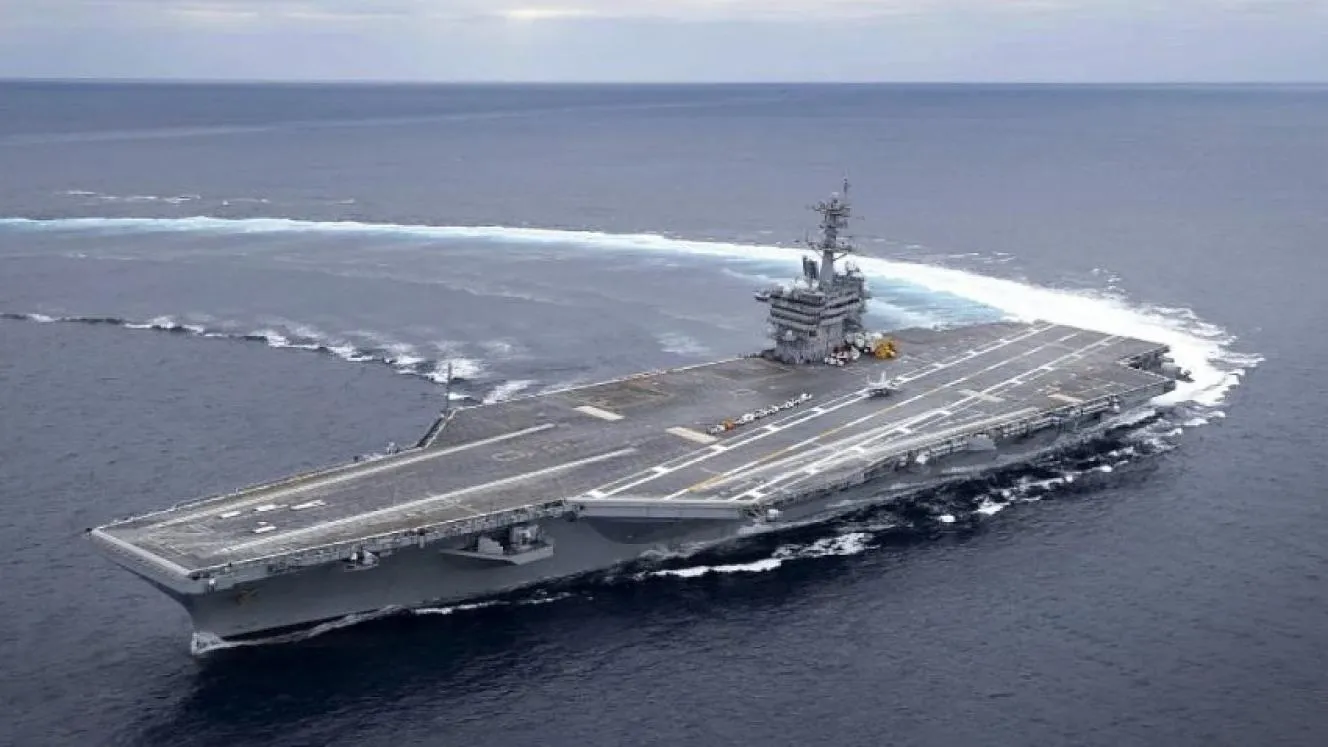
By midday March 5, reports indicated a major US naval presence including two carrier strike groups such as the USS Abraham Lincoln and USS Gerald R. Ford, along with destroyers including USS McFaul.
This dual approach—military deterrence plus insurance guarantees—is deliberate.
Military presence may reduce physical attack risk. Insurance support may reduce commercial paralysis.
One without the other may be insufficient.
Warships cannot force private underwriters to price risk cheaply. Insurance alone cannot stop armed escalation.
Together, they aim to restore movement.
Nearly 200 Tankers Stranded: Why That Matters
Reports suggest roughly 200 crude oil and product tankers are now stranded in the Gulf.
That figure matters for several reasons.
First, stranded tonnage reduces effective shipping supply. Tankers sitting idle are not transporting cargo elsewhere.
Second, delays can distort refinery planning and inventory cycles across importing nations.
Third, if ships cluster in one region waiting for clarity, future congestion can intensify when flows resume.
Fourth, freight rates may rise globally as available vessel supply tightens.
Even short-lived disruptions can create multi-week aftershocks through logistics systems.
Context is everything. While you follow today’s updates, use the Serrari Group Market Index and Marketplace to spot emerging shifts. Need to sharpen your edge? Our Wealth Builder Platform turns these insights into a professional-grade strategy.
Oil Prices, Inflation, and the Consumer
Because around one-fifth of global oil and gas flows through Hormuz, sustained disruption would likely feed quickly into energy markets.
Higher crude prices often ripple outward into fuel costs, transport costs, airline economics, manufacturing inputs, and household inflation.
Central banks watching inflation trends would need to distinguish between temporary geopolitical spikes and sustained structural pressures.
That is not easy.
If markets believe supply disruption could persist, expectations can become self-reinforcing.
In that sense, stabilizing Hormuz traffic is not just a shipping issue—it is macroeconomic policy by other means.
A Critical Perspective: Is This Sustainable?
The US move may calm markets in the short term, but important questions remain.
Can public insurance be priced properly in a fast-changing conflict zone?
If a major loss occurs, who ultimately bears the cost—taxpayers, operators, or future premiums?
Could government-backed cover distort market discipline by encouraging transit through excessively dangerous conditions?
Would allies or competitors respond with parallel schemes?
These are not trivial issues.
Emergency guarantees can stabilize markets, but if prolonged, they can also create moral hazard or politicize commercial shipping.
Why Private Insurers Pulled Back
Private insurers are not ideological actors. They price probability and severity.
If conflict risk rises sharply, premiums increase or capacity withdraws.
That does not necessarily mean catastrophe is certain. It means the uncertainty became difficult to price rationally.
War-risk insurance markets can function under tension. They struggle when scenarios become open-ended.
The reported Iranian threats to target vessels likely shifted underwriting assumptions from theoretical tension toward active hazard.
That changes pricing models dramatically.
What This Means for Asia and Europe
Major Asian importers such as Japan, South Korea, India, and China depend heavily on Gulf energy flows. Europe also remains exposed through refined products, LNG dynamics, and broader commodity pricing.
Even if cargoes continue moving, higher shipping and insurance costs can raise delivered energy prices.
That means countries far from the Gulf still feel the consequences.
Globalization compresses distance. Maritime disruption in one narrow strait can affect factory margins, inflation prints, and household fuel bills worldwide.
What This Means for Africa
Many African economies are highly sensitive to imported fuel prices and freight costs.
If Hormuz disruption drives sustained energy inflation, import-dependent nations may face renewed currency pressure, transport cost increases, and wider fiscal strain through subsidy systems.
Shipping insurance stress can also affect broader trade routes and tanker availability beyond the Gulf.
For African policymakers, this reinforces the strategic importance of energy diversification, refining capacity, and resilient supply chains.
Markets Will Watch Three Signals Next
The first is whether commercial insurers begin restoring private cover at normalized prices.
The second is whether tanker traffic resumes steadily or remains hesitant despite US backing.
The third is whether geopolitical rhetoric escalates into repeated incidents.
If insurance returns and ships move, markets may relax quickly.
If guarantees fail to restart flows, risk premiums could rise further.
Looking Ahead: Finance as a Tool of Geopolitics
This episode highlights a modern reality: states increasingly use financial tools to manage geopolitical crises.
Sanctions, guarantees, export credits, reserve assets, and insurance support now sit alongside naval deployments and diplomacy.
The Hormuz response fits that pattern.
Rather than only projecting force, Washington is projecting balance-sheet confidence.
That may become more common in future crises involving supply chains, commodities, and strategic trade corridors.
Conclusion: The Strait Is Narrow, but the Consequences Are Global
The US decision to offer risk insurance for vessels transiting the Strait of Hormuz is more than a tactical move. It is recognition that the functioning of global trade depends as much on confidence as on cargo.
When insurers retreat, markets seize. When ships stop, energy systems tighten. When chokepoints close, inflation can spread worldwide.
By stepping in, the United States is attempting to reopen not just a waterway, but a chain of trust linking shipowners, insurers, traders, refiners, and consumers.
Whether that trust returns will determine if this becomes a short-lived scare or a much larger economic shock.
Your financial future isn’t something you wait for, it’s something you build.
The real question is: when do you begin?
Move beyond simply staying informed.
Navigate the markets with clarity—track trends through the Serrari Group Market Index, uncover opportunities in the Serrari Marketplace, and build practical knowledge with our Curated Wealth Builder Platform.
Stay connected to what truly matters.
Get daily insights on macro trends and financial movements across Kenya, Africa, and global markets—delivered through the Serrari Newsletter.
Growth opens doors.
Advance your career through professional programs including ACCA, HESI A2, ATI TEAS 7 , HESI EXIT , NCLEX – RN and NCLEX – PN, Financial Literacy!🌟—designed to move you forward with confidence.
See where money is flowing—clearly and in real time.
Track Money Market Funds, Treasury Bills, Treasury Bonds, Green Bonds, and Fixed Deposits, alongside global and African indexes, key economic indicators, and the evolving Crypto and stablecoin landscape—all within Serrari’s Market Index.