A $91M blended finance deal is scaling one of Africa’s largest carbon removal projects in South Africa, combining public and private capital to accelerate ecosystem restoration. The initiative leverages innovative financing structures to reduce risk and attract institutional investment at scale. A long-term carbon offtake agreement with Amazon provides revenue certainty, strengthening the project’s financial viability. By focusing on high-quality, nature-based carbon removal, the project aligns with evolving global standards for integrity in carbon markets. It also supports local economic development through job creation and land restoration. Overall, the deal represents a scalable model for climate finance in emerging markets.
Key Overview
- $91M financing secured for South Africa restoration project
- Combines World Bank outcome bond and private capital
- 50,000-hectare Phase 2 expansion underway
- Backed by long-term Amazon carbon offtake agreement
- Targets 100,000 hectares and 35M tonnes CO₂ removal
Scaling Nature-Based Carbon Removal in Africa
A major step forward in climate investment has been achieved with the expansion of one of Africa’s largest ecosystem restoration initiatives. Backed by $91 million in blended financing, the Spekboom Ecosystem Restoration Project in South Africa is entering its second phase, significantly increasing both its scale and its long-term environmental and economic impact.
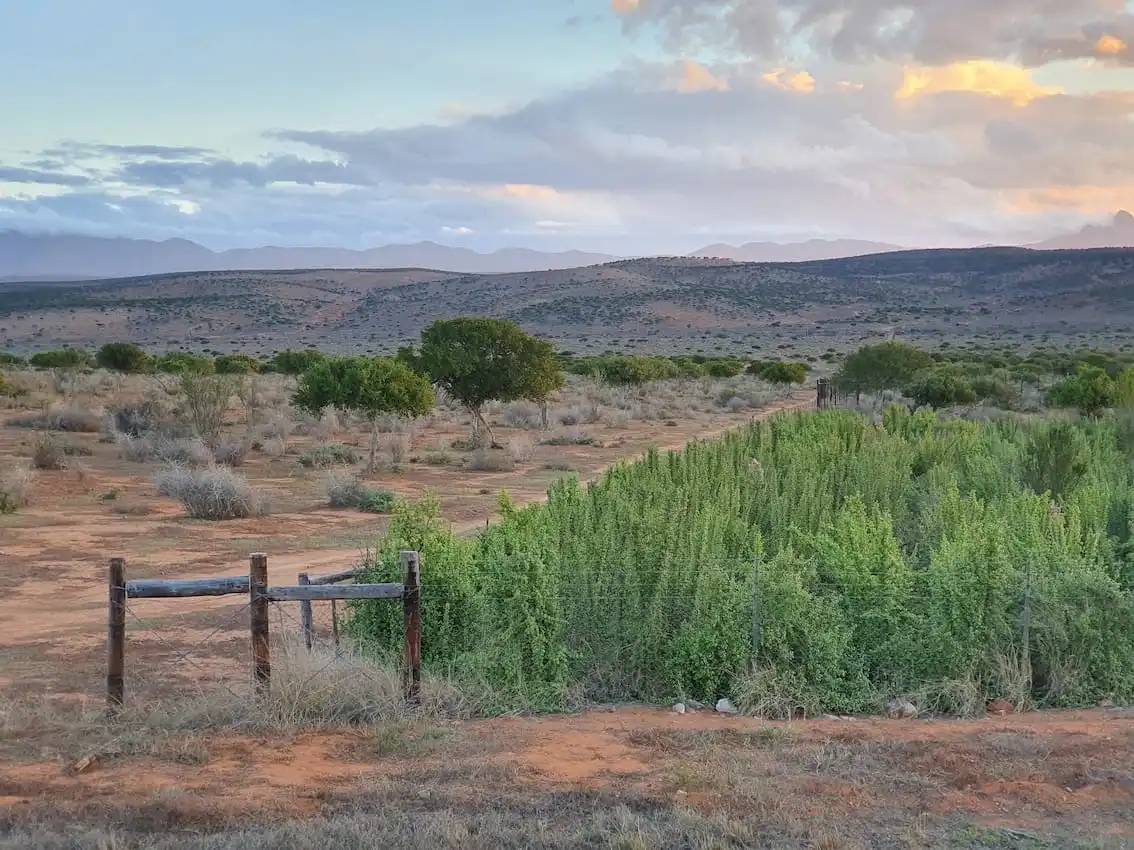
Developed by Imperative, the project focuses on restoring degraded landscapes using spekboom, a resilient native plant species known for its exceptional carbon sequestration capacity. Unlike many conventional reforestation efforts, spekboom restoration is particularly effective in semi-arid environments, making it well-suited to the ecological conditions of South Africa’s Eastern Cape region.
Phase 2 will expand restoration efforts across 50,000 hectares, building on an initial 10,000-hectare Phase 1 launched in 2024. This expansion represents a significant scaling of operations, both in terms of land coverage and carbon removal potential. Over time, the project is expected to deliver millions of tonnes of verified carbon removal, contributing meaningfully to global decarbonization efforts.
Beyond carbon sequestration, the initiative reflects a broader shift toward nature-based solutions (NbS) in climate finance. These projects are increasingly recognized for their ability to deliver multiple co-benefits, including:
- Ecosystem restoration and improved land health
- Biodiversity conservation through habitat regeneration
- Soil stabilization and water retention in degraded areas
- Sustainable livelihoods for local communities through job creation
This multi-dimensional impact is particularly important in emerging markets, where climate solutions must also support economic development and social resilience.
With implementation already underway, the expansion is expected to accelerate the recovery of degraded land while generating high-integrity carbon removal credits over a multi-decade period. These credits are increasingly in demand as global carbon markets shift toward higher standards of verification, permanence, and environmental credibility.
Markets move fast; don’t get left behind. We’ve paired the Serrari Group Market Index with a curated Marketplace and a comprehensive Wealth Builder Course to ensure you have the data—and the skills—to act on it.
Blended Finance Unlocks Large-Scale Investment
At the core of the project’s success is an innovative blended finance structure, designed to combine public and private capital in a way that reduces risk and attracts institutional investment at scale. The $91 million financing package is carefully structured to align financial returns with environmental performance, creating a replicable model for large-scale climate investment.
The funding includes:
- $25 million from a World Bank outcome bond issued by the International Bank for Reconstruction and Development (IBRD) and structured by BNP Paribas
- $66 million from a syndicated streaming facility provided by investors including GenZero, Mirova, Rubicon Carbon, and Bregal Sphere
A defining feature of this structure is the performance-linked outcome bond, where a portion of investor returns is directly tied to the successful delivery of verified carbon removal credits. This creates a powerful alignment of incentives, ensuring that financial performance is dependent on measurable environmental outcomes.
This approach addresses two of the most persistent challenges in climate finance:
- Execution risk, by linking funding to verified project performance
- Demand risk, by ensuring that carbon credits meet high market standards
By mitigating these risks, the blended finance model makes the project significantly more attractive to institutional investors, who typically require predictable returns and strong risk management frameworks.
Importantly, the structure also enables long-term capital deployment, which is essential for nature-based projects that generate value over decades rather than short investment cycles. This marks a shift away from traditional project financing toward more patient, impact-aligned capital.
As a result, the project demonstrates how innovative financial engineering can unlock large-scale investment in sectors that have historically struggled to attract funding, particularly in emerging markets.
Amazon’s Role in Providing Market Certainty
A critical component of the project’s financial viability is a long-term carbon offtake agreement with Amazon. Structured as an Environmental Risk Purchase Agreement, this arrangement provides predictable and stable revenue streams by securing long-term demand for the carbon credits generated by the project.
Demand uncertainty has long been one of the biggest barriers in voluntary carbon markets. Investors are often hesitant to commit capital without clear visibility on future buyers and pricing for carbon credits. By acting as an anchor buyer, Amazon effectively removes this uncertainty, providing confidence that the credits produced will have a guaranteed market.
This has several important implications:
- Improved bankability of the project, making it easier to secure financing
- Enhanced investor confidence, particularly among institutional capital providers
- Greater price stability, reducing exposure to market volatility
For Amazon, the agreement also supports its broader climate commitments, including investments in high-quality carbon removal solutions that go beyond emissions reduction to actively remove CO₂ from the atmosphere.
More broadly, this model—combining verified carbon removal credits with long-term offtake agreements—is increasingly emerging as a blueprint for scaling climate finance. It demonstrates how corporate demand can be leveraged to unlock investment in large-scale environmental projects, creating a direct link between private sector climate commitments and real-world impact.
As carbon markets continue to evolve toward higher integrity standards, such structures are likely to become more common, helping to bridge the gap between capital availability and scalable climate solutions.
Context is everything. While you follow today’s updates, use the Serrari Group Market Index and Marketplace to spot emerging shifts. Need to sharpen your edge? Our Wealth Builder Course turns these insights into a professional-grade strategy.
Expanding Scale and Long-Term Impact
The Spekboom Ecosystem Restoration Project is designed with a long-term horizon, both environmentally and financially, reflecting the nature of carbon removal initiatives that generate value over decades rather than short investment cycles. With Phase 2 now underway, total committed capital across both phases has reached $114 million, supporting restoration efforts across approximately 60,000 hectares in South Africa.
Looking ahead, the project has an ambitious scaling pathway, targeting 100,000 hectares of restored land. At this scale, it would rank among the largest ecosystem restoration initiatives not only in Africa but globally. The long-term vision is to create a durable, nature-based carbon sink capable of delivering meaningful climate impact while supporting local ecological and economic systems.
Over a projected 40-year crediting period, the project is expected to generate more than 35 million tonnes of CO₂ equivalent in verified carbon removal. This positions it as a significant contributor to global carbon removal efforts, particularly as demand grows for high-quality, durable credits that meet increasingly stringent international standards.
The project’s credibility is further reinforced by its BeZero Carbon AApre rating, which indicates low execution risk and strong credit quality. Such ratings are becoming increasingly important as investors and buyers seek independent validation of project performance and risk profiles. In addition, recognition as a UNEP World Restoration Flagship highlights the initiative’s environmental significance and alignment with global restoration goals.
These certifications play a critical role in attracting institutional capital. As carbon markets mature, investors are placing greater emphasis on transparency, verification, and long-term environmental integrity. Projects that can demonstrate these attributes are better positioned to secure funding and achieve premium pricing for their carbon credits.
Addressing Challenges in Carbon Markets
The structure of the Spekboom project directly addresses two of the most persistent and structural challenges in nature-based carbon markets: demand uncertainty and execution risk.
- Demand Uncertainty – Historically, many carbon projects have struggled to secure long-term buyers, leading to volatile pricing and uncertain revenue streams. This project mitigates that risk through long-term offtake agreements with corporate buyers, ensuring stable demand for its carbon credits.
- Execution Risk – Nature-based projects often face challenges related to implementation, monitoring, and verification. By incorporating performance-linked financing mechanisms and robust project design, the initiative reduces these risks and ensures accountability in delivery.
By tackling these challenges head-on, the project demonstrates how innovative financial structuring can unlock capital for large-scale environmental initiatives that might otherwise struggle to attract investment.
This approach is particularly relevant as global carbon markets transition toward higher-integrity credits. Buyers are increasingly prioritizing projects that offer:
- Verifiable and scientifically robust emissions reductions
- Long-term permanence of carbon storage
- Transparent monitoring, reporting, and verification (MRV) systems
As a result, projects like Spekboom are well-positioned to benefit from this shift, as they align closely with evolving market expectations and regulatory trends.
Outlook: A Model for Scalable Climate Investment
The success of the Spekboom Ecosystem Restoration Project highlights the growing importance of blended finance models in scaling climate solutions, particularly in emerging markets. By aligning public and private capital, linking financial returns to environmental performance, and securing long-term demand through corporate partnerships, the project provides a compelling and replicable framework for future investments.
In the near term, the focus will be on the successful execution of Phase 2, including land restoration activities and the generation of verified carbon credits. Maintaining high standards of environmental integrity and meeting performance targets will be critical for sustaining investor confidence and ensuring continued access to capital.
Over the longer term, the initiative has the potential to serve as a blueprint for nature-based climate projects globally. Its integrated approach—combining ecological restoration, financial innovation, and market alignment—offers a scalable model that can be adapted to other geographies and ecosystems.
As demand for carbon removal credits continues to rise, driven by corporate net-zero commitments and tightening climate policies, projects like Spekboom are likely to play an increasingly central role in bridging the global climate finance gap. They demonstrate that it is possible to align environmental restoration, economic development, and investment returns in a way that delivers measurable impact at scale.
Ultimately, the project reflects a broader transformation in climate finance—one where capital is not only mobilized for sustainability, but structured in a way that ensures long-term, verifiable, and meaningful outcomes for both the environment and society.
Your financial future isn’t something you wait for—it’s something you build.
The real question is: when do you begin?
Move beyond simply staying informed.
Navigate the markets with clarity—track trends through the Serrari Group Market Index, uncover opportunities in the Serrari Marketplace, and build practical knowledge with our Curated Wealth Builder Course.
Stay connected to what truly matters.
Get daily insights on macro trends and financial movements across Kenya, Africa, and global markets—delivered through the Serrari Newsletter.
Growth opens doors.
Advance your career through professional programs including ACCA,HESI A2,ATI TEAS 7,HESI EXIT ,NCLEX – RNandNCLEX – PN, Financial Literacy!🌟—designed to move you forward with confidence.
See where money is flowing—clearly and in real time.
Track Money Market Funds, Treasury Bills, Treasury Bonds, Green Bonds, and Fixed Deposits, alongside global and African indexes, key economic indicators, and the evolving Crypto and stablecoin landscape—all withinSerrari’s Market Index.