Shell is entering the EV innovation race with its Triple 10 concept, targeting ultra-fast charging, high efficiency, and low lifecycle emissions. The project reflects a broader industry shift toward practical, scalable electric mobility solutions rather than extreme performance. By focusing on lightweight design and advanced battery cooling, Shell aims to demonstrate how existing technologies can deliver meaningful improvements in everyday EV usability. The concept also highlights growing competition in battery innovation, as companies race to reduce charging times and improve sustainability. While not intended for production, the vehicle serves as a proof of concept for next-generation EV standards. Ultimately, it positions Shell as an active player in the transition from fossil fuels to future mobility.
Key Overview
- Shell unveils Triple 10 Challenge EV concept
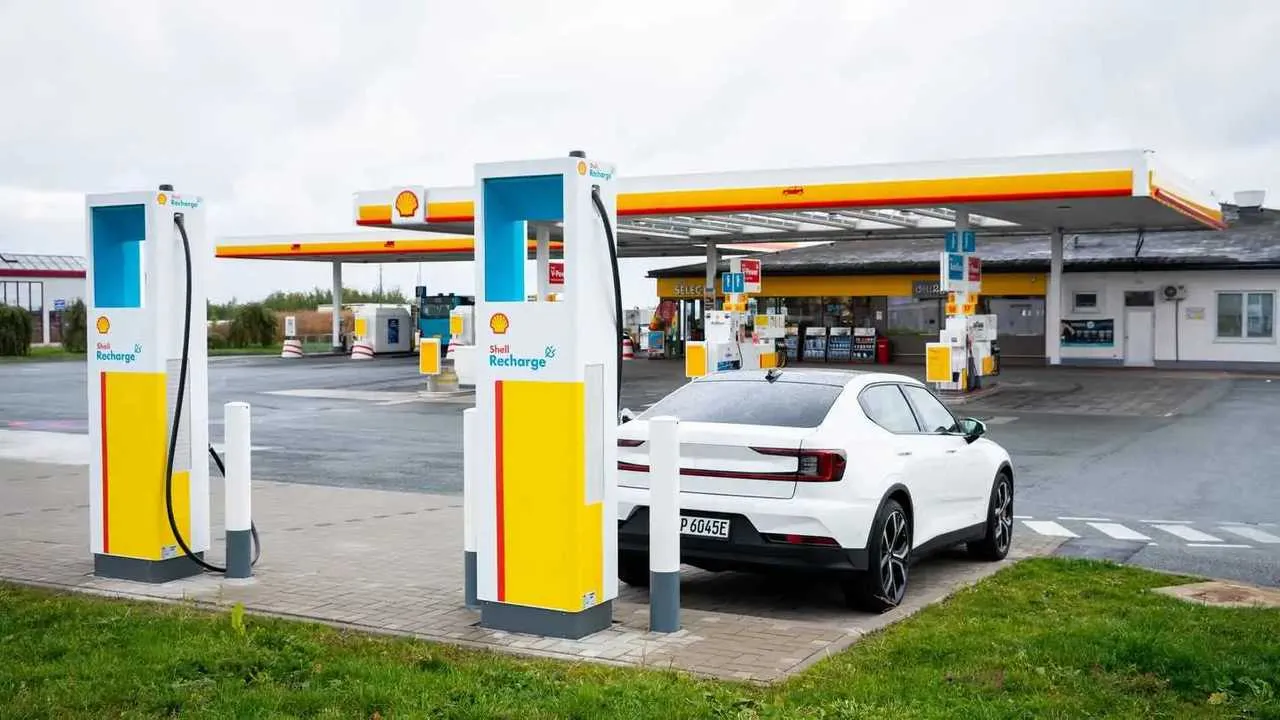
- Targets 10–80% charge in under 10 minutes
- Aims for 10 km/kWh efficiency and <10 tonnes lifecycle emissions
- Lightweight SUV concept with advanced cooling and materials
- Set to debut as a fully functional prototype in June
A New Benchmark for Next-Generation EVs
Shell is stepping further into the electric mobility space with a bold new concept vehicle built around its “Triple 10 Challenge”—a framework designed to redefine what practical, next-generation battery electric vehicles (BEVs) can achieve. Rather than chasing headline-grabbing acceleration figures or luxury features, the initiative is grounded in improving the everyday experience of EV ownership, with a strong emphasis on usability, efficiency, and sustainability.
This approach reflects a broader strategic shift across the automotive industry. As EV adoption accelerates globally, innovation is increasingly being measured not just by peak performance, but by how seamlessly electric vehicles can integrate into daily life. Consumers are placing greater importance on factors such as charging convenience, energy efficiency, total cost of ownership, and environmental impact over the full lifecycle of the vehicle.
Shell’s concept directly addresses these evolving priorities. By focusing on practical performance benchmarks rather than theoretical extremes, the company is positioning the project as a realistic blueprint for the next generation of EVs. The aim is to demonstrate that meaningful improvements in charging speed, efficiency, and sustainability can be achieved using technologies that are already available or close to commercialization.
Set to debut in June as a fully functional, driveable prototype, the vehicle is intended to serve as a proof of concept rather than a design exercise. This distinction is important—unlike many concept cars that showcase futuristic ideas with limited real-world applicability, Shell’s model is built to demonstrate what can be delivered using current, scalable technologies. In doing so, it bridges the gap between innovation and practical deployment, offering insights into how the EV market could evolve in the near term.
Markets move fast; don’t get left behind. We’ve paired the Serrari Group Market Index with a curated Marketplace and a comprehensive Wealth Builder Course to ensure you have the data—and the skills—to act on it.
Breaking Down the Triple 10 Challenge
At the core of the project are three ambitious yet clearly defined targets that shape Shell’s vision for the future of electric mobility:
- Charging Speed: Increase battery charge from 10% to 80% in under 10 minutes
- Energy Efficiency: Achieve more than 10 km per kilowatt-hour
- Sustainability: Limit total lifecycle carbon emissions to under 10 tonnes
Taken together, these goals address some of the most persistent barriers to widespread EV adoption—charging time, energy consumption, and environmental footprint. Each target is designed not only to push technological boundaries but also to deliver tangible benefits for everyday users.
The emphasis on ultra-fast charging is particularly transformative. One of the main concerns among potential EV buyers remains the time required to recharge compared to refueling a conventional vehicle. Reducing charging times to under 10 minutes could significantly narrow this gap, making EVs far more convenient and accessible to a broader range of consumers.
Efficiency is equally critical. Achieving more than 10 km per kWh would represent a substantial improvement over many current EVs, allowing drivers to travel longer distances with less energy. This not only reduces operating costs but also lowers demand on charging infrastructure and electricity grids.
The third pillar—lifecycle sustainability—reflects the growing importance of environmental accountability beyond tailpipe emissions. By targeting a total carbon footprint of under 10 tonnes, Shell is addressing emissions associated with manufacturing, materials, and end-of-life processes, aligning with stricter global sustainability standards.
Collectively, these targets signal a shift toward a more holistic definition of EV performance—one that balances speed, efficiency, and environmental impact.
Lightweight Design and Engineering Innovation
Unlike many concept vehicles that emphasize futuristic styling or experimental features, Shell’s approach is rooted in engineering efficiency and practicality. The design is expected to take the form of a compact B-segment SUV—comparable in size to models like the Volvo EX30 or Nissan Kicks—making it directly relevant to the mass market rather than a niche audience.
One of the most striking aspects of the concept is its ambitious target weight of just 1,000 kilograms, significantly lighter than most contemporary electric vehicles. For context, many current electric SUVs weigh close to or above 1,800 kilograms, largely due to the size and weight of their battery packs.
Achieving such a low weight requires a combination of advanced engineering strategies:
- Extensive use of lightweight composite materials, including carbon fiber
- Implementation of a smaller, highly optimized battery pack
- Streamlined structural design to eliminate unnecessary mass
- Integration of components to reduce redundancy and improve efficiency
Weight reduction plays a critical role in overall vehicle performance. A lighter vehicle requires less energy to move, which directly improves efficiency and extends driving range even with a smaller battery. This creates a virtuous cycle—smaller batteries reduce weight, which in turn improves efficiency, further reducing the need for large energy storage systems.
In addition to improving efficiency, a lighter vehicle can also enhance handling, reduce wear on components, and lower production emissions associated with material use. This aligns closely with the sustainability goals of the Triple 10 Challenge.
Ultimately, Shell’s focus on lightweight design highlights an often-overlooked aspect of EV innovation. While much attention is given to battery size and charging speed, reducing vehicle weight offers a powerful and complementary pathway to improving overall performance and sustainability.
Advanced Battery Cooling for Faster Charging
One of the most significant technological breakthroughs in Shell’s concept vehicle lies in its innovative approach to battery thermal management. Instead of relying on conventional air or liquid cooling systems, the design submerges battery cells in a non-conductive dielectric fluid, enabling far more efficient heat dissipation during both charging and operation.
Thermal management has long been one of the primary constraints in EV performance, particularly when it comes to ultra-fast charging. As charging speeds increase, so does heat generation within the battery pack. Excessive heat can degrade battery cells, reduce efficiency, and even pose safety risks, making effective cooling systems essential for next-generation EVs.
By immersing the cells directly in a cooling fluid, Shell’s system allows for uniform heat distribution across the battery pack, preventing localized hotspots that typically limit charging performance. This enables the battery to sustain higher charging rates for longer periods without compromising safety or durability.
The approach offers several key advantages:
- Improved thermal stability, particularly during high-power charging cycles
- Ability to maintain ultra-fast charging speeds without overheating constraints
- Enhanced battery lifespan and durability, reducing long-term degradation
- Greater energy efficiency, as less energy is lost to heat
In addition, this cooling method could enable the use of smaller battery packs without sacrificing performance, aligning with the broader goal of reducing vehicle weight and improving overall efficiency. While still relatively novel in automotive applications, immersion cooling is gaining traction as a viable solution for high-performance EV systems.
Ultimately, efficient thermal management is a critical enabler of the Triple 10 Challenge. Without it, achieving sub-10-minute charging would be extremely difficult, making this innovation a central pillar of Shell’s approach.
Context is everything. While you follow today’s updates, use the Serrari Group Market Index and Marketplace to spot emerging shifts. Need to sharpen your edge? Our Wealth Builder Course turns these insights into a professional-grade strategy.
Rising Competition in EV Technology
Shell’s concept enters a rapidly evolving and intensely competitive EV landscape, where automakers, battery manufacturers, and technology firms are racing to redefine performance benchmarks. The pace of innovation has accelerated dramatically in recent years, with breakthroughs in battery chemistry, charging infrastructure, and software integration reshaping the industry.
Companies such as BYD and CATL are already pushing the boundaries of what is possible. BYD has demonstrated battery systems capable of charging in as little as five minutes under optimal conditions, while CATL continues to advance battery durability, charging speed, and energy density with its latest technologies.
On the infrastructure side, firms like ChargePoint are deploying ultra-fast charging solutions exceeding 600 kW, significantly reducing charging times and improving convenience for users. These developments highlight how charging speed is becoming a central battleground, alongside traditional metrics such as range, cost, and performance.
At the same time, emerging technologies such as solid-state batteries are moving closer to commercial viability. These next-generation batteries promise higher energy density, improved safety, and faster charging capabilities compared to current lithium-ion systems. If successfully scaled, they could fundamentally reshape the EV landscape.
This competitive environment is driving rapid iteration and innovation across the sector. Automakers are under increasing pressure to not only match but exceed advancements made by both traditional rivals and new entrants. In this context, Shell’s Triple 10 concept represents both a response to and a contribution toward this ongoing technological race.
Sustainability at the Core of EV Development
Beyond performance improvements, the Triple 10 Challenge places strong emphasis on lifecycle sustainability, reflecting a growing shift in how EVs are evaluated. While electric vehicles are often associated with zero tailpipe emissions, their overall environmental impact depends on a much broader set of factors spanning the entire value chain.
Automakers and energy companies are now under increasing pressure to address emissions across:
- Raw material extraction, including mining of lithium, cobalt, and nickel
- Battery production, which is energy-intensive and carbon-heavy
- Manufacturing processes, including vehicle assembly and supply chains
- End-of-life management, including recycling and material recovery
Regulatory frameworks—particularly in Europe—are tightening requirements around transparency, traceability, and emissions reporting. Companies such as Tesla, Mercedes-Benz, and Volkswagen are increasingly disclosing lifecycle emissions data and investing in cleaner supply chains to meet these standards.
Shell’s approach aligns closely with this evolving landscape. By targeting a total lifecycle carbon footprint of under 10 tonnes, the company is addressing sustainability not just as a compliance requirement, but as a core design principle. This includes considerations around material selection, energy efficiency, and manufacturing processes.
Importantly, sustainability is also becoming a key differentiator in consumer decision-making. As awareness of environmental issues grows, buyers are placing greater value on vehicles that demonstrate genuine reductions in environmental impact. This trend is likely to continue shaping market dynamics in the years ahead.
Outlook: Shaping the Future of EV Adoption
While Shell’s concept is not intended for mass production, its broader implications could be substantial. If the Triple 10 targets prove achievable at scale, they could help establish new industry benchmarks—particularly in areas such as charging speed, energy efficiency, and lifecycle sustainability.
In the near term, the concept serves as a technology demonstrator, illustrating how existing innovations can be integrated into a cohesive and practical solution. This has the potential to influence not only automakers but also battery suppliers, infrastructure providers, and policymakers as they develop next-generation mobility ecosystems.
Looking ahead, ultra-fast charging—potentially within 10 minutes—could become a mainstream expectation within the next five years. Such a shift would significantly reduce one of the key barriers to EV adoption, making electric vehicles more comparable to traditional internal combustion engine vehicles in terms of convenience.
At the same time, even if competing technologies surpass Shell’s specific benchmarks, the principles underpinning the Triple 10 Challenge are likely to have lasting influence. Areas such as lightweight design, energy efficiency, and lifecycle sustainability are becoming central to long-term competitiveness in the EV market.
Ultimately, Shell’s initiative reflects a broader transformation underway in the global mobility sector. The transition from fossil fuels to electrified transport is not just about replacing engines—it is about rethinking the entire system, from energy production and storage to vehicle design and user experience.
By positioning itself within this transition, Shell is not only adapting to a changing energy landscape but also actively contributing to shaping the future of mobility—where efficiency, sustainability, and innovation converge to define the next generation of transportation.
Your financial future isn’t something you wait for—it’s something you build.
The real question is: when do you begin?
Move beyond simply staying informed.
Navigate the markets with clarity—track trends through the Serrari Group Market Index, uncover opportunities in the Serrari Marketplace, and build practical knowledge with our Curated Wealth Builder Course.
Stay connected to what truly matters.
Get daily insights on macro trends and financial movements across Kenya, Africa, and global markets—delivered through the Serrari Newsletter.
Growth opens doors.
Advance your career through professional programs including ACCA, HESI A2, ATI TEAS 7 , HESI EXIT , NCLEX – RN and NCLEX – PN, Financial Literacy!🌟—designed to move you forward with confidence.
See where money is flowing—clearly and in real time.
Track Money Market Funds, Treasury Bills, Treasury Bonds, Green Bonds, and Fixed Deposits, alongside global and African indexes, key economic indicators, and the evolving Crypto and stablecoin landscape—all within Serrari’s Market Index.