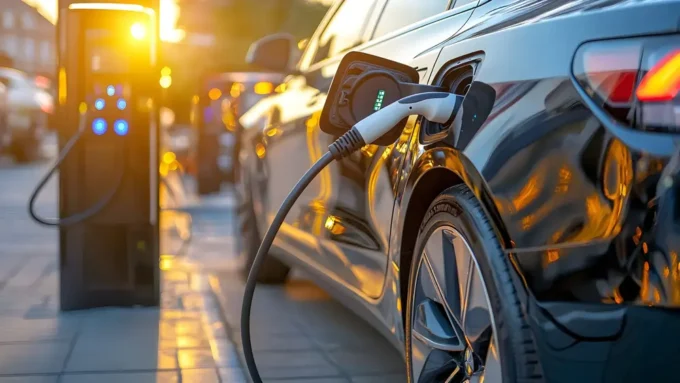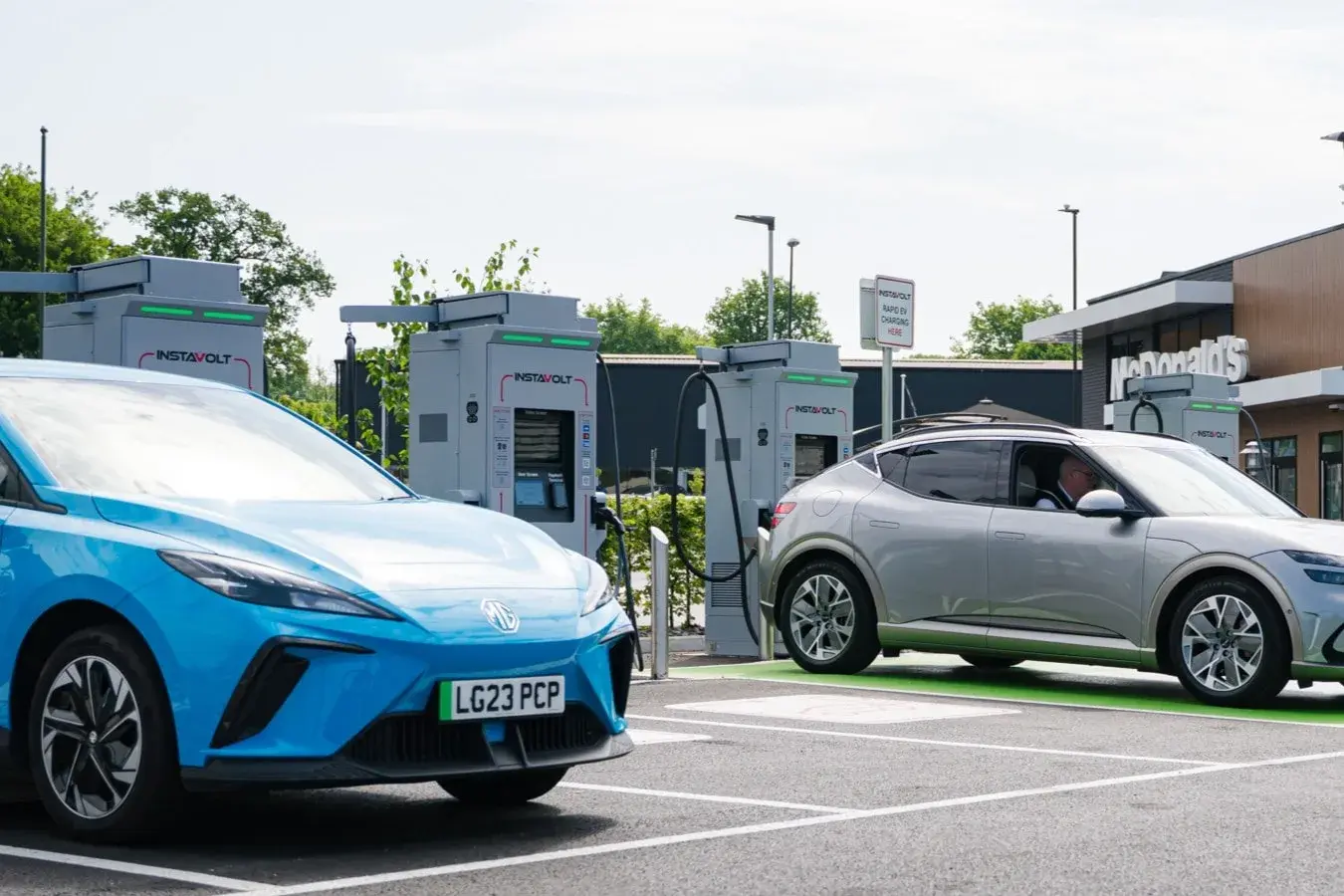
The United Kingdom has surpassed 2 million EV registrations, driven by strong government incentives, falling costs, and expanding charging infrastructure. Support schemes like the Electric Car Grant have helped lower upfront costs and accelerate adoption. Improved vehicle affordability and lower running costs are making EVs increasingly competitive with petrol models. At the same time, rapid expansion of charging networks is enhancing convenience and reducing range anxiety. Together, these factors are accelerating the UK’s transition to electric mobility.
Key Overview
- Over 2 million EVs registered in the UK
- EV registrations up 15% year-on-year
- 100,000+ drivers supported by Electric Car Grant
- Up to £3,750 discount per EV
- Government investing £7.5B in EV transition
A Landmark Moment for the UK’s EV Transition
The United Kingdom has surpassed 2 million registered electric vehicles (EVs), marking a major milestone in its transition toward low-emission transport and signaling a significant shift in the country’s automotive landscape. According to data from the Department for Transport, EV registrations have grown by 15% year-on-year, with March 2026 recording the highest monthly demand on record, underscoring the accelerating pace of adoption.
This rapid growth reflects a convergence of multiple factors, including strong policy support, continuous technological improvements, and a notable shift in consumer attitudes toward sustainability and cost efficiency. As electric vehicles become more accessible, reliable, and practical for everyday use, they are increasingly viewed not just as an alternative, but as a mainstream replacement for traditional petrol and diesel vehicles.
The milestone also reinforces the UK’s position as one of the leading EV markets in Europe, where electrification is being driven by a combination of regulatory frameworks—such as emissions targets and phase-out timelines for internal combustion engines—and evolving market dynamics. The growing presence of EVs on UK roads highlights how quickly the transition is gaining momentum, moving from early adoption to broader market penetration.
Markets move fast; don’t get left behind. We’ve paired the Serrari Group Market Index with a curated Marketplace and a comprehensive Wealth Builder Course to ensure you have the data—and the skills—to act on it.
Government Incentives Accelerate Adoption
A key driver behind the surge in EV adoption is the Electric Car Grant (ECG), a government-backed incentive designed to reduce the upfront cost of purchasing electric vehicles. The scheme has already helped more than 100,000 drivers transition to EVs, offering discounts of up to £3,750 per vehicle, making electric mobility more financially accessible.
By lowering the initial purchase price, the grant has played a crucial role in overcoming one of the most persistent barriers to EV adoption—high upfront costs. Its impact is clearly reflected in the rapid increase in registrations following its introduction, demonstrating how targeted financial incentives can effectively stimulate market demand.
In addition to direct vehicle subsidies, the government has implemented a range of supporting measures to expand charging infrastructure. Renters, landlords, and businesses can access grants of up to £500 for the installation of electric vehicle chargers, helping to reduce the cost of both home and workplace charging solutions. This is particularly important for urban populations and those without private driveways, where access to charging has historically been a challenge.
Taken together, these initiatives illustrate a comprehensive, policy-driven approach to market transformation, where financial incentives, infrastructure investment, and regulatory support work in tandem to accelerate the shift toward cleaner transport technologies. The UK’s strategy demonstrates how coordinated policy frameworks can significantly influence consumer behavior and industry development.
EVs Reach Cost Parity with Petrol Vehicles
One of the most significant developments supporting EV adoption is the shift in cost dynamics. Recent data indicates that electric vehicles are now, on average, cheaper to purchase than petrol models for the first time, marking a critical turning point in the evolution of the market.
Historically, higher upfront costs have been a major barrier to EV adoption, limiting their appeal to early adopters and environmentally motivated consumers. With price parity now emerging, the decision to purchase an EV is increasingly driven by economic considerations rather than environmental concerns alone, broadening its appeal to a much wider segment of the population.
Beyond the purchase price, EVs offer substantial savings in day-to-day operation. The UK government estimates that drivers can save up to £1,400 annually on running costs, particularly when charging at home using lower-cost electricity. These savings are driven by lower fuel costs, reduced maintenance requirements, and fewer moving parts compared to internal combustion engine vehicles.
These economic advantages are further reinforced by external factors such as volatile global fuel prices, which have made petrol and diesel vehicles more expensive to operate. As fuel price uncertainty persists, the relative cost stability of electricity is becoming an increasingly attractive proposition for consumers.
Together, these trends signal a structural shift in the automotive market, where EVs are transitioning from a niche, premium product to a cost-competitive and economically rational choice for everyday drivers.
Expanding Charging Infrastructure Supports Growth
To support the rapidly growing number of EVs on the road, the United Kingdom government is investing heavily in charging infrastructure, recognizing it as a critical enabler of mass adoption. A total of £7.5 billion has been committed to the EV transition, including £600 million specifically allocated to expanding public charging networks and improving nationwide accessibility.
Currently, the UK has more than 119,000 public charging points, with plans to deploy hundreds of thousands more in the coming years. This expansion is essential for addressing one of the most persistent concerns among potential EV buyers—range anxiety—and ensuring that electric mobility is both practical and convenient across urban, suburban, and rural areas.
Notably, the number of charging points is already nearly double the number of petrol pumps, highlighting a fundamental shift in how energy is delivered to vehicles. Unlike traditional refueling infrastructure, EV charging is more decentralized, with growing availability in homes, workplaces, retail centers, and public spaces.
Beyond quantity, the focus is also shifting toward quality and speed of charging, with increased deployment of rapid and ultra-fast chargers that significantly reduce charging times. This is particularly important for long-distance travel and high-usage drivers, where convenience plays a key role in adoption decisions.
The continued expansion of charging infrastructure will be central to sustaining EV growth, especially as adoption moves beyond early adopters to a broader demographic—including drivers without access to private charging. Ensuring widespread, reliable, and affordable access to charging will be a defining factor in the next phase of the UK’s EV transition.
Context is everything. While you follow today’s updates, use the Serrari Group Market Index and Marketplace to spot emerging shifts. Need to sharpen your edge? Our Wealth Builder Course turns these insights into a professional-grade strategy.
Popular Models and Market Competition
The surge in EV adoption is also being driven by a rapidly expanding range of competitive models, offering consumers more choice than ever before. Among the most popular vehicles supported by the Electric Car Grant are:
These models reflect the increasing diversity and maturity of the EV market, with options now available across a wide range of price points, body styles, and performance levels. From compact city cars to family SUVs, consumers are no longer limited in their choice when transitioning to electric mobility.
Technological advancements have also significantly improved the appeal of EVs. Enhancements in battery range, charging speed, and onboard technology are making electric vehicles more practical for everyday use, while digital features and connectivity are elevating the overall driving experience.
As competition intensifies, automakers are investing heavily in research and development, accelerating innovation across the sector. This competitive pressure is driving down costs, improving product quality, and shortening development cycles—further reinforcing the momentum behind EV adoption.
Industry and Policy Perspectives
Government and industry leaders have emphasized the significance of this milestone, framing it as a pivotal moment in the UK’s transition to sustainable transport. UK Transport Secretary Heidi Alexander described the achievement as a “landmark moment”, highlighting the role of £7.5 billion in government funding in supporting the shift toward electric mobility.
Industry experts also point to a combination of structural and market-driven factors underpinning the growth:
- Increased investment in charging infrastructure, improving accessibility and convenience
- Continuous improvements in vehicle performance, affordability, and efficiency
- Growing consumer awareness and acceptance of electric vehicles as a mainstream option
However, despite the strong progress, stakeholders acknowledge that several challenges remain. Ensuring equitable access to EVs is a key concern, particularly for lower-income households and individuals without access to private charging infrastructure. Without targeted policies, there is a risk that the benefits of electrification could be unevenly distributed.
Addressing these challenges will require continued collaboration between government, industry, and financial institutions to develop inclusive solutions—such as expanding public charging, offering targeted subsidies, and improving financing options.
Ultimately, while the UK has made significant strides, the next phase of the transition will depend on ensuring that electric mobility is accessible, affordable, and practical for all segments of society, sustaining momentum toward a fully electrified transport system.
Outlook: Sustaining Momentum in the EV Transition
The United Kingdom’s achievement of surpassing 2 million electric vehicles represents a major milestone, but it also serves as a foundation for the next phase of electrification. While early progress has been driven by policy incentives and early adopters, sustaining momentum will require a more comprehensive and inclusive approach as the market continues to expand.
In the near term, continued government support, infrastructure investment, and technological innovation will be critical in maintaining growth. Expanding charging networks, improving grid capacity, and ensuring affordability will remain top priorities, particularly as EV adoption spreads to a broader and more diverse consumer base.
Over the longer term, the transition to electric mobility is expected to accelerate further, driven by several structural trends:
- Declining battery costs, making EVs increasingly affordable and cost-competitive
- Stricter emissions regulations, pushing both consumers and manufacturers toward cleaner alternatives
- Rising consumer demand for sustainable and low-emission transport solutions
As the market evolves, the focus will shift from early adoption to mass-market penetration, where accessibility, affordability, and convenience become even more critical. This will require more targeted and inclusive policies to ensure that all segments of society—particularly lower-income households and those without access to private charging—can participate in the transition.
At the same time, the integration of EVs into broader energy systems—through smart charging, vehicle-to-grid technologies, and renewable energy integration—will further enhance their role in the energy transition. EVs are increasingly being viewed not just as transport solutions, but as flexible energy assets within a decarbonized economy.
Ultimately, the UK’s progress demonstrates how a combination of policy incentives, market dynamics, and technological advancement can drive rapid transformation in the transport sector. As other countries look to accelerate their own transitions, the UK’s experience offers a practical blueprint for scaling electric mobility while balancing economic, environmental, and social considerations.
Your financial future isn’t something you wait for—it’s something you build.
The real question is: when do you begin?
Move beyond simply staying informed.
Navigate the markets with clarity—track trends through the Serrari Group Market Index, uncover opportunities in the Serrari Marketplace, and build practical knowledge with our Curated Wealth Builder Course.
Stay connected to what truly matters.
Get daily insights on macro trends and financial movements across Kenya, Africa, and global markets—delivered through the Serrari Newsletter.
Growth opens doors.
Advance your career through professional programs including ACCA, HESI A2, ATI TEAS 7 , HESI EXIT , NCLEX – RN and NCLEX – PN, Financial Literacy!🌟—designed to move you forward with confidence.
See where money is flowing—clearly and in real time.
Track Money Market Funds, Treasury Bills, Treasury Bonds, Green Bonds, and Fixed Deposits, alongside global and African indexes, key economic indicators, and the evolving Crypto and stablecoin landscape—all within Serrari’s Market Index.