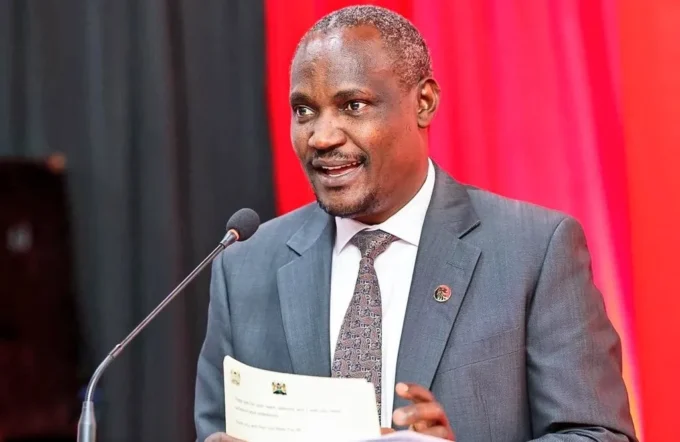
Uganda has called for stronger follow-up on Africa’s development-financing agenda, including implementation of the Sevilla commitments, domestic resource mobilisation and coordinated debt reform. Ambassador Rebecca Amuge Otengo, Uganda’s Permanent Representative to the African Union and the UN Economic Commission for Africa, made the case during a September 18 briefing in Addis Ababa led by ECA Executive Secretary Claver Gatete.
Uganda’s intervention comes as African governments seek to turn the commitments agreed at the Fourth International Conference on Financing for Development into concrete national and regional action while addressing high borrowing costs, constrained fiscal space and persistent financing gaps.
Key Overview
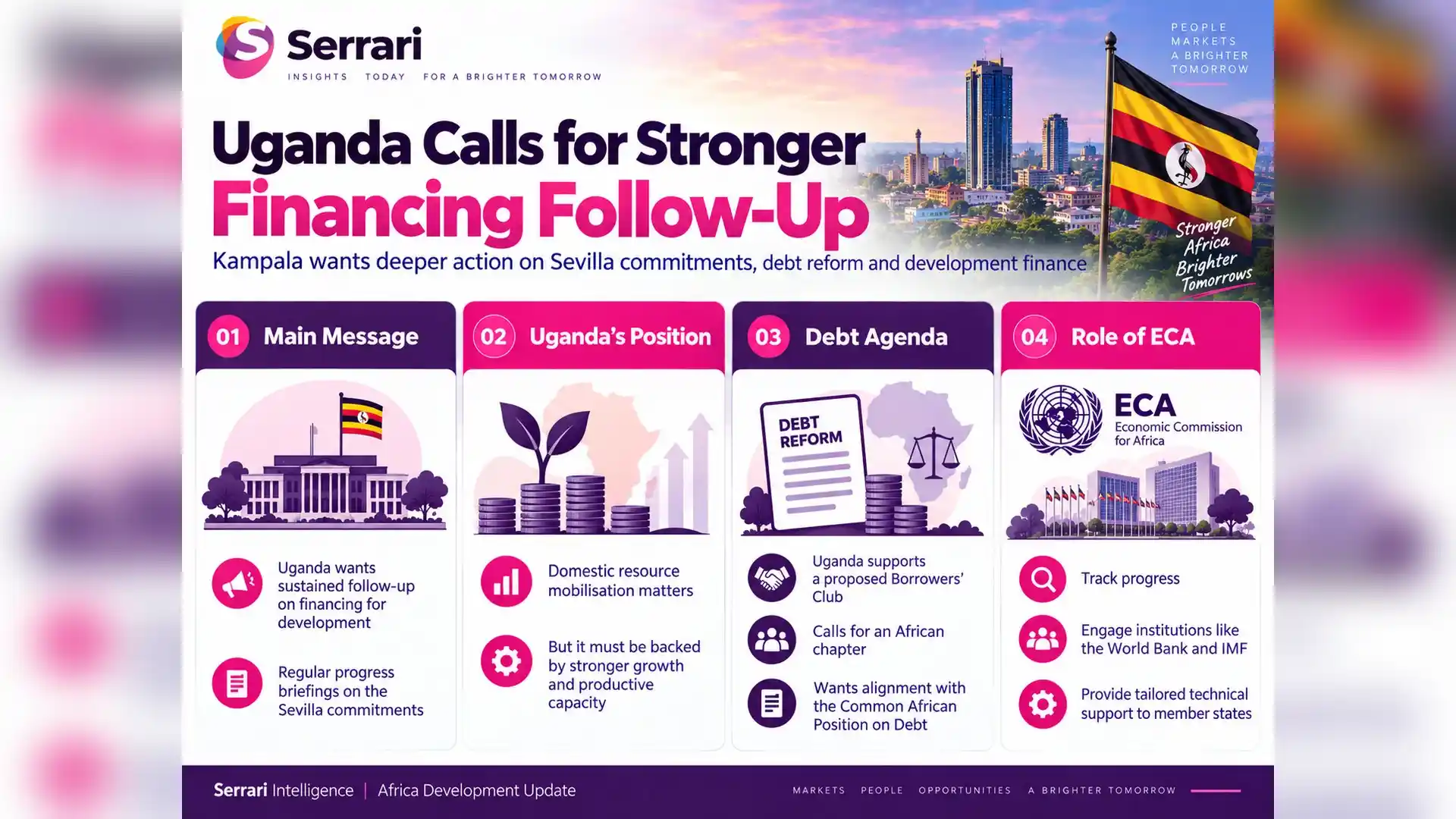
- Uganda wants sustained monitoring of the Sevilla financing commitments and regular progress briefings.
- The country says domestic resource mobilisation must be supported by stronger economic growth and productive capacity.
- Uganda backs a proposed Borrowers’ Club, including an African chapter, to strengthen coordination among debtor countries.
- The initiative should align with the Common African Position on Debt now being advanced by the African Union.
- ECA is being urged to deepen engagement with institutions such as the World Bank and IMF.
- Africa’s financing agenda increasingly focuses on debt sustainability, affordable capital and reform of the global financial architecture.
Uganda Pushes for Stronger Sevilla Follow-Up
Ambassador Otengo made the call during a September 18 briefing in Addis Ababa involving ambassadors, permanent representatives and ECA leadership.
Her intervention focused on ensuring that financing commitments do not end at international declarations. Uganda called for regular follow-up, progress tracking and sustained engagement with major international financial institutions to ensure that African development priorities remain part of the financing agenda.
The Sevilla Commitment was adopted at the Fourth International Conference on Financing for Development in 2025 as a new global framework for closing development-financing gaps and reforming the international financial architecture. Its agenda covers domestic public resources, private investment, international development cooperation, debt, trade and systemic financial reforms.
In July 2026, African policymakers and development partners met in Addis Ababa to move the Sevilla commitments from agreement into implementation, with a particular focus on practical national and regional measures.
Domestic Revenue Alone Will Not Close the Gap
Uganda stressed that domestic resource mobilisation remains central to sustainable development financing, but argued that tax and other domestic revenues must be supported by faster economic growth and greater productive capacity.
That distinction matters because raising more revenue from economies with narrow tax bases, high informality or weak productivity has limits. Increasing domestic resources over time depends partly on expanding businesses, employment, exports, infrastructure and investment so that governments have a broader economic base from which to raise revenue.
Uganda has already told the 2026 Financing for Development Forum that it is aligning financing options with national development priorities, using a mix of domestic revenue, grants, debt, climate finance, blended finance and infrastructure bonds.
The wider global environment remains difficult. The 2026 financing report warned that developing economies face a continuing financing squeeze driven by high debt-service burdens, falling aid, weak tax revenues and insufficient private investment.
Context is everything. Stay ahead of shifting trends with today’s market updates, and uncover emerging opportunities using the Serrari Group Market Index and Marketplace. Then, take control of your own financial future by exploring our Money & Life Reset Transformation Blueprint ™ to build stronger habits, create better systems, and design a path toward lasting wealth.
Borrowers’ Club Could Strengthen Africa’s Voice
Uganda also expressed support for a proposed Borrowers’ Club and the creation of an African chapter. The idea is to give borrowing countries a platform to coordinate positions, exchange experiences and strengthen their collective voice in international discussions on debt and financial reform.
The Ugandan delegation said the proposal should be closely aligned with the emerging Common African Position on Debt and developed through cooperation between ECA and the African Union Commission.
That position is already moving into implementation. In July, African policymakers met in Harare to advance a coordinated approach to debt sustainability and reform, with discussions covering access to affordable financing, debt-management reforms and a stronger African role in global financial governance.
The African approach reflects concerns that existing debt-restructuring mechanisms can be slow, complex and difficult to coordinate across different creditor groups. A common position is intended to give African governments greater negotiating coherence while strengthening debt-management practices at national level.
ECA’s Role Extends Beyond Policy Advice
Uganda also highlighted ECA’s role in tracking progress and helping African governments engage institutions such as the World Bank and IMF.
ECA has increasingly positioned itself as both a policy adviser and a coordination platform on development finance. Its work includes technical assistance, debt analysis, domestic resource mobilisation, capital-market development and support for African-led financing mechanisms.
The commission also supports the Sustainable Debt Coalition, an African-led platform focused on affordable financing, stronger creditworthiness and greater coordination among sovereign borrowers.
Gatete told member states that ECA would continue providing tailored technical and analytical support aligned with national priorities.
From Commitments to Implementation
Uganda’s message reflects a wider shift in Africa’s development-financing debate from negotiating commitments toward measuring whether they are actually implemented.
For African governments, the challenge now spans several fronts: raising more domestic revenue without undermining growth, attracting private investment, improving access to concessional and long-term capital, managing debt sustainably and securing a stronger voice in global financial institutions.
The Sevilla process, the Common African Position on Debt and proposals such as a Borrowers’ Club all point toward the same objective — improving Africa’s ability to finance development while reducing vulnerability to expensive, fragmented and unpredictable sources of capital.
Sources: Uganda Broadcasting Corporation / Nile Post / United Nations / United Nations Economic Commission for Africa / African Union
Your financial future isn’t something you wait for—it’s something you build.
The real question is: when do you begin?
Move beyond simply staying informed.
Navigate the markets with clarity—track trends through the Serrari Group Market Index, uncover opportunities in the Serrari Marketplace, and build practical knowledge with our Curated Wealth Builder Platform.
Stay connected to what truly matters.
Get daily insights on macro trends and financial movements across Kenya, Africa, and global markets—delivered through the Serrari Newsletter.
Growth opens doors.
Advance your career through professional programs including ACCA, HESI A2, ATI TEAS 7 , HESI EXIT , NCLEX – RN and NCLEX – PN, Financial Literacy!🌟—designed to move you forward with confidence.
See where money is flowing—clearly and in real time.
Track Money Market Funds, Treasury Bills, Treasury Bonds, Green Bonds, and Fixed Deposits, alongside global and African indexes, key economic indicators, and the evolving Crypto and stablecoin landscape—all within Serrari’s Market Index.