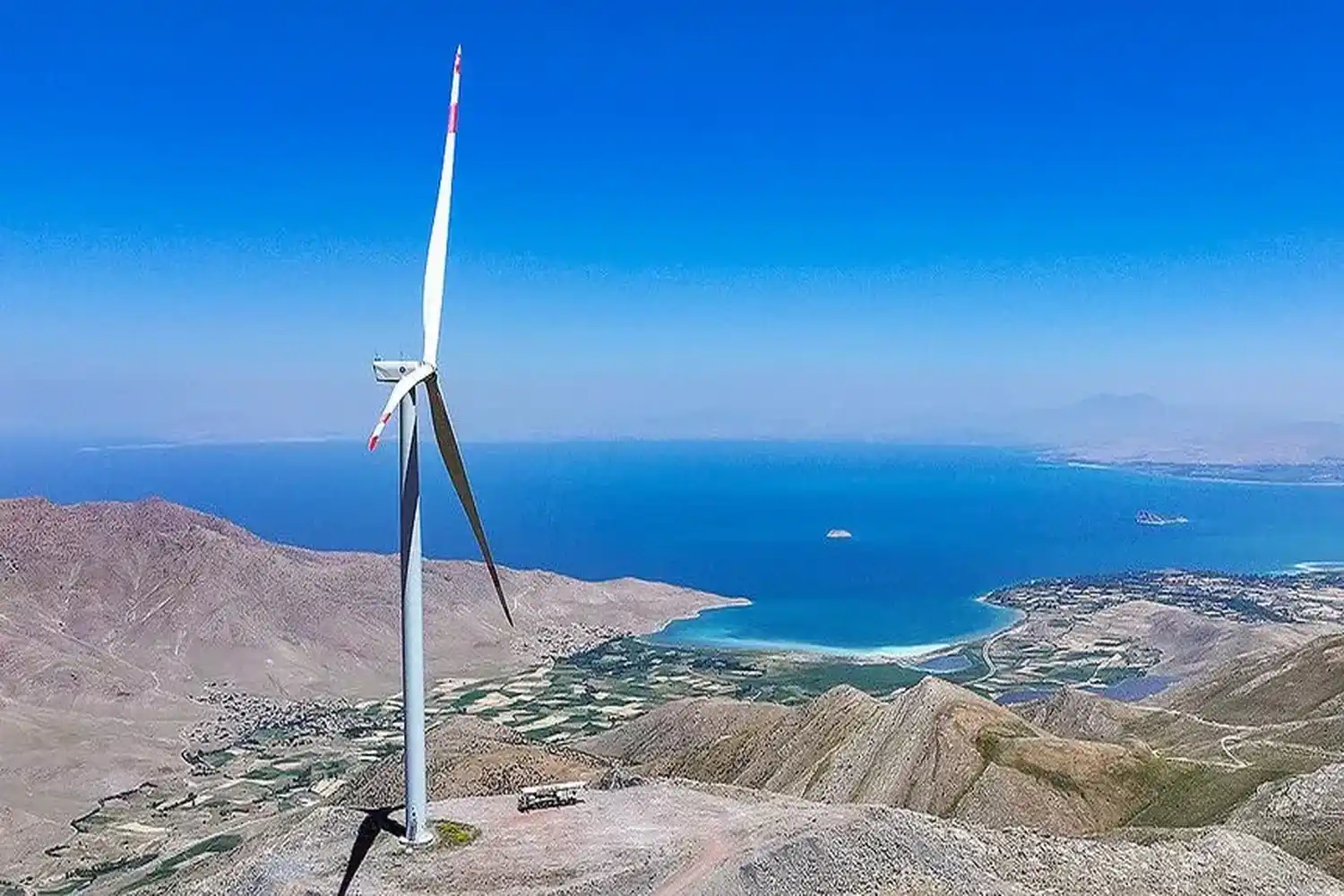
Türkiye is preparing to unveil a revised National Energy Plan on November 5, 2026, extending its energy strategy through 2040. The plan is expected to strengthen renewable energy ambitions, expand electrification and address the infrastructure needed to integrate more clean electricity. The government has set a target of meeting approximately 70% of the country’s energy needs from renewable sources by 2040 and maintaining its broader ambition of achieving a carbon-neutral economy by 2053. Grid investment, energy efficiency and domestic equipment manufacturing are expected to play important roles in delivering these objectives.
Key Overview
- Plan announcement: November 5, 2026.
- Renewable energy target: Approximately 70% of energy needs by 2040.
- Climate ambition: Carbon neutrality by 2053.
- Existing wind and solar capacity: More than 44 gigawatts (GW).
- Earlier capacity target: 120 GW of combined wind and solar capacity by 2035.
- Energy efficiency investment: $20 billion planned for 2024–2030.
- Grid infrastructure: Investment requirements are expected to increase as planning extends to 2040.
Türkiye Prepares a New National Energy Plan
Türkiye is preparing to revise its national energy strategy as it seeks to strengthen energy security, reduce dependence on imported energy and support its longer-term climate objectives.
The revised National Energy Plan is scheduled to be presented on November 5. The announcement is expected to establish stronger targets extending beyond the country’s existing 2035 planning horizon and towards 2040.
The updated strategy comes as Türkiye faces rising electricity demand, growing interest in electrification and the need to expand domestic energy production. Renewable energy is central to this approach because it can diversify electricity generation and reduce exposure to imported fossil fuels.
The government has also linked its energy planning to its 2053 net-zero emissions target. Achieving that objective will require changes across electricity generation, industry, buildings and transport, alongside improvements in energy efficiency.
The revised plan is therefore expected to address not only the amount of renewable energy Türkiye wants to develop, but also the infrastructure and policies required to integrate it into the wider economy.
Renewable Energy Target Reaches 70% by 2040
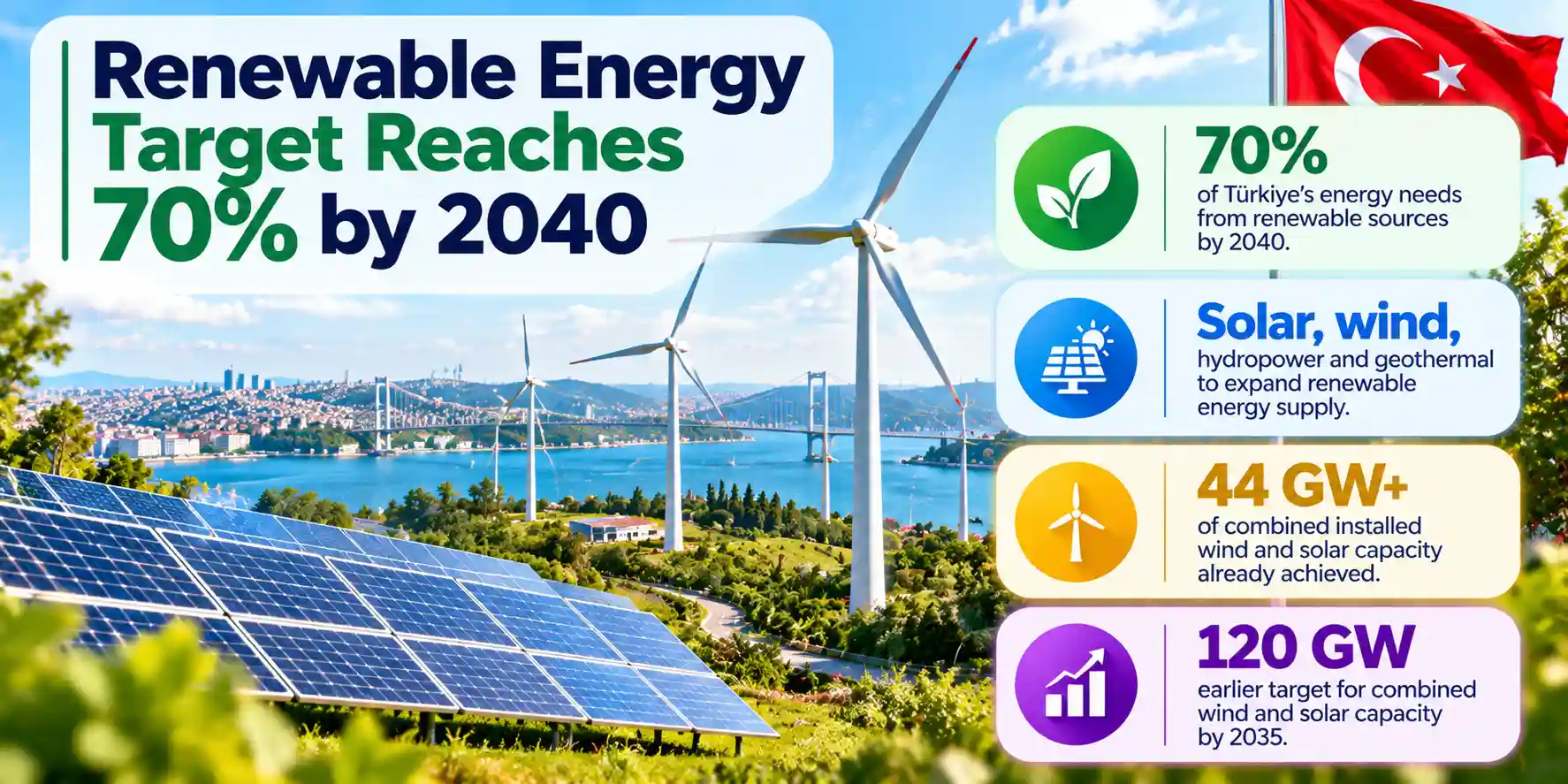
One of the country’s most significant stated ambitions is to obtain approximately 70% of its energy needs from renewable sources by 2040. The target was announced by Energy and Natural Resources Minister Alparslan Bayraktar as part of the government’s broader energy strategy.
Türkiye intends to develop a combination of solar, wind, hydropower and geothermal resources. These technologies offer different generation characteristics and could help diversify the country’s energy supply.
Solar and wind are particularly important to the expansion of renewable electricity capacity. Currently, Turkey’s combined wind and solar installed capacity has surpassed 44 gigawatts.
By 2035, the country aims to increase this capacity to 120 gigawatts.
The new planning horizon is expected to introduce stronger ambitions extending from 2035 to 2040. However, the final capacity targets and the contribution expected from individual technologies should not be assumed until the revised plan is officially published.
Increasing renewable generation could help reduce the role of imported fossil fuels in the energy mix. Nevertheless, the transition will require coordinated investment in transmission networks, storage, flexible generation and electricity market infrastructure.
Grid Investment Becomes a Critical Priority
Expanding renewable energy capacity will require substantial investment in Türkiye’s electricity transmission and distribution networks. Solar and wind generation can fluctuate depending on weather conditions, making grid flexibility, energy storage and reliable connections increasingly important as renewable penetration rises.
Türkiye’s transmission and distribution investment requirements were previously estimated at $80 billion through 2035. These requirements are expected to increase as the country’s energy planning extends to 2040.
The investment will be important for connecting new renewable power plants to consumers and ensuring that electricity can move efficiently between regions. Without sufficient grid capacity, newly installed renewable generation could face connection constraints or curtailment, limiting the amount of clean electricity delivered.
Grid development will also need to accommodate growing electricity demand as households, businesses and industrial facilities increasingly switch to electricity for activities previously powered by fossil fuels.
The revised plan is expected to place greater emphasis on infrastructure alongside generation targets. This reflects the reality that renewable energy expansion depends not only on building new solar and wind facilities, but also on ensuring that the electricity system can accommodate their output reliably.
Context is everything. Stay ahead of shifting trends with today’s market updates, and uncover emerging opportunities using the Serrari Group Market Index and Marketplace. Then, take control of your own financial future by exploring our Money & Life Reset Transformation Blueprint ™ to build stronger habits, create better systems, and design a path toward lasting wealth.
Energy Efficiency and Electrification Support the Transition
Türkiye is also pursuing energy efficiency as a way to manage rising demand and reduce energy waste. The government has planned USD20bn in energy efficiency between 2024 and 2030.
Efficiency improvements can help reduce the amount of energy needed to provide the same services, from industrial production to heating, cooling and lighting. This can lower energy costs for consumers and businesses while easing pressure on generation and network infrastructure.
Electrification is another central element of the country’s developing strategy. Expanding the use of electricity in transport, buildings and industry could reduce direct fossil fuel consumption, particularly as electricity generation becomes cleaner.
However, electrification will also increase demand for electricity. Türkiye will therefore need to coordinate renewable generation, grid upgrades and efficiency measures to ensure that the transition remains reliable and affordable.
The revised National Energy Plan is expected to provide a more comprehensive framework for aligning these priorities as the country approaches 2040.
Domestic Manufacturing Creates Industrial Opportunities
Türkiye’s energy transition could also support domestic manufacturing by increasing demand for renewable energy equipment and related infrastructure.
Ozkaya also said domestic manufacturing is gaining strength, with local content approaching 100 percent in hydropower equipment, nearly 90 percent in solar and 60 to 65 percent in wind. The ministry is working on additional incentives to ease competitive pressures on the sector.
These capabilities could help Turkish manufacturers participate in future renewable energy projects, support local supply chains and reduce reliance on imported equipment. Further investment may also create opportunities in grid technology, storage systems and electrification-related industries.
Nevertheless, maintaining competitiveness will be important as manufacturers face changing technology costs and competition in international markets. The government is working on additional incentives to address pressures affecting the sector.
Outlook
Türkiye’s revised National Energy Plan could establish a more ambitious framework for renewable energy deployment, electrification and infrastructure investment through 2040. Its success will depend on translating national targets into practical projects, financing commitments and policies that support implementation.
The November 5 announcement will be an important milestone, particularly for clarifying how the government intends to build on its existing renewable energy ambitions. Investors, energy developers and equipment manufacturers will be watching for specific capacity targets, grid investment priorities and implementation timelines.
Achieving the country’s renewable energy and carbon-neutrality objectives will require sustained coordination across electricity generation, networks, industry and transport. The revised plan’s significance will ultimately depend on whether it accelerates investment and delivers measurable progress towards a more secure, efficient and lower-carbon energy system.
Frequently Asked Questions
1. When will Türkiye announce its revised National Energy Plan?
The plan is scheduled to be presented on November 5, 2026, with stronger energy targets extending through 2040.
2. What is Türkiye’s renewable energy target for 2040?
Türkiye aims to meet approximately 70% of its energy needs from renewable sources by 2040.
3. How much investment is needed for Türkiye’s electricity grid?
Transmission and distribution investment requirements were previously estimated at US$80 billion through 2035, with further needs expected as planning extends to 2040.
4. What is Türkiye’s long-term climate goal?
Türkiye aims to achieve a carbon-neutral economy by 2053, supported by renewable energy expansion, energy efficiency and electrification.
SOURCES: IndexBox | Enerdata | OGN News | Daily Imroz
Your financial future isn’t something you wait for—it’s something you build.
The real question is: when do you begin?
Move beyond simply staying informed.
Navigate the markets with clarity—track trends through the Serrari Group Market Index, uncover opportunities in the Serrari Marketplace, and build practical knowledge with our Curated Wealth Builder Platform.
Stay connected to what truly matters.
Get daily insights on macro trends and financial movements across Kenya, Africa, and global markets—delivered through the Serrari Newsletter.
Growth opens doors.
Advance your career through professional programs including ACCA, HESI A2, ATI TEAS 7 , HESI EXIT , NCLEX – RN and NCLEX – PN, Financial Literacy!🌟—designed to move you forward with confidence.
See where money is flowing—clearly and in real time.
Track Money Market Funds, Treasury Bills, Treasury Bonds, Green Bonds, and Fixed Deposits, alongside global and African indexes, key economic indicators, and the evolving Crypto and stablecoin landscape—all within Serrari’s Market Index.