The new Amundi tokenised money market fund initiative marks a major step in the integration of blockchain technology into traditional asset management. Developed in collaboration with Ant International and CACEIS, the tokenised share classes are designed to support real-time treasury management and facilitate faster, borderless financial transactions.
Key Overview
- Amundi has launched tokenised share classes for its Money Market Fund – Short Term.
- The share classes are denominated in euros and U.S. dollars.
- The initiative was developed specifically for Ant International.
- The collaboration follows a memorandum of understanding signed in 2025.
- Ant International has used blockchain technology for treasury management since 2019.
- Amundi manages approximately €2.4 trillion in assets.
- CACEIS holds €5.9 trillion in assets under custody.
- The project aims to enable real-time treasury solutions.
- Blockchain technology supports the minting and burning of digital shares.
- The initiative highlights growing interest in tokenised assets and digital finance.
Tokenised Money Market Fund Marks New Stage in Digital Finance
The launch of a tokenised money market fund by Amundi represents another milestone in the evolution of blockchain-based investment products.
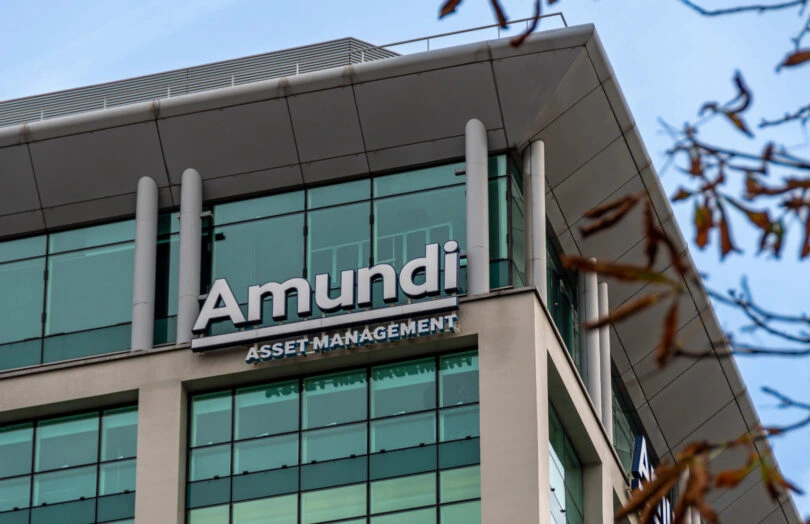
Europe’s largest asset manager announced the creation of tokenised share classes for its Amundi Money Market Fund – Short Term in partnership with asset servicing firm CACEIS and financial technology company Ant International.
The new share classes are denominated in euros and U.S. dollars and were developed specifically for Ant International as part of a broader effort to explore blockchain-enabled treasury management and investment solutions.
The initiative reflects the growing convergence between traditional asset management and digital technologies.
As financial institutions increasingly seek greater efficiency and real-time capabilities, tokenisation is emerging as one of the most promising innovations within global capital markets.
Amundi Tokenised Money Market Fund Introduces Digital Share Classes
The newly launched Amundi tokenised money market fund represents a practical application of blockchain technology within the investment industry.
The initiative follows a memorandum of understanding signed between Amundi and Ant International in late 2025.
The agreement focused on exploring blockchain applications that could improve treasury operations and support tokenised investment products.
Under the arrangement, Amundi created digital share classes linked to its existing short-term money market fund.
These tokenised units maintain exposure to traditional money market assets while benefiting from blockchain infrastructure that enables more efficient issuance and transfer processes.
The development highlights how established financial institutions are increasingly adopting digital technologies to enhance operational efficiency.
For Amundi, the project represents another step toward expanding real-world use cases for tokenisation.
Context is everything. Stay ahead of shifting trends with today’s market updates, and uncover emerging opportunities using the Serrari Group Market Index and Marketplace. Then, take control of your own financial future by exploring our Money & Life Reset Transformation Blueprint ™ to build stronger habits, create better systems, and design a path toward lasting wealth.
Ant International Pursues Real-Time Treasury Solutions
The partnership with Ant International reflects the company’s broader vision for digital financial infrastructure.
Ant International has utilized blockchain systems for internal treasury management since 2019 and continues pursuing technologies capable of enabling faster and more efficient money movement.
The company aims to build a future in which funds can move instantly across borders with minimal friction.
According to company executives, blockchain and artificial intelligence have the potential to transform treasury operations for global corporations.
Real-time liquidity management and seamless settlement processes are among the key objectives of the initiative.
The collaboration with Amundi demonstrates how fintech companies and traditional asset managers are working together to develop next-generation financial products.
As treasury functions become increasingly digitized, blockchain-based solutions are expected to play a larger role.
Digital Money Market Fund Supports Treasury Innovation
The launch of a digital money market fund highlights the expanding role of tokenisation within liquidity management.
Money market funds have traditionally been used by corporations and institutional investors seeking stability, liquidity, and short-term returns.
Tokenization introduces additional efficiency by enabling digital ownership structures and potentially reducing settlement times.
For corporate treasurers, faster transaction processing and improved transparency can enhance liquidity management and operational flexibility.
The latest initiative seeks to combine the characteristics of conventional money market funds with the technological advantages offered by blockchain networks.
This approach may ultimately create new opportunities for treasury management and cash optimization.
As institutional adoption of digital technologies grows, tokenised fund structures could become increasingly common.
Blockchain Finance Gains Momentum
The latest development highlights the broader expansion of blockchain finance across the investment industry.
Financial institutions worldwide are experimenting with tokenisation as a way to improve market infrastructure and reduce inefficiencies.
Blockchain technology enables assets to be represented digitally while maintaining secure ownership records and transparent transaction histories.
Supporters argue that tokenisation can streamline processes traditionally dependent on intermediaries and manual procedures.
The collaboration involving Amundi, CACEIS, and Ant International demonstrates how blockchain applications are moving beyond experimentation toward commercial implementation.
As adoption accelerates, blockchain finance could reshape multiple areas of asset management, payments, and treasury operations.
The technology’s ability to support real-time transactions remains one of its most attractive features.
Tokenised Assets Continue Expanding Across Markets
Interest in tokenised assets has increased significantly in recent years.
Financial institutions are exploring tokenisation across a wide range of asset classes, including bonds, equities, money market instruments, and real estate.
Tokenization allows ownership interests to be represented digitally, potentially improving accessibility, efficiency, and liquidity.
Amundi’s latest initiative illustrates how established asset managers are embracing these opportunities.
By leveraging blockchain infrastructure, tokenised assets can support faster settlement processes and more flexible transaction mechanisms.
Many market participants view tokenisation as one of the most important developments shaping the future of capital markets.
As regulatory frameworks evolve and technology matures, tokenised products are expected to become increasingly integrated into mainstream finance.
Money Market Funds Enter the Digital Era
Traditional money market funds have long played a critical role in short-term liquidity management.
The introduction of tokenised share classes represents a significant evolution in how these products are structured and distributed.
Amundi currently manages approximately €2.4 trillion in assets, making it one of the world’s largest asset managers.
Meanwhile, CACEIS oversees €5.9 trillion in assets under custody and €3.7 trillion in assets under administration.
Their involvement underscores the scale and institutional support behind the initiative.
Through its role as transfer and tokenisation agent, CACEIS enables the creation and redemption of digital shares, commonly referred to as minting and burning.
This infrastructure provides the technological foundation necessary to support blockchain-enabled fund operations.
Why Tokenisation Matters for Financial Markets
Tokenization offers several potential advantages for investors and institutions.
Real-time settlement capabilities may reduce operational delays and improve liquidity management.
Digital ownership structures can enhance transparency and simplify administrative processes.
Cross-border transactions may also become more efficient, reducing costs associated with traditional financial infrastructure.
These benefits explain why major financial institutions are increasingly investing in blockchain-related initiatives.
Although widespread adoption remains in its early stages, projects such as Amundi’s tokenised money market fund demonstrate the practical applications of the technology.
As digital transformation accelerates, tokenisation is expected to become a central component of future financial systems.
Conclusion
The launch of the tokenised money market fund by Amundi, CACEIS, and Ant International marks another significant step in the evolution of blockchain finance. By combining traditional money market investments with digital infrastructure, the initiative aims to support real-time treasury management and more efficient financial operations.
As institutional interest in tokenised assets continues growing, projects like this demonstrate how blockchain technology is gradually moving into mainstream asset management. With major players supporting the development, tokenisation is increasingly positioned to reshape the future of global finance.
FAQs
1. What is a tokenised money market fund?
A tokenised money market fund is a traditional money market fund whose ownership units are represented digitally using blockchain technology. This approach allows investors and institutions to benefit from faster settlement processes, improved transparency, and enhanced operational efficiency.
2. Why did Amundi launch tokenised share classes?
Amundi developed the tokenised share classes in collaboration with Ant International and CACEIS to explore blockchain applications for treasury management and investment solutions. The initiative aims to support real-time liquidity management and more efficient cross-border financial operations.
3. How long has Ant International used blockchain technology?
Ant International has utilized blockchain infrastructure for internal treasury management since 2019. The company believes blockchain and artificial intelligence can help create real-time solutions for corporate treasury functions and facilitate instant global money movement.
4. Why are tokenised assets becoming popular?
Tokenised assets offer several potential benefits, including faster transactions, greater transparency, improved efficiency, and enhanced accessibility. As financial institutions seek modern solutions for managing assets and payments, tokenisation is increasingly viewed as a key innovation shaping the future of financial markets.
Sources: Market Screener, Fintech Global, Tn Global, Fintech News Network, Ledger Insights
Your financial future isn’t something you wait for—it’s something you build.
The real question is: when do you begin?
Move beyond simply staying informed.
Navigate the markets with clarity—track trends through the Serrari Group Market Index, uncover opportunities in the Serrari Marketplace, and build practical knowledge with our Curated Wealth Builder Platform.
Stay connected to what truly matters.
Get daily insights on macro trends and financial movements across Kenya, Africa, and global markets—delivered through the Serrari Newsletter.
Growth opens doors.
Advance your career through professional programs including ACCA, HESI A2, ATI TEAS 7 , HESI EXIT , NCLEX – RN and NCLEX – PN, Financial Literacy!🌟—designed to move you forward with confidence.
See where money is flowing—clearly and in real time.
Track Money Market Funds, Treasury Bills, Treasury Bonds, Green Bonds, and Fixed Deposits, alongside global and African indexes, key economic indicators, and the evolving Crypto and stablecoin landscape—all within Serrari’s Market Index.