Affordable Housing Levy Kenya collections are mandatory monthly contributions used to finance affordable housing and related infrastructure. The issue before Parliament is not whether the levy exists, but whether its collections and spending should be independently scrutinised by the Controller of Budget. The Affordable Housing Act allows the Fund to support housing projects, institutional housing, social infrastructure and physical infrastructure. It also allows the Board, with Treasury approval, to invest income not immediately required. That makes transparent reporting important for employees, employers, developers, contractors, banks and real-estate investors exposed to government-backed housing delivery. (Kenya Law)
Key Overview
- Employees contribute 1.5% of gross salary.
- Employers match with another 1.5%.
- The combined formal-employment contribution is 3%.
- KRA collects the Affordable Housing Levy.
- The levy is due by the ninth working day after the relevant month.
- Late remittance attracts a 3% penalty on unpaid funds for every month or part month the amount remains unpaid.
- MPs are questioning whether the levy’s legal classification weakens Controller of Budget oversight.
- Parliament’s current debate refers to about KSh63 billion annually.
- Treasury had earlier raised the current fiscal-year collection projection to about KSh97 billion.
- The difference strengthens the case for clearer, timely and independently verified reporting. (Kenya Revenue Authority)
Kenya Housing Levy Faces New Parliamentary Oversight Push
Parliament Is Targeting the Oversight Gap
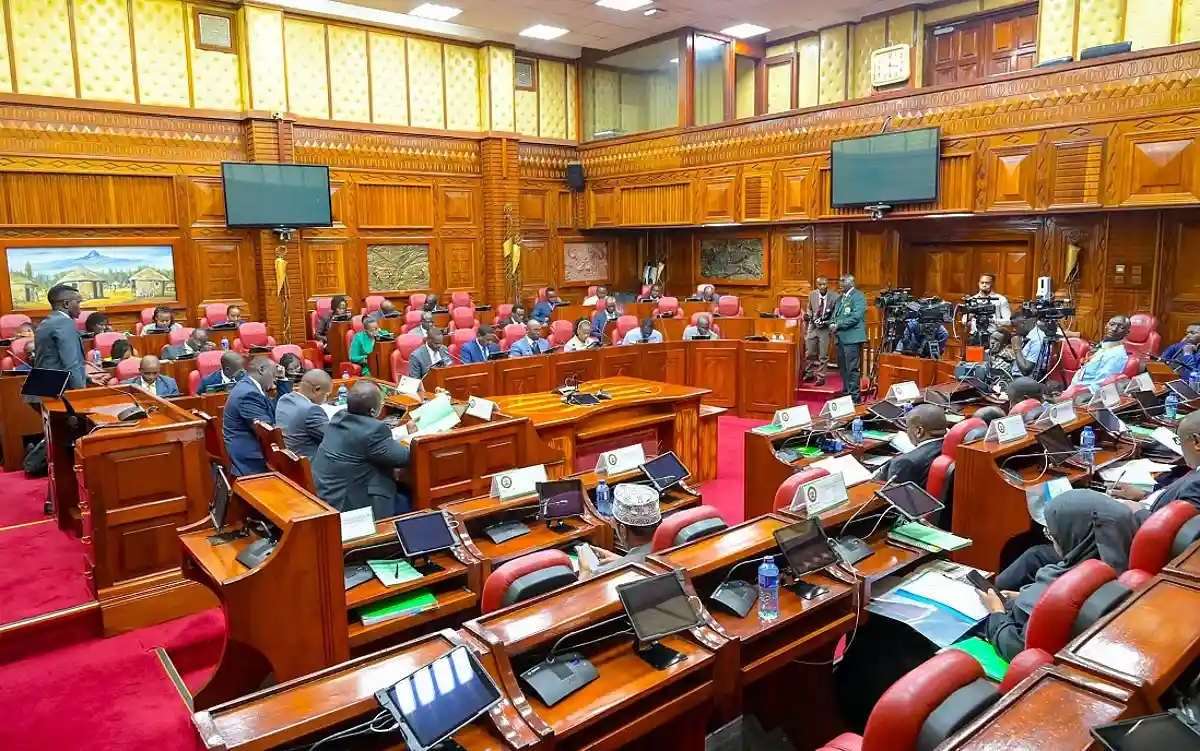
The immediate trigger is a parliamentary concern that the housing levy may sit outside the Controller of Budget’s normal approval system because of how it is legally classified. Radio Generation Kenya reported that the committee wants changes to the Public Finance Management Act so that special funds and levies are subjected to Controller of Budget oversight. The report also quoted the committee as saying that the levy’s exclusion creates “significant accountability gaps.” (Radio Generation Kenya)
That is the governance issue investors and contributors should focus on. The debate is not only about how much money is collected. It is about who independently confirms how the money is approved, released, spent, invested and reported.
The Controller’s Mandate Explains the Concern
The Office of the Controller of Budget says its constitutional mandate is to oversee implementation of national and county budgets by authorising withdrawals from public funds. It also prepares and publishes statutory reports, conducts investigations and advises Parliament on public-finance transfers. (County of Bungoma)
The Controller’s budget-control function requires that no withdrawal from a public fund be approved unless it is authorised by law. That makes the legal classification of the Affordable Housing Levy central to the current dispute. If the levy does not fully sit inside the withdrawal-approval framework, Parliament may have less real-time assurance over how collections move from contributors to projects. (County of Bungoma)
Context is everything. Stay ahead of shifting trends with today’s market updates, and uncover emerging opportunities using the Serrari Group Market Index and Marketplace. Then, take control of your own financial future by exploring our Money & Life Reset Transformation Blueprint ™ to build stronger habits, create better systems, and design a path toward lasting wealth
The Collection Numbers Need Clearer Reconciliation
The committee discussion refers to about KSh63 billion in annual housing levy collections. Daily Nation reported that figure in the context of MPs seeking legal changes to bring the levy under independent Controller of Budget scrutiny. (Nation Africa)
But Business Daily reported in March that Treasury had raised the expected housing levy receipts for the current financial year to KSh97 billion, from an earlier KSh95 billion estimate. It also reported that KRA collected KSh73.2 billion in FY2024/25, above Treasury’s earlier KSh63.2 billion projection. (Business Daily Africa)
Those figures may relate to different fiscal periods, estimates or reporting contexts. They should not be presented as a direct contradiction without the committee report and Treasury tables side by side. But the variation does show why contributors need a consistent public reporting dashboard.
The Law Defines Where the Money Can Go
The Affordable Housing Act imposes the levy at 1.5% of an employee’s gross salary and requires employers to remit an equivalent contribution. It also says the levy is payable to the collector for remittance into the Fund by the ninth working day after the month in which the salary or income was due. (Kenya Law)
The Act allows allocations from the Fund for affordable housing programmes and projects, institutional housing, and social and physical infrastructure. It also allows up to 0.5% to the collector, up to 2% to the Affordable Housing Board for administration, and not less than 0.5% to county committees. (Kenya Law)
Why This Matters to Contributors
Employees and employers fund the levy every month. KRA’s public notice says employers must deduct 1.5% of employees’ gross monthly salaries and remit the amount together with the employer’s matching contribution. Other persons with Kenyan income are also required to remit 1.5% of gross income. (Kenya Revenue Authority)
That makes the levy different from voluntary Boma Yangu savings, REITs or direct property investments. Contributors are not automatically unit-holders or shareholders in the Fund. They are statutory contributors to a public housing programme.
Why This Matters to Developers and Banks
The Affordable Housing Fund can finance housing projects, institutional housing and related infrastructure. For developers, contractors, banks and financiers, the governance of the Fund affects payment confidence, project execution and public-sector counterparty risk.
If reporting is unclear, firms exposed to the housing programme may face uncertainty over disbursement timing, project pipeline credibility and fiscal governance. Stronger oversight could improve confidence if it produces transparent approvals, expenditure tracking and timely public reporting.
Temporary Investments Need Transparency
The Act permits the Affordable Housing Board, with Treasury approval, to invest income not immediately required. (Kenya Law) Business Daily also reported that at least a third of proceeds had been temporarily invested in Treasury bills because construction projects take time to plan and implement. (Business Daily Africa)
This does not mean contributors earn a direct return. It means idle Fund money may be managed temporarily before deployment. That makes reporting on balances, investment income, maturity profiles and eventual project allocation important.
What Parliament Should Clarify
Parliament’s proposed amendments should clarify whether all levy collections, withdrawals, temporary investments and project disbursements require Controller of Budget approval or reporting. They should also clarify the reporting frequency, publication format, audit trail, enforcement powers and whether penalties apply for non-compliance with oversight requirements.
The public does not only need annual headline numbers. It needs timely information showing how much was collected, how much was approved, how much was spent, how much was invested temporarily, and which projects received allocations.
Conclusion
Kenya Housing Levy oversight has become a governance test for one of the country’s most politically and financially significant real-estate programmes. The levy can support housing supply, infrastructure and construction-sector activity, but confidence depends on transparent control of collections and expenditure.
The KSh63 billion parliamentary reference and the KSh97 billion Treasury projection may reflect different reporting periods. Even so, the gap reinforces the need for clear, independently verified reporting. Contributors, developers, financiers and real-estate investors all benefit when public housing money can be traced from collection to approval, expenditure and delivery.
FAQs
1. What is the Kenya Housing Levy?
The Kenya Housing Levy is a statutory Affordable Housing Levy imposed under the Affordable Housing Act. Employees contribute 1.5% of gross salary, and employers remit an equivalent 1.5% contribution. (Kenya Law)
2. Why are MPs seeking more oversight?
MPs are concerned that the levy’s current legal classification may leave major collections outside the Controller of Budget’s normal approval and monitoring framework. The parliamentary committee has called for legal changes to close that accountability gap. (Nation Africa)
3. What does the Controller of Budget normally do?
The Controller of Budget oversees implementation of national and county budgets by authorising withdrawals from public funds. The office also prepares statutory reports, investigates public-finance issues and reports to Parliament. (County of Bungoma)
4. Why do the KSh63 billion and KSh97 billion figures differ?
The KSh63 billion figure appears in the parliamentary oversight debate, while Business Daily reported that Treasury had raised the current fiscal-year collection projection to KSh97 billion. The figures may relate to different fiscal years, estimates or reporting contexts, so they should not be treated as directly contradictory without the underlying documents. (Nation Africa)
5. Do contributors earn a return from the Fund?
Not automatically. The levy is a statutory charge, not a voluntary investment product. Although the Act allows the Board, with Treasury approval, to invest income not immediately required, contributors should not be described as unit-holders or shareholders in the Fund. (Kenya Law)
Sources: Nation Africa, Kenya Law, KRA, Office of the Controller of Budget Bungoma, Business Daily, Kenya Parliament, Radio Generation Kenya
Your financial future isn’t something you wait for—it’s something you build.
The real question is: when do you begin?
Move beyond simply staying informed.
Navigate the markets with clarity—track trends through the Serrari Group Market Index, uncover opportunities in the Serrari Marketplace, and build practical knowledge with our Curated Wealth Builder Platform.
Stay connected to what truly matters.
Get daily insights on macro trends and financial movements across Kenya, Africa, and global markets—delivered through the Serrari Newsletter.
Growth opens doors.
Advance your career through professional programs including ACCA, HESI A2, ATI TEAS 7 , HESI EXIT , NCLEX – RN and NCLEX – PN, Financial Literacy!🌟—designed to move you forward with confidence.
See where money is flowing—clearly and in real time.
Track Money Market Funds, Treasury Bills, Treasury Bonds, Green Bonds, and Fixed Deposits, alongside global and African indexes, key economic indicators, and the evolving Crypto and stablecoin landscape—all within Serrari’s Market Index.