Telecom Italia (TIM) has announced a Climate Transition Plan backed by an investment of approximately €550 million to reduce greenhouse gas emissions while supporting the continued expansion of digital services. The plan establishes emissions reduction milestones for 2030, 2040 and 2050, focusing on improving energy efficiency, expanding renewable energy use, modernising data centres and accelerating 5G deployment. It also addresses emissions across the company’s supply chain, which accounts for more than 90% of its carbon footprint, and will be reviewed periodically to reflect technological, industrial and regulatory developments.
Key Overview
- TIM will invest approximately €550 million in its Climate Transition Plan.
- The company has established emissions reduction targets for 2030, 2040 and 2050.
- More than 90% of TIM’s carbon footprint comes from its supply chain.
- The plan focuses on energy efficiency, renewable energy, 5G expansion and more efficient data centres.
TIM Unveils €550 Million Climate Transition Plan
Telecom Italia (TIM) has unveiled a Climate Transition Plan that will see the company invest approximately EUR 550 million to reduce greenhouse gas emissions while supporting the growing demand for digital connectivity, cloud computing and artificial intelligence.
The investment, which is already included in the group’s industrial roadmap, will finance initiatives designed to improve the environmental performance of TIM’s infrastructure and operations in Italy and Brazil. According to the company, the Climate Transition Plan provides a long-term roadmap for progressively reducing emissions through 2030, 2040 and 2050, while ensuring its networks continue supporting increasing digital demand.
Emissions Reduction Strategy Extends to 2050
TIM said its Climate Transition Plan addresses all of the group’s major sources of greenhouse gas emissions, including its supply chain, which accounts for more than 90% of the company’s overall carbon footprint.
The strategy has been developed using measures that are already planned, financial resources that have already been allocated and technologies currently available to the group across its operations in Italy and Brazil.
According to the company, the plan is designed to reduce emissions while maintaining the infrastructure required to support growing digital services and customer demand.
Investment Targets Greener Networks and Infrastructure
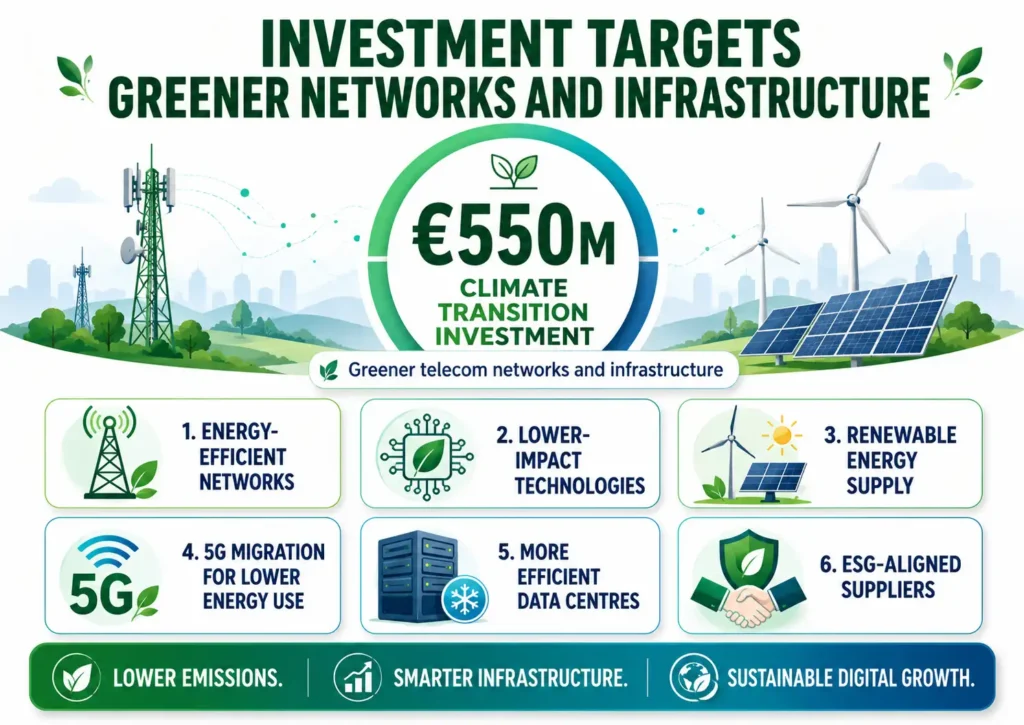
A significant portion of the investment will focus on improving the energy efficiency of TIM’s telecommunications infrastructure and reducing the environmental impact of its operations.
Key measures outlined in the Climate Transition Plan include:
- Improving the energy efficiency of network infrastructure.
- Adopting technologies with a lower environmental impact.
- Maintaining energy supplies sourced from renewable energy.
- Aligning suppliers with TIM’s environmental, social and governance (ESG) objectives.
- Accelerating the migration to 5G networks to reduce energy consumption per unit of traffic carried.
- Modernising data centres through more efficient cooling systems and energy management technologies.
TIM said these initiatives are expected to help lower emissions while supporting continued expansion of digital infrastructure.
Digital Growth Driving Climate Action
The company noted that demand for connectivity continues to increase as businesses and consumers adopt cloud computing and artificial intelligence based applications.
TIM believes the rapid growth of digital technologies requires a parallel effort to improve the sustainability of telecommunications infrastructure.
Chief Executive Officer Pietro Labriola said the Climate Transition Plan seeks to balance digital transformation with environmental responsibility.
“Cloud computing and artificial intelligence are driving demand for connectivity and computing power at an unprecedented rate. We cannot ignore this. With our Climate Transition Plan, we have set out a path to reduce our emissions whilst supporting digital growth. We will make our processes and infrastructure more efficient to reduce consumption and adopt technologies with a lower environmental impact.”
Labriola added that greater economic support for the transition would allow the company to pursue even more ambitious climate objectives in the future.
Context is everything. Stay ahead of shifting trends with today’s market updates, and uncover emerging opportunities using the Serrari Group Market Index and Marketplace. Then, take control of your own financial future by exploring our Money & Life Reset Transformation Blueprint ™ to build stronger habits, create better systems, and design a path toward lasting wealth.
Renewable Energy and Supply Chain Remain Key Priorities
Beyond improving network efficiency, TIM intends to maintain energy supplies from renewable sources while encouraging greater alignment between its suppliers and the company’s ESG objectives.
Because supply chain activities account for more than 90% of TIM’s overall carbon footprint, the company said collaboration with suppliers will remain central to achieving its long-term emissions reduction targets.
The Climate Transition Plan therefore combines operational improvements with broader efforts to reduce emissions across the value chain.
Climate Plan Will Be Monitored and Updated
TIM said the Climate Transition Plan will undergo regular monitoring and may be updated as technological innovation, industrial developments and regulatory requirements evolve.
According to the company, this approach will help ensure the emissions reduction roadmap remains aligned with future business development and the best available technologies.
Pending the release of its new Industrial Plan, TIM confirmed that its existing ESG targets relating to gender equality and advanced digital solutions remain unchanged.
The Climate Transition Plan has been approved by the company’s Board of Directors and published in the Sustainability section of TIM’s website together with the group’s ESG targets.
Outlook
TIM’s Climate Transition Plan reflects the growing emphasis within the telecommunications sector on balancing rapid digital expansion with long-term emissions reduction. As demand for cloud computing, artificial intelligence and high-speed connectivity continues to rise, investments in energy-efficient infrastructure, renewable energy and lower-impact technologies are becoming increasingly important for network operators. By committing approximately €550 million to modernise its infrastructure and reduce emissions across its operations and supply chain, TIM is positioning sustainability as a core element of its future growth strategy. The company’s commitment to regularly reviewing the plan also provides flexibility to adapt to changing technologies, regulations and market conditions as it progresses toward its 2030, 2040 and 2050 climate targets.
FAQs
What is TIM’s Climate Transition Plan?
It is a long-term strategy outlining how Telecom Italia (TIM) plans to reduce greenhouse gas emissions while supporting continued growth in digital services.
How much is TIM investing?
TIM plans to invest approximately €550 million, with the funding already included in its industrial roadmap.
What are TIM’s emissions reduction targets?
The company has established emissions reduction milestones for 2030, 2040 and 2050.
What initiatives are included in the plan?
The plan includes improving energy efficiency, expanding renewable energy use, accelerating 5G deployment, modernising data centres and aligning the supply chain with TIM’s ESG objectives.
Why is the supply chain important to TIM’s climate strategy?
According to the company, the supply chain accounts for more than 90% of TIM’s overall carbon footprint, making supplier engagement a key part of its emissions reduction efforts.
Sources: Telecompaper, MarketScreener, Mobile World Live
Your financial future isn’t something you wait for—it’s something you build.
The real question is: when do you begin?
Move beyond simply staying informed.
Navigate the markets with clarity—track trends through the Serrari Group Market Index, uncover opportunities in the Serrari Marketplace, and build practical knowledge with our Curated Wealth Builder Platform.
Stay connected to what truly matters.
Get daily insights on macro trends and financial movements across Kenya, Africa, and global markets—delivered through the Serrari Newsletter.
Growth opens doors.
Advance your career through professional programs including ACCA, HESI A2, ATI TEAS 7 , HESI EXIT , NCLEX – RN and NCLEX – PN, Financial Literacy!🌟—designed to move you forward with confidence.
See where money is flowing—clearly and in real time.
Track Money Market Funds, Treasury Bills, Treasury Bonds, Green Bonds, and Fixed Deposits, alongside global and African indexes, key economic indicators, and the evolving Crypto and stablecoin landscape—all within Serrari’s Market Index.