Satellite imagery shows a rise in tanker activity at Saudi Arabia’s Gulf export terminals, with supertankers carrying up to 14 million barrels observed over the weekend. The increase comes as traffic through the Strait of Hormuz continues to fall, while disruptions to Saudi Arabia’s East-West pipeline have reduced the kingdom’s crude loadings.
Key Overview
- Supertankers with a capacity for 14 million barrels were observed at Saudi Arabia’s Gulf export terminals.
- Only 12 commodity vessels crossed the Strait of Hormuz over the weekend, compared with 35 a week earlier.
- Saudi Arabia moved crude through the strait at 2.9 million barrels per day over the past six days.
- Drone strikes on September 11 disrupted Saudi Arabia’s East-West pipeline.
- Saudi crude loadings fell to about 2.1 million barrels per day by mid-September.
- Aramco is using Gulf-to-Gulf transfers to move oil toward larger tankers for deliveries to Asian refiners.
Saudi Gulf Tanker Activity Reaches Highest Level Since June
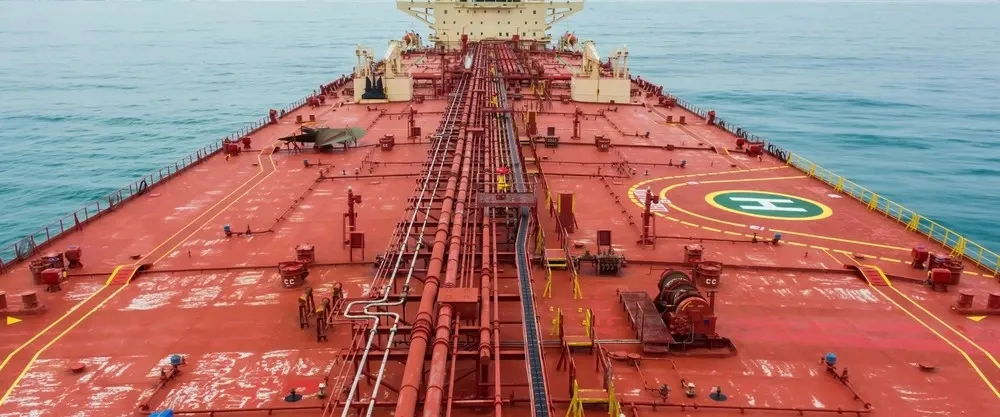
Satellite images gathered by Bloomberg show supertankers with capacity for 14 million barrels at Saudi Arabia’s Gulf export terminals over the weekend.
According to data compiled from the European Union’s Sentinel-2 satellite, the tanker count was the highest observed since at least June.
The increase in tanker activity comes as overall traffic through the Strait of Hormuz continues to decline.
Only 12 commodity vessels crossed the strait over the same weekend, down from 35 a week earlier. On Thursday, just four tankers crossed, compared with a 10-day moving average of 16, according to Kpler data cited by Reuters.
Saudi Arabia moved crude through the Strait of Hormuz at 2.9 million barrels a day over the past six days, according to JPMorgan. The bank described the kingdom’s shift as the “most notable pivot” among Gulf producers.
East-West Pipeline Disruption Cuts Saudi Oil Loadings
Saudi Arabia’s oil flows have also been affected by disruptions to its East-West pipeline, also known as Petroline.
On September 11, drone strikes launched from Iraq shut down the pipeline, which normally carries as much as 7 million barrels a day across 1,200 kilometres from oil fields in the Eastern Province to the Yanbu terminal on the Red Sea.
The attack took an estimated 4 million to 5 million barrels per day of pipeline capacity offline.
Saudi crude loadings subsequently fell from 7.5 million bpd in January and February to about 2.1 million barrels a day by mid-September, representing a decline of more than 70%.
U.S. Energy Secretary Chris Wright said on September 15 that the pipeline would restart within days. However, an industry analyst cited by Al-Monitor said pump stations were destroyed during the strike and that full restoration could take six weeks or more.
Yanbu Faces Renewed Threat
Saudi Arabia’s alternative export infrastructure has also faced renewed security concerns.
Yemen’s Houthi movement claimed cruise missile, ballistic missile and drone strikes on Riyadh and Aramco facilities at Yanbu overnight on September 18-19.
Saudi Arabia confirmed that the Houthis had targeted civilian infrastructure at the port where the East-West pipeline terminates.
The missile targeting Riyadh was intercepted, while Saudi authorities reported no casualties or damage from either strike.
The attempted attack nevertheless puts Yanbu, the kingdom’s primary outlet since the Hormuz freeze, under renewed threat.
Context is everything. Stay ahead of shifting trends with today’s market updates, and uncover emerging opportunities using the Serrari Group Market Index and Marketplace. Then, take control of your own financial future by exploring our Money & Life Reset Transformation Blueprint ™ to build stronger habits, create better systems, and design a path toward lasting wealth.
Aramco Uses Gulf-to-Gulf Oil Transfers
Saudi Aramco is also using a different routing arrangement to maintain exports.
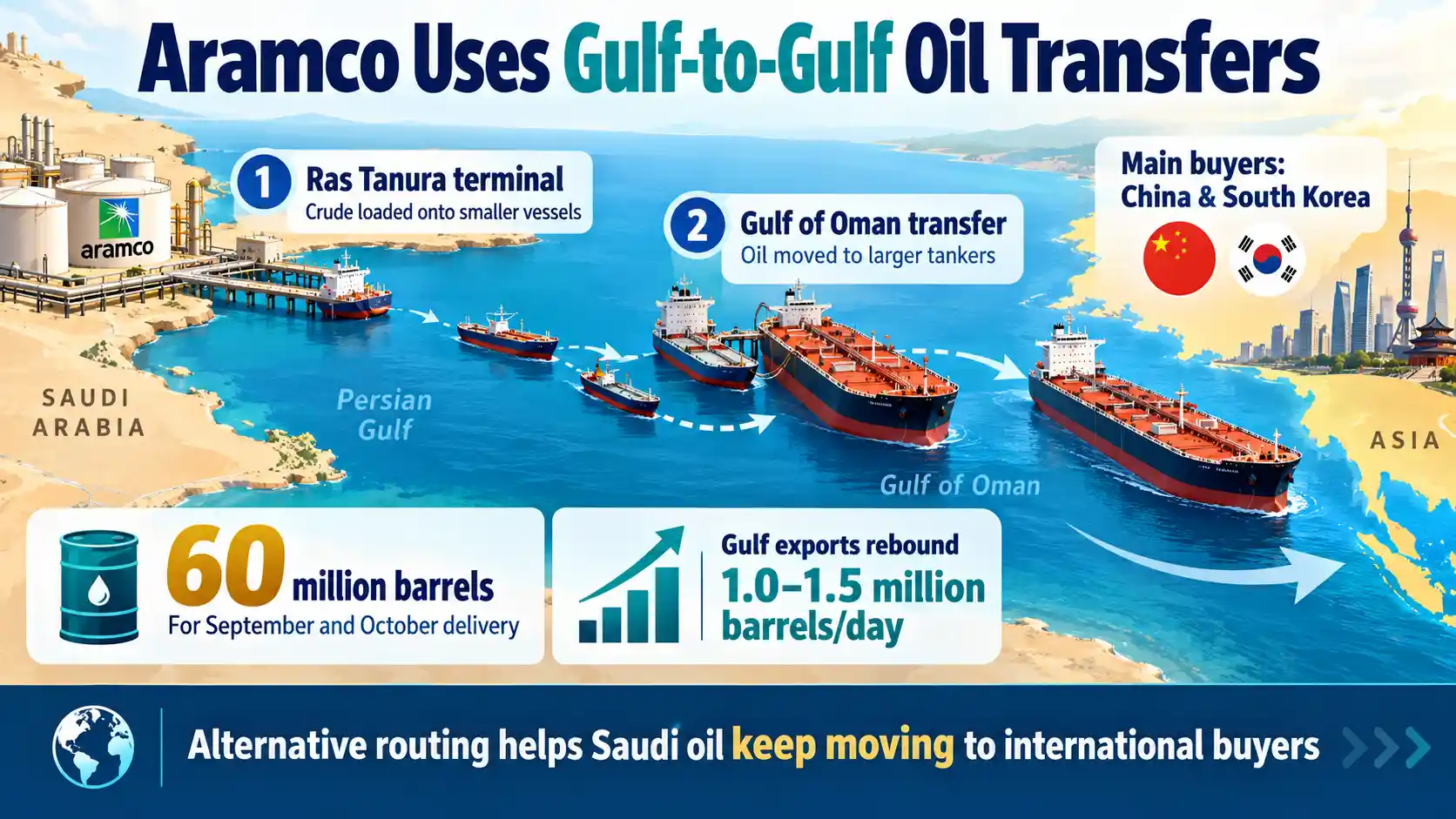
Aramco pipes crude to its Ras Tanura terminal on the Persian Gulf, where it is loaded onto smaller vessels. The crude is then transferred to larger tankers in the Gulf of Oman.
The routing is being used to move around 60 million barrels loaded at Ras Tanura for September and October delivery, mainly to refiners in China and South Korea.
Gulf exports have rebounded to an average of 1 million to 1.5 million barrels a day, roughly in line with August levels.
The use of smaller vessels to move crude before transferring it to larger tankers provides a route for Saudi oil to continue moving toward international buyers despite the decline in traffic through the Strait of Hormuz.
Hormuz Shipping Traffic Continues to Decline
The rise in Saudi Gulf tanker activity contrasts with the broader decline in vessel traffic through the Strait of Hormuz.
The number of commodity vessels crossing the strait fell to 12 over the weekend from 35 the previous week.
Thursday’s figure was even lower, with four tankers crossing against a 10-day moving average of 16.
The changing shipping patterns come as Gulf producers adjust their oil export routes amid disruptions affecting established infrastructure and shipping channels.
Oil Prices Fall
Oil prices declined on Monday amid the changing flow picture.
Brent crude fell to $100.90 a barrel at 9:33 a.m. ET, down 2.82%.
West Texas Intermediate (WTI) dropped to $97.18 a barrel, representing a 3.11% decline.
Outlook
Saudi Arabia is increasing the use of Gulf export routes and alternative shipping arrangements as traffic through the Strait of Hormuz remains depressed.
At the same time, disruptions to the East-West pipeline have sharply reduced Saudi crude loadings, while the latest reported attacks have renewed concerns around Yanbu.
The movement of larger tanker capacity at Saudi Arabia’s Gulf terminals and the use of Gulf-to-Gulf transfers will remain important to the kingdom’s ability to maintain crude exports while established routes face disruption.
FAQs
1. Why are Saudi oil flows increasing while Hormuz traffic is falling?
Saudi Arabia is using alternative Gulf export routes and shipping arrangements as traffic through the Strait of Hormuz continues to decline.
2. How much crude is Saudi Arabia moving through the Strait of Hormuz?
Saudi Arabia moved crude through the strait at about 2.9 million barrels per day over the six days referenced in the report.
3. What happened to Saudi Arabia’s East-West pipeline?
Drone strikes on September 11 disrupted the pipeline, taking an estimated 4 million to 5 million barrels per day of its capacity offline. Saudi crude loadings subsequently fell to about 2.1 million barrels per day by mid-September.
4. How is Aramco maintaining oil exports?
Aramco is moving crude from Ras Tanura on the Persian Gulf on smaller vessels, transferring it to larger tankers in the Gulf of Oman for deliveries, mainly to Chinese and South Korean refiners.
Your financial future isn’t something you wait for—it’s something you build.
The real question is: when do you begin?
Move beyond simply staying informed.
Navigate the markets with clarity—track trends through the Serrari Group Market Index, uncover opportunities in the Serrari Marketplace, and build practical knowledge with our Curated Wealth Builder Platform.
Stay connected to what truly matters.
Get daily insights on macro trends and financial movements across Kenya, Africa, and global markets—delivered through the Serrari Newsletter.
Growth opens doors.
Advance your career through professional programs including ACCA, HESI A2, ATI TEAS 7 , HESI EXIT , NCLEX – RN and NCLEX – PN, Financial Literacy!🌟—designed to move you forward with confidence.
See where money is flowing—clearly and in real time.
Track Money Market Funds, Treasury Bills, Treasury Bonds, Green Bonds, and Fixed Deposits, alongside global and African indexes, key economic indicators, and the evolving Crypto and stablecoin landscape—all within Serrari’s Market Index.