Key Overview
- Pakistan launches first telecom-sector Green Sukuk
- PKR 3 billion ‘AAA’-rated issuance with full principal guarantee
- Funds solar and battery systems for telecom towers
- Targets reduced diesel use and improved energy efficiency
InfraZamin Pakistan Limited has partnered with financial institutions to launch Pakistan’s first telecom-sector Green Sukuk, mobilizing PKR 3 billion for clean energy deployment. The initiative will fund solar and battery systems to reduce diesel reliance across telecom infrastructure.
The transaction highlights growing momentum in climate-aligned Islamic finance and the role of credit enhancement in unlocking private capital. By integrating renewable energy with critical infrastructure, the project supports both cost efficiency and operational resilience. It also strengthens Pakistan’s green capital markets while creating a scalable financing model for energy-intensive sectors.
A Landmark Green Sukuk for Infrastructure Financing
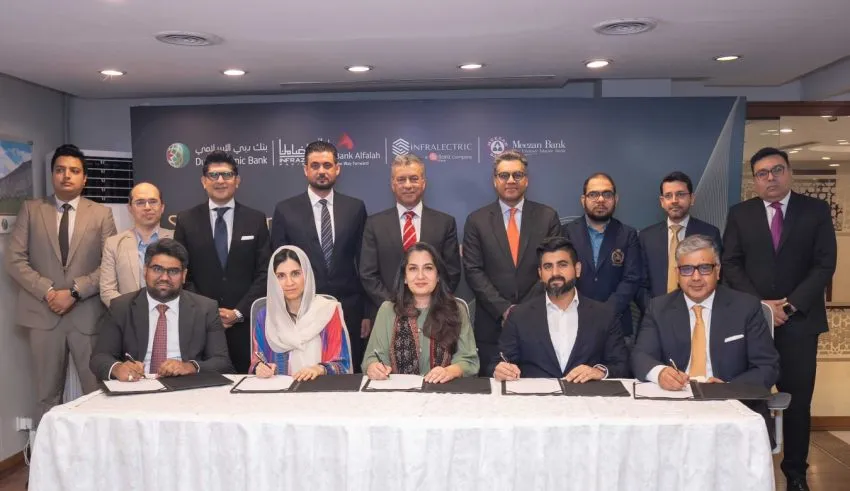
InfraZamin Pakistan Limited, in partnership with Infralectric Private Limited and leading financial institutions, has launched Pakistan’s first-ever PKR 3 billion ‘AAA’-rated Green Sukuk for the telecom sector. This issuance represents a notable milestone in the evolution of the country’s green capital markets, marking a shift toward more structured and scalable financing solutions for infrastructure development.
The transaction highlights how Islamic finance instruments can be effectively deployed to fund capital-intensive projects, particularly in sectors requiring long-term investment. It also reflects a growing alignment between financial innovation and infrastructure modernization, as investors increasingly seek opportunities that combine stable returns with exposure to real economy assets.
A key feature of the issuance is its 100% principal guarantee from InfraZamin Pakistan Limited, which provides strong credit enhancement and enables the Sukuk to achieve a top-tier ‘AAA’ rating. This structure plays a critical role in mitigating risk, making the instrument more attractive to institutional investors such as pension funds, insurance companies, and asset managers.
The issuance was led by Dubai Islamic Bank Pakistan Limited, with participation from Bank Alfalah Limited and Meezan Bank Limited. The deal was oversubscribed, underscoring robust investor demand for green and Shariah-compliant instruments and signaling increasing depth and liquidity in Pakistan’s financial markets.
Markets move fast; don’t get left behind. We’ve paired the Serrari Group Market Index with a curated Marketplace and a comprehensive Wealth Builder Platform to ensure you have the data—and the skills—to act on it.
Use of Proceeds: Powering Telecom Infrastructure
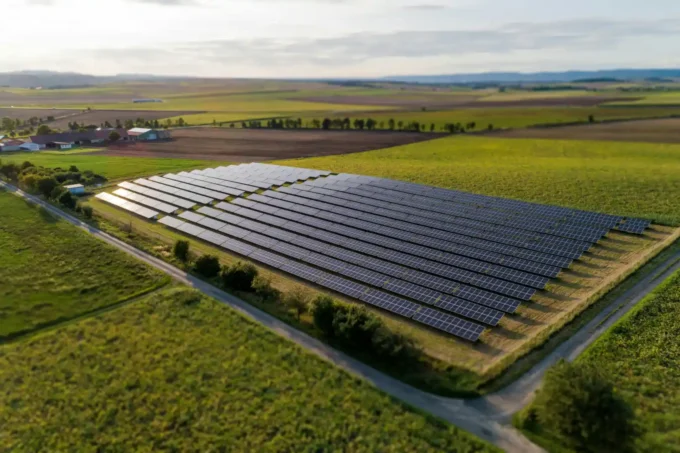
Proceeds from the Sukuk will finance one of Pakistan’s largest commercial deployments of lithium-ion Battery Energy Storage Systems (BESS) and solar photovoltaic solutions across telecom tower infrastructure. This investment is designed to address both energy reliability challenges and rising operational costs within the sector.
The project targets approximately 1,955 telecom tower sites, integrating solar generation, battery storage, artificial intelligence optimization, and remote monitoring systems. Together, these technologies are expected to significantly improve energy efficiency, reduce downtime, and enhance overall system performance.
Pakistan’s telecom sector, serving nearly 190 million subscribers and operating more than 50,000 towers nationwide, remains highly energy-intensive. A significant portion of these sites operates on weak-grid or off-grid systems, making diesel a dominant energy source. This reliance has historically resulted in high operating expenses and exposure to fuel price volatility.
By transitioning to distributed renewable energy systems, the project introduces a more stable and predictable energy model. This shift not only reduces fuel dependency but also improves cost visibility for operators, enabling better long-term financial planning.
In addition, the integration of smart technologies such as AI-driven optimization and remote monitoring enhances operational efficiency by enabling real-time performance tracking and predictive maintenance, reducing the likelihood of system failures.
Reducing Fuel Costs and Emissions Exposure
The transition from diesel generators to solar and battery systems is expected to deliver immediate and long-term cost benefits. Lower fuel consumption will reduce operating expenses for telecom operators while minimizing exposure to fluctuations in global oil prices, which have historically impacted profitability.
At a broader economic level, reduced diesel usage may contribute to lowering Pakistan’s fuel import bill, easing pressure on foreign exchange reserves and improving overall energy security. This is particularly significant in a market where energy imports represent a substantial portion of national expenditure.
The shift also provides a hedge against supply disruptions, as reliance on locally generated renewable energy reduces vulnerability to external energy market shocks. This enhances operational resilience, particularly in regions with unstable grid infrastructure.
In addition to cost savings, the move will reduce emissions associated with telecom operations, aligning infrastructure upgrades with broader sustainability and efficiency objectives. The combination of lower costs, improved reliability, and reduced emissions highlights the strong financial and operational case for transitioning to cleaner energy systems within energy-intensive sectors.
Operational Gains and Network Reliability
Beyond cost efficiency, the project is expected to deliver meaningful operational improvements across telecom networks. Solar and battery storage systems provide a more stable and consistent power supply compared to diesel generators, particularly in areas where grid connectivity is weak or unreliable. This shift reduces dependence on fuel logistics and minimizes disruptions caused by power outages.
Improved energy reliability directly enhances network uptime, supporting uninterrupted connectivity for millions of users. In a sector where service continuity is critical, even minor improvements in uptime can translate into significant gains in customer experience and revenue stability. This is especially important in regions where telecom infrastructure underpins essential services, business operations, and digital access.
The integration of AI-driven optimization and remote monitoring systems further strengthens performance by enabling predictive maintenance and real-time system management. These capabilities allow operators to identify and address potential issues before they escalate, reducing downtime and improving asset utilization.
Over time, the combination of reliable energy supply and advanced monitoring is expected to lower maintenance costs, extend equipment lifespan, and improve overall network efficiency. This positions the project not only as an energy solution but also as a broader operational upgrade for telecom infrastructure.
Context is everything. While you follow today’s updates, use the Serrari Group Market Index and Marketplace to spot emerging shifts. Need to sharpen your edge? Our Wealth Builder Platform turns these insights into a professional-grade strategy.
Credit Structure and Investor Confidence
The Sukuk’s structure is a central factor behind its strong market reception, highlighting the importance of credit enhancement in mobilizing capital for infrastructure projects. The 100% principal guarantee provided by InfraZamin Pakistan Limited significantly reduces credit risk, allowing the issuance to achieve a ‘AAA’ rating from Pakistan Credit Rating Agency.
This high credit rating broadens the pool of potential investors, making the instrument accessible to institutional participants such as pension funds, insurance companies, and asset managers that require investment-grade securities. It also enhances pricing efficiency by lowering the risk premium typically associated with infrastructure projects in emerging markets.
Additional oversight was provided by Pakistan Environment Trust as Green Bond Consultant and Al Hilal Shariah Advisory as Shariah advisor, ensuring compliance with both environmental standards and Islamic finance principles. This dual-layer verification strengthens the credibility of the transaction and aligns it with both financial and regulatory expectations.
The combination of credit guarantees, structured financing, and independent verification mechanisms reinforces investor confidence and sets a precedent for future green Sukuk issuances. It demonstrates how well-designed financial structures can overcome market barriers and attract capital at scale.
Why This Matters: Scaling Green Capital in Emerging Markets
The transaction illustrates how structured financial instruments can unlock private capital for infrastructure development in emerging markets, where funding gaps often constrain project implementation. By combining Islamic finance with green investment principles, the Sukuk introduces a scalable model for financing energy transitions in sectors that are traditionally difficult to decarbonize.
It also highlights the critical role of credit enhancement in attracting institutional investors, particularly in markets where perceived risks can limit participation. By mitigating these risks, such structures enable broader access to capital and support the development of more liquid and mature financial markets.
As global demand for sustainable and impact-linked investments continues to grow, instruments like green Sukuk are likely to play an increasingly important role in bridging the climate finance gap. They offer a pathway for aligning capital markets with infrastructure needs, particularly in regions where both energy demand and financing requirements are rising.
Over time, the success of transactions like this could encourage replication across other sectors and geographies, supporting the expansion of green capital markets while driving long-term infrastructure development.
Outlook: A Blueprint for Future Green Financing
Pakistan’s first telecom-sector Green Sukuk signals a broader shift toward market-based solutions for infrastructure financing, particularly in energy-intensive sectors where traditional funding models have faced constraints. The transaction highlights how structured instruments can align investor demand with large-scale infrastructure needs, creating a pathway for more sustainable capital deployment.
In the near term, the focus will be on the successful rollout of solar and battery systems across the targeted telecom tower sites. Delivering measurable efficiency gains, cost reductions, and improved energy reliability will be critical in validating the financial and operational case for similar projects. Sustained investor interest will also play a key role in determining whether such instruments can be scaled and replicated in future issuances.
Beyond immediate implementation, the transaction sets a precedent for blending credit enhancement with green financing to attract institutional capital. If the model proves effective, it could encourage further innovation in structuring Shariah-compliant instruments that support infrastructure development while managing risk.
Over the longer term, the approach could be extended across other sectors, including transport, manufacturing, and urban infrastructure, where energy transition needs remain significant. If sustained, such initiatives could strengthen Pakistan’s position in Islamic green finance, deepen its capital markets, and support long-term infrastructure modernization through more efficient and diversified funding channels.
Your financial future isn’t something you wait for—it’s something you build.
The real question is: when do you begin?
Move beyond simply staying informed.
Navigate the markets with clarity—track trends through the Serrari Group Market Index, uncover opportunities in the Serrari Marketplace, and build practical knowledge with our Curated Wealth Builder Platform.
Stay connected to what truly matters.
Get daily insights on macro trends and financial movements across Kenya, Africa, and global markets—delivered through the Serrari Newsletter.
Growth opens doors.
Advance your career through professional programs including ACCA, HESI A2, ATI TEAS 7 , HESI EXIT , NCLEX – RN and NCLEX – PN, Financial Literacy!🌟—designed to move you forward with confidence.
See where money is flowing—clearly and in real time.
Track Money Market Funds, Treasury Bills, Treasury Bonds, Green Bonds, and Fixed Deposits, alongside global and African indexes, key economic indicators, and the evolving Crypto and stablecoin landscape—all within Serrari’s Market Index.