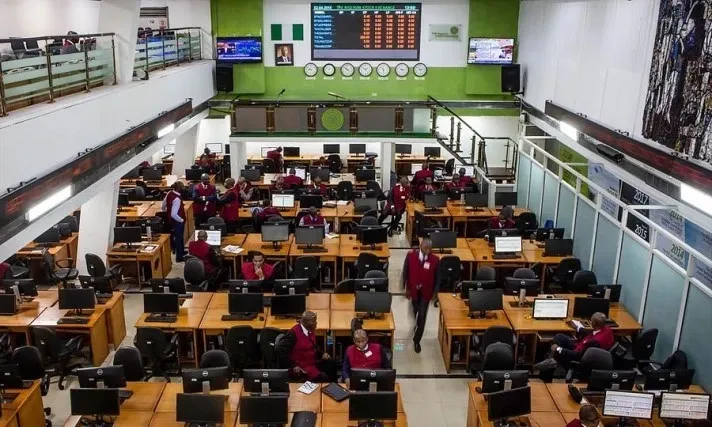
Nigeria’s Securities and Exchange Commission (SEC) has declared the country’s just-concluded banking sector recapitalisation exercise a runaway success, saying it triggered a ₦29.83 trillion (about USD22.1 billion) wealth creation in the equity market within the first 90 days of 2026 alone. Equity market capitalisation surged from ₦99.38 trillion at the close of 2025 to ₦129.21 trillion by the end of March 2026, while the Nigerian Exchange All-Share Index (NGX ASI) climbed to a historic 201,287.78 points — a 29.35 percent gain in just one quarter. With roughly 500,000 fresh investors drawn into the market, ₦4.65 trillion mobilised through public offers over 24 months, and 33 deposit money banks meeting the Central Bank of Nigeria’s (CBN) new capital thresholds, the SEC is now pitching the exercise as the foundation of a deeper, more inclusive capital market capable of bankrolling President Bola Tinubu’s USD1 trillion economy ambition.
Key Overview
- The SEC says equity market capitalisation grew by ₦29.83 trillion (roughly USD22.1 billion) in the first 90 days of 2026, rising from ₦99.38 trillion at end-2025 to ₦129.21 trillion by 31 March 2026.
- The NGX All-Share Index jumped 29.35 percent in a single quarter, climbing from 155,613 points to an all-time high of 201,287.78 points.
- An estimated 500,000 new investors, many of them first-timers, bought into bank public offers and rights issues between 2024 and 2026.
- February 2026 alone added ₦17.6 trillion in market capitalisation — the largest single-month gain in the history of Nigeria’s stock market.
- The capital market mobilised ₦4.65 trillion over the 24-month recapitalisation window, with 33 banks meeting or exceeding the revised minimum capital requirements.
- SEC Director-General Dr. Emomotimi Agama framed the programme as “the beginning of a more consequential era” in which the capital market underwrites national development.
- The rally, driven partly by tier-one bank stocks, has made the NGX one of the world’s best-performing exchanges in dollar terms in 2026.
Markets move fast; don’t get left behind. We’ve paired the Serrari Group Market Index with a curated Marketplace and a comprehensive Wealth Builder Platform to ensure you have the data—and the skills—to act on it.
A ₦29.83 Trillion Quarter
Nigeria’s Securities and Exchange Commission has put a remarkable number on the impact of the country’s two-year bank recapitalisation push. In a fresh policy briefing, the commission said the exercise generated ₦29.83 trillion in equity market wealth during the first three months of 2026, as total market capitalisation moved from ₦99.38 trillion at the close of 2025 to ₦129.21 trillion by 31 March 2026.
That headline number corresponds to roughly USD22.1 billion of paper wealth created in just 90 days, according to the Nigerian Tribune’s conversion of the SEC figures. The Nigerian Exchange All-Share Index (NGX ASI) followed suit, rising from 155,613 points at the end of 2025 to a historic 201,287.78 points by the end of Q1 2026 — a 29.35 percent gain in a single quarter that briefly ranked Nigeria among the best-performing equity markets globally in dollar terms.
The SEC tied the rally directly to investor expectations around the March 31 recapitalisation deadline, noting that optimism about a fully recapitalised banking system firmed up sharply in the final stretch. February 2026 alone delivered a market capitalisation gain of ₦17.6 trillion — the largest single-month increase ever recorded on the Nigerian stock market.
Behind the Numbers: What CBN Actually Demanded
The rally’s backbone is a regulatory overhaul the CBN first announced on 28 March 2024. Under a circular signed by Director for Financial Policy and Regulation Haruna Mustafa, the apex bank sharply lifted minimum capital requirements for the first time in two decades and gave lenders a 24-month window, from 1 April 2024 to 31 March 2026, to comply.
The new thresholds set ₦500 billion for commercial banks with international authorisation, ₦200 billion for national commercial banks and ₦50 billion for regional ones. Merchant banks were pegged at ₦50 billion, while non-interest banks were required to hold ₦20 billion (national) and ₦10 billion (regional). The programme applied a paid-up equity and share premium definition of regulatory capital, excluding other tier-one components banks had historically leaned on.
CBN Governor Olayemi Cardoso first signalled the move in his November 2023 address to the Annual Bankers’ Dinner and has since framed recapitalisation as central to the federal government’s ambition of becoming a USD1 trillion economy. The Tinubu-era CBN wanted balance sheets that could absorb naira volatility, inflation shocks and the after-effects of currency devaluation — and it wanted them built from real equity, not accounting artifice.
₦4.65 Trillion Raised, 33 Banks Across the Line
By the time the deadline expired, 33 deposit money banks had successfully raised ₦4.65 trillion in fresh capital through rights issues, initial public offerings, private placements and other equity-raising channels. The CBN said the figure represented roughly USD3.38 billion, with 72.55 percent sourced domestically and the remaining 27.45 percent coming from international investors — a split the regulator read as a vote of confidence from both local and cross-border capital.
Analysts at Finance in Africa put the valuation impact in starker terms. Thirteen listed banks saw their combined market capitalisation more than double from about USD5.85 billion (₦8.08 trillion) before the programme began to USD15.07 billion (₦20.83 trillion) by late March 2026. Individual lenders told their own dramatic stories: according to a Whistler analysis of Q1 performance, Zenith Bank’s share price jumped 55 percent from ₦61.80 to ₦95.80, lifting its market capitalisation by ₦1.396 trillion to ₦3.93 trillion.
Five tier-one banks — Zenith Bank, Guaranty Trust Holding Company, Access Holdings, United Bank for Africa and FBN Holdings — collectively netted shareholders ₦3.03 trillion in Q1 2026 alone. The NGX Banking Index rose roughly 23 percent, closing at 1,860.75 points from 1,515.85 at the start of the year.
Not every institution cruised in. Ecobank Nigeria raised ₦353 billion, Stanbic IBTC reached ₦257 billion and Wema Bank mobilised ₦215 billion, according to analysis by Within Nigeria, with Premium Trust Bank, Sterling Financial Holdings, Standard Chartered Nigeria, Globus Bank, Optimus Bank and Citibank Nigeria each crossing their category thresholds through a mix of parent-company injections, share issues and strategic restructuring.
Context is everything. While you follow today’s updates, use the Serrari Group Market Index and Marketplace to spot emerging shifts. Need to sharpen your edge? Our Wealth Builder Platform turns these insights into a professional-grade strategy.
Half a Million New Investors — and a Structural Shift
The SEC’s standout claim, however, is not about the banks themselves but about who bought their shares. The commission estimated that about 500,000 new investors participated in various bank public offers between 2024 and 2026, many of them first-time equity investors drawn in by the scale and visibility of the tier-one offers.
That is a potentially significant demographic shift for a market that has long been criticised for its shallow retail base. The SEC expects a meaningful share of these investors to remain active in the secondary market and in future public offerings, thereby deepening liquidity and broadening the capital-formation pipeline beyond Lagos-based institutional money. The regulator also argued that the exercise rebuilt institutional capacity across investment banks, stockbroking firms, registrars, custodians and issuing houses — entities that handled unprecedented transaction volumes during the recapitalisation window and now, by the SEC’s reckoning, carry that operational muscle memory into future financing exercises.
The NGX Banking Index told an instructive story along the way. The SEC noted that the index initially declined in mid-2024 as investors priced in the dilution risk of anticipated mega rights issues, before rebounding strongly as fresh capital was successfully raised and participants re-priced the sector for its newly fortified balance sheets and expanded lending capacity. The regulator described the market’s ability to manage those valuation complexities in real time as a signal of “growing analytical sophistication” among institutional investors, stronger broker research, wider analyst coverage and improved real-time data systems.
Agama: Resilience Must Become Transformation
SEC Director-General Dr. Emomotimi Agama — who has been the regulator’s most vocal champion of the programme — used the briefing to reframe the numbers as a platform rather than a peak. “The recapitalisation has demonstrated that the Nigerian capital market is resilient,” he said, adding that it is the commission’s unwavering determination to ensure that resilience becomes transformation. He argued that the ₦4.65 trillion raised should be remembered not as a finish line but as the opening chapter of a more consequential era in which the capital market plays a central role in financing Nigeria’s future.
Agama has been building this case throughout the exercise. In February, he told the Capital Market Working Group on Market Liquidity that total market capitalisation had grown 125 percent since April 2024, from about ₦55 trillion to over ₦123.93 trillion, while the capital market’s contribution to national GDP had risen from 13 percent to 33 percent over the same period. In an earlier CNBC Africa interview, he argued that recapitalisation — including a planned follow-on exercise for capital market operators — is crucial to Nigeria’s USD1 trillion economy target. He has also floated a longer-term ambition: pushing the country’s market capitalisation-to-GDP ratio from a current 33 percent to as much as 92 percent, matching India’s under a 2026–2035 Capital Market Master Plan now in development.
For his part, CBN Governor Olayemi Cardoso has said the recapitalisation programme has reinforced the capital base of Nigerian banks and positioned the financial system to support economic growth and withstand both domestic and external shocks. Capital adequacy ratios across the sector, the CBN said, remain above international Basel benchmarks.
A Record-Setting Rally — but With Questions Attached
The headline market numbers have continued to rise even after the 31 March deadline. By the trading week ended 10 April 2026, the NGX All-Share Index had pushed past 203,770 points on the back of strong demand for banking and oil stocks, with market capitalisation north of ₦131 trillion. Business Day has noted that the All-Share Index’s crossing of the 200,000-point milestone makes the NGX one of the best-performing exchanges in the world in dollar terms so far this year.
Tekedia, citing Business Day data, found Nigeria leading a strong cohort of African markets, with a 34.4 percent dollar-denominated return year-to-date as of late February, ahead of Tanzania, Zimbabwe, Ghana and Egypt.
But the exuberance comes with caveats. A Tribune Online analysis published this week argued that the exercise also exposed deep inequality in how Nigerians interact with formal finance, since the scale of domestic capital that rushed into bank share offers suggested vast pools of private wealth concentrated in a small investor class, even as poverty indicators worsened elsewhere in the economy. Analysts have also flagged the need to watch post-deadline price discovery carefully, since some bank stocks trading at substantial premiums to book value could face corrections if earnings do not keep pace with the capital injections.
There are regulatory loose ends, too. The CBN has said a limited number of institutions remain subject to ongoing regulatory or judicial processes, though all banks continue to operate fully, ensuring uninterrupted services for customers.
What Comes Next
Beyond the headline wealth effect, the SEC has been using the exercise to pitch a broader agenda. Its policy briefing flagged plans to deepen market liquidity, improve real-time data infrastructure, widen analyst coverage and institutionalise the expertise built up by deal teams during the recapitalisation. A follow-on recapitalisation of capital market operators has already been confirmed for 2026, aimed at extending the same balance-sheet logic to broker-dealers, issuing houses and other intermediaries.
For banks, the next chapter will be about deploying the new capital. Analysts expect stronger lending to infrastructure, agriculture, manufacturing and small businesses — sectors the CBN has repeatedly flagged as under-served — and more capacity to underwrite the kind of big-ticket transactions a trillion-dollar economy would require.
For investors, the rally has already produced life-changing returns for those who bought in early. And for the SEC, the ₦29.83 trillion first-quarter boom is both a trophy and a starting gun: proof that Nigeria’s capital market can deliver at scale, and a reminder that a follow-up act — in the form of broader retail participation, more listings and deeper liquidity — will be needed if the 2026 euphoria is to harden into a durable, transformational cycle.
Your financial future isn’t something you wait for—it’s something you build.
The real question is: when do you begin?
Move beyond simply staying informed.
Navigate the markets with clarity—track trends through the Serrari Group Market Index, uncover opportunities in the Serrari Marketplace, and build practical knowledge with our Curated Wealth Builder Platform.
Stay connected to what truly matters.
Get daily insights on macro trends and financial movements across Kenya, Africa, and global markets—delivered through the Serrari Newsletter.
Growth opens doors.
Advance your career through professional programs including ACCA, HESI A2, ATI TEAS 7 , HESI EXIT , NCLEX – RN and NCLEX – PN, Financial Literacy!🌟—designed to move you forward with confidence.
See where money is flowing—clearly and in real time.
Track Money Market Funds, Treasury Bills, Treasury Bonds, Green Bonds, and Fixed Deposits, alongside global and African indexes, key economic indicators, and the evolving Crypto and stablecoin landscape—all within Serrari’s Market Index.