















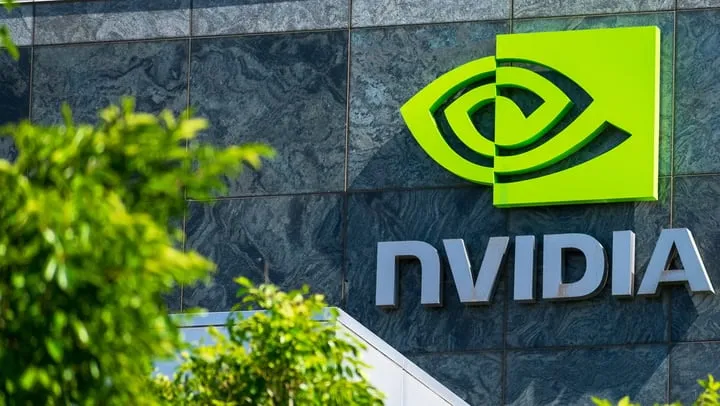
Nvidia has made its most significant neocloud bet yet, announcing a $2 billion strategic investment in Nebius Group, the Amsterdam-based AI cloud operator that spun out of Russia’s Yandex just two years ago. The deal sent Nebius shares surging as much as 18 percent on the day of the announcement, pushing the company’s market capitalisation above $28 billion. But behind the headline number lies a far deeper commitment — one that maps out how Nvidia intends to shape the global AI infrastructure landscape through to the end of the decade.
A Partnership Built from Silicon to Software
The investment is not simply a financial stake. A filing with the U.S. Securities and Exchange Commission confirmed that Nvidia has agreed to buy shares representing a stake of approximately 8.3 percent in Nebius at $94.94 per share. The deal is structured around four concrete pillars: designing and supporting AI factories, building an inference and agentic AI stack for developers and enterprises, rolling out multiple generations of Nvidia infrastructure, and fleet health monitoring using Nvidia’s latest GPU software.
As part of the arrangement, Nebius will receive early access to Nvidia’s most advanced upcoming platforms — the Rubin architecture GPUs, Vera CPUs, and BlueField storage systems. The current top-of-the-line GPU series that Nebius offers its customers is Blackwell, but the new Rubin GPU is expected to run inference workloads at ten times the cost efficiency. For a company whose entire business model is built around providing GPU-as-a-service, early access to next-generation silicon is a significant competitive advantage.
Nvidia CEO Jensen Huang framed the deal in explicit strategic terms. “Nebius is building an AI cloud designed for the agentic era,” Huang said, adding that the partnership will scale the cloud firm to meet surging global demand for AI compute. Nebius CEO Arkady Volozh echoed that ambition: “Nebius has been built for AI since day one — not adapted from a general-purpose cloud, but designed for what developers actually need. Now with Nvidia, we are extending that throughout the stack — from gigawatt-scale AI factories to inference and software.”
Build the future you deserve. Get started with our top-tier Online courses: ACCA, HESI A2, ATI TEAS 7, HESI EXIT, NCLEX-RN, NCLEX-PN, and Financial Literacy. Let Serrari Ed guide your path to success. Enroll today.
The Road to Five Gigawatts by 2030
At the heart of the deal is a shared goal to deploy more than five gigawatts of AI data center capacity by the end of 2030. To put that number in context, five gigawatts represents enough energy to power roughly 3.8 to 4 million U.S. households at any given moment. It is an enormous buildout target that would require sustained capital deployment on a scale that few companies in the world are currently capable of.
A major step toward that target is already underway. Earlier this month, Nebius received approval to break ground on a 1.2-gigawatt AI factory on 400 acres near Independence, Missouri, with power delivery expected in the second half of 2026. This will be the company’s largest AI facility to date, and its construction signals a decisive shift from Nebius as a European-centric operator to a genuinely transatlantic infrastructure provider.
The financial figures underpinning this expansion are staggering. Nebius reported a sharp jump in capital spending, rising to $2.1 billion in the December quarter alone, up from $416 million in the prior year. Much of the $2 billion Nvidia is investing will be cycled directly back into purchasing Nvidia hardware, making the deal part of a broader pattern that critics have described as circular financing — a topic addressed in more detail below.
From Yandex Spinout to Global AI Heavyweight
To understand how remarkable Nebius’s rise has been, it helps to revisit its origins. The company is formally registered as Nebius Group N.V. in Amsterdam, but its roots stretch back to Yandex, the dominant Russian internet company often described as Russia’s Google. The Netherlands-based holding structure of Yandex became the vehicle through which the international assets were eventually separated from the Russian business.
In July 2024, the Dutch branch officially became independent from its Russian parent company, and the Russian operations were subsequently sold to a group of domestic investors for $5.2 billion. The renamed Nebius Group listed on the Nasdaq and immediately began repositioning itself as a pure-play AI infrastructure company headquartered in Europe but operating globally, with R&D hubs across Europe, North America, and Israel.
The pace of transformation has been breathtaking. By the end of 2024, Nebius had already raised a $700 million investment round, with Nvidia participating and receiving a seat on the board. That earlier deal laid the groundwork for today’s far larger commitment. Nebius’s cloud platform, built from scratch for intensive AI workloads rather than retrofitted from general-purpose infrastructure, has positioned it as a distinctly different kind of operator compared to legacy hyperscalers like Amazon Web Services or Google Cloud.
One decision can change your entire career. Take that step with our Online courses in ACCA, HESI A2, ATI TEAS 7, HESI EXIT, NCLEX-RN, NCLEX-PN, and Financial Literacy. Join Serrari Ed and start building your brighter future today.
The Microsoft and Meta Deals: Proof of Concept at Scale
Before Nvidia’s announcement, Nebius had already demonstrated that it could attract the largest technology companies in the world as customers. In September 2025, the company confirmed a $17.4 billion agreement with Microsoft to deliver dedicated GPU infrastructure capacity from a new data center in Vineland, New Jersey. The deal, which could rise to $19.4 billion if Microsoft exercises additional capacity options, was struck as Microsoft CFO Amy Hood acknowledged the company would remain “capacity constrained” through the end of 2025. Nebius shares surged 53 percent in after-hours trading following that announcement alone.
Then, in November 2025, Nebius revealed a $3 billion, five-year contract with Meta Platforms to provide AI infrastructure. Together with the Microsoft deal, these two contracts represent approximately $20 billion in committed revenue — an extraordinary figure for a company that only became operational as an independent entity in early 2024. For the third quarter of 2025, Nebius reported revenue growth of 355 percent year-over-year, reaching $146.1 million — though the company continued to run at a significant net loss as it ploughed capital into infrastructure expansion.
Beyond the two hyperscale giants, CEO Volozh has indicated that Nebius is actively broadening its customer base. The company is increasingly targeting a wider range of clients, including Shopify and several prominent AI startups, rather than relying solely on large technology firms for revenue concentration. By end of 2026, management has said it targets an annualized revenue run rate of $7 to $9 billion, a target that would represent one of the most rapid scale-ups in the history of cloud infrastructure.
Nvidia’s Ecosystem Investment Strategy — and the Circular Deals Debate
The Nebius investment fits neatly into a pattern that has become one of the defining financial dynamics of the current AI boom. Nvidia has accumulated a massive cash reserve through the extraordinary demand for its GPUs, and it has been deploying that capital aggressively back into the AI ecosystem — including into companies that are themselves its largest customers.
In January 2026, Nvidia announced a $2 billion investment in CoreWeave, Nebius’s closest rival in the neocloud space, structured around a similar commitment to deploy five gigawatts of capacity by 2030. Earlier still, Nvidia committed $30 billion to OpenAI, cementing a relationship with the most visible AI application company in the world. And just last week, Nvidia announced parallel $2 billion investments in Lumentum and Coherent, two photonics specialists developing the optical interconnect technology that future AI data centers will depend on for moving data between chips at the speeds modern training and inference clusters demand.
Nvidia executives have been explicit about the strategy: at recent earnings conferences, they stated the company would use its cash reserve to invest in the AI ecosystem and boost model output. The logic is straightforward — by financing the infrastructure buildout of companies that buy its hardware, Nvidia accelerates demand for its own chips.
Critics, however, have raised concerns about what some describe as circular deals. The world’s most valuable firm is investing billions into companies that are often simultaneously its largest customers, and those companies are then using the capital they receive to purchase more Nvidia hardware. Reuters and Bloomberg have both noted that this dynamic raises concerns about circular investments potentially fuelling a bubble in AI infrastructure valuations.
Defenders of the model argue that the underlying demand for AI compute is real and growing, and that Nvidia is simply acting as a rational actor that happens to have both the capital and the strategic interest in accelerating adoption. Whether the circular investment dynamic represents sound industrial financing or the inflation of a speculative bubble is a question that markets and regulators are likely to continue scrutinising.
What the Rubin Architecture Means for Nebius’s Competitive Position
One of the most consequential elements of the Nvidia-Nebius deal is the early access to hardware that is not yet commercially available. Nebius currently deploys Blackwell-generation GPUs — the most advanced Nvidia chips on the market today. But the agreement provides a roadmap to Rubin-generation hardware and Vera CPUs, which represent Nvidia’s next major architectural leap.
For neocloud operators, hardware generation matters enormously. A provider with access to the latest GPUs can offer inference at lower cost per token, which is increasingly the unit economics that enterprise customers and AI developers care about. The Rubin GPU is engineered to run inference workloads at ten times the cost efficiency of current alternatives, according to SiliconAngle’s analysis of the partnership terms. Combined with Vera CPUs handling general compute tasks and BlueField chips offloading storage management from main CPUs, Nebius’s infrastructure roadmap positions it at the frontier of what AI-native cloud looks like.
This is precisely the “full-stack” proposition that both Jensen Huang and Arkady Volozh have emphasised: a cloud platform that is fully integrated from silicon to software, rather than a general-purpose cloud retrofitted for AI workloads. In an era where inference is becoming as important as training — and where agentic AI applications require persistent, low-latency compute — the architectural choices that neoclouds make today will determine their market positions for years to come.
The Neocloud Category Comes of Age
The Nebius-Nvidia announcement is the latest evidence that the neocloud category — specialised cloud providers focused almost exclusively on AI workloads — has moved decisively from startup curiosity to critical infrastructure. Nebius and CoreWeave are the two most prominent operators in this space, and both have now secured multi-gigawatt deployment commitments backed by Nvidia capital.
Unlike legacy hyperscalers such as Google, Amazon, and Microsoft — which are simultaneously building their own custom AI accelerators and competing with Nvidia on chip design — neoclouds are betting that Nvidia’s hardware advantage will persist long enough to build sustainable businesses on top of it. The hyperscalers’ development of proprietary silicon represents a long-term risk to that thesis, but in the near term, demand for Nvidia-based infrastructure is outpacing supply by a significant margin.
For Nebius specifically, the trajectory from Yandex spinout to a company with a market capitalisation above $28 billion and contracts worth tens of billions of dollars represents one of the most improbable corporate reinventions of the AI era. With Nvidia now holding an 8.3 percent stake and providing a direct pipeline to the most advanced hardware on the planet, the company enters the next phase of its growth story with the backing of the single most powerful player in the global AI hardware ecosystem.
Whether Nebius can convert that structural advantage into durable profitability — while managing an enormous capital expenditure program and navigating the ever-present risk of technology disruption — remains to be seen. But for now, the message from Jensen Huang’s $2 billion vote of confidence is clear: in the race to build the AI cloud infrastructure of the future, Nebius has earned a seat at the very top table.
Ready to take your career to the next level? Join our Online courses: ACCA, HESI A2, ATI TEAS 7 , HESI EXIT , NCLEX – RN and NCLEX – PN, Financial Literacy!🌟 Dive into a world of opportunities and empower yourself for success. Explore more at Serrari Ed and start your exciting journey today! ✨
Track GDP, Inflation and Central Bank rates for top African markets with Serrari’s comparator tool.
See today’s Treasury bonds and Money market funds movement across financial service providers in Kenya, using Serrari’s comparator tools.
Photo Source: Google
By: Montel Kamau
Serrari Financial Analyst
12th March, 2026