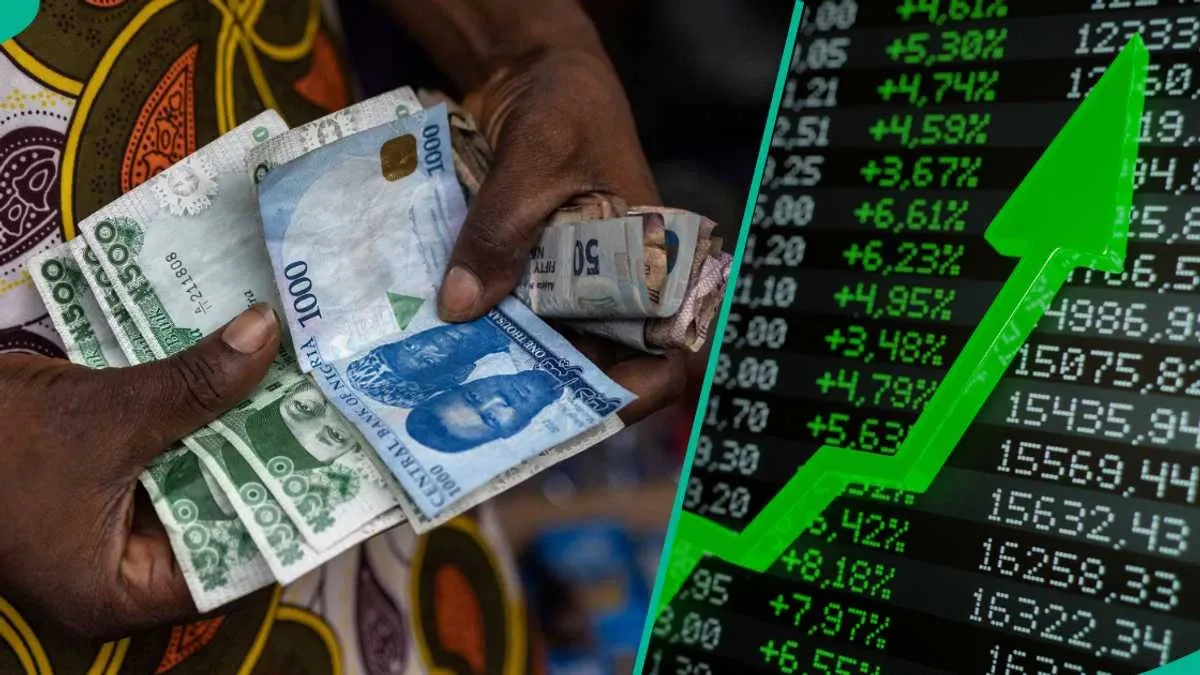
The NGX Oil and Gas Index tracks listed Nigerian oil and gas companies and became one of the clearest drivers of the Nigeria stock market 2026 rally. On July 8, the index rose 3.85%, while its year-to-date gain stood around 98.21%. That strength helped lift the wider NGX All-Share Index even as Wall Street weakened. However, the oil story is not one-dimensional. Higher crude can support oil-linked equities and government revenue expectations, but Nigeria also imports refined products, meaning diesel and transport costs can rise sharply for households and businesses. For investors, the key is separating equity-market winners from real-economy cost pressures.
Key Overview
- The NGX All-Share Index rose 2.27% on July 8 to 242,459.98 points.
- Market capitalisation increased by about ₦3.45 trillion to roughly ₦155.59 trillion.
- The index was up 7.43% over one week and 55.81% year-to-date.
- The NGX Oil and Gas Index rose 3.85% on the day and was up 98.21% year-to-date.
- Airtel Africa gained 10% to ₦5,801.40, while Fidelity Bank gained 9.97%.
- Nigeria’s diesel price has risen 86% in local-currency terms, the steepest increase among the African markets reviewed by IFPRI.
Nigerian Stocks Defy Wall Street as Oil Lifts NGX 2.3%
Nigeria Decouples From Wall Street
Nigerian stocks moved in the opposite direction from Wall Street on July 8. While the Dow fell 1.1% on oil and rate concerns, the NGX All-Share Index rose 2.27% to close at 242,459.98. Proshare reported that buying interest lifted the index from 237,083.28 in the previous session and added roughly ₦3.45 trillion to investor wealth under the NGXASI gains 2.27 percent report.
NGX Pulse also listed the July 8 daily wrap at 242,459.98, confirming the same 2.27% move. That makes the rally a confirmed local-market outperformance, not just a headline reaction to crude prices through the NGX July 8 market wrap.
Market Cap Jumps by ₦3.45 Trillion
The size of the move matters. Proshare said the market’s year-to-date return rose to 55.81%, while investors gained approximately ₦3.45 trillion in one session. NGX Pulse’s live dashboard showed the market moving further by July 9, but the July 8 close remains the clean reference point for this article’s market move under the NGX Pulse daily market data.
The rally also came after a difficult June. Nairametrics reported that the NGX All-Share Index had settled at 229,419.18 on June 30, carrying a 46.8% H1 return after a correction from its May peak. The rebound therefore marks a recovery from June weakness, not a fresh all-time high.
Oil and Gas Did the Lifting
Oil and gas was the key sector. Proshare’s July 8 market table showed the NGX Oil and Gas Index up 3.85%, while the sector’s year-to-date gain stood near 98.21%. Industrial goods rose 1.89%, banking gained 1.07%, consumer goods added 0.31%, and insurance slipped 0.20% under the NGX sector performance table.
The stock leadership was broad enough to support the index, but still concentrated in major names. Proshare listed Airtel Africa up 10.00%, Fidelity Bank up 9.97%, Aradel up 8.86% and Dangote Cement up 3.15%. Market breadth was positive, with gainers outpacing losers.
Not a New Record Yet
The rally was strong, but it was not a new record. Nairametrics reported that the NGX All-Share Index peaked at 252,508 points on May 13, 2026, before the June correction erased more than 20,400 points from the benchmark. By June 30, the index had fallen to 229,419.18, although the H1 return was still a powerful 46.8% under the Nairametrics H1 NGX report.
That distinction matters for investors. The July 8 gain was a sharp recovery and a major outperformance versus global equities, but it still left the market below its May all-time high.
The Exporter’s Paradox
The July rally captures Nigeria’s exporter paradox. Higher crude can help oil-linked equities, but it also raises costs in an economy where refined-product pricing is exposed to global markets, exchange-rate movements and import-parity dynamics. IFPRI reported that Nigeria’s diesel price rose 86% in local-currency terms between mid-January and mid-June, compared with an African average increase of around 25% and a global crude rise of roughly 70% under the IFPRI oil price shock analysis.
That is why “African oil exporters” is too simple as an investment shortcut. Equity investors may reward oil and gas stocks, but households, transport operators, manufacturers and food distributors can still face higher operating costs.
Context is everything. Stay ahead of shifting trends with today’s market updates, and uncover emerging opportunities using the Serrari Group Market Index and Marketplace. Then, take control of your own financial future by exploring our Money & Life Reset Transformation Blueprint ™ to build stronger habits, create better systems, and design a path toward lasting wealth.
Dangote Dividend Adds Liquidity
Dangote Cement also matters this week. Punch reported that a ₦45 per share dividend payout from Dangote Cement was set to hit investors’ accounts, with shareholders approving a final dividend of ₦45 per ordinary share for the 2025 financial year and a total payout of ₦753.8 billion under the Dangote Cement dividend payout report.
That dividend can add cash to the market and support tactical reinvestment. However, the dividend story should be separated from the July 8 market-close data because some reports mixed different sessions and movers.
Naira Returns Need Adjustment
The 55.81% year-to-date gain is a nominal naira return. It does not mean USD or KES investors earned the same result after currency conversion. For diaspora investors and regional allocators, the naira exchange rate, repatriation costs and market liquidity remain central to the return calculation.
This does not weaken the Nigerian stocks story. It simply makes the performance more precise. Local investors may view the NGX as an inflation hedge and naira-wealth preservation vehicle, while foreign investors must compare equity gains with currency depreciation.
Conclusion
Nigerian stocks defied Wall Street because the local market had a different driver: oil-linked strength, large-cap buying and renewed domestic risk appetite. The NGX All-Share Index rose 2.27% to 242,459.98 as the Dow fell, showing a clear Africa-market decoupling.
But the lesson is not that oil automatically makes Nigeria a winner. The same crude surge that supports oil and gas equities can raise diesel, transport and food-system costs. For investors, the real story is the split between market leadership and real-economy pressure.
FAQs
1. Why did Nigerian stocks rise while Wall Street fell?
Nigerian stocks rose because local buying interest strengthened across oil and gas, industrials, banking and selected large-cap names. The NGX All-Share Index gained 2.27% on July 8 while the Dow fell 1.1%. This shows that Nigeria’s equity market was driven by local sector dynamics and oil-linked sentiment rather than simply tracking US market weakness.
2. Was the July 8 NGX rally a new all-time high?
No. The July 8 rally was strong, but it was not a fresh all-time high. Nairametrics reported that the NGX All-Share Index peaked at 252,508 points on May 13, 2026, before a June correction. The July 8 close of 242,459.98 remains below that May peak, even though the year-to-date performance is still very strong.
3. Why does diesel matter for Nigerian equity investors?
Diesel matters because it affects transport, logistics, food distribution and manufacturing costs. Even if oil-linked stocks benefit from higher crude prices, companies and consumers can face higher operating costs when diesel rises. IFPRI reported that Nigeria’s diesel price rose 86% in local-currency terms, showing that the oil shock has also created domestic cost pressure.
4. How should foreign investors read the 55.81% YTD gain?
Foreign investors should treat the 55.81% gain as a nominal naira return. A USD or KES investor must adjust for exchange-rate movement, conversion costs and liquidity. This is especially important in Nigeria, where currency depreciation can materially reduce foreign-currency returns even when local-currency index performance looks strong.
5. What should investors monitor next on the NGX?
Investors should monitor the NGX Oil and Gas Index, market breadth, daily turnover, banking recapitalisation updates, Dangote Cement dividend reinvestment, Q2 earnings releases and naira performance. They should also watch whether the index can reclaim its May peak or whether diesel costs, inflation and currency pressure limit the rally.
Sources: Proshare, NGX Pulse, AFX/Kwayisi, Nairametrics, IFPRI
Your financial future isn’t something you wait for—it’s something you build.
The real question is: when do you begin?
Move beyond simply staying informed.
Navigate the markets with clarity—track trends through the Serrari Group Market Index, uncover opportunities in the Serrari Marketplace, and build practical knowledge with our Curated Wealth Builder Platform.
Stay connected to what truly matters.
Get daily insights on macro trends and financial movements across Kenya, Africa, and global markets—delivered through the Serrari Newsletter.
Growth opens doors.
Advance your career through professional programs including ACCA, HESI A2, ATI TEAS 7 , HESI EXIT , NCLEX – RN and NCLEX – PN, Financial Literacy!🌟—designed to move you forward with confidence.
See where money is flowing—clearly and in real time.
Track Money Market Funds, Treasury Bills, Treasury Bonds, Green Bonds, and Fixed Deposits, alongside global and African indexes, key economic indicators, and the evolving Crypto and stablecoin landscape—all within Serrari’s Market Index.