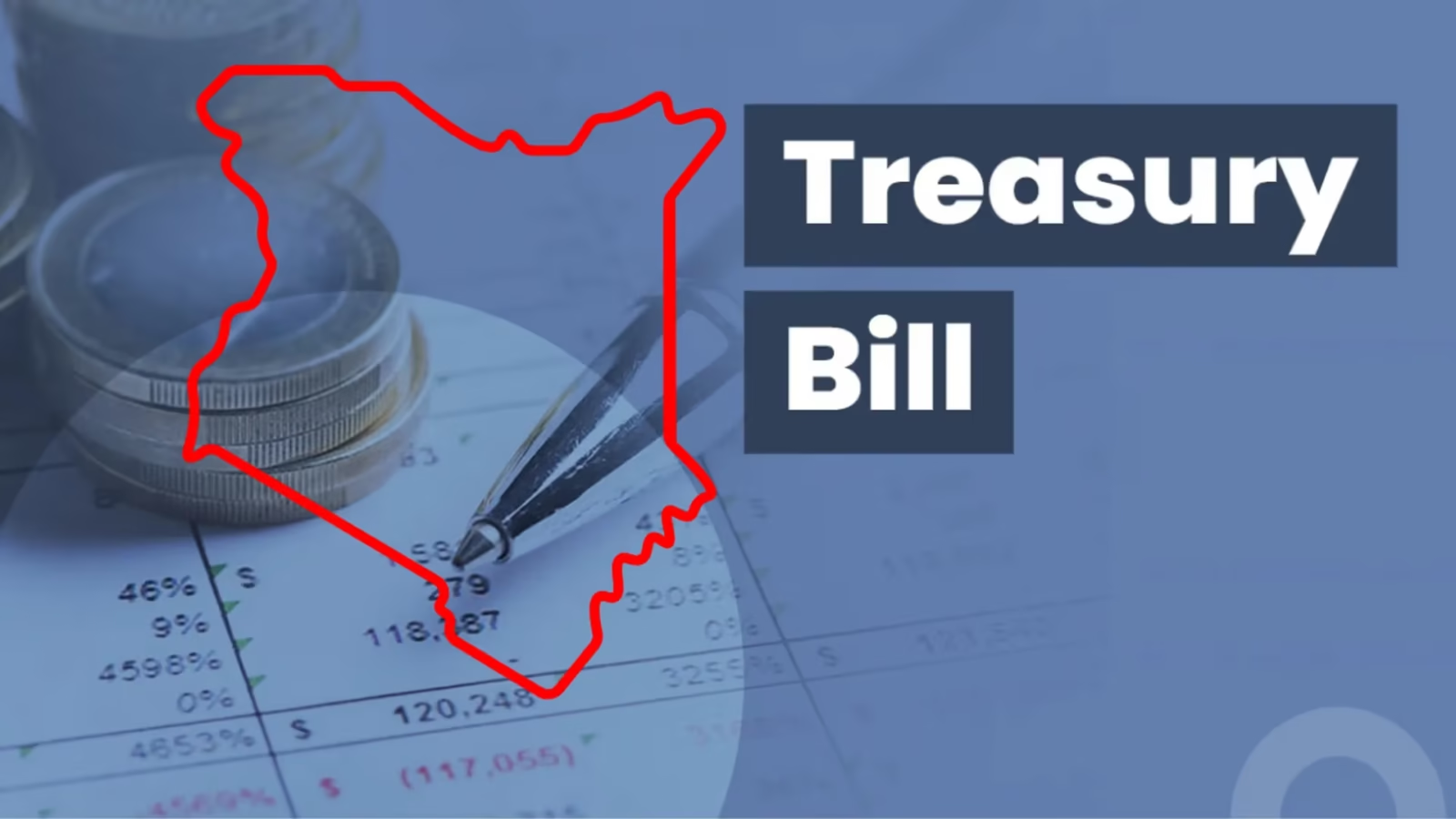
Kenya’s domestic debt market is experiencing exceptionally strong investor demand, with the latest Treasury bill auction attracting KSh100.43 billion in bids against an offer of KSh24 billion. The level of participation represents the highest demand recorded in recent Central Bank of Kenya (CBK) auction records.
LIVET-bill rates: 91-day 8.76% · 182-day 8.87% · 364-day 9.04% · auction of 8 OctSee rates →The overwhelming response from investors reflects growing appetite for government securities amid changing financial conditions, including interest rate expectations and investment diversification strategies.
Treasury bills, which are short-term government securities, have become increasingly attractive to investors seeking stable returns and relatively low-risk financial instruments.
The latest auction results show that investors submitted bids more than four times the amount offered, enabling the government to raise significantly more than its initial target while refinancing maturing debt obligations.
Breakdown of the Treasury Bill Auction
The auction covered three standard Treasury bill tenors issued by the Kenyan government:
- 91-day Treasury bill
- 182-day Treasury bill
- 364-day Treasury bill
Each tenor attracted different levels of investor interest.
364-Day Treasury Bill
The 364-day Treasury bill received the overwhelming majority of investor bids.
- Total bids: KSh83.32 billion
This accounted for more than 80% of total demand, indicating strong investor preference for longer-term short-term instruments that provide higher yields compared to shorter maturities.
182-Day Treasury Bill
The 182-day bill received moderate demand.
- Total bids: KSh15.16 billion
While significantly lower than the demand for the one-year paper, the six-month instrument still attracted substantial participation from investors seeking shorter investment horizons.
91-Day Treasury Bill
The 91-day Treasury bill recorded the lowest level of demand.
- Total bids: KSh1.95 billion
Shorter-term instruments typically attract lower demand when investors expect stable or rising yields, as longer maturities allow them to lock in higher returns.
Government Borrowing Outcome
Although the government initially offered KSh24 billion worth of Treasury bills, it accepted significantly more bids.
The government ultimately accepted KSh41.42 billion from the auction.
This allowed the Treasury to:
- Refinance KSh26.21 billion in maturing securities
- Raise approximately KSh15.21 billion in net new borrowing
Accepting bids above the initial offer is a common practice when investor demand is strong and borrowing conditions remain favorable.
This approach allows governments to increase domestic financing while maintaining liquidity in the debt market.
Kenya’s Domestic Debt Surpasses KSh7 Trillion
The strong participation in Treasury bill auctions is part of a broader trend in Kenya’s domestic debt market.
According to data from the Central Bank of Kenya, the combined stock of Treasury bills and Treasury bonds recently surpassed KSh7 trillion.
Domestic borrowing has become an increasingly important component of Kenya’s fiscal financing strategy.
The government has gradually increased reliance on local capital markets to fund budget deficits and refinance existing debt obligations.
Domestic borrowing offers several advantages compared with external loans:
- Reduced exposure to foreign exchange risk
- Greater control over borrowing terms
- Support for the development of local capital markets
However, increasing domestic debt levels also raise questions about long-term fiscal sustainability.
Strong Demand for Treasury Bonds
Investor appetite has not been limited to short-term Treasury bills.
The Treasury bond market has also experienced significant demand during the 2025/26 fiscal year.
Between July 2025 and February 16, 2026, Treasury bond auctions recorded:
- KSh1.38 trillion in total bids
- KSh540 billion offered by the government
From these auctions, the government successfully raised approximately KSh746.35 billion from domestic investors.
This strong participation highlights the continued attractiveness of Kenyan government debt instruments to both institutional and retail investors.
Major Bond Auction Highlights
Several Treasury bond auctions during the fiscal year attracted particularly high levels of demand.
August 2025 Infrastructure Bond Auction
One of the largest bond auctions occurred on 18 August 2025, when the government reopened two infrastructure bonds:
- IFB1/2018/015
- IFB1/2018/019
The reopening received:
- KSh323.4 billion in bids
- Against an offer of KSh90 billion
This represented an oversubscription rate of more than three times the offered amount.
Subsequent Tap Sale
A follow-up tap sale on 25 August for the same infrastructure bond issues also attracted strong investor interest.
- Total bids: KSh207.5 billion
- Amount raised: KSh179.8 billion
Tap sales allow governments to reopen previously issued bonds to raise additional funds when market conditions are favorable.
February 2026 Bond Auction
Another major auction took place on 16 February 2026, when the government reopened the following bonds:
- FXD3/2019/015
- FXD1/2018/025
This auction received:
- KSh213.74 billion in bids
- Against an offer of KSh100 billion
Such results highlight the continued liquidity and depth of Kenya’s domestic bond market.
Why Investor Demand Is Increasing
Several factors have contributed to the surge in investor demand for Kenyan government securities.
Attractive Yields
Government securities typically offer competitive interest rates compared with other investment options such as bank deposits.
LIVEKenya bond yields: Average yield 11.85% across 58 bonds · 21 OctSee yields →Higher yields make Treasury bills and bonds particularly attractive to institutional investors, including pension funds and insurance companies.
Safe-Haven Investment
Government securities are generally considered low-risk investments because they are backed by the full faith and credit of the government.
During periods of financial uncertainty, investors often shift funds toward safer assets.
Limited Alternative Investments
In some cases, investors may have limited alternative investment opportunities with comparable risk-return profiles.
Government debt securities provide a predictable income stream and capital preservation.
Strong Institutional Participation
Institutional investors such as pension funds, banks, and asset managers play a major role in the Kenyan debt market.
These institutions often allocate large portions of their portfolios to government securities.
Historical Context: Growth of Kenya’s Domestic Debt Market
Over the past two decades, Kenya has significantly expanded its domestic debt market.
Government securities have become an important tool for financing public expenditure and managing fiscal deficits.
Several factors have supported the growth of the domestic bond market:
- Development of the Central Depository System (CDS)
- Increased participation by pension funds and institutional investors
- Improvements in auction transparency
- Expansion of infrastructure bonds and specialized debt instruments
The growth of the domestic debt market has helped Kenya reduce reliance on external borrowing.
However, rising domestic debt levels have also increased the government’s interest payment obligations.
Why This Development Matters
The strong demand for Kenyan government securities has several important implications for the country’s economy and financial markets.
Improved Government Financing
High investor demand allows the government to raise funds more easily and at competitive interest rates.
This supports public investment and budget financing.
Development of Capital Markets
Active participation in government debt markets helps strengthen Kenya’s financial system by increasing market liquidity and investment opportunities.
Increased Investor Confidence
Strong demand signals confidence among investors in the government’s ability to meet its debt obligations.
Support for Fiscal Management
Domestic borrowing provides a flexible financing tool that can be adjusted depending on fiscal needs.
Risks and Considerations
Despite the strong demand for government securities, several risks should be considered.
Rising Debt Levels
As domestic borrowing increases, total public debt continues to grow.
Higher debt levels may place pressure on government finances through increased interest payments.
Crowding Out Private Investment
Heavy government borrowing from domestic markets may reduce the availability of capital for private sector businesses.
This phenomenon is often referred to as crowding out.
Interest Rate Risks
If interest rates rise significantly, the cost of refinancing government debt could increase.
This could place additional strain on fiscal budgets.
Market Dependency
Excessive reliance on domestic debt markets could expose the government to liquidity risks if investor demand weakens.
Looking Ahead
The outlook for Kenya’s domestic debt market will depend on several key factors.
Fiscal Policy Direction
Government borrowing plans and fiscal deficits will influence the volume of future debt issuance.
Interest Rate Trends
Changes in interest rates will affect investor demand and government borrowing costs.
Institutional Investor Participation
Pension funds and financial institutions are expected to remain major participants in the domestic debt market.
Economic Growth
Stronger economic growth could improve government revenue and reduce the need for extensive borrowing.
Conclusion
Kenya’s latest Treasury bill auction, which attracted KSh100.43 billion in bids against a KSh24 billion offer, highlights the strong investor appetite for government securities.
The oversubscription reflects confidence in Kenya’s domestic debt market and underscores the importance of government bonds and Treasury bills as key investment instruments.
As the stock of domestic debt surpasses KSh7 trillion, Kenya’s financial markets continue to play a critical role in supporting government financing and economic development.
However, maintaining sustainable borrowing levels and managing fiscal risks will remain essential to ensuring the long-term stability of the country’s public finances.
Track GDP, Inflation and Central Bank rates for top African markets with Serrari’s comparator tool.
See today’s Treasury bonds and Money market funds movement across financial service providers in Kenya, using Serrari’s comparator tools.
Photo Source: Google
By: Elsie Njenga
11th March,2026