














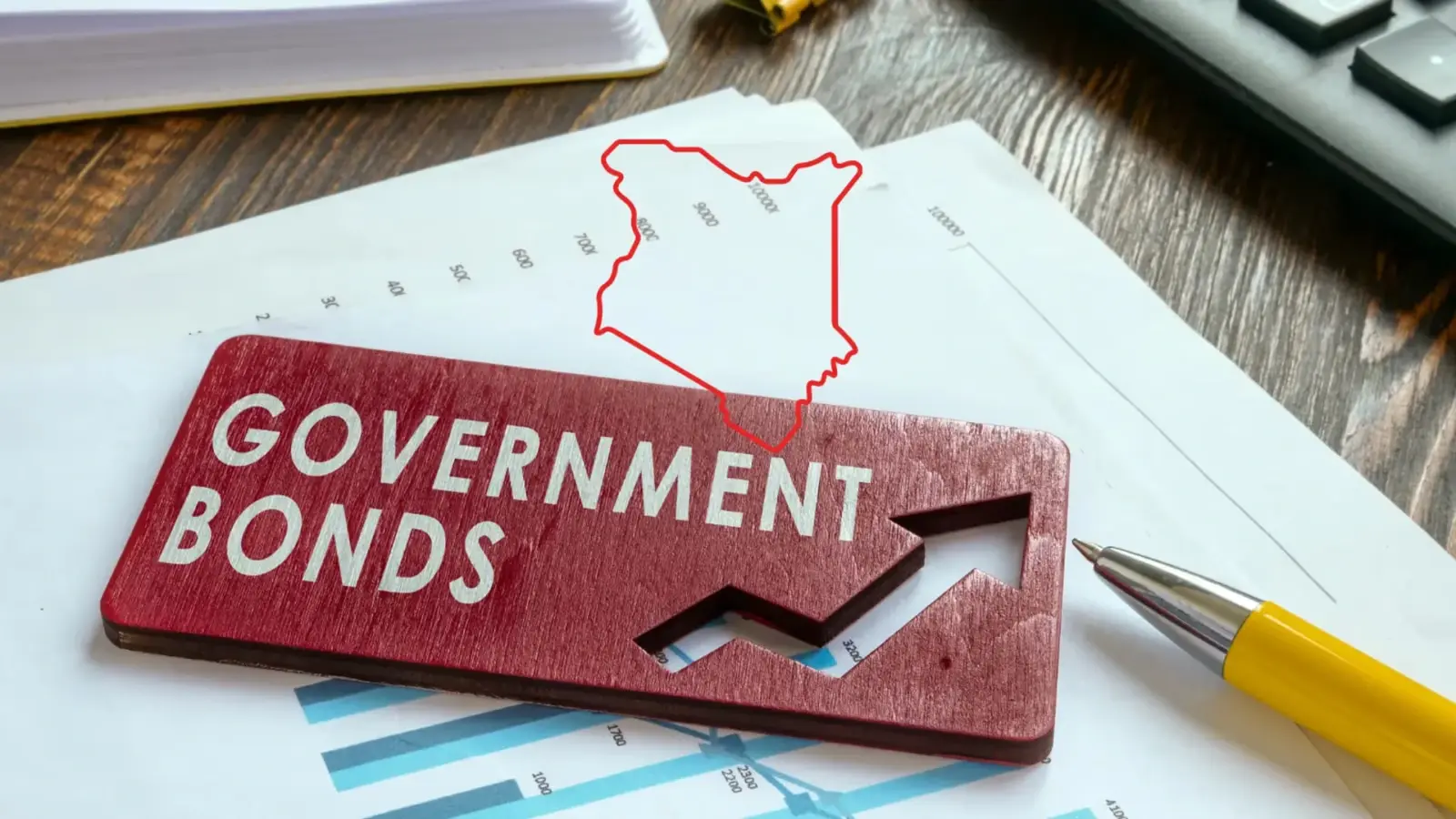
The Central Bank of Kenya has opened a Ksh 20 billion treasury bond auction that closes on April 15, 2026, offering both retail and institutional investors access to two government debt instruments with attractive fixed coupon rates. The first is a reopened 14.9-year bond carrying a 12.00 percent coupon, while the second is a newly issued 30-year bond maturing in March 2056 with a 12.5 percent coupon — one of the highest fixed rates available in Kenya’s current fixed income market. Both bonds carry a preferential withholding tax rate of 10 percent, compared to the standard 15 percent applied to most other investment income, meaningfully enhancing the net return for investors. With a minimum investment threshold of just Ksh 50,000, the auction is accessible to individual Kenyan savers as well as the institutional investors and international participants that the CBK has explicitly invited to participate. Settlement is scheduled for April 20, 2026, making this one of the most time-sensitive fixed income opportunities currently available in the East African market.
Key Overview
- Issuer: Central Bank of Kenya (CBK) on behalf of the Government of Kenya
- Total Offer Size: Ksh 20 billion
- Purpose: Budgetary support for the Government of Kenya
- Bond 1: Reopened 14.9-year bond (SDB1/2011/030) — 12.00% coupon, accrued interest of Ksh 2.3077 per Ksh 100
- Bond 2: New 30-year bond (FXD1/2026/030, ISIN KE8000006760) — 12.5% coupon, maturing March 13, 2056, zero accrued interest
- Minimum Investment: Ksh 50,000
- Non-Competitive Bid Cap: Ksh 50 million per CSD account per tenor (exemptions apply to state corporations, public universities, and Semi-Autonomous Government Agencies)
- Withholding Tax: 10% (reduced rate, versus the standard 15%) — computed on clean prices
- Auction Window: April 7–15, 2026; bids due by 10:00 am on April 15, 2026
- Settlement Date: April 20, 2026
A Rare Window Into Kenya’s Long-Term Debt Market
Government bonds are among the oldest and most reliable instruments in the global financial system. They represent a sovereign borrower’s promise to repay capital over a defined period while making regular interest payments — and in a country like Kenya, where government debt carries the full faith and credit of the Republic, they occupy a unique position at the low-risk end of the domestic investment spectrum. The Central Bank of Kenya’s latest auction, which closes on April 15, 2026, offers investors access to two fixed-coupon bonds with tenors that stretch well into the next decade and beyond. For those seeking predictable, government-guaranteed income over the long term, the timing and structure of this offer deserve close attention.
The auction is notable in several dimensions. The coupon rates on offer — 12.00 percent for the 14.9-year bond and 12.5 percent for the new 30-year issue — are fixed for the life of the instrument, meaning investors who participate today lock in these rates regardless of how Kenya’s interest rate environment evolves over the coming years. The preferential withholding tax treatment of 10 percent, applied to both bonds, enhances the net return in a way that meaningfully differentiates these instruments from other fixed income alternatives. And the low minimum investment threshold of Ksh 50,000 — approximately $385 at current exchange rates — makes the auction accessible to a far broader pool of investors than the institutional-only structures that have historically characterised Kenya’s longer-dated bond market.
The CBK’s explicit invitation to international investors is also significant. It signals confidence in Kenya’s fiscal narrative and a deliberate strategy to deepen the participation of global capital in Kenya’s domestic debt market — a development that, if sustained, would improve pricing, liquidity, and the overall depth of Kenya’s fixed income ecosystem.
Markets move fast; don’t get left behind. We’ve paired the Serrari Group Market Index with a curated Marketplace and a comprehensive Wealth Builder Course to ensure you have the data—and the skills—to act on it.
Historical Context: Kenya’s Treasury Bond Market and Its Evolution
Kenya’s government bond market has its origins in the post-independence era, when the newly established Central Bank of Kenya began issuing treasury bills and bonds as the primary instruments for financing government expenditure. In those early decades, the market was thin, largely confined to commercial banks and state-owned financial institutions, and characterised by administratively set interest rates that bore limited relationship to market-clearing prices.
The liberalisation of Kenya’s financial sector in the 1990s transformed the dynamics of government debt issuance. The introduction of competitive auction mechanisms — under which investors submit bids specifying the yields they require, and the government accepts bids from the lowest yield upwards until the target amount is raised — brought market discipline to the pricing of government debt for the first time. This shift was critical: it forced the government to offer rates that reflected genuine investor demand rather than administratively convenient benchmarks, and it created the foundation for a liquid secondary market in which bonds could be bought and sold between investors.
The development of the Central Securities Depository in subsequent years further professionalised the market, providing a centralised registry for bond ownership and a streamlined settlement infrastructure that reduced the operational barriers to participation. The CSD system is now the backbone of retail investor access to government bonds in Kenya, enabling individuals to hold bonds directly in their own accounts rather than through intermediaries.
The extension of Kenya’s yield curve — the range of maturities for which the government issues bonds — has been a gradual process. Short-dated treasury bills of 91, 182, and 364 days have long been the most liquid instruments in the market. Medium-term bonds of two, five, and ten years developed over subsequent years. The issuance of 30-year bonds represents the frontier of this curve extension — a point at which the government is making very long-term commitments about its borrowing costs and investors are making equally long-term commitments about their capital allocation.
The current auction, which includes both a reopening of an existing long-dated bond and a new 30-year issue, reflects the maturity of Kenya’s debt capital markets and the government’s confidence that sufficient investor appetite exists to absorb long-duration sovereign paper at the coupon rates on offer.
Understanding the Two Bonds: Structure, Pricing, and Key Differences
The auction presents investors with a choice between two distinct instruments, each suited to a different investment horizon and risk appetite. Understanding the structural differences between the two bonds is essential for making an informed participation decision.
Bond 1: SDB1/2011/030 — The Reopened 14.9-Year Bond
The first bond, designated SDB1/2011/030, is a reopening of an existing issue — meaning that the bond was originally issued in 2011 with a 30-year maturity and now has approximately 14.9 years remaining until its scheduled maturity. The coupon rate is fixed at 12.00 percent per annum, paid semi-annually in line with standard Kenyan government bond practice.
Because this bond has been in existence for some time and interest has been accruing since the last coupon payment date, investors who purchase it in the current auction must pay the seller — in this case, the government — the accrued interest that has accumulated since the last coupon date. This accrued interest is Ksh 2.3077 per Ksh 100 of face value. The pricing mechanics work as follows: the clean price represents the bond’s value excluding accrued interest, while the dirty price — which is what the investor actually pays — is the clean price plus the accrued interest. Using the example provided in the CBK’s auction notice, if the quoted yield is 12.0000 percent, the clean price is Ksh 99.9587 per Ksh 100, and adding the accrued interest of Ksh 2.3077 produces a dirty price of Ksh 102.2664 per Ksh 100.
For investors, the accrued interest is not a cost in the economic sense — it is recovered in full when the next coupon payment is made, effectively reimbursing the buyer for the portion of the coupon period that elapsed before their purchase. It is, however, an important component of the cash flow calculation that investors must account for when determining their actual yield to maturity.
Bond 2: FXD1/2026/030 — The New 30-Year Issue
The second bond, FXD1/2026/030, is a brand new issue with ISIN KE8000006760, carrying a higher coupon rate of 12.5 percent per annum and maturing on March 13, 2056. Because this bond is newly issued, no interest has yet accrued — the accrued interest figure is Ksh 0 per Ksh 100 — and investors pay only the clean price, which will be determined by the auction clearing yield.
The 30-year tenor places this bond at the very long end of Kenya’s yield curve. For investors, a 30-year bond represents a commitment to hold a fixed income instrument through multiple economic cycles, interest rate environments, and political administrations. The 12.5 percent coupon provides a meaningful buffer against the risk that inflation or rising interest rates might erode the real value of future coupon payments — but investors should be clear-eyed about the fact that locking in a fixed rate for three decades involves accepting the risk that a materially different interest rate environment could prevail in the future.
For the government, the new 30-year issue serves a different purpose: it extends the maturity profile of Kenya’s public debt, reducing the refinancing risk associated with a debt portfolio concentrated at shorter maturities and providing long-term funding certainty for infrastructure and development expenditure.
The Tax Advantage: Why 10% Withholding Matters
One of the most practically significant features of both bonds in this auction is their withholding tax treatment. Both the SDB1/2011/030 and FXD1/2026/030 attract withholding tax at the reduced rate of 10 percent, compared to the standard rate of 15 percent that applies to most other forms of investment income in Kenya.
This five percentage point difference in withholding tax rate has a direct and meaningful impact on the net return that investors realise from their bond holdings. For an investor receiving Ksh 12,500 in annual coupon income per Ksh 100,000 of face value on the new 30-year bond, withholding tax at 10 percent reduces the net receipt to Ksh 11,250 — compared to Ksh 10,625 if the standard 15 percent rate applied. Over the life of a 30-year bond, this difference compounds into a very significant advantage.
The reduced withholding tax rate reflects a deliberate policy choice by the Kenyan government to incentivise participation in the longer-dated segment of the government bond market. By making longer-term government securities more attractive on an after-tax basis, the policy encourages the development of a deeper market for long-duration sovereign debt — which in turn reduces the government’s refinancing risk and supports more stable long-term fiscal planning.
It is worth noting that withholding tax on these bonds is computed on clean prices — meaning it is applied to the principal value of the bond excluding accrued interest. This is a technical but important detail for investors calculating their precise after-tax yield, particularly for the reopened bond where the dirty price includes a meaningful accrued interest component.
Who Should Consider Participating?
The structure of this auction — two bonds with different tenors, a low minimum investment threshold, and the explicit inclusion of non-competitive bidding — reflects a deliberate effort to make the offer accessible to a broad range of investors. But different investor profiles will find different aspects of the opportunity compelling.
For retail investors and individual savers, the combination of a Ksh 50,000 minimum, a government guarantee, a fixed coupon rate, and a preferential tax rate makes these bonds one of the most straightforward fixed income options available in Kenya today. The predictability of the income stream — semi-annual coupon payments at a known, fixed rate — is particularly valuable for individuals planning for retirement, education funding, or other long-term financial goals. The 14.9-year bond may be more appropriate for investors who want certainty over a defined medium-to-long term horizon without committing capital for a full three decades.
For institutional investors — pension funds, insurance companies, fund managers, and banks — the longer-dated bond offers the duration matching that is a core requirement of their liability-driven investment strategies. Pension funds, in particular, have long-dated liabilities that are best matched with long-dated fixed income assets, and a 30-year Kenyan government bond at 12.5 percent offers an attractive risk-adjusted return relative to the alternatives available in Kenya’s domestic market.
For international investors, the explicit invitation from the CBK represents an opportunity to access Kenya’s sovereign yield curve at a point where the coupon rates on offer compare favourably with long-dated government bonds available in most developed and emerging markets. Currency risk — the possibility that the Kenyan shilling depreciates against the investor’s home currency — is the primary consideration that international participants must manage, either through hedging instruments or by accepting the currency exposure as part of a broader emerging market allocation.
Context is everything. While you follow today’s updates, use the Serrari Group Market Index and Marketplace to spot emerging shifts. Need to sharpen your edge? Our Wealth Builder Course turns these insights into a professional-grade strategy.
Risks to Consider
Like any fixed income investment, Kenya’s treasury bonds carry risks that investors should understand clearly before committing capital.
Interest rate risk is the most fundamental risk associated with long-duration bonds. If market interest rates in Kenya rise after an investor has purchased a fixed-coupon bond, the market value of that bond will fall — because newer bonds would offer higher coupon rates, making the existing bond less attractive to potential buyers. For investors who intend to hold the bond to maturity, this risk is largely academic: they will receive the contracted coupon payments and the full face value at maturity regardless of what happens to market rates in the interim. For investors who may need to sell before maturity, however, rising rates represent a real source of potential capital loss.
Inflation risk is closely related. A fixed coupon of 12.00 or 12.5 percent provides strong real returns in the current environment, where Kenya’s inflation rate is running at approximately 3 to 4 percent. But over a 30-year horizon, there is no guarantee that inflation will remain at these levels. A sustained period of high inflation would erode the real purchasing power of the fixed coupon payments — a risk that is inherent in any long-duration fixed income instrument.
Currency risk is relevant primarily for international investors but also warrants mention for Kenyan investors in the context of the broader macroeconomic picture. The Kenyan shilling has experienced significant depreciation against major currencies at various points in recent years, reflecting persistent current account deficits and periods of external financing pressure. While the CBK has made considerable progress in stabilising the currency, the long tenor of these bonds means that macroeconomic conditions may shift materially over their life.
Fiscal sustainability risk is the sovereign-specific risk that investors in government bonds must always assess. Kenya’s public debt has grown substantially over the past decade, and debt servicing costs now represent a significant portion of government revenue. While the government has demonstrated continued access to both domestic and international capital markets, investors should monitor Kenya’s fiscal trajectory — including the path of revenues, expenditure, and external debt repayment obligations — as part of their ongoing risk assessment.
Challenges Ahead
The success of this auction — and of Kenya’s longer-term strategy to develop a deep, liquid market for long-dated government bonds — depends on navigating several structural challenges.
Domestic savings mobilisation remains a constraint. Kenya’s household savings rate, while improving, is insufficient to absorb the full volume of government bond issuance required to meet fiscal financing needs without significant participation from institutional investors and international capital. Deepening the culture of long-term saving — through financial education, improved access to investment accounts, and continued product innovation — is essential for building the domestic investor base that a mature bond market requires.
The secondary market for Kenyan government bonds, while more developed than in many comparable African markets, remains relatively illiquid beyond the most actively traded benchmark maturities. Investors who purchase bonds in the primary auction may find it difficult to sell their holdings quickly in the secondary market without accepting a meaningful price discount — a liquidity premium that is not always fully reflected in the primary auction yields.
Exchange rate management will be critical for sustaining international investor participation. The CBK’s ability to maintain a broadly stable and competitive exchange rate — without the kind of sharp depreciations that have historically deterred foreign participation in local currency debt markets — is a prerequisite for building the international investor base that the auction notice implicitly targets.
Looking Ahead: Building Kenya’s Long-Term Capital Market
The CBK’s 30-year bond auction is not merely a financing transaction — it is a statement about the ambition and direction of Kenya’s capital market development. Every successful long-dated bond auction extends the government’s yield curve, adds a new data point to the pricing of long-term risk in the Kenyan economy, and builds the infrastructure of a market that can eventually support the issuance of long-term bonds by corporate borrowers and infrastructure project financiers.
The countries that have successfully built deep domestic bond markets — South Africa, Brazil, India — share a common characteristic: a sustained, multi-decade commitment to developing the institutional and regulatory infrastructure that allows long-duration capital to be efficiently priced and allocated. Kenya is on this journey, and the current auction is one more step along it.
For investors, the window is short. Bids must be submitted by 10:00 am on April 15, 2026 — just days away — and settlement follows on April 20. The combination of attractive coupon rates, preferential tax treatment, government guarantee, and low minimum investment makes this one of the more compelling fixed income opportunities currently available in Kenya’s market.
The decision to invest ultimately depends on individual circumstances — investment horizon, liquidity needs, risk tolerance, and portfolio context. But for investors who can commit capital for the medium to long term and who value the certainty of a fixed, government-guaranteed income stream, Kenya’s latest treasury bond auction deserves serious consideration.
Your financial future isn’t something you wait for, it’s something you build.
The real question is: when do you begin?
Move beyond simply staying informed.
Navigate the markets with clarity—track trends through the Serrari Group Market Index, uncover opportunities in the Serrari Marketplace, and build practical knowledge with our Curated Wealth Builder Course.
Stay connected to what truly matters.
Get daily insights on macro trends and financial movements across Kenya, Africa, and global markets—delivered through the Serrari Newsletter.
Growth opens doors.
Advance your career through professional programs including ACCA, HESI A2, ATI TEAS 7 , HESI EXIT , NCLEX – RN and NCLEX – PN, Financial Literacy!🌟—designed to move you forward with confidence.
See where money is flowing—clearly and in real time.
Track Money Market Funds, Treasury Bills, Treasury Bonds, Green Bonds, and Fixed Deposits, alongside global and African indexes, key economic indicators, and the evolving Crypto and stablecoin landscape—all within Serrari’s Market Index.