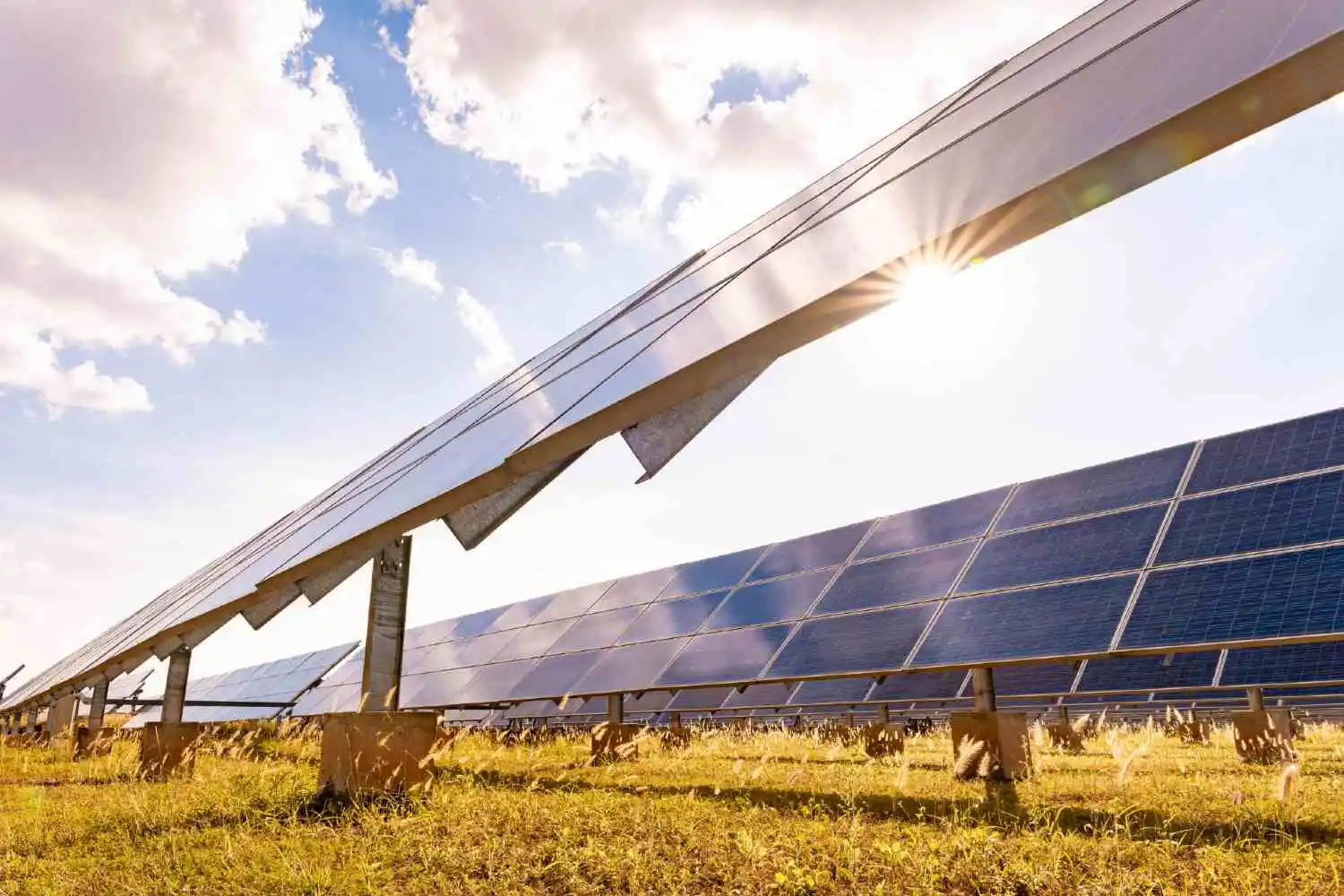
Voltalia has fully commissioned the 148MW Bolobedu solar farm in Limpopo, South Africa, marking a significant milestone in industrial renewable energy adoption.
The project supplies power to Richards Bay Minerals through a long-term corporate power purchase agreement, using Eskom’s transmission network.
With an annual output of around 300 GWh and emissions reductions exceeding 237,000 tonnes of CO₂, the project demonstrates how renewable energy can directly support industrial decarbonisation while contributing to local economic development and energy security.
Key Overview
- Voltalia commissions 148MW Bolobedu solar farm in Limpopo
- Supplies power to Richards Bay Minerals (Rio Tinto subsidiary)
- Generates ~300 GWh annually
- Cuts 237,000+ tonnes of CO₂ emissions per year
- Powers electricity equivalent of ~425,000 people
- Uses Eskom grid wheeling arrangement
- Built under long-term corporate PPA
- Created 800 local jobs (56% youth, 21% women)
- Includes skills development and local enterprise support
- Reflects growing demand for industrial renewable energy solutions
Voltalia Commissions Landmark Solar Project in South Africa
Voltalia has officially begun full operations at the 148MW Bolobedu solar farm in Limpopo, South Africa, marking a significant milestone in the country’s renewable energy expansion.
The commissioning of the facility represents more than just the addition of new solar capacity—it reflects a broader shift in how energy is being produced and consumed in South Africa. As the country continues to face ongoing power supply challenges and a heavy reliance on coal, projects of this scale are increasingly important in supporting a more diversified and resilient energy system.
The project stands out not only for its size, but also for its unique structure. Rather than feeding electricity into general grid consumption, the solar farm is specifically designed to supply power directly to a single industrial client through the national transmission network. This targeted approach reflects a growing trend where renewable energy projects are tailored to meet the specific energy demands of large corporate users.
This development highlights a significant shift toward private-sector-led renewable energy solutions, where independent power producers and industrial offtakers are playing a central role in accelerating the energy transition.
Markets move fast; don’t get left behind. We’ve paired the Serrari Group Market Index with a curated Marketplace and a comprehensive Wealth Builder Course to ensure you have the data—and the skills—to act on it.
Powering Industry Through Renewable Energy
The Bolobedu solar farm supplies electricity to Richards Bay Minerals (RBM), a subsidiary of Rio Tinto, under a long-term corporate power purchase agreement (CPPA).
This agreement provides RBM with a stable and predictable source of renewable energy, enabling the company to integrate clean power into its operations while reducing exposure to conventional, carbon-intensive electricity sources. It also reflects the growing importance of long-term contractual arrangements in enabling the financing and development of large-scale renewable energy projects.
Electricity generated at the plant is transmitted through Eskom’s national grid using a wheeling arrangement. This allows power to be delivered efficiently without requiring a direct physical connection between the generation site and the end user, offering greater flexibility in how energy is distributed.
This wheeling model is emerging as a critical enabler of renewable energy adoption, particularly for industrial users seeking reliable, scalable, and cleaner energy solutions.
The facility is expected to generate approximately 300 GWh of electricity annually, providing a substantial and consistent supply of clean energy that supports RBM’s operations while reducing reliance on fossil fuel-based power.
Driving Industrial Decarbonisation
One of the most significant contributions of the Bolobedu solar project lies in its ability to reduce carbon emissions within South Africa’s mining sector, which is among the most energy-intensive industries in the country.
The solar farm is projected to cut more than 237,000 tonnes of CO₂ emissions per year, clearly demonstrating the potential of renewable energy to support large-scale industrial decarbonisation efforts.
This positions the project as a strong example of how renewable energy can be integrated into high-emission industries to deliver measurable environmental impact.
The output of the facility is equivalent to the annual electricity consumption of approximately 425,000 people, further highlighting both its scale and its significance within the broader energy system.
In a country where coal continues to dominate electricity generation, projects like Bolobedu play a crucial role in shifting the energy mix toward cleaner alternatives. They demonstrate how renewable energy can move beyond supplementary use and become a core component of industrial energy supply.
This reflects a broader transition where renewable energy is not only supporting sustainability goals, but actively reshaping how industries source and consume power.
Socio-Economic Impact and Community Development
Beyond its environmental contributions, the Bolobedu solar project has delivered meaningful socio-economic value to surrounding communities, demonstrating how renewable energy investments can extend benefits beyond power generation.
During the construction phase, the project employed approximately 800 local residents, with 56% being youth and 21% women, reflecting a deliberate and structured focus on inclusive job creation.
This employment distribution highlights the role of renewable energy projects in supporting inclusive economic participation, particularly among youth and women who are often underrepresented in large infrastructure developments.
In addition to job creation, the project contributed to long-term capacity building through targeted training initiatives. Workers were equipped with skills in engineering support, solar panel installation, and health, safety, and environmental practices—skills that can be transferred to future projects and employment opportunities.
This focus on skills development ensures that the project’s impact extends beyond short-term employment into long-term workforce empowerment.
The project also supported a range of local enterprises, including transport cooperatives, catering services led by women, and handicraft providers. These engagements created additional income streams and strengthened local economic ecosystems.
By integrating local businesses into its supply chain, the project demonstrates how renewable energy development can stimulate broader economic activity at the community level.
Context is everything. While you follow today’s updates, use the Serrari Group Market Index and Marketplace to spot emerging shifts. Need to sharpen your edge? Our Wealth Builder Course turns these insights into a professional-grade strategy.
A Model for Inclusive Energy Transition
A defining feature of the Bolobedu solar project is its strong emphasis on inclusivity and meaningful local participation, setting it apart from many traditional infrastructure developments.
Voltalia’s partnership with two local women investors marks a significant milestone, representing a first for a large-scale renewable energy project in the region.
This milestone underscores the growing importance of gender inclusion and local ownership in the energy transition.
By incorporating local stakeholders not only as beneficiaries but also as investors, the project reflects a more inclusive model of development—one that seeks to distribute both economic opportunities and long-term value more equitably.
This approach highlights a shift from purely technical project delivery toward community-centered energy development models.
More broadly, the initiative demonstrates how renewable energy projects can be designed to deliver environmental, social, and economic outcomes simultaneously, aligning clean energy goals with inclusive growth.
Strengthening Energy Security in South Africa
The commissioning of the Bolobedu solar farm comes at a critical time for South Africa, where the energy system continues to rely heavily on coal for electricity generation.
This dependence has contributed to ongoing challenges, including supply constraints, infrastructure pressures, and reliability issues that have affected both households and industries.
Such conditions have increased the urgency for diversifying energy sources and strengthening the resilience of the national power system.
Projects like Bolobedu are playing an increasingly important role in addressing these challenges by introducing large-scale renewable energy capacity into the system.
By enabling industrial users to access renewable energy directly through wheeling arrangements, the project reduces pressure on the national grid while simultaneously supporting cleaner energy generation.
This model not only enhances energy security but also creates a more flexible and decentralized approach to power supply.
In the longer term, developments of this nature are expected to contribute to a more balanced and sustainable energy mix, supporting South Africa’s efforts to improve reliability while advancing its transition toward lower-carbon energy sources.
Expanding Renewable Solutions for Mining
The Bolobedu solar project also aligns closely with Voltalia’s broader strategic focus on expanding renewable energy solutions within the mining sector—an industry that remains highly energy-intensive and heavily reliant on fossil fuels.
This partnership reflects a growing recognition that mining operations must transition toward cleaner energy sources to remain sustainable and competitive in the long term.
These initiatives are designed to integrate renewable energy—often combined with storage and hybrid systems—directly into mining operations. By doing so, they aim to reduce dependence on fossil fuels while improving energy reliability and cost stability.
The integration of renewable energy into mining is emerging as a critical pathway for reducing emissions in one of the most carbon-intensive sectors.
Such collaborations also demonstrate how financial institutions, energy developers, and industrial players are increasingly working together to accelerate decarbonisation efforts across the continent.
This growing intersection between renewable energy and heavy industry signals a structural shift in how large-scale industrial energy needs are being met.
Outlook: Scaling Renewable Energy for Industry
Looking ahead, the Bolobedu solar farm offers a clear and practical example of how renewable energy is evolving from a supplementary power source into a core component of industrial operations.
In the short term, similar projects are likely to gain momentum as companies seek to reduce emissions while also securing more stable and predictable energy supplies. Rising energy costs and reliability concerns are expected to further accelerate this trend.
Industrial demand is increasingly becoming a key driver of renewable energy deployment, particularly in regions facing energy supply challenges.
Over the medium term, the continued expansion of wheeling arrangements and corporate power purchase agreements (CPPAs) is expected to unlock further investment in large-scale renewable energy projects. These mechanisms provide the financial certainty needed for developers while enabling businesses to access clean energy directly.
The growth of corporate PPAs and grid wheeling is reshaping how energy markets operate, enabling more direct connections between producers and industrial consumers.
In the long term, industrial decarbonisation is likely to become one of the most significant drivers of renewable energy demand, particularly in sectors such as mining, manufacturing, and heavy industry. As regulatory pressures increase and sustainability targets become more stringent, companies will continue to seek scalable and cost-effective clean energy solutions.
The transition to renewable energy is no longer just an environmental objective—it is becoming a strategic necessity for long-term industrial competitiveness.
Ultimately, the Bolobedu project highlights a defining shift in the energy landscape:
Renewable energy is moving beyond sustainability goals to become a fundamental pillar of industrial resilience, energy security, and economic transformation.
Your financial future isn’t something you wait for—it’s something you build.
The real question is: when do you begin?
Move beyond simply staying informed.
Navigate the markets with clarity—track trends through the Serrari Group Market Index, uncover opportunities in the Serrari Marketplace, and build practical knowledge with our Curated Wealth Builder Course.
Stay connected to what truly matters.
Get daily insights on macro trends and financial movements across Kenya, Africa, and global markets—delivered through the Serrari Newsletter.
Growth opens doors.
Advance your career through professional programs including ACCA, HESI A2, ATI TEAS 7 , HESI EXIT , NCLEX – RN and NCLEX – PN, Financial Literacy!🌟—designed to move you forward with confidence.
See where money is flowing—clearly and in real time.
Track Money Market Funds, Treasury Bills, Treasury Bonds, Green Bonds, and Fixed Deposits, alongside global and African indexes, key economic indicators, and the evolving Crypto and stablecoin landscape—all within Serrari’s Market Index.