Ethiopia is accelerating its climate finance agenda through the launch of the ARISE program, a new initiative designed to mobilize both public and private capital for climate resilience, clean energy, and sustainable development. The program aims to close critical financing gaps by supporting high-impact projects in vulnerable sectors such as agriculture, infrastructure, and energy. By combining international funding with domestic policy alignment, Ethiopia is positioning itself as a key player in Africa’s climate transition. The initiative also reflects a broader shift toward blended finance models, which are increasingly essential for scaling investment in emerging markets.
Key Overview
- Ethiopia launches new ARISE climate program
- Up to $40M per country, $50M for regional projects
- Focus on resilience, clean energy, and sustainable development
- Over $1B CIF investments across 30+ countries
- Ethiopia among candidates for $250M climate funding window
- 111,000+ EVs and growing green industrial transition
A Major Step in Ethiopia’s Climate Finance Strategy
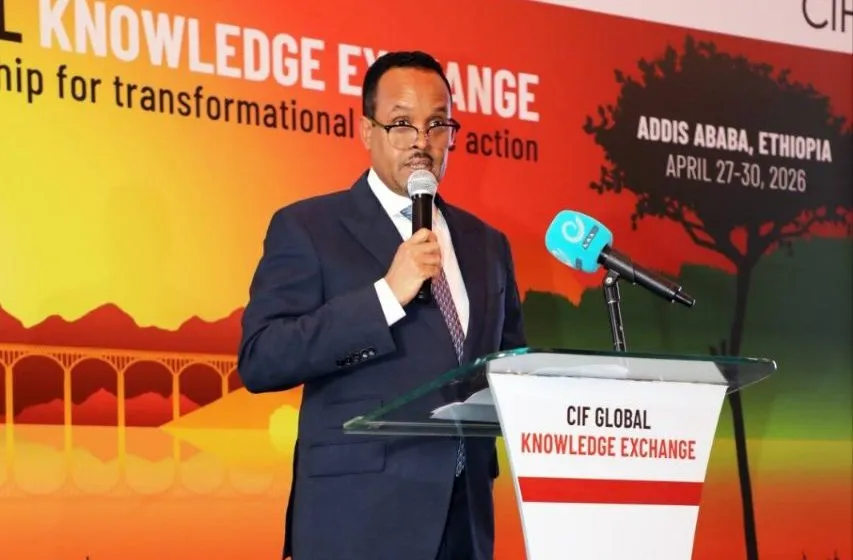
Ethiopia is intensifying its efforts to secure climate finance and accelerate green development, as global partners unveiled a new resilience-focused investment program at the CIF Global Knowledge Exchange in Addis Ababa. The initiative marks a significant step in aligning international climate funding with national development priorities, particularly in countries facing high climate vulnerability.
The event, held from April 27 to 30, 2026, brings together policymakers, development finance institutions, private sector investors, and technical experts to accelerate country-led climate finance initiatives. Beyond funding, it serves as a platform for South-South collaboration, enabling developing economies to exchange practical insights, share successful models, and scale solutions tailored to their specific climate challenges.
Speaking at the opening, Ahmed Shide emphasized that climate action is now central to Ethiopia’s long-term economic strategy. He highlighted that while progress has been made, current financing levels remain far below what is required to address the scale and urgency of climate risks facing the country—from droughts and land degradation to urban vulnerability and energy access gaps.
Ethiopia’s climate investment priorities reflect a broad, system-wide approach to resilience and sustainability, including:
- Climate-resilient agriculture, aimed at improving food security and adapting to changing weather patterns
- Water security, addressing scarcity and improving resource management
- Renewable energy, expanding clean power generation and reducing reliance on fossil fuels
- Sustainable land management, restoring degraded ecosystems and improving productivity
- Resilient urban systems, strengthening infrastructure to withstand climate shocks
These priority areas underscore Ethiopia’s strategy of integrating climate action directly into its economic development framework, rather than treating it as a standalone policy objective.
Markets move fast; don’t get left behind. We’ve paired the Serrari Group Market Index with a curated Marketplace and a comprehensive Wealth Builder Course to ensure you have the data—and the skills—to act on it.
Launch of the ARISE Program
A key highlight of the event was the launch of the Accelerating Resilience Investments and Innovations for Sustainable Economies (ARISE) program by the Climate Investment Funds, representing a new phase in global climate finance focused on resilience and innovation.
The initiative is designed to provide:
- Up to $40 million per country
- Up to $50 million for regional programs
- An application deadline of June 8, 2026
ARISE is structured to support high-impact, scalable projects that integrate climate resilience into national development strategies. Unlike traditional funding mechanisms, the program emphasizes blended finance approaches, aiming to mobilize both public and private capital to maximize impact and ensure long-term sustainability.
According to Tariye Gbadegesin, the program is intended to bridge the gap between climate ambition and financial reality, helping countries translate policy commitments into actionable investment pipelines. Since its establishment in 2008, CIF has already deployed over $1 billion in resilience-focused investments across more than 30 countries, demonstrating its role as a key catalyst in global climate finance.
Gbadegesin also underscored the urgency of scaling such initiatives, noting that climate shocks are already disrupting livelihoods, weakening economic stability, and increasing vulnerability across developing regions. In this context, ARISE is positioned not just as a funding mechanism, but as a strategic tool for building long-term resilience.
Africa’s Climate Finance Gap and Opportunity
Africa remains one of the most climate-vulnerable regions globally, yet continues to face a significant shortfall in climate finance. According to Alex Mubiru, the continent is structurally underfunded, despite being disproportionately exposed to climate risks such as drought, flooding, and extreme weather events.
This imbalance highlights a critical gap in the global climate finance architecture—where funding flows do not fully align with vulnerability and need. Addressing this gap is essential not only for climate adaptation, but also for supporting sustainable economic growth across the region.
CIF-backed projects across Africa illustrate both the scale of investment and the potential for leveraging additional capital:
- Over $1.1 billion invested
- Projects spanning 28 countries
- Approximately $10 billion in co-financing mobilized
These figures demonstrate the power of blended finance models, where relatively modest public funding can unlock significantly larger private sector investment.
Within this context, Ethiopia is emerging as a key player in regional climate finance. The country is among the top candidates competing for a $250 million CIF funding window, reflecting both its ambitious climate agenda and its capacity to deploy capital effectively.
If successful, this funding could significantly accelerate Ethiopia’s transition toward a more resilient, low-carbon economy, while also positioning the country as a model for other emerging markets seeking to scale climate finance and investment.
Early Results and Sectoral Transformation
Climate investments in Ethiopia are already delivering tangible, measurable results across multiple sectors, demonstrating how targeted financing can translate into real economic and environmental impact. According to Dawit Alemu, combined investments from the Climate Investment Funds and multilateral development banks have provided approximately $32 million for “Nature and People” programs, generating a strong multiplier effect of $12 for every $1 invested.
This high leverage ratio highlights the effectiveness of blended finance models in mobilizing additional capital and scaling climate solutions beyond initial public funding.
Several key sectors are undergoing significant transformation:
- Industrial Decarbonization
Ethiopia’s industrial sector is gradually shifting away from diesel and coal-based energy systems toward electrification, supported by the country’s growing renewable energy capacity, particularly hydropower. This transition not only reduces emissions but also lowers long-term energy costs and improves industrial competitiveness. Electrification of manufacturing processes is also positioning Ethiopia as a potential hub for low-carbon industrial production in Africa.
- Circular Economy
Efforts to promote resource efficiency are gaining momentum, with:
- Up to 20% of steel inputs now sourced from recycled materials
- Approximately 30% of plastic waste being reused
These initiatives are helping reduce waste, lower production costs, and decrease dependence on imported raw materials. At the same time, they are supporting the development of local recycling industries, contributing to job creation and more sustainable urban systems.
- E-Mobility Expansion
Ethiopia is emerging as a regional leader in electric mobility, with:
- Over 111,000 electric vehicles currently in use
- More than 10 assembly plants operating across industrial hubs
This rapid adoption is driven by supportive government policies, including restrictions on fossil-fuel vehicle imports, and growing demand for affordable, clean urban transport. The expansion of e-mobility is also reducing fuel import costs, improving air quality, and creating new opportunities in manufacturing and services.
- Green Logistics
The Addis Ababa–Djibouti railway is playing a transformative role as a carbon-free transport corridor, enabling efficient movement of goods while significantly reducing emissions compared to road transport. This infrastructure not only enhances trade efficiency but also strengthens regional connectivity, positioning Ethiopia as a key logistics hub in East Africa.
Collectively, these sectoral transformations illustrate how climate finance is driving system-wide change, supporting both environmental sustainability and economic development.
Context is everything. While you follow today’s updates, use the Serrari Group Market Index and Marketplace to spot emerging shifts. Need to sharpen your edge? Our Wealth Builder Course turns these insights into a professional-grade strategy.
Positioning for COP32 and Global Leadership
As Ethiopia prepares to host COP32 in 2027, the country is actively positioning itself as a leader in climate diplomacy, policy innovation, and green development. Hosting the global climate summit represents a significant opportunity to showcase national progress while influencing the international climate agenda.
Ethiopia’s ongoing collaboration with the Climate Investment Funds includes nearly $90 million in climate-related investments, targeting key areas such as:
- Clean energy access, expanding renewable power and reducing energy poverty
- Nature-based solutions, including reforestation and ecosystem restoration
- Resilient infrastructure, designed to withstand climate shocks
These investments reflect a strategic effort to align climate action with broader development goals, ensuring that sustainability initiatives also deliver economic and social benefits.
Government officials have emphasized that scaling climate finance and deepening private sector participation will be critical to translating policy commitments into tangible outcomes. This includes improving investment frameworks, reducing regulatory barriers, and strengthening project pipelines to attract long-term capital.
By leveraging COP32 as a platform, Ethiopia aims to position itself not only as a beneficiary of climate finance but also as a regional and global leader in climate solutions, demonstrating how emerging economies can drive meaningful progress.
Outlook: Scaling Climate Finance for Resilient Growth
The launch of the ARISE program marks a significant milestone in Ethiopia’s broader strategy to mobilize climate finance at scale. By combining international partnerships, domestic policy alignment, and targeted sectoral investments, the country is building a foundation for long-term resilience and sustainable economic growth.
In the near term, the success of this strategy will depend on several key factors:
- Securing funding allocations under ARISE, ensuring access to critical capital
- Expanding private sector participation, particularly through blended finance mechanisms
- Strengthening project pipelines, enabling rapid deployment of funds into high-impact initiatives
These elements are essential for translating financial commitments into real-world outcomes, particularly in sectors most vulnerable to climate risks.
Over the longer term, Ethiopia’s approach has the potential to serve as a model for other emerging and developing economies, demonstrating how climate finance can be effectively integrated into national development strategies. By aligning investment with policy, and leveraging both public and private capital, the country is creating a scalable framework for climate action.
As global demand for resilience investment continues to grow, initiatives like ARISE highlight the critical role of:
- Blended finance, in unlocking large-scale capital
- International cooperation, in sharing knowledge and resources
- Innovation, in developing scalable and impactful solutions
Ultimately, Ethiopia’s trajectory reflects a broader shift in climate finance—from fragmented funding toward coordinated, strategic investment ecosystems. If successfully implemented, this approach could not only strengthen national resilience but also unlock new economic opportunities, positioning the country at the forefront of Africa’s green transformation.
Your financial future isn’t something you wait for—it’s something you build.
The real question is: when do you begin?
Move beyond simply staying informed.
Navigate the markets with clarity—track trends through the Serrari Group Market Index, uncover opportunities in the Serrari Marketplace, and build practical knowledge with our Curated Wealth Builder Course.
Stay connected to what truly matters.
Get daily insights on macro trends and financial movements across Kenya, Africa, and global markets—delivered through the Serrari Newsletter.
Growth opens doors.
Advance your career through professional programs including ACCA, HESI A2, ATI TEAS 7 , HESI EXIT , NCLEX – RN and NCLEX – PN, Financial Literacy!🌟—designed to move you forward with confidence.
See where money is flowing—clearly and in real time.
Track Money Market Funds, Treasury Bills, Treasury Bonds, Green Bonds, and Fixed Deposits, alongside global and African indexes, key economic indicators, and the evolving Crypto and stablecoin landscape—all within Serrari’s Market Index.