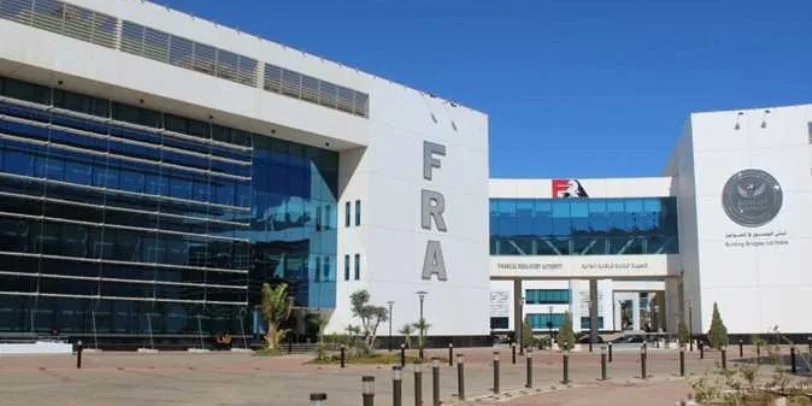
Egypt’s Financial Regulatory Authority (FRA), led by Chairman Islam Azzam, has signed a series of cooperation protocols aimed at developing human capital across the country’s non-banking financial sector. The agreements, concluded between the FRA’s training arm — the Financial Services Institute (FSI) — and federations representing mortgage finance, leasing, consumer finance, and factoring, are designed to bridge the gap between academic training and practical application. The initiative falls within a broader regulatory push to improve institutional efficiency, expand financial inclusion, and keep pace with Egypt’s rapidly growing fintech ecosystem, which reached an estimated $765 million in market size in 2024 and is projected to approach $2.9 billion by 2033.
Markets move fast; don’t get left behind. We’ve paired the Serrari Group Market Index with a curated Marketplace and a comprehensive Wealth Builder Platform to ensure you have the data—and the skills—to act on it.
Key Overview
- Signatories: Financial Services Institute (FSI) and federations covering mortgage finance, leasing, consumer finance, and factoring
- Goal: Strengthen the non-banking financial sector’s workforce capabilities through structured training and knowledge transfer
- Trainer accreditation: Qualified industry professionals can become certified instructors after technical assessments
- Training focus areas: Governance, risk management, financial innovation, and digital transformation
- Broader context: Egypt’s financial inclusion rate reached 77.6% by end of 2025, up 219% since 2016
- International recognition: FRA Chairman Azzam recently elected chair of IOSCO’s Growth and Emerging Markets Committee for 2026–2028
- Alignment: Supports Egypt Vision 2030 goals for digital transformation and sustainable economic growth
The Cooperation Protocols: What Was Signed and Why
On April 29, 2026, FRA Chairman Islam Azzam witnessed the signing of several cooperation protocols between the Financial Services Institute and federations representing key segments of the non-banking financial sector. According to a report by Amwal Al Ghad, the agreements were concluded with federations covering mortgage finance, leasing, consumer finance, and factoring — four pillars of Egypt’s non-banking financial infrastructure.
The protocols are designed to maximise the use of practical experience within the sector by enabling qualified professionals from federation-affiliated companies to join the Financial Services Institute as accredited instructors, provided they pass technical assessments. This model aims to institutionalise knowledge transfer from experienced practitioners to the broader workforce, improving the quality and relevance of training programmes.
Cooperation areas extend beyond instructor accreditation. The agreements include provisions for developing flexible training plans tailored to the specific needs of individual federations and companies, offering incentives to encourage participation among federation members, and updating training content to reflect evolving market conditions. The approach reflects a recognition that standardised, one-size-fits-all training models are insufficient for a sector undergoing rapid technological and regulatory change.
Tarek Saif, executive director of the Financial Services Institute, said the agreements aim to bridge the gap between academic training and real-world application by involving industry experts directly in the training system. He added that the FSI is developing programmes specifically designed to transfer practical expertise to trainees and improve workforce readiness across the sector.
Why Human Capital Development Matters Now
Chairman Azzam framed the protocols as part of the FRA’s continued focus on investing in human capital as a primary driver of growth in the non-banking financial sector. He noted that developing workforce capabilities has become not just beneficial but necessary, given the successive changes reshaping non-banking financial activities — particularly the expansion of financial technology, which demands ongoing improvements in financial literacy and professional skills.
This assessment is grounded in data. Egypt’s fintech sector has grown from just two startups in 2014 to more than 177 startups and payment service providers today, spanning 14 subsectors including lending and alternative finance, payments and remittances, and business-to-business marketplaces. The sector reached an estimated $765 million in market size in 2024 and is projected to grow to nearly $2.9 billion by 2033, according to industry analyses. Mobile subscriptions exceed 116 million, with over 90 million internet users creating a substantial digital infrastructure for financial services delivery.
This growth has created a skills gap. As new platforms, products, and regulatory requirements emerge, the workforce serving the non-banking financial sector must keep pace. Consumer finance providers, leasing companies, factoring firms, and mortgage finance institutions all require personnel who understand not only traditional financial operations but also digital tools, data analytics, cybersecurity, and evolving governance standards. Without adequate training, the sector risks falling behind the innovation curve — or worse, exposing consumers to poorly managed financial products.
Azzam emphasised that the FRA is working to build an integrated training system through partnerships with local and international professional institutions. The goal is to prepare qualified personnel capable of applying high standards of efficiency and governance, ultimately enhancing investor confidence and supporting the sector’s attractiveness to both domestic and international investment.
The Financial Services Institute: Egypt’s Training Engine
The Financial Services Institute sits at the centre of this strategy. Established in July 2010 pursuant to Law No. 10 of 2009 and Presidential Decree No. 260 of 2010, the FSI replaced the former Egyptian Insurance Institute and commenced operations in January 2011. It serves as the FRA’s dedicated training arm, offering programmes across the full spectrum of non-banking financial services — including capital markets, insurance, mortgage finance, leasing, microfinance, factoring, consumer finance, and movable collaterals.
The FSI has progressively expanded its scope and partnerships. In December 2024, it signed a cooperation protocol with Spain’s Instituto de Estudios Bursátiles to offer an internationally accredited Master’s programme in financial markets, covering areas such as macroeconomics, financial derivatives, asset management, corporate finance, risk management, compliance, fintech, and cybersecurity. The first cohort of the programme has already graduated, with participants reporting significant gains in knowledge and career advancement.
More recently, in April 2026, the FRA signed a strategic cooperation protocol with the Arab Academy for Management, Banking, and Financial Sciences to establish specialised postgraduate programmes — including MBA tracks in Arabic and English and Professional Doctorates — for FRA staff and employees of affiliated companies. That agreement, set for an initial two-year renewable term, includes partial scholarships and flexible payment systems and aligns with Egypt Vision 2030’s digital transformation and financial inclusion goals.
The FSI also houses the Regional Centre for Sustainable Finance, which focuses on fostering transparent non-banking financial markets in the MENA region through knowledge sharing, skills development, and technical training in sustainable finance. These layered initiatives position the FSI as more than a simple training provider — it functions as an institutional bridge between regulatory requirements, international best practices, and the practical realities of Egypt’s financial services workforce.
Context is everything. While you follow today’s updates, use the Serrari Group Market Index and Marketplace to spot emerging shifts. Need to sharpen your edge? Our Wealth Builder Platform turns these insights into a professional-grade strategy.
A Regulator with Rising International Standing
The timing of these workforce development protocols is noteworthy given the FRA’s growing prominence on the international stage. In April 2026, FRA Chairman Islam Azzam was elected chair of the Growth and Emerging Markets Committee of the International Organisation of Securities Commissions (IOSCO) for the 2026–2028 term. He will simultaneously serve as vice chair of the IOSCO Board.
The Growth and Emerging Markets Committee is IOSCO’s largest, representing more than 75 per cent of the organisation’s membership — 94 full members and 23 associate non-voting members, including several G20 economies. The committee plays a central role in improving capital market efficiency, setting regulatory standards, facilitating information exchange, and providing training and technical assistance.
Azzam was appointed FRA chairman in March 2026 under Presidential Decree No. 116, becoming the sixth person to head the authority. He previously served as chairman of the Egyptian Exchange during the second half of 2025 and as FRA vice chairman from January 2021 to August 2025. His appointment to the Economic Ministerial Group by Prime Minister Mostafa Madbouly in April 2026 further underscores his influence on Egypt’s broader economic policy direction.
This international positioning gives the FRA’s domestic workforce development agenda additional credibility and urgency. As the regulator now chairs a global committee responsible for promoting best practices among emerging market regulators, demonstrating progress at home becomes both a strategic necessity and a reputational imperative.
The Broader Regulatory Push: Licensing, Digitisation, and Basel III
The cooperation protocols are one element within a wider regulatory modernisation effort at the FRA. In March 2026, the authority issued Decision No. 44 of 2026, establishing a comprehensive new framework governing the registration, transfer, amendment, and closure of branches of companies licensed to conduct non-banking financial activities. The decision requires prior FRA approval for any expansion beyond a firm’s registered head office and introduces specific requirements for mobile and seasonal branches, including operating plans, documentation handling, vehicle licensing, and tracking systems.
Earlier in January 2026, the FRA launched the first integrated digital payment network for the non-banking financial sector, built through a strategic partnership with e-finance. The platform enables registered entities to settle financial dues digitally, access information on outstanding claims, and register electronically — a move the FRA described as a practical application of “smart regulation” designed to reduce reliance on paper-based processes.
In late March 2026, the FRA also approved licences for 10 new firms to conduct non-banking financial activities ranging from venture capital and securities brokerage to insurance brokerage and healthcare programme management.
Separately, in meetings with representatives of companies financing micro, small, and medium enterprises, Azzam discussed the phased implementation of Basel III standards in the non-banking sector, with emphasis on gradual adoption to strengthen risk management without disrupting operations. He also pushed for responsible pricing frameworks that balance business sustainability with consumer protection.
All of these regulatory actions share a common thread: they require a more skilled, more knowledgeable workforce to implement effectively. New digital platforms need staff who understand cybersecurity and data governance. Basel III adoption demands professionals trained in risk assessment. Branch licensing frameworks require compliance officers familiar with the new rules. The cooperation protocols signed on April 29 are, in this context, the human capital infrastructure necessary to support the FRA’s broader regulatory ambitions.
Egypt’s Financial Inclusion Progress: The Demand Side
The urgency of workforce development is further amplified by Egypt’s dramatic progress on financial inclusion. According to the Central Bank of Egypt, the country’s financial inclusion rate reached 77.6 per cent by the end of 2025, meaning approximately 54.7 million citizens held active financial accounts — bank accounts, Egypt Post accounts, mobile wallets, or prepaid cards. This represents a growth rate of 219 per cent since 2016.
Women’s financial inclusion rose from 19.1 per cent in 2016 to 71.4 per cent by the end of 2025, a growth rate of 316 per cent. Youth financial inclusion (ages 15 to 35) climbed from 36.3 per cent in 2020 to 56.8 per cent in 2025. The Central Bank is now developing its Second Financial Inclusion Strategy for 2026–2030, with priorities including expanding digital solutions, supporting the transition to a green economy, raising financial awareness, and strengthening public-private partnerships.
This rapid expansion of the financially included population places direct pressure on the non-banking financial sector’s service delivery capacity. More consumers using leasing products, consumer finance, microfinance, and insurance means more transactions, more regulatory interactions, and more potential points of failure. A workforce that has not kept pace with this growth risks undermining the very inclusion gains the country has achieved.
Looking Ahead: Training as Competitive Advantage
Azzam highlighted that expanding specialised training programmes linked to market needs contributes to improving service quality and supports efforts to advance financial inclusion and broaden access to secure and innovative financial services. The FRA continues to expand its training and qualification programmes through the Financial Services Institute, with a particular focus on governance, risk management, financial innovation, and digital transformation.
These efforts align with international best practices and aim to enhance the competitiveness of Egypt’s non-banking financial sector at both regional and international levels. As Egypt prepares to host the IOSCO annual meeting in 2026, the country is positioning itself not merely as a regulatory follower but as a model for emerging market financial sector development — one where human capital investment is treated as foundational rather than supplementary.
The cooperation protocols signed this week represent one more step in that direction. Whether they succeed in closing the skills gap will depend on execution — on the quality of the trainers accredited, the relevance of the curricula developed, and the willingness of federation member companies to invest in their own people. But the strategic intent is clear: Egypt’s non-banking financial sector cannot grow faster than its workforce can learn.
Your financial future isn’t something you wait for—it’s something you build.
The real question is: when do you begin?
Move beyond simply staying informed.
Navigate the markets with clarity—track trends through the Serrari Group Market Index, uncover opportunities in the Serrari Marketplace, and build practical knowledge with our Curated Wealth Builder Platform.
Stay connected to what truly matters.
Get daily insights on macro trends and financial movements across Kenya, Africa, and global markets—delivered through the Serrari Newsletter.
Growth opens doors.
Advance your career through professional programs including ACCA,HESI A2,ATI TEAS 7,HESI EXIT ,NCLEX – RNandNCLEX – PN, Financial Literacy!🌟—designed to move you forward with confidence.
See where money is flowing—clearly and in real time.
Track Money Market Funds, Treasury Bills, Treasury Bonds, Green Bonds, and Fixed Deposits, alongside global and African indexes, key economic indicators, and the evolving Crypto and stablecoin landscape—all withinSerrari’s Market Index.