China has unveiled its 15th Five-Year Renewable Energy Development Plan (2026–2030), setting ambitious targets to accelerate clean energy deployment, expand renewable power capacity and strengthen grid reliability. The plan aims to increase renewable energy consumption to 1.8 billion tonnes of standard coal equivalent by 2030 while boosting wind, solar, hydropower and energy storage to support the country’s carbon neutrality goals.
Key Overview
- China launched its renewable energy development plan for 2026–2030.
- Renewable energy capacity is targeted to reach 3.5 billion kW by 2030.
- Wind and solar capacity will exceed 2.8 billion kW.
- Annual renewable electricity generation is projected to reach 6 trillion kWh.
- The plan includes major investments in offshore wind, hydropower and energy storage.
China Sets New Renewable Energy Targets for 2030
China has officially released its 15th Five-Year Plan period for renewable energy development, outlining an ambitious roadmap to expand clean energy generation, strengthen grid reliability and accelerate the country’s transition toward a low-carbon economy through 2030.
Jointly issued by the National Development and Reform Commission (NDRC) and the National Energy Administration (NEA), the strategy positions renewable energy as the cornerstone of China’s future electricity system while supporting its long-term carbon peak and carbon neutrality objectives.
Officials said the renewable energy sector will enter a new stage focused not only on expanding installed capacity but also on improving quality, reliability and the ability of renewable power to replace fossil fuels.
Renewable Energy Capacity to Reach 3.5 Billion kW
Under the plan, China expects total renewable energy consumption to reach approximately 1.8 billion tonnes of standard coal equivalent by 2030.
Installed renewable electricity generation capacity is projected to rise to around 3.5 billion kilowatts (kW), producing roughly 6 trillion kilowatt-hours (kWh) of electricity annually.
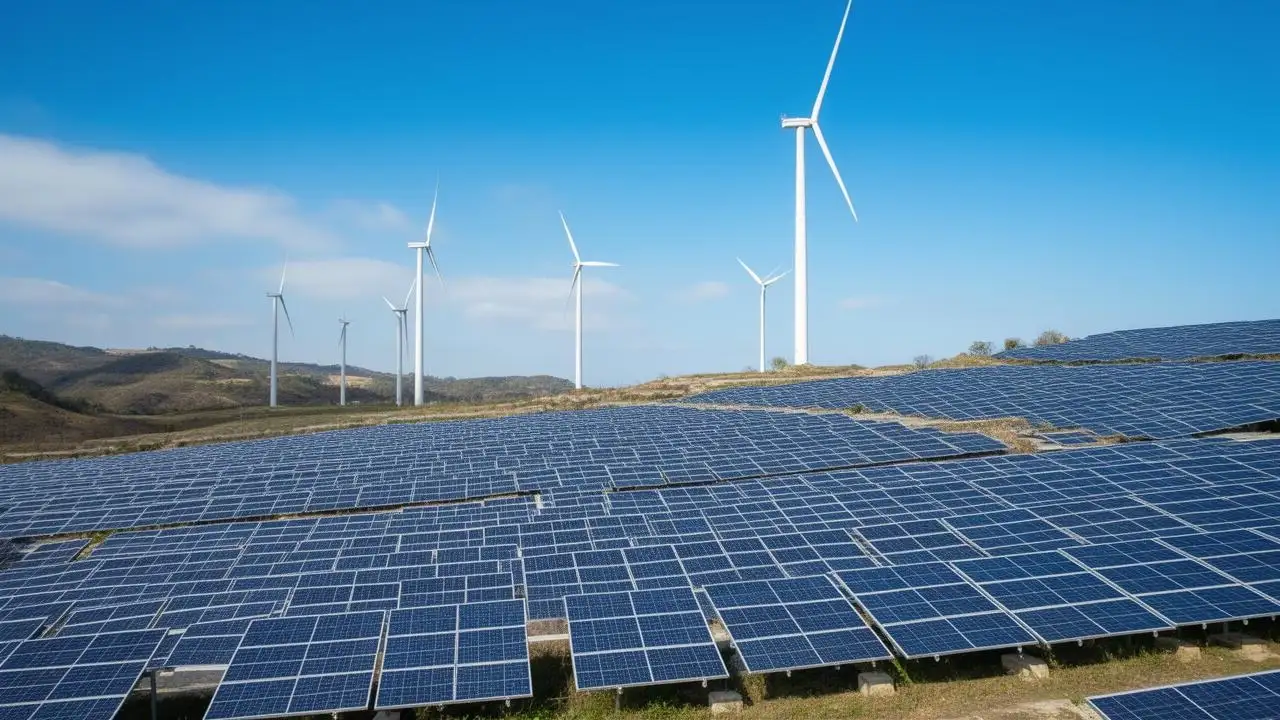
Wind and solar energy will account for the largest share of that growth, with combined installed capacity expected to exceed 2.8 billion kilowatts and annual electricity generation surpassing 4 trillion kilowatt-hours.
The government also aims for renewable energy used outside the power sector to increase 2.5 times compared with 2025 levels, equivalent to about 150 million tonnes of standard coal.
Major Expansion Across Multiple Technologies
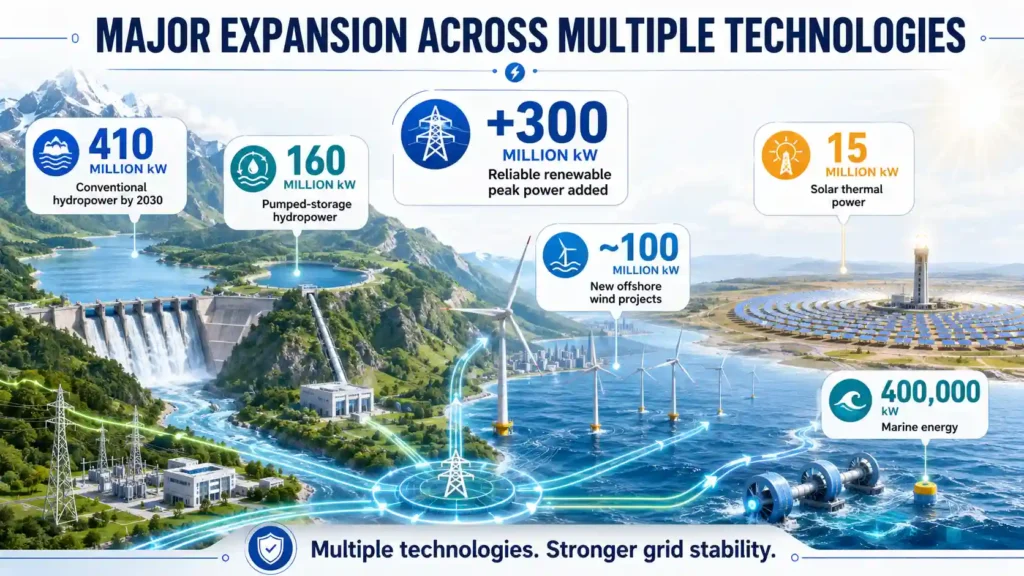
The plan outlines substantial investment across a wide range of renewable energy technologies.
China expects to add more than 300 million kW of reliable renewable peak power capacity during the five-year period while launching approximately 100 million kW of new offshore wind projects.
Hydropower will continue to play an important role, with conventional hydropower capacity expected to reach around 410 million kW by 2030 while balancing ecological protection, flood control, irrigation and navigation needs.
The strategy also sets specific deployment targets for emerging technologies, including:
- 15 million kW of solar thermal power.
- 160 million kW of pumped-storage hydropower.
- 400,000 kW of marine energy capacity.
Together, these technologies are expected to improve grid stability as renewable generation continues expanding.
Electricity Mix Shifts Away from Fossil Fuels
Officials said that by 2030, China’s electricity generation mix is expected to feature about half non-fossil fuel sources generated, with renewable energy contributing nearly half of total electricity generation and new energy sources accounting for approximately 30 percent.
Achieving these targets will require continued investment in transmission infrastructure, energy storage systems and power system flexibility to ensure renewable electricity can reliably meet demand.
Industry analysts note that meeting the wind and solar targets will require significant progress in grid modernization, battery storage integration and cross-regional electricity transmission to reduce renewable energy curtailment.
The plan also highlights the growing importance of co-located energy storage, allowing renewable projects to provide more reliable electricity during periods of peak demand.
Context is everything. Stay ahead of shifting trends with today’s market updates, and uncover emerging opportunities using the Serrari Group Market Index and Marketplace. Then, take control of your own financial future by exploring our Money & Life Reset Transformation Blueprint ™ to build stronger habits, create better systems, and design a path toward lasting wealth.
Global Cooperation Remains a Priority
Beyond domestic deployment, China said it will continue expanding international cooperation on renewable energy technologies.
The government plans to promote the global adoption of Chinese green technologies, support international standards development and strengthen mutual recognition of renewable energy certifications.
Officials also reaffirmed China’s commitment to participating in global climate governance while supporting international cooperation on energy transition and low-carbon development based on countries’ individual circumstances.
Renewable Energy Stocks Rally
The announcement was welcomed by investors, lifting several renewable energy companies listed in Hong Kong.
Shares of Goldwind Science and Technology gained as much as 4%, while Dongfang Electric climbed more than 5% following the policy announcement.
Other clean energy companies, including Longyuan Power, China Resources Power, Sigenergy and Dajin Heavy Industry, also posted gains as investors anticipated stronger demand across China’s renewable energy supply chain.
Analysts believe the government’s long-term capacity targets provide greater visibility for equipment manufacturers, renewable project developers and energy storage providers over the next five years.
Outlook
China’s latest renewable energy development plan reinforces its position as the world’s largest clean energy market while providing one of the clearest long-term policy roadmaps for the global renewable sector. The ambitious capacity targets are expected to drive significant investment in wind, solar, hydropower, offshore wind, energy storage and grid infrastructure through 2030. Beyond accelerating China’s domestic energy transition, the strategy is likely to influence global clean energy supply chains, equipment manufacturers and technology providers as demand for renewable energy technologies continues to expand worldwide.
FAQs
1. What is China’s new renewable energy target for 2030?
China aims to reach 3.5 billion kW of installed renewable energy capacity by 2030.
2. How much wind and solar capacity is planned?
The government expects combined wind and solar capacity to exceed 2.8 billion kW by 2030.
3. Why is the new plan significant?
It provides a long-term roadmap for expanding renewable energy, improving grid reliability and supporting China’s carbon neutrality goals.
4. Which renewable technologies are included?
The plan covers hydropower, wind, solar, biomass, geothermal, marine energy, offshore wind, solar thermal power and pumped-storage hydropower.
Sources: Xinhua, China Daily, BigGo Finance, China.org.cn
Your financial future isn’t something you wait for—it’s something you build.
The real question is: when do you begin?
Move beyond simply staying informed.
Navigate the markets with clarity—track trends through the Serrari Group Market Index, uncover opportunities in the Serrari Marketplace, and build practical knowledge with our Curated Wealth Builder Platform.
Stay connected to what truly matters.
Get daily insights on macro trends and financial movements across Kenya, Africa, and global markets—delivered through the Serrari Newsletter.
Growth opens doors.
Advance your career through professional programs including ACCA, HESI A2, ATI TEAS 7 , HESI EXIT , NCLEX – RN and NCLEX – PN, Financial Literacy!🌟—designed to move you forward with confidence.
See where money is flowing—clearly and in real time.
Track Money Market Funds, Treasury Bills, Treasury Bonds, Green Bonds, and Fixed Deposits, alongside global and African indexes, key economic indicators, and the evolving Crypto and stablecoin landscape—all within Serrari’s Market Index.