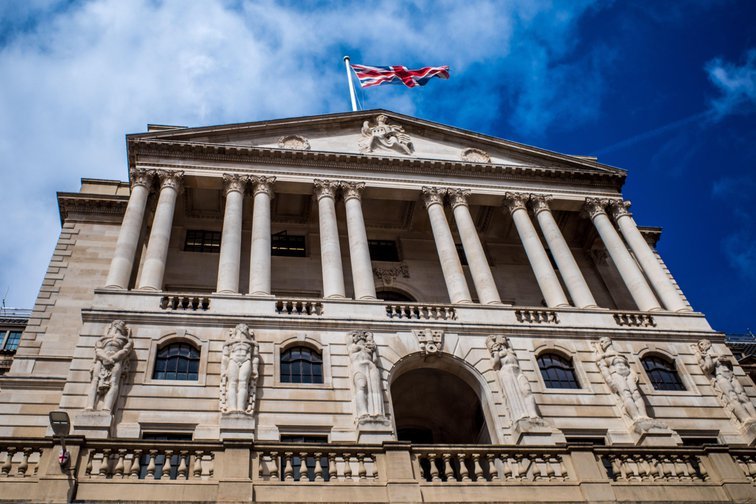
The Bank of England (BoE) has opted to keep its key interest rate unchanged at 5.25%, a decision that may indicate a potential stabilization in the nation’s monetary policy. This announcement follows nearly two years of consistent rate hikes, making it a significant point of interest for financial markets.
The central bank’s Monetary Policy Committee (MPC) found itself in a closely divided situation, with five members advocating for the status quo and four leaning towards an increase. Ultimately, BoE Governor Andrew Bailey’s vote tipped the balance in favor of maintaining the existing rates. This verdict signifies the first pause in a series of 14 successive rate hikes that began in December 2021.
Simultaneously, the US Federal Reserve, in its Wednesday policy meeting, decided to hold its benchmark interest rate steady, concluding a string of rate increases that had taken borrowing costs to their highest level since the 2008 financial crisis.
Global inflation pressures have shown signs of abating after a notable spike, marking the most severe inflation shock in four decades. While central banks worldwide refrain from declaring a definitive victory over inflation, they collectively signal that interest rates may have plateaued or are approaching their zenith.
Although the MPC did not explicitly outline its future policy direction, the majority’s inclination to maintain current interest rates suggests a probable pause in further hikes. Emphasizing the importance of retaining the existing rate level until progress is made in curbing inflation down to the BoE’s 2% target, this stance aims to provide economic stability.
Yael Selfin, Chief Economist at KPMG UK, commented that interest rates may have reached their peak in this particular cycle. However, she cautioned that BoE officials would be vigilant in monitoring data to ensure that the policy remains adequately restrictive to combat inflation.
The housing market has already experienced a decline in mortgage rates since the middle of the summer, with notable announcements from NatWest, TSB, and Nationwide regarding rate cuts. Some providers have even begun offering new five-year fixed rates below 5%.
Despite these developments, the swaps market still suggests a 70% likelihood of a final quarter-point rate increase in the BoE’s benchmark rate, potentially reaching 5.5% before March next year.
In the wake of Wednesday’s inflation data release, the British pound continued its decline, trading 0.4% lower against the US dollar, reaching a six-month low of $1.2239.
The MPC’s decision led to a brief rally in real estate stocks, with Barratt Developments and Berkeley Group experiencing a 2% increase before retracing some of their gains.
For Prime Minister Rishi Sunak, the MPC’s decision provides a positive economic backdrop as he seeks to assert control over the political agenda, particularly in light of postponing key net-zero targets. This decision followed an unexpected dip in August’s inflation rate to 6.7%, aligning with Sunak’s aim of “halving inflation” this year.
BoE Governor Bailey emphasized that inflation would continue to decline but warned against complacency. He noted that further monetary policy tightening would be necessary if evidence of more persistent inflationary pressures emerged, leaving the door open for potential rate hikes in the coming months.
In a unanimous decision, the MPC also agreed to expedite its quantitative tightening process for the upcoming year, increasing it from £80 billion in 2022-23 to £100 billion in 2023-24. The committee underlined that interest rates remained their primary tool for monetary policy, with the impact of asset sales on borrowing costs described as “modest.”
Photo Source: Google
By: Montel Kamau
Serrari Financial Analyst
21st September, 2023