Abu Dhabi National Oil Co. (ADNOC) has acquired five very large crude carriers (VLCCs) for about $590 million, expanding its fleet as shipping disruptions in the Red Sea and the Strait of Hormuz continue to tighten global tanker supply. The purchases support ADNOC’s strategy to strengthen control over its crude oil logistics and ensure reliable deliveries to customers despite ongoing geopolitical tensions affecting key maritime trade routes.
Key Overview
- ADNOC acquired five VLCCs for about $590 million.
- The vessels were purchased from Frontline Plc through ADNOC Logistics and Services (ADNOC L&S).
- The acquisition aims to strengthen ADNOC’s shipping capabilities amid disruptions in the Red Sea and Strait of Hormuz.
- ADNOC also acquired three very large gas carriers (VLGCs) and has ordered 25 to 30 additional vessels.
- The company has expanded crude transportation as the UAE reaches record oil production levels.
ADNOC Strengthens Oil Shipping Capacity
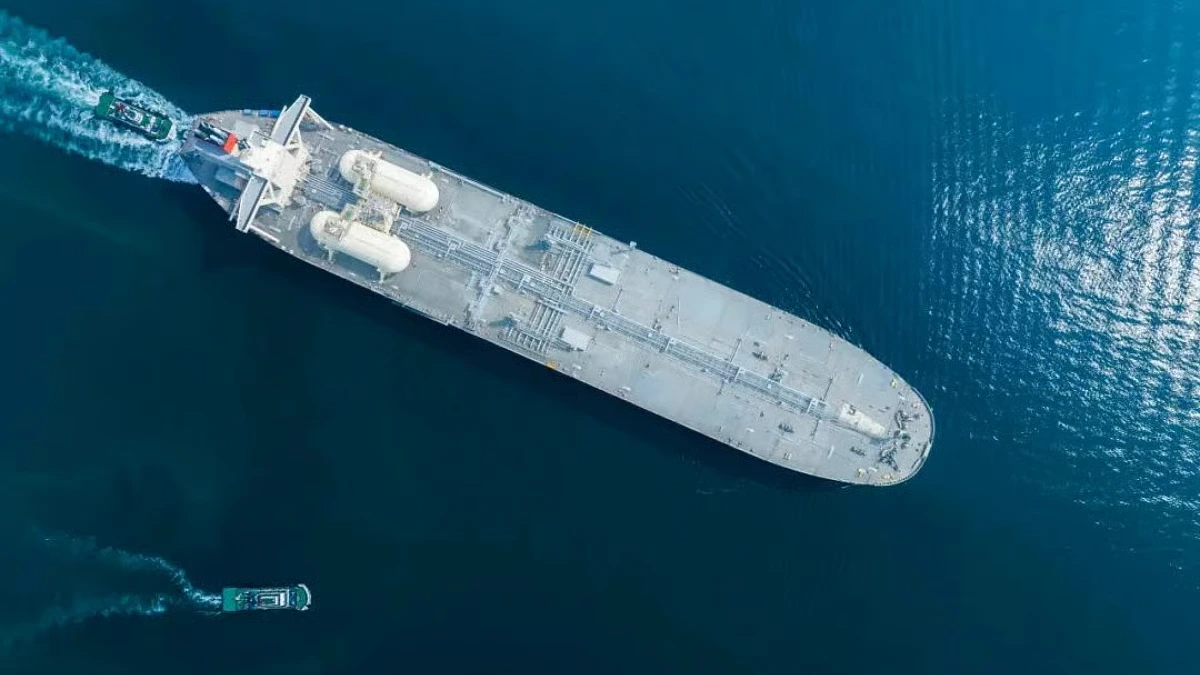
Abu Dhabi National Oil Co. (ADNOC) has expanded its crude oil transportation fleet by acquiring five very large crude carriers (VLCCs) for about $590 million, according to sources familiar with the transaction.
The vessels were purchased by ADNOC Logistics and Services (ADNOC L&S) from tanker operator Frontline Plc as part of the company’s broader strategy to strengthen control over its supply chain and maintain reliable crude deliveries amid increasing geopolitical uncertainty.
According to the sources, the acquisition includes two 2012 – built vessels , purchased for about $115 million each, and three built in 2015, acquired for about $120 million each.
ADNOC L&S did not confirm the transaction.
“We do not comment on rumours or market speculation. ADNOC L&S continually reviews its fleet requirements and strategic growth opportunities,” the company said in a statement.
The company added that announcements relating to potential transactions are made in accordance with its governance procedures and disclosure obligations.
Frontline also declined to comment.
Expansion Supports Supply Chain Resilience
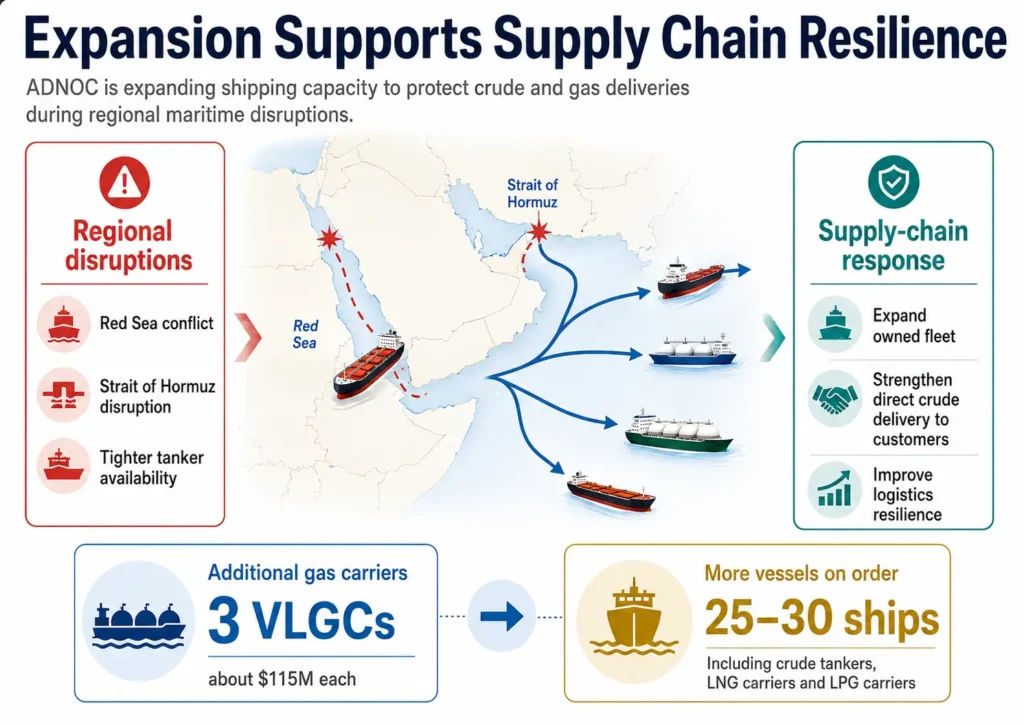
The acquisitions come as conflicts affecting the Red Sea and the Strait of Hormuz continue to disrupt global shipping and tighten tanker availability.
By expanding its owned fleet, ADNOC aims to strengthen its ability to transport crude oil directly to customers even as regional maritime routes face operational challenges.
According to one source, ADNOC has also acquired three very large gas carriers (VLGCs) for about $115 million each.
The company is also continuing to invest in new vessels, with orders placed for 25 to 30 new vessels, including crude oil tankers, LNG carriers and LPG carriers from various shipyards.
Fleet Expansion Continues
ADNOC L&S currently operates more than 900 vessels, including seven VLGCs and eight VLCCs, according to the company’s published fleet information.
In addition to expanding its owned fleet, the company has also chartered approximately 25 crude tankers from South Korea’s Sinokor following the escalation of the regional crisis.
According to one source, around 15 vessels have been deployed as shuttle tankers transporting crude from facilities inside the Strait of Hormuz to storage terminals in Fujairah and Oman, while the remaining vessels have been used to supply customers directly.
Context is everything. Stay ahead of shifting trends with today’s market updates, and uncover emerging opportunities using the Serrari Group Market Index and Marketplace. Then, take control of your own financial future by exploring our Money & Life Reset Transformation Blueprint ™ to build stronger habits, create better systems, and design a path toward lasting wealth.
UAE Oil Production Reaches Record Levels
The fleet expansion comes as the United Arab Emirates continues increasing crude production.
According to estimates from the International Energy Agency, the UAE produced 4.1 million barrels per day of crude oil in June, representing the country’s highest production level on record.
To adapt to disruptions affecting the Strait of Hormuz, the UAE has increasingly offered crude grades for loading offshore Fujairah and Sohar in Oman, outside the strait.
ADNOC is also expanding its liquefied natural gas shipping business. Earlier this month, ADNOC L&S placed a $900-million order for four newbuild LNG carriers to support growing global demand for LNG exports.
Outlook
ADNOC’s latest tanker acquisitions highlight the growing importance of shipping capacity as energy producers strengthen supply chains amid persistent geopolitical uncertainty and disruptions along key global maritime routes. By expanding both its crude oil and gas carrier fleets, the company is positioning itself to maintain reliable exports, improve logistical flexibility and better serve customers despite challenges affecting the Red Sea and the Strait of Hormuz. The continued investment in vessels, alongside additional LNG carrier orders and chartered tankers, reflects ADNOC’s broader strategy of increasing control over its energy transportation network as the UAE expands oil production and grows its international energy business. As global energy demand evolves and supply chain resilience becomes increasingly critical, strengthening owned shipping capacity is expected to remain a key pillar of ADNOC’s long-term growth and export strategy.
FAQs
1. How many oil tankers did ADNOC acquire?
ADNOC acquired five very large crude carriers (VLCCs) for about $590 million.
2. Who sold the vessels to ADNOC?
According to sources familiar with the transaction, the vessels were purchased from Frontline Plc through ADNOC Logistics and Services.
3. Why is ADNOC expanding its fleet?
The expansion aims to strengthen crude transportation capabilities as disruptions in the Red Sea and Strait of Hormuz tighten tanker supply.
4. How large is ADNOC L&S’s fleet?
According to the company’s fleet information, ADNOC L&S operates more than 900 vessels, including seven VLGCs and eight VLCCs.
5. Has ADNOC invested in other shipping assets?
Yes. According to the information provided, ADNOC has also acquired three VLGCs and ordered 25 to 30 additional vessels, including crude tankers, LNG carriers and LPG carriers.
Sources: Business Recorder, Zawya, Crude Oil Prices Today
Your financial future isn’t something you wait for—it’s something you build.
The real question is: when do you begin?
Move beyond simply staying informed.
Navigate the markets with clarity—track trends through the Serrari Group Market Index, uncover opportunities in the Serrari Marketplace, and build practical knowledge with our Curated Wealth Builder Platform.
Stay connected to what truly matters.
Get daily insights on macro trends and financial movements across Kenya, Africa, and global markets—delivered through the Serrari Newsletter.
Growth opens doors.
Advance your career through professional programs including ACCA, HESI A2, ATI TEAS 7 , HESI EXIT , NCLEX – RN and NCLEX – PN, Financial Literacy!🌟—designed to move you forward with confidence.
See where money is flowing—clearly and in real time.
Track Money Market Funds, Treasury Bills, Treasury Bonds, Green Bonds, and Fixed Deposits, alongside global and African indexes, key economic indicators, and the evolving Crypto and stablecoin landscape—all within Serrari’s Market Index.