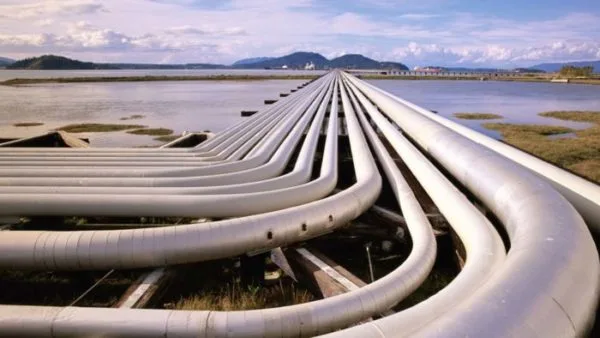
Nigeria is on the cusp of a transformative energy milestone as the Nigerian Upstream Petroleum Regulatory Commission (NUPRC) announces a July 2026 start date for natural gas deliveries to the capital, Abuja. This development marks the partial activation of the 614-kilometer Ajaokuta-Kaduna-Kano (AKK) gas pipeline, a $2.8 billion infrastructure project central to the nation’s “Decade of Gas” initiative. Designed to transport 2.2 billion cubic feet of gas per day (bcf/d), the pipeline aims to revitalize Nigeria’s northern industrial corridor, alleviate chronic power shortages, and provide a cleaner alternative to expensive diesel and fuel oil. Despite years of delays and technical hurdles, the project is now over 90% complete, signaling a new era for Africa’s largest gas holder.
Key Overview
- Technical Capacity: The AKK pipeline will transport 2.2 billion cubic feet of gas daily, significantly boosting domestic supply.
- Economic Integration: The project connects the gas-rich South to the North via the OB3 (Obiafu-Obrikom-Oben) gas pipeline, ensuring a nationwide energy loop.
- Engineering Feats: Completion of the River Niger crossing using horizontal directional drilling was a critical hurdle successfully cleared.
- Industrialization Focus: The pipeline is expected to power three new thermal plants in Abuja, Kaduna, and Kano, supporting a combined 3,600 MW of electricity generation.
- Investment Context: The project represents a $2.8 billion investment, initially facilitated by Chinese lenders before transitioning to indigenous funding models.
Markets move fast; don’t get left behind. We’ve paired the Serrari Group Market Index with a curated Marketplace and a comprehensive Wealth Builder Platform to ensure you have the data—and the skills—to act on it.
The AKK Pipeline: A Strategic Necessity for a Gas-Led Economy
For decades, Nigeria has grappled with the paradox of having the largest gas reserves in Africa, estimated at over 210 trillion cubic feet (tcf), while simultaneously suffering from persistent energy poverty. The Ajaokuta–Kaduna–Kano (AKK) pipeline was conceived in 2008 as the solution to this structural imbalance. By bridging the gap between the Niger Delta’s gas fields and the industrial heartlands of the North, the pipeline serves as the primary artery for the Nigerian Gas Master Plan.
The recent confirmation by the Nigerian Upstream Petroleum Regulatory Commission (NUPRC) that gas will reach Abuja by July 2026 is a watershed moment. While the full 614-kilometer stretch to Kano is still being finalized, the delivery to Abuja represents the functional activation of the southern and central segments. This delivery is expected to provide the necessary feedstock for the Abuja Independent Power Plant (IPP), which is designed to stabilize electricity supply in the Federal Capital Territory.
Overcoming the “Eurotunnel” of the Niger
The journey to this July milestone has been fraught with engineering challenges that tested the limits of Nigerian infrastructure development. The most daunting of these was the River Niger crossing at Ahoko. Engineers had to utilize Horizontal Directional Drilling (HDD) to lay the 40-inch pipeline beneath the riverbed, a feat industry experts have likened to a scaled-down version of the Eurotunnel.
This technical milestone was essential because the River Niger crossing serves as the gateway for gas moving from the Ajaokuta terminal station toward the northern territories. According to project attorneys and site engineers, the completion of this segment allowed for the final welding and hydro-testing of the pipes that will now carry the first molecules of gas to Abuja. With the pipeline now reported at 90% completion, the focus has shifted to the installation of surface facilities and pressure-reducing stations.
The Synergy of the OB3 and AKK Pipelines
The success of the AKK pipeline is inextricably linked to the East-West Obiafu-Obrikom-Oben (OB3) pipeline. The OB3 is the “interconnector” that collects gas from various processing plants in the southern fields and feeds it into the national grid. For years, the OB3 project faced its own set of delays, particularly regarding the crossing of the River Obiafu, which required specialized HDD equipment.
In 2025, the NNPC Ltd announced the 100% completion of the OB3 pipeline, which effectively opened the taps for the AKK. Industry officials emphasize that without the OB3’s capacity to aggregate gas, the AKK would be an “empty vessel.” Together, these two pipelines form a “Gas Loop” that allows for the flexible redistribution of energy resources across Nigeria’s diverse geographic regions, ensuring that gas-to-power projects are no longer localized to the South.
Economic Revitalization: Powering the Northern Industrial Corridor
The economic implications of the AKK pipeline reaching Abuja and eventually Kaduna and Kano cannot be overstated. Northern Nigeria was once home to a vibrant textile industry that collapsed largely due to the high cost of energy. Operating factories on diesel generators became unsustainable, leading to mass closures and unemployment.
The AKK pipeline is designed to reverse this trend by providing cheap, sustainable natural gas to these industrial hubs. Specifically, the project will supply gas to:
- The Abuja Power Plant: To stabilize the capital’s grid.
- Kaduna and Kano Power Plants: Targeting an additional 3,600 megawatts of electricity.
- Fertilizer and Petrochemical Industries: Reducing the cost of agricultural inputs by providing feedstock for local urea production.
By substituting diesel with natural gas, Nigerian industries are expected to see a 40% to 50% reduction in energy costs, making “Made in Nigeria” products competitive once again.
Context is everything. While you follow today’s updates, use the Serrari Group Market Index and Marketplace to spot emerging shifts. Need to sharpen your edge? Our Wealth Builder Platform turns these insights into a professional-grade strategy.
Funding and Sovereignty: The Shift to Indigenous Capital
The $2.8 billion project also tells a story of shifting global financial dynamics. Initially, the project relied heavily on financing from Chinese banks, including the Bank of China and Sinosure. However, funding bottlenecks emerged in 2021, leading to a temporary slowdown.
In a bold move, the Nigerian National Petroleum Company (NNPC) Limited took over the funding, utilizing internally generated revenue to ensure the project did not stall. Group CEO Mele Kyari has consistently maintained that the AKK is a “sovereign priority” that must be completed to unlock the country’s industrial potential. This shift to domestic funding has been viewed by analysts as a sign of growing institutional strength within the NNPC as it transitions into a fully commercialized entity under the Petroleum Industry Act (PIA).
Environmental Impact: A Step Toward Net Zero
As the world pushes toward decarbonization, Nigeria has positioned natural gas as its transition fuel. While still a fossil fuel, natural gas emits significantly less CO2 than coal or heavy fuel oil. By shifting the energy mix towards gas through the AKK pipeline, Nigeria aims to meet its National Determined Contributions (NDCs) under the Paris Agreement.
Moreover, the pipeline helps address the long-standing issue of gas flaring. By providing a commercial outlet for associated gas that would otherwise be flared at the wellhead, the AKK pipeline converts an environmental hazard into an economic asset. The reduction in flaring is estimated to save the Nigerian economy millions of dollars annually in wasted resources and carbon fines.
The Trans-Saharan Pipeline Ambition
The AKK is not just a domestic project; it is the first leg of the ambitious Trans-Saharan Gas Pipeline (TSGP). This multi-billion dollar project aims to transport Nigerian gas through Niger and Algeria to the European market. With Europe seeking to diversify its energy sources away from Russian gas, the completion of the AKK pipeline becomes a matter of international strategic importance.
The functional activation of the AKK to Abuja proves the viability of large-scale midstream infrastructure in West Africa. It serves as a “proof of concept” for international investors looking at the TSGP and the Nigeria-Morocco Gas Pipeline. As Nigeria proves it can successfully navigate the engineering and funding complexities of the AKK, its standing as a global energy hub is significantly bolstered.
Challenges Remaining: Security and Maintenance
Despite the optimism surrounding the July start date, challenges remain. The pipeline passes through regions that have historically dealt with security threats. Ensuring the integrity of 614 kilometers of high-pressure pipe requires state-of-the-art surveillance and community engagement.
The NNPC and the NUPRC have indicated that SCADA (Supervisory Control and Data Acquisition) systems are being integrated into the pipeline to monitor pressure changes and detect leaks or tampering in real-time. Furthermore, the Petroleum Host Communities Development Trust (as mandated by the PIA) is being leveraged to ensure that local communities have a financial stake in the pipeline’s security and uptime.
Future Outlook: The “Decade of Gas” Reality
The “July in Abuja” target is the cornerstone of President Bola Tinubu’s administration’s energy policy. The administration has frequently cited the AKK as the engine that will drive the Compressed Natural Gas (CNG) initiative, which seeks to convert millions of Nigerian vehicles from petrol to gas following the removal of fuel subsidies.
By the time the pipeline reaches its final destination in Kano, expected by early 2027, the entire northern economy will have access to over 2 billion cubic feet of gas daily. This will likely spark a real estate and industrial boom in cities like Kaduna, which will transition into “gas cities” similar to Hubli or Ahmedabad in India.
Conclusion: A Turning Point for Africa’s Energy Giant
The delivery of gas to Abuja via the AKK pipeline this July represents more than just a successful construction project; it is the realization of a national dream deferred for 18 years. It proves that Nigeria can execute complex, multi-billion dollar infrastructure projects despite global economic headwinds and technical adversity.
As the first flames are lit at the Abuja terminal station, they will symbolize the end of Nigeria’s reliance on imported liquid fuels for power and the beginning of a self-sustaining, gas-powered future. For the factories in the North, the households in Abuja, and the global energy markets, the AKK pipeline is the definitive signal that Nigeria’s “Decade of Gas” is no longer a policy document—it is a tangible, flowing reality.
Your financial future isn’t something you wait for—it’s something you build.
The real question is: when do you begin?
Move beyond simply staying informed.
Navigate the markets with clarity—track trends through the Serrari Group Market Index, uncover opportunities in the Serrari Marketplace, and build practical knowledge with our Curated Wealth Builder Platform.
Stay connected to what truly matters.
Get daily insights on macro trends and financial movements across Kenya, Africa, and global markets—delivered through the Serrari Newsletter.
Growth opens doors.
Advance your career through professional programs including ACCA, HESI A2, ATI TEAS 7 , HESI EXIT , NCLEX – RN and NCLEX – PN, Financial Literacy!🌟—designed to move you forward with confidence.
See where money is flowing—clearly and in real time.
Track Money Market Funds, Treasury Bills, Treasury Bonds, Green Bonds, and Fixed Deposits, alongside global and African indexes, key economic indicators, and the evolving Crypto and stablecoin landscape—all within Serrari’s Market Index.