An exceptionally powerful El Niño could trigger widespread floods, droughts and extreme heat into 2027, threatening food production, infrastructure and economic stability. The latest global seasonal outlook projects that a key area of the tropical Pacific could average 3.8°C above normal between November 2026 and January 2027, with conditions expected to peak around December.
United Nations humanitarian officials warn that the impacts could extend far beyond weather-related emergencies, worsening hunger, migration pressures and disruption to already strained supply chains. The 3.8°C figure is a forecast ocean-temperature anomaly, not a predicted increase in global air temperatures or a measured result.
Key Overview
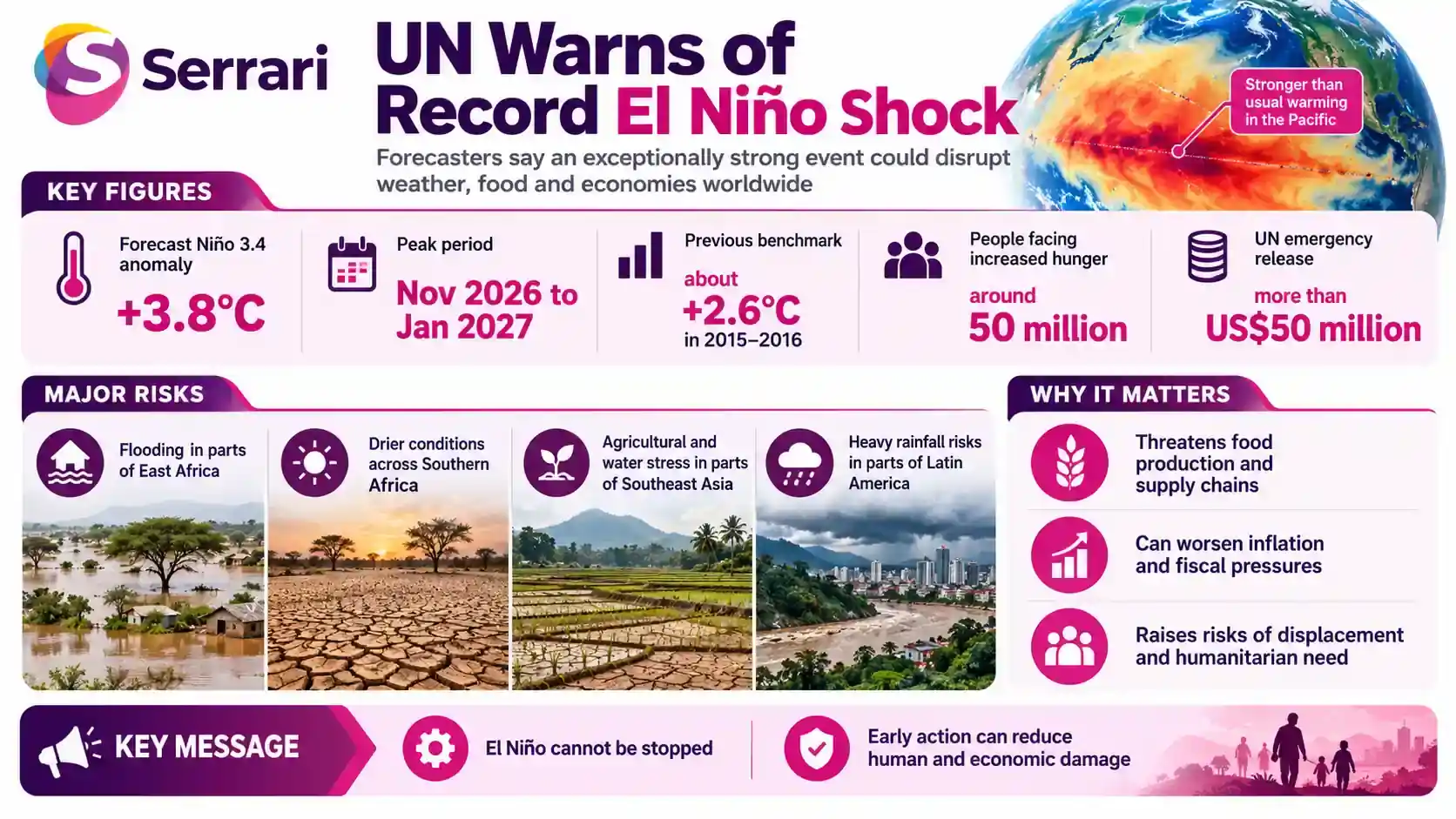
- Record-level forecast: The Niño 3.4 Pacific sea-surface temperature anomaly could average +3.8°C in November 2026–January 2027.
- Previous benchmark: The 2015–2016 episode reached approximately +2.6°C on the comparable seasonal measure.
- Humanitarian exposure: Around 50 million people could face increased hunger, according to UN emergency officials.
- Funding response: The UN has released more than US$50 million in emergency funding for 11 vulnerable countries.
- Regional threats: Parts of East Africa face elevated flood risks, while Southern Africa faces greater risk of dry conditions affecting crops and water supplies.
- Economic concern: Agricultural losses, infrastructure damage and higher food prices could intensify existing financial pressures.
Why This El Niño Could Be Unprecedented
El Niño occurs when waters in the central and eastern tropical Pacific become unusually warm, changing atmospheric circulation and rainfall patterns around the world. It typically develops every two to seven years, although its strength and effects vary substantially.
The October 21 climate forecast puts the seasonal Niño 3.4 anomaly at approximately +3.8°C, above the earlier record cited for 2015–2016. That would make this an exceptional event if the forecast materialises. The projected figure should not be mistaken for an observed record or a precise forecast of damage in individual countries.
Warming oceans increase the likelihood of shifts in rainfall and temperature, but local outcomes also depend on other climate systems and weather conditions. National and regional forecasts remain essential for identifying where floods or droughts are most likely.
Where Floods, Drought and Food Shortages Could Hit
The latest humanitarian weather assessment identifies elevated risks of heavy rainfall and flooding in parts of East Africa during the October–December rainy season. In Kenya, Ethiopia and Somalia, heavy rains can damage roads, homes, farmland and water infrastructure, especially in already vulnerable communities.
Southern Africa, by contrast, faces greater risks of below-normal rainfall from November, raising concerns over crop production, livestock and water availability. Parts of Southeast Asia could experience more heat, rainfall shortages, wildfires and smoke, while portions of Latin America may face intense rainfall and flooding.
These are regional risk patterns rather than guarantees that every country or district will experience the same conditions.
Context is everything. Stay ahead of shifting trends with today’s market updates, and uncover emerging opportunities using the Serrari Group Market Index and Marketplace. Then, take control of your own financial future by exploring our Money & Life Reset Transformation Blueprint ™ to build stronger habits, create better systems, and design a path toward lasting wealth.
How Extreme Weather Could Affect the Global Economy
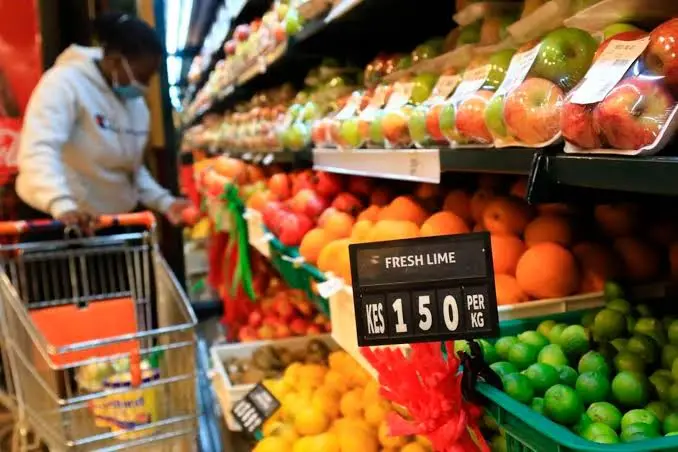
A strong El Niño can spread economic pressure through several channels. Drought may reduce harvests and push up food prices, while flooding can interrupt transport corridors, damage warehouses and delay deliveries. Hydropower shortages may also affect electricity supply where rainfall is insufficient.
Rising agricultural and logistics costs could complicate inflation management, particularly for countries already facing expensive imported fuel, fertiliser and food. Severe losses may also increase public spending on emergency relief and reconstruction, leaving less room in national budgets for other priorities.
At an October 21 UN briefing, humanitarian coordinator Tom Fletcher warned that as many as 50 million people could face worsening hunger. That is an estimate of potential exposure, not a confirmed count of people newly experiencing hunger or proof that a global economic crisis will occur.
UN Emergency Funding and the Next Steps
The UN has released more than US$50 million from its Central Emergency Response Fund to support 11 countries, including Chad, El Salvador, Ethiopia, Somalia and South Sudan. Priorities include preparing communities for floods, protecting food supplies and helping vulnerable households withstand weather shocks.
Governments and businesses will be watching updated seasonal forecasts, crop conditions, water availability and transport disruptions through early 2027. Early warnings, resilient infrastructure and timely assistance could reduce losses even if El Niño becomes exceptionally strong.
Sources: World Meteorological Organization / United Nations Office for the Coordination of Humanitarian Affairs / United Nations Geneva / Reuters / CGTN
Your financial future isn’t something you wait for—it’s something you build.
The real question is: when do you begin?
Move beyond simply staying informed.
Navigate the markets with clarity—track trends through the Serrari Group Market Index, uncover opportunities in the Serrari Marketplace, and build practical knowledge with our Curated Wealth Builder Platform.
Stay connected to what truly matters.
Get daily insights on macro trends and financial movements across Kenya, Africa, and global markets—delivered through the Serrari Newsletter.
Growth opens doors.
Advance your career through professional programs including ACCA, HESI A2, ATI TEAS 7 , HESI EXIT , NCLEX – RN and NCLEX – PN, Financial Literacy!🌟—designed to move you forward with confidence.
See where money is flowing—clearly and in real time.
Track Money Market Funds, Treasury Bills, Treasury Bonds, Green Bonds, and Fixed Deposits, alongside global and African indexes, key economic indicators, and the evolving Crypto and stablecoin landscape—all within Serrari’s Market Index.