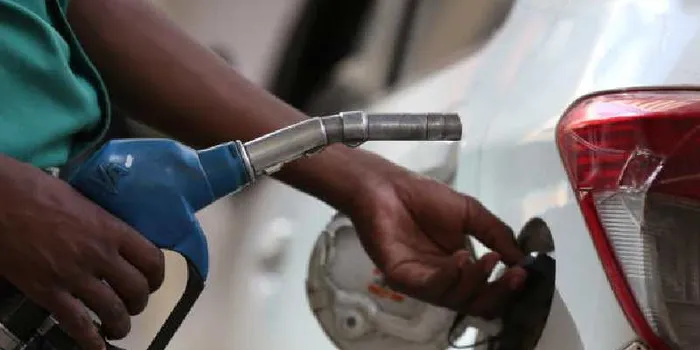
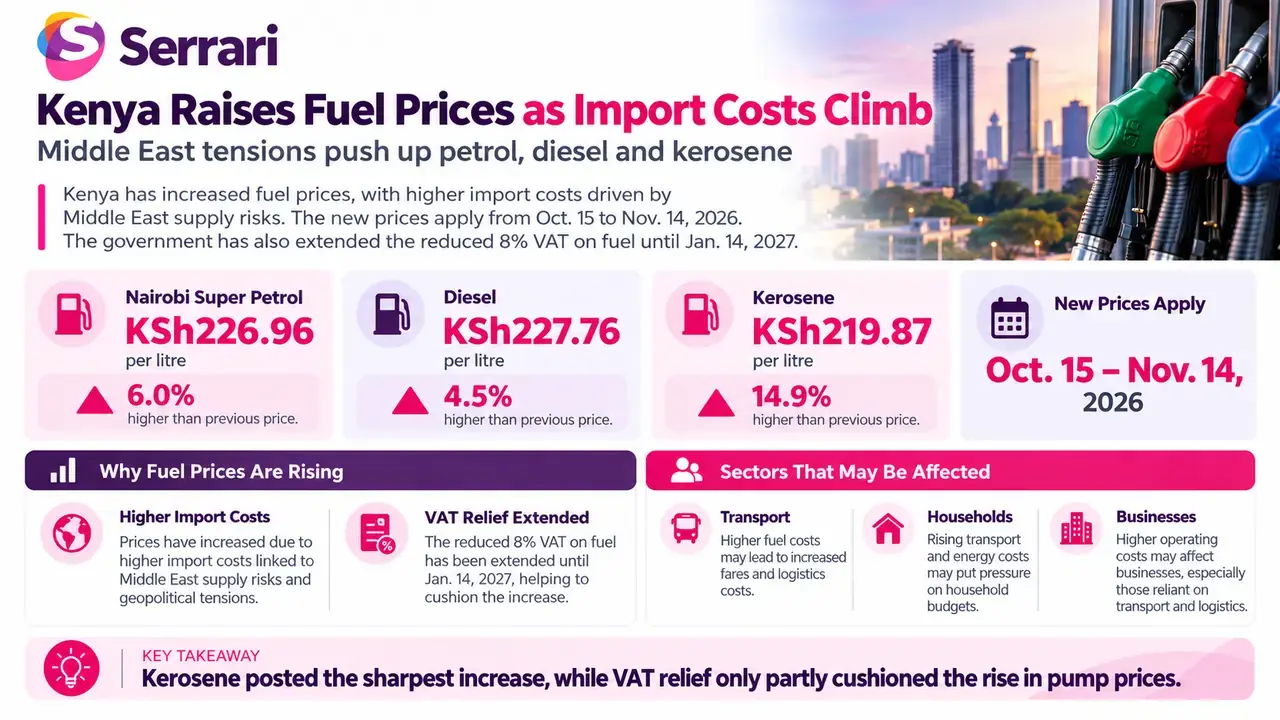
Kenya has raised the maximum retail prices of petrol, diesel and kerosene for the October 15–November 14, 2026 pricing cycle as conflict in the Middle East drives up the cost of imported fuel. Under the latest monthly pricing announcement, super petrol will cost up to KSh226.96 per litre in Nairobi, diesel KSh227.76 and kerosene KSh219.87.
The increases follow rising international petroleum costs and come despite the government’s continued use of a reduced 8% value-added tax (VAT) rate on fuel. Higher pump prices could put renewed pressure on household spending, transport operators and businesses that depend on diesel-powered distribution and equipment.
Key Overview
- Petrol: Nairobi’s maximum price rises by KSh12.93, from KSh214.03 to KSh226.96 per litre, an increase of about 6.0%.
- Diesel: The price climbs by KSh9.90, from KSh217.86 to KSh227.76 per litre, or about 4.5%.
- Kerosene: The price jumps by KSh28.49, from KSh191.38 to KSh219.87 per litre, or approximately 14.9%.
- Tax relief: The reduced 8% fuel VAT, rather than the previous 16%, has been extended through January 14, 2027.
- Effective period: The revised price ceilings apply from October 15 to November 14, 2026, with another monthly review due thereafter.
Why Fuel Prices Are Rising in Kenya
The regulator linked the increase to higher landed costs of imported petroleum products, as instability in the Middle East disrupts supply chains and raises costs for oil buyers. Kenya relies on imports for its refined petroleum products, making domestic prices sensitive to international fuel markets, shipping and the exchange rate.
Between August and September 2026, the average landed cost of super petrol increased 11.81%, from $874.26 to $977.55 per cubic metre. Diesel rose 11.32%, from $957.05 to $1,065.38, while kerosene increased 9.41%, from $1,003.87 to $1,098.31 per cubic metre.
These import-cost increases are not identical to the percentage changes at the pump because retail pricing also reflects taxes, levies and distribution costs. The latest adjustments follow a September–October cycle in which maximum fuel prices had remained unchanged across the country.
Reduced VAT Offers Partial Relief
The government has extended the temporary reduction in fuel VAT from 16% to 8% until January 14, 2027. The newly announced pump prices already include the lower rate, so the tax reduction does not mean motorists will receive an additional 8% discount at filling stations.
The relief limits the tax component of retail prices but cannot fully offset higher imported fuel costs. Consumers therefore still face increases even with the reduced tax rate in place.
Context is everything. Stay ahead of shifting trends with today’s market updates, and uncover emerging opportunities using the Serrari Group Market Index and Marketplace. Then, take control of your own financial future by exploring our Money & Life Reset Transformation Blueprint ™ to build stronger habits, create better systems, and design a path toward lasting wealth.
Impact on Transport, Businesses and Households
Diesel is widely used in freight transport, agriculture, construction and backup power generation. Its higher price could increase operating expenses for businesses, potentially affecting delivery charges and the prices of transported goods. Whether these costs reach consumers will depend on how operators adjust their margins and charges.
Kerosene presents a particular household concern. Its KSh28.49-per-litre increase is the largest of the three products in both shilling and percentage terms, affecting users who depend on it for cooking or lighting. Petrol users also face higher commuting costs: purchasing 50 litres at Nairobi’s new maximum price would cost KSh646.50 more than in the previous cycle.
Regional Prices and the Next Review
The new maximum prices differ across Kenyan towns because of distribution and transport costs. In Mombasa, petrol is capped at KSh223.81, diesel at KSh224.61 and kerosene at KSh216.71 per litre. Nakuru’s corresponding prices are KSh225.73, KSh226.93 and KSh219.06.
These figures are retail price ceilings, not guaranteed prices at every station. The next pricing cycle begins on November 15, 2026; its actual price changes will depend on the subsequent review of import costs and applicable taxes.
Sources: Energy and Petroleum Regulatory Authority / Reuters / Pulse Kenya
Your financial future isn’t something you wait for—it’s something you build.
The real question is: when do you begin?
Move beyond simply staying informed.
Navigate the markets with clarity—track trends through the Serrari Group Market Index, uncover opportunities in the Serrari Marketplace, and build practical knowledge with our Curated Wealth Builder Platform.
Stay connected to what truly matters.
Get daily insights on macro trends and financial movements across Kenya, Africa, and global markets—delivered through the Serrari Newsletter.
Growth opens doors.
Advance your career through professional programs including ACCA, HESI A2, ATI TEAS 7 , HESI EXIT , NCLEX – RN and NCLEX – PN, Financial Literacy!🌟—designed to move you forward with confidence.
See where money is flowing—clearly and in real time.
Track Money Market Funds, Treasury Bills, Treasury Bonds, Green Bonds, and Fixed Deposits, alongside global and African indexes, key economic indicators, and the evolving Crypto and stablecoin landscape—all within Serrari’s Market Index.