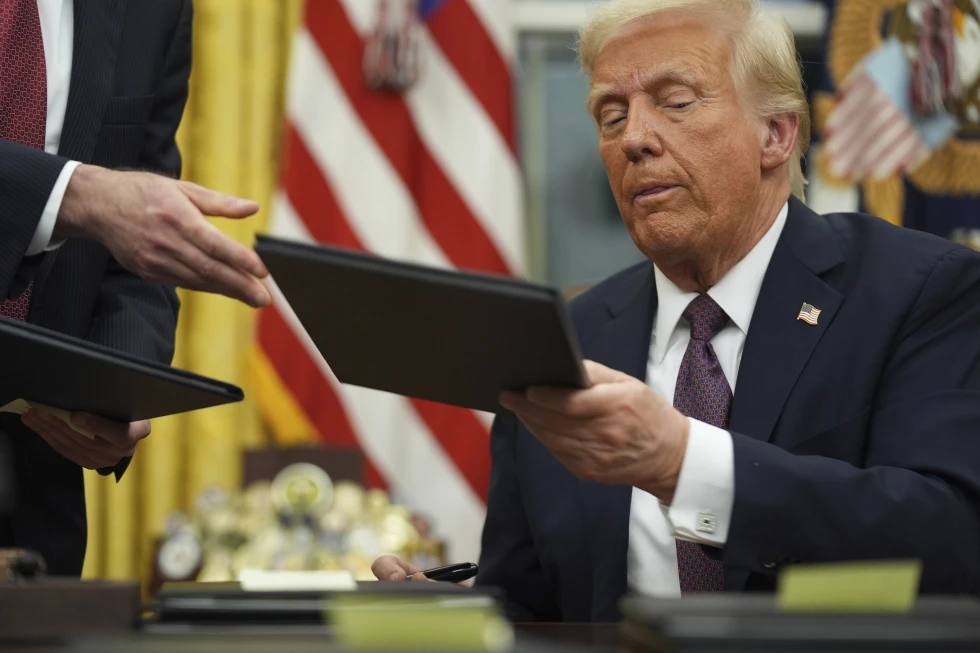
On January 20, 2025, U.S. President Donald Trump issued an executive order that has sent shockwaves through the global health community. The order, which suspends all U.S. foreign aid for 90 days pending a review, has cast uncertainty over crucial HIV/AIDS programs funded by the U.S., particularly in sub-Saharan Africa. This includes the President’s Emergency Plan for AIDS Relief (PEPFAR), a program that has been instrumental in saving millions of lives since its inception in 2003.
The order states that no foreign assistance “shall be disbursed in a manner that is not fully aligned with the foreign policy of the President of the United States.” However, its vague wording has left many healthcare providers and program managers uncertain about whether previously committed funds will continue to flow or if all payments will be halted immediately.
PEPFAR: A Lifeline for Sub-Saharan Africa
Since its launch by former President George W. Bush, PEPFAR has been a cornerstone of the global fight against HIV/AIDS. The program has provided antiretroviral treatment (ART) to nearly 21 million people across 55 countries, with a significant focus on sub-Saharan Africa. In addition to treatment, PEPFAR has supported preventive measures, including pre-exposure prophylaxis (PrEP) for 2.5 million people and HIV testing for 84 million individuals in 2024 alone.
Countries like Uganda, Namibia, Botswana, Mozambique, Zimbabwe, and Malawi heavily rely on PEPFAR funding for their HIV intervention programs. In South Africa, where an estimated 5.6 million people are on ART, PEPFAR funding supports staffing, prevention efforts, and educational initiatives.
However, the executive order has introduced a level of uncertainty that could jeopardize these life-saving programs.
Immediate Impacts on HIV Treatment and Prevention
The ambiguity of the order’s wording has left healthcare providers and organizations scrambling for clarity. The directive to “pause new obligations and disbursements” has raised questions about whether funds already committed through signed contracts will be affected. For many, this uncertainty is not just bureaucratic—it is a matter of life and death.
Professor Linda-Gail Bekker, an infectious disease scientist at the Desmond Tutu HIV Centre in South Africa, expressed grave concerns:
“HIV treatment doesn’t stand still. Interruptions in treatment, PrEP, and quality healthcare can lead to disastrous outcomes, especially for countries that are heavily dependent on donor funding.”
Studies have shown that interruptions in ART can significantly increase the risk of mortality. A 2024 study in South Africa revealed that adults who experienced treatment interruptions were at much greater risk of death, underscoring the importance of continuous access to medication.
The Ripple Effect on African Health Systems
Beyond its immediate impact on HIV/AIDS programs, the suspension of U.S. foreign aid threatens to destabilize already fragile healthcare systems across Africa. Countries like Malawi, which allocated $180 million and $178 million of PEPFAR funding for 2024 and 2025, respectively, face an urgent need to sustain their HIV response efforts.
In Malawi’s recent National AIDS Commission (NAC) strategic plan, officials warned of the potential consequences of funding disruptions:
“There is an urgent need to sustain and accelerate the national response between 2020 and 2025 in order to put Malawi on the path towards ending AIDS as a public health threat by 2030.”
PEPFAR funding has also supported critical HIV-related research in Africa, much of which is conducted in collaboration with the U.S. National Institutes of Health (NIH). With the future of this funding in doubt, progress in combating the epidemic could be stalled or reversed.
The Broader Implications of U.S. Policy Shifts
President Trump’s suspension of foreign aid is part of a broader policy shift that includes an executive order to withdraw the U.S. from the World Health Organization (WHO). As the WHO’s largest funder, the U.S. contributes approximately $400 million annually to its programs, which address global health crises, including pandemics and vaccine distribution.
The decision to withdraw from the WHO has raised alarm bells within the global health community. According to Reuters, there is a 12-month notice period for the U.S. to complete its withdrawal, during which its financial contributions are expected to cease. This move could have far-reaching consequences, particularly for countries that depend on WHO support for immunization campaigns and epidemic response efforts.
Calls for Self-Reliance Amid Funding Uncertainty
While the suspension of U.S. aid has highlighted the vulnerabilities of donor-dependent health systems, it has also reignited discussions about the need for greater self-reliance among African nations. Professor Bekker acknowledged this dual reality, stating:
“There is no doubt our own national governments need to step up. But the sudden stop of donor funding can be disastrous.”
South Africa, for instance, funds the procurement of antiretroviral medicines domestically but relies on PEPFAR for staffing and community outreach initiatives. In countries with smaller health budgets, such as Malawi and Mozambique, the reliance on foreign aid is far more pronounced.
Global Reactions and Criticism
The executive order has drawn sharp criticism from global health advocates and policymakers. Many have questioned the ethical and strategic implications of halting aid to some of the world’s most vulnerable populations.
Mark Dybul, a former U.S. Global AIDS Coordinator, argued that the move undermines decades of progress:
“PEPFAR is not just a program; it’s a testament to what global partnerships can achieve. Suspending aid now risks undoing years of hard work and millions of lives saved.”
Critics also point to the potential geopolitical consequences of reduced U.S. involvement in global health initiatives. With China and other nations increasing their influence in Africa through infrastructure investments and development aid, the U.S. risks losing its standing as a leader in humanitarian assistance.
Uncertain Future for Global Health
As the 90-day review period unfolds, the fate of U.S. foreign aid programs remains uncertain. Advocacy groups are calling on the Biden administration to reconsider the decision and provide clarity on the status of committed funds.
In the meantime, healthcare providers in Africa are bracing for the worst. The potential disruption of PEPFAR funding could derail years of progress in controlling the HIV/AIDS epidemic and place millions of lives at risk.
The stakes are high, and the world is watching. Whether the U.S. chooses to reaffirm its commitment to global health or retreat into isolationism will have lasting consequences—not just for Africa, but for the global community.
As Professor Bekker put it:
“This is not just about funding. It’s about the future of global health and our shared responsibility to protect the most vulnerable among us.”
Ready to take your career to the next level? Join our dynamic courses: ACCA, HESI A2, ATI TEAS 7 , HESI EXIT , NCLEX – RN and NCLEX – PN, Financial Literacy!🌟 Dive into a world of opportunities and empower yourself for success. Explore more at Serrari Ed and start your exciting journey today! ✨
photo source: Google
By: Montel Kamau
Serrari Financial Analyst
24th January, 2025