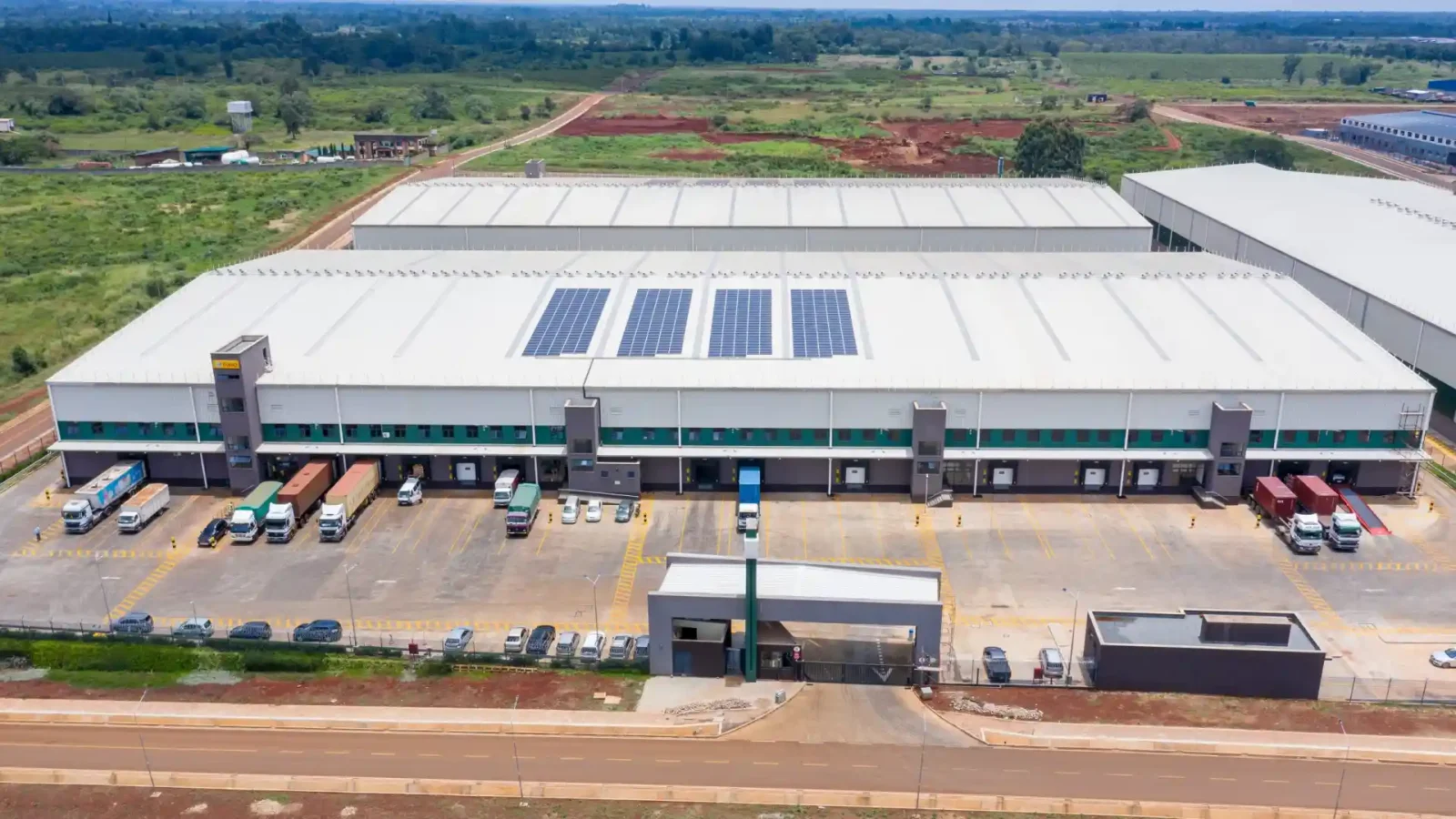
Kenya’s industrial real estate sector is undergoing one of the most significant structural transformations in its history. The traditional godown — long the default warehousing solution across the country — is being systematically replaced by high-performance, green-certified industrial facilities that meet the evolving demands of multinational tenants, ESG-conscious investors, and an increasingly cost-aware logistics industry. Prime warehouse occupancy levels remained above 80 percent in the first quarter of 2026, a figure that underscores how severely supply is lagging behind the surge in demand for quality space. Developers who invest in green certification are absorbing a 3 to 5 percent construction cost premium but are being rewarded with superior rental yields and stronger tenant retention. Meanwhile, tenants occupying EDGE-certified facilities are reporting utility savings of up to 40 percent compared to conventional structures — a figure that transforms green certification from an environmental aspiration into a hard financial calculation.
Key Overview
- Market Signal: Prime warehouse occupancy in Kenya remained above 80% in Q1 2026, reflecting a severe supply shortage of high-quality industrial space
- The Old Standard: The traditional “godown” — poorly ventilated, dimly lit, and energy-inefficient — is rapidly being phased out
- Driver: A combination of ESG mandates from multinational corporations and rising utility costs is accelerating the flight to quality
- Developer Economics: Green-certified warehouses carry a 3–5% construction cost premium but deliver superior long-term rental yields and tenant retention
- Tenant Economics: Companies in EDGE-certified facilities report utility savings of up to 40% compared to conventional buildings
- Strategic Shift: Green certification has moved from a marketing differentiator to a baseline requirement for market relevance in Kenya’s logistics sector
The End of the Godown Era
There is a structure found in virtually every industrial zone across Kenya — from Mombasa’s port hinterland to Nairobi’s Industrial Area and the expanding logistics corridors of the city’s outskirts. It is typically a large, rectangular building of corrugated iron or unreinforced concrete, with limited natural light, minimal ventilation, and an interior climate governed entirely by the weather outside. It is known as the godown, and for decades it was the unquestioned standard for warehousing and industrial storage across East Africa.
The godown was a practical solution for a particular era. In an economy where formal supply chains were relatively simple, where multinational corporate tenants were few, and where energy costs were absorbed as an unavoidable overhead rather than a managed variable, the godown did what was required of it. It provided covered storage at low cost, and that was largely sufficient.
That era is ending. The forces reshaping Kenya’s industrial real estate sector are structural, not cyclical, and they are being driven by changes that originate far beyond the boundaries of any individual warehouse or industrial park. Global supply chains are hardening their environmental standards. Multinational corporations are embedding ESG requirements into their procurement and real estate decisions. And the economics of energy — in a country where electricity costs have historically been volatile and remain among the highest in the region — are making the operational inefficiency of conventional warehousing increasingly difficult to justify.
What is emerging in its place is a new category of industrial space: high-performance, green-certified facilities designed to deliver measurable operational benefits alongside the basic function of covered storage. This is not merely an aesthetic upgrade. It is a fundamental reimagining of what a warehouse is for and what it must deliver to remain competitive in a rapidly evolving market.
Markets move fast; don’t get left behind. We’ve paired the Serrari Group Market Index with a curated Marketplace and a comprehensive Wealth Builder Course to ensure you have the data—and the skills—to act on it.
Historical Context: Kenya’s Industrial Real Estate Journey
To appreciate the scale of the transformation now underway, it is worth tracing how Kenya’s industrial real estate sector arrived at this moment.
Kenya’s formal industrial sector took shape largely in the post-independence era, as the government pursued import substitution policies designed to build domestic manufacturing capacity. The industrial zones established during this period — most notably Nairobi’s Industrial Area, developed in the 1960s and 1970s — were designed around the needs of a manufacturing economy that was still in its infancy. The godown became the default industrial building typology: cheap to construct, relatively quick to erect, and adequate for the storage and light manufacturing activities that characterised the era.
The liberalisation of Kenya’s economy in the 1990s brought new pressures and new opportunities. The establishment of export processing zones attracted foreign manufacturers seeking low-cost production bases, and the growth of Nairobi as a regional headquarters city for multinational corporations began to generate demand for higher-quality commercial and industrial space. The port of Mombasa, as one of the busiest on the East African coast, drove demand for logistics and warehousing facilities in its hinterland, and a cluster of industrial parks began to emerge along the Nairobi-Mombasa corridor.
The 2000s and 2010s saw accelerating growth in Kenya’s logistics sector, driven by the country’s emergence as a regional hub for East and Central Africa. The expansion of the Standard Gauge Railway, the development of inland container depots, and the growth of the Nairobi metropolitan area all created new demand for industrial and warehousing space. Developers began to move beyond the basic godown, offering more sophisticated facilities with better specifications — higher eaves heights, reinforced floors, modern loading dock configurations — in response to the requirements of logistics companies and multinational distributors.
But the green building dimension was largely absent from this evolution. Kenya’s industrial real estate market remained focused on the quantity and basic quality of space, rather than on the environmental performance characteristics — energy efficiency, water conservation, indoor air quality — that were beginning to define best practice in more mature markets.
The shift began to accelerate in the early 2020s, driven by a convergence of factors: the formalisation of ESG requirements by multinational corporations, the development of green building rating frameworks applicable to industrial facilities in emerging markets, and the growing recognition among Kenyan developers and investors that the premium commanded by high-quality space was sufficient to justify the additional investment required to deliver it.
Understanding the Flight to Quality
The concept of a “flight to quality” is well established in commercial real estate theory. It describes the tendency of tenants — particularly during periods of economic uncertainty or structural market change — to concentrate their occupancy in the best available space, even at higher cost, while vacating inferior properties. The premium paid for quality is justified by the operational, reputational, and financial benefits that superior space delivers.
In Kenya’s warehouse market, this dynamic is playing out with particular intensity. Prime warehouse occupancy rates above 80 percent in the first quarter of 2026 are a striking indicator of how concentrated demand has become at the upper end of the quality spectrum. In a balanced market, occupancy rates of this magnitude would typically trigger a wave of new supply development. The fact that supply has not kept pace is partly a reflection of the lead time required to develop high-quality industrial facilities — which is substantially longer than that required for conventional godown construction — and partly a reflection of the relatively limited number of developers currently capable of delivering certified green industrial space to the standard that tenants now require.
The tenants driving this demand are not a homogeneous group. They include multinational fast-moving consumer goods companies whose global sustainability commitments require that their African operations meet the same environmental standards as their facilities elsewhere. They include logistics service providers who are under pressure from their clients to demonstrate measurable reductions in carbon emissions across their operations. They include e-commerce fulfillment operators who require the kind of operational precision — consistent temperatures, reliable power, efficient workflows — that conventional warehouses cannot provide. And they include pharmaceutical distributors and cold chain operators for whom the environmental control characteristics of the facility are not a preference but a regulatory requirement.
What unites these tenants is a recognition that the cost of occupying inferior space is not simply the rent saved. It is the operational inefficiency, the reputational risk, the energy costs, and the increasingly real possibility of failing to meet contractual ESG commitments to their own clients and investors.
The Economics of Green Certification: Developer and Tenant Perspectives
The financial case for green industrial development is now sufficiently robust that it is shifting the calculus for both developers and tenants — though from different directions.
For developers, the key data point is the 3 to 5 percent premium in construction costs associated with green certification. This figure — which encompasses the additional investment in insulation, energy-efficient lighting and HVAC systems, water recycling infrastructure, and the certification process itself — is not trivial, but it is manageable in the context of a development where the long-term revenue profile is substantially superior to that of a conventional build.
The mechanism through which this superior revenue profile is achieved is straightforward. Green-certified facilities command higher rents, attract tenants with stronger covenant strength, and retain those tenants for longer periods. In commercial real estate, long-term lease agreements with creditworthy tenants are the primary driver of asset value — and green certification is increasingly a prerequisite for securing precisely these kinds of covenants. For a developer underwriting a warehouse project over a 10 to 15 year investment horizon, the incremental construction cost of green certification is modest relative to the cumulative benefit of higher rents and lower vacancy costs.
For tenants, the financial case is even more compelling. Utility savings of up to 40 percent in EDGE-certified facilities — relative to conventional buildings — translate directly into lower operating costs. In a sector where margins are frequently thin and operational efficiency is a primary competitive differentiator, a 40 percent reduction in energy expenditure is not a marginal benefit. It is a structural cost advantage that compounds over the life of a lease and can meaningfully affect the profitability of a logistics operation.
EDGE — which stands for Excellence in Design for Greater Efficiencies — is a green building certification system developed by the International Finance Corporation, a member of the World Bank Group. It is designed specifically for emerging markets, where the cost sensitivity of developers and tenants requires a certification framework that delivers meaningful performance improvements without the complexity and cost associated with more intensive systems such as LEED or BREEAM. EDGE certification requires a minimum 20 percent reduction in energy use, water use, and embodied energy in materials — thresholds that are achievable in Kenya’s climate at relatively modest cost premiums, making it a practically relevant benchmark for the market.
ESG Mandates: The Corporate Imperative Reshaping Tenant Behaviour
The flight to quality in Kenya’s warehouse market cannot be fully understood without appreciating the force of ESG mandates flowing from multinational corporations to their African operations. These are not soft preferences — they are contractual requirements embedded in global real estate and procurement policies that local subsidiaries and supply chain partners must comply with.
The source of these mandates is, in most cases, the sustainability commitments that multinationals have made to their own shareholders, regulators, and customers. Companies listed on major global stock exchanges are subject to increasingly stringent disclosure requirements around their carbon emissions, energy consumption, and environmental impact. The Scope 3 emissions category — which encompasses the emissions generated across a company’s entire value chain, including the facilities occupied by its logistics partners — is becoming a focus of regulatory attention in Europe, North America, and increasingly in Asia.
For a multinational distributing consumer goods across East Africa from a warehouse in Nairobi, the environmental performance of that warehouse is no longer an internal operational matter. It is a data point that may need to be reported to regulators, disclosed to investors, and verified by third-party auditors. A godown that consumes three times the energy of a certified equivalent facility is not simply inefficient — it is a potential liability in the context of a global corporate sustainability reporting framework.
This dynamic creates a direct and powerful incentive for multinational tenants to demand green-certified space — and to be willing to pay a rental premium to secure it. It also creates an incentive for their logistics partners and supply chain service providers to upgrade their facilities, since failing to do so risks losing contracts with tenants whose own ESG compliance depends on the performance of their partners.
Context is everything. While you follow today’s updates, use the Serrari Group Market Index and Marketplace to spot emerging shifts. Need to sharpen your edge? Our Wealth Builder Course turns these insights into a professional-grade strategy.
Risks to Consider
The transition towards green industrial real estate in Kenya is compelling, but investors and developers should approach it with a clear-eyed assessment of the risks involved.
Financing access remains a constraint. Green building development requires upfront capital that is not always readily available from Kenya’s domestic banking sector, where lending for industrial real estate has historically been limited and expensive. While international development finance institutions — including the IFC, which promotes EDGE certification — have been active in providing concessional finance for green building projects in emerging markets, the volume of such financing available in Kenya remains insufficient relative to the scale of demand. Developers without access to international capital markets may find the green premium difficult to finance.
Certification complexity is another practical challenge. Achieving and maintaining green certification requires technical expertise that is not yet widely available in Kenya’s construction and property management industries. The pipeline of architects, engineers, and building managers with the skills to design, build, and operate certified green facilities is growing but remains limited. This creates a risk of quality gaps between certified design intentions and actual building performance — a phenomenon known as the “performance gap” that has been documented in green building markets globally.
Tenant affordability is a nuanced risk. While the operational savings from green certification are real, the higher base rents associated with premium space may be beyond the reach of smaller Kenyan businesses and domestic logistics operators. If the green warehouse market becomes predominantly the domain of multinational tenants, the broader economic development benefits — including job creation and supply chain upgrading for local firms — may be more limited than the headline investment figures suggest.
Infrastructure dependency is a structural risk specific to Kenya’s context. The energy savings delivered by green warehouse design depend in part on reliable grid electricity. In a context where power outages remain relatively common, the performance modelling underlying green building economics may not fully reflect the backup generation costs that tenants must absorb to maintain operational continuity.
Challenges Ahead
Beyond the immediate risk landscape, several structural challenges will shape the trajectory of Kenya’s green industrial real estate market over the medium term.
Land availability and affordability in prime logistics locations — particularly along the Nairobi Northern and Eastern bypasses and in the Nairobi-Mombasa corridor — is becoming a significant constraint. As demand for quality industrial land intensifies, prices are rising in ways that can erode the economics of new development, particularly for developers building to green standards who are already absorbing a construction cost premium.
Skills development across the construction value chain is essential but lagging. Producing buildings that genuinely perform to their certified specifications requires contractors, sub-contractors, and site managers who understand green building techniques — and this level of expertise is not yet widespread in Kenya’s construction industry. Investing in training and certification at the trade and supervisory levels is a prerequisite for scaling the sector sustainably.
Regulatory frameworks for green building in Kenya remain underdeveloped relative to the pace of market evolution. The National Construction Authority and county governments are beginning to incorporate sustainability considerations into building regulations, but the process is slow and inconsistent across jurisdictions. A clearer, more harmonised regulatory framework — ideally one that creates positive incentives for green building rather than simply imposing requirements — would accelerate the transition.
Looking Ahead: Kenya as East Africa’s Green Logistics Hub
The trajectory of Kenya’s industrial real estate market points towards an increasingly bifurcated landscape: a premium segment of green-certified, high-performance facilities commanding strong rents and high occupancy from quality tenants, and a legacy stock of conventional godowns gradually losing relevance as the gap between their capabilities and tenant requirements widens.
For Kenya, the prize is significant. As the primary logistics and distribution hub for East and Central Africa, the country has the opportunity to attract the regional headquarters, distribution centres, and fulfillment operations of the multinationals who are building out their African presence. Securing these operations — which bring not only direct employment but technology transfer, management capability, and supply chain integration — requires offering facilities that meet global standards. Green certification is the most visible and verifiable expression of those standards.
The data from Q1 2026 suggests the market is already moving decisively in this direction. Occupancy above 80 percent in the prime segment is a market signal that cannot be ignored. Developers who respond with green-certified supply will capture the rental premium and the tenant quality that the market is now offering as a reward for building to the right standard.
For investors, Kenya’s green warehouse market represents an opportunity that combines the structural growth story of African logistics with the defensive characteristics of ESG-compliant assets — a combination that is increasingly in demand from the institutional capital that will ultimately determine the pace and scale of the sector’s transformation.
The godown is not disappearing overnight. But its days as the default answer to Kenya’s warehousing needs are numbered, and the future being built in its place is measurably better — for tenants, for investors, and for the environment.
Your financial future isn’t something you wait for, it’s something you build.
The real question is: when do you begin?
Move beyond simply staying informed.
Navigate the markets with clarity—track trends through the Serrari Group Market Index, uncover opportunities in the Serrari Marketplace, and build practical knowledge with our Curated Wealth Builder Course.
Stay connected to what truly matters.
Get daily insights on macro trends and financial movements across Kenya, Africa, and global markets—delivered through the Serrari Newsletter.
Growth opens doors.
Advance your career through professional programs including ACCA, HESI A2, ATI TEAS 7 , HESI EXIT , NCLEX – RN and NCLEX – PN, Financial Literacy!🌟—designed to move you forward with confidence.
See where money is flowing—clearly and in real time.
Track Money Market Funds, Treasury Bills, Treasury Bonds, Green Bonds, and Fixed Deposits, alongside global and African indexes, key economic indicators, and the evolving Crypto and stablecoin landscape—all within Serrari’s Market Index.