South Korea has announced a 1,000 trillion won ($747 billion) Korea-Green Transformation (K-GX) strategy covering 2026–2035. The plan combines public spending, climate finance and private investment to expand renewable energy, decarbonise heavy industry, accelerate electric vehicle adoption and develop domestic clean technology supply chains.
Key Overview
- Total investment: 1,000 trillion won, equivalent to approximately $747 billion.
- Public funding: 200 trillion won in fiscal spending and more than 790 trillion won in climate finance.
- Separate private-sector investment: 220 trillion won.
- Renewable energy target: 100 GW of capacity by 2030.
- Electric and hydrogen vehicles: more than 70% of new vehicle sales by 2035.
- Industrial focus: steel, petrochemicals, refining, cement, semiconductors and displays.
- Tandem solar cells targeted for commercialisation by 2028.
South Korea Commits $747 Billion to Green Transformation
South Korea has unveiled an ambitious decade-long strategy to reduce emissions while strengthening industrial competitiveness and energy security. The 1,000 trillion won (USD$747 billion) energy transition plan runs through 2035 and is designed to move the country towards cleaner energy while developing new sources of economic growth.
The Korea-Green Transformation, or K-GX, strategy combines renewable energy expansion, industrial decarbonisation, cleaner transport and domestic manufacturing of green technologies. The government is positioning the transition as both a climate initiative and an industrial development programme.
The strategy arrives as South Korea seeks to reduce its exposure to imported fossil fuels and respond to tightening global carbon regulations. Expanding domestic renewable generation is expected to strengthen energy security while supporting the competitiveness of export-oriented industries.
Public Finance to Mobilise Private Investment
The financing structure combines 200 trillion won in fiscal spending with more than 790 trillion won in climate finance channelled through state-backed financial institutions. A separate 220 trillion won in private-sector investment is planned for 10 flagship projects.
Climate finance will be particularly important for businesses considering expensive industrial upgrades, emerging technologies and clean-energy infrastructure. The strategy is designed to reduce investment uncertainty by sharing some of the financial risks associated with long-term decarbonisation projects.
Projects receiving climate-finance support will be assessed on their greenhouse gas reduction impact, linking financing more closely to measurable environmental outcomes. The approach could help direct capital towards projects that demonstrate tangible emissions reductions rather than relying solely on broad sustainability commitments.
Renewable Energy Capacity to Reach 100 GW
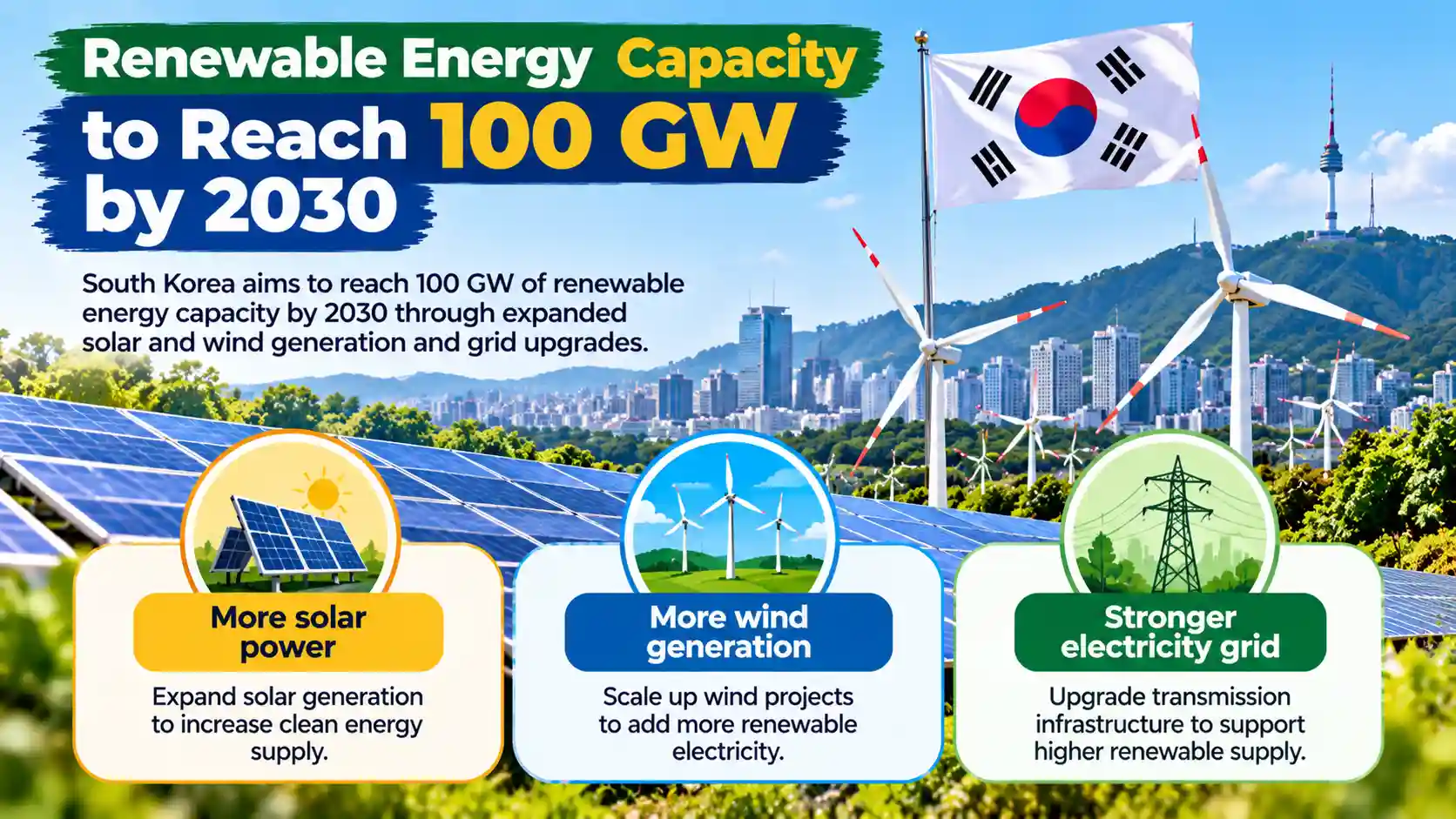
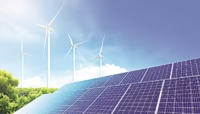
South Korea aims to reach 100 GW of renewable energy capacity by 2030 through expanded solar and wind generation and improvements to the electricity grid.
The plan also includes upgrading transmission infrastructure to accommodate larger volumes of renewable electricity. High-capacity power lines and direct-current transmission and distribution systems are intended to improve the delivery of clean power from generation sites to end users.
A further target is the commercialisation of tandem solar cells by 2028. These technologies are part of a wider effort to strengthen domestic manufacturing and reduce reliance on external suppliers for critical clean-energy equipment.
Electric Vehicles and Batteries Take Centre Stage
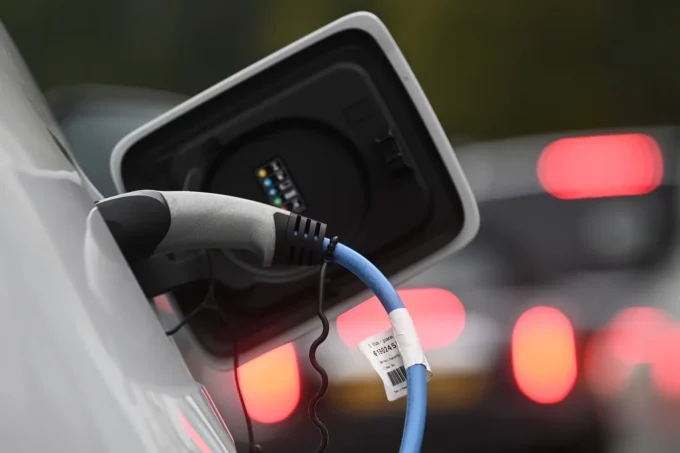
Transport electrification is another major component of the strategy. South Korea wants electric and hydrogen-powered vehicles to account for more than 70% of new vehicle sales by 2035.
The government plans to restructure electric vehicle subsidies, expand support for environmentally friendly vehicles and accelerate electrification beyond passenger cars. Public transport, two-wheelers, construction equipment, port facilities and vessels are also included in the wider transition.
The programme identifies 10 priority green industries: electric vehicles, batteries, solar power, wind power, small modular reactors, power equipment, power semiconductors, heat pumps, hydrogen and carbon capture, utilisation and storage.
Domestic production tax credits are planned for technologies such as solar photovoltaic equipment, wind power and battery storage. The strategy also supports next-generation batteries, including all-solid-state designs, and electric motors that do not rely on rare-earth materials.
These measures aim to strengthen domestic supply chains while supporting South Korea’s position in global automotive and battery manufacturing.
Context is everything. Stay ahead of shifting trends with today’s market updates, and uncover emerging opportunities using the Serrari Group Market Index and Marketplace. Then, take control of your own financial future by exploring our Money & Life Reset Transformation Blueprint ™ to build stronger habits, create better systems, and design a path toward lasting wealth.
Heavy Industry Faces Decarbonisation Pressure
South Korea’s industrial transition will focus on steel, petrochemicals, refining, cement, semiconductors and displays. These sectors require substantial energy and face challenges in replacing fossil fuels and carbon-intensive production processes.
In steelmaking, the government wants to advance hydrogen-reduced steel production, using hydrogen to replace more carbon-intensive processes. Petrochemical producers will receive support for electrically heated naphtha cracking technology and cleaner feedstocks.
The strategy targets an increase in the share of bio-based and recycled feedstocks used in petrochemical production to 10% by 2035 from 0.5% in 2025.
Refining will also be targeted through greater production of sustainable aviation fuel and biodiesel using bio-based and waste-derived materials. The plan sets a sustainable aviation fuel blending target of 3–5% by 2030, rising to 7–10% by 2035.
These changes are intended to reduce emissions while creating markets for recycled materials and higher-value lower-carbon products.
Green Cities and a Longer-Term Coal Transition
The K-GX strategy extends beyond factories and power generation. It includes the development of carbon-neutral cities through urban solar installations, distributed energy resources, electric mobility and energy-efficient renovation of public buildings.
The government also plans to designate special zones to support communities and workers affected by the transition to cleaner industries.
A 2040 coal power transition roadmap is also planned, signalling that coal’s role in the electricity system will remain part of the country’s longer-term energy planning.
The programme’s wider industrial ambitions include support for climate-technology start-ups and emerging technologies that could create new manufacturing opportunities.
Outlook
South Korea’s $747 billion K-GX strategy links emissions reduction with industrial competitiveness, energy security and domestic technology development. Its targets cover renewable generation, electric transport, cleaner manufacturing and a broader ecosystem of green industries.
The main challenge will be translating the financial commitments into operational projects, infrastructure and commercially viable technologies. Progress towards 100 GW of renewable capacity, hydrogen-reduced steel production and cleaner vehicle sales will provide important measures of implementation.
If the strategy delivers its planned investments and industrial changes, it could reshape South Korea’s energy system while strengthening domestic clean-technology supply chains. However, achieving the targets will depend on effective policy execution, private-sector participation and the ability to scale technologies across energy-intensive industries.
FAQs
1. What is South Korea’s K-GX strategy?
Korea-Green Transformation is a 2026–2035 strategy designed to accelerate decarbonisation, expand renewable energy and develop green industries.
2. How much funding is planned?
The strategy involves 1,000 trillion won, approximately $747 billion, including fiscal spending and climate finance, alongside a separate 220 trillion won private-sector investment plan.
3. What are South Korea’s renewable energy and vehicle targets?
The country aims to reach 100 GW of renewable energy capacity by 2030 and have electric and hydrogen vehicles account for more than 70% of new vehicle sales by 2035.
4. Which industries will receive support?
Priority sectors include electric vehicles, batteries, solar and wind power, hydrogen, small modular reactors, power equipment, heat pumps and carbon capture technologies. Heavy industries such as steel, petrochemicals, cement, refining and semiconductors are also targeted for decarbonisation.
Sources: ESG News | ICIS | ESG Today | The Business Times | Enerdata | OneStop ESG
Your financial future isn’t something you wait for—it’s something you build.
The real question is: when do you begin?
Move beyond simply staying informed.
Navigate the markets with clarity—track trends through the Serrari Group Market Index, uncover opportunities in the Serrari Marketplace, and build practical knowledge with our Curated Wealth Builder Platform.
Stay connected to what truly matters.
Get daily insights on macro trends and financial movements across Kenya, Africa, and global markets—delivered through the Serrari Newsletter.
Growth opens doors.
Advance your career through professional programs including ACCA, HESI A2, ATI TEAS 7 , HESI EXIT , NCLEX – RN and NCLEX – PN, Financial Literacy!🌟—designed to move you forward with confidence.
See where money is flowing—clearly and in real time.
Track Money Market Funds, Treasury Bills, Treasury Bonds, Green Bonds, and Fixed Deposits, alongside global and African indexes, key economic indicators, and the evolving Crypto and stablecoin landscape—all within Serrari’s Market Index.