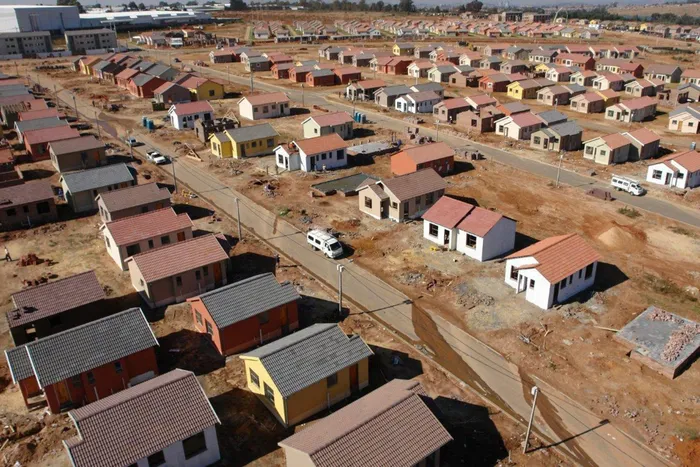
Recent developments in the South Africa housing market suggest that buyer activity is becoming less sensitive to interest rates. Homes are selling faster than historical averages despite elevated borrowing costs, pointing to resilient demand and changing market dynamics.
Key Overview
- Homes are selling faster despite high interest rates.
- Average selling time declined to 10 weeks and six days.
- Long-term average selling time is around 13 weeks.
- Buyer demand appears less dependent on borrowing costs.
- Pricing and online listings are influencing buyer decisions.
- Digital access to property information has increased competition.
- Residential developers continue to expand housing supply.
- More than 30,000 housing opportunities have been created by Thorntree Developments.
- Calls have been made to expand first-time buyer support.
- Demand remains resilient amid economic uncertainty.
South Africa Property Market Defies High Interest Rates
The South Africa property market is showing unexpected resilience as homes continue to sell faster despite elevated interest rates.
Traditionally, rising borrowing costs have slowed housing activity and extended the amount of time properties remain on the market. However, recent data suggest that this long-standing relationship has weakened.
According to Sandra Gordon, an independent research economist, even the aggressive post-pandemic rate hiking cycle failed to push average selling times above the long-term average of 13 weeks.
Instead, the latest FNB Estate Agent Survey shows that the national average time required to sell a property declined by one week to 10 weeks and six days during the second quarter of 2026.
The trend indicates that buyer activity is proving more resilient than many analysts had anticipated.
This shift suggests that factors beyond interest rates are increasingly shaping housing demand and influencing market behavior.
Context is everything. Stay ahead of shifting trends with today’s market updates, and uncover emerging opportunities using the Serrari Group Market Index and Marketplace. Then, take control of your own financial future by exploring our Money & Life Reset Transformation Blueprint ™ to build stronger habits, create better systems, and design a path toward lasting wealth.
South Africa Housing Market Shows Unexpected Strength
The latest performance of the South Africa housing market highlights a significant departure from historical patterns.
Over the last 15 to 20 years, property demand has generally been closely linked to borrowing costs. Higher rates typically reduced affordability and lengthened selling periods.
However, the current cycle has delivered a different outcome.
Despite elevated interest rates, buyers continue to actively participate in the market, helping maintain relatively short selling times.
This resilience reflects changing consumer behavior and growing confidence among certain segments of the market.
It also suggests that many prospective buyers are adapting to the higher-rate environment rather than postponing their purchasing decisions.
The ability of the market to withstand rising rates demonstrates the underlying strength of housing demand across the country.
South African Real Estate Market Influenced by Digital Access
The South African real estate market has been transformed by increased access to online listings and property information.
According to Adrian Goslett, Chief Executive and Regional Director of RE/MAX Southern Africa, today’s buyers are better informed than ever before.
Prospective buyers can easily compare properties, evaluate pricing and assess market conditions before making decisions.
This abundance of information has made buyers more selective.
Properties perceived to be overpriced are often ignored rather than negotiated, forcing sellers to align asking prices more closely with prevailing market conditions.
Digital platforms have therefore increased transparency and competition.
As a result, pricing strategy has become one of the most important determinants of how quickly homes are sold.
This shift has changed the dynamics of the housing market and contributed to greater efficiency.
Homes Sales South Africa Continue to Outperform Expectations
Recent home sales South Africa data indicate that transaction activity remains stronger than expected.
The decline in average selling times suggests that buyers continue to enter the market despite economic uncertainty.
Strong demand has helped prevent the significant slowdown that many analysts feared would accompany higher borrowing costs.
The resilience of home sales demonstrates that affordability challenges have not entirely suppressed buyer appetite.
Instead, households appear to be adjusting their expectations and focusing on properties that offer value.
This adaptability has helped sustain transaction volumes and maintain healthy levels of activity within the market.
While rising rates have undoubtedly increased financing costs, they have not eliminated demand.
Consequently, the housing sector has remained more robust than many observers anticipated.
Property Demand South Africa Remains Resilient
The latest trends suggest that property demand in South Africa continues to exhibit considerable strength.
Population growth, urbanization and the desire for homeownership continue to support the market.
Developers are also responding to demand by expanding housing supply.
Thorntree Developments, formerly known as Valumax, has accumulated more than four decades of experience within the residential sector.
Over this period, the company has delivered more than 30,000 housing opportunities.
These developments now support over 150,000 residents.
According to the company, these projects represent more than simple growth figures.
They reflect the transition of thousands of families from uncertainty and renting into stable homeownership.
Continued investment in housing development highlights confidence in the long-term prospects of the sector.
Residential Property Market Supported by Housing Programs
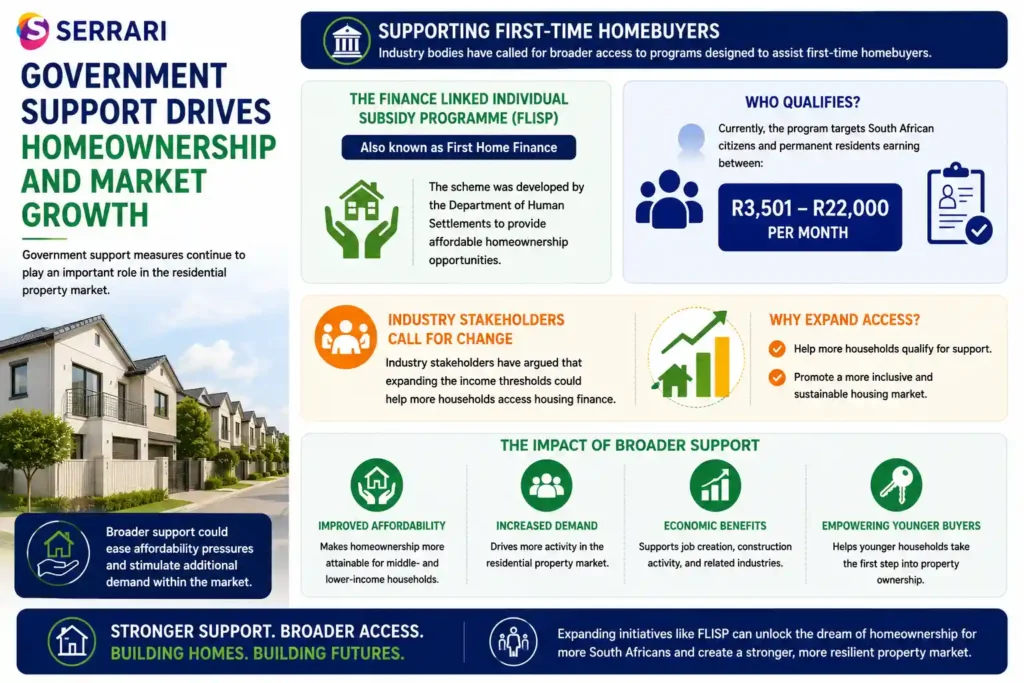
Government support measures continue to play an important role in the residential property market.
Industry bodies have called for broader access to programs designed to assist first-time homebuyers.
One such initiative is the Finance Linked Individual Subsidy Programme (FLISP), also known as First Home Finance.
The scheme was developed by the Department of Human Settlements to provide affordable homeownership opportunities.
Currently, the program targets South African citizens and permanent residents earning between R3,501 and R22,000 per month.
Industry stakeholders have argued that expanding the income thresholds could help more households access housing finance.
Broader support could ease affordability pressures and stimulate additional demand within the market.
Such measures may prove particularly valuable in helping younger buyers enter the property sector.
Housing Market Trends Point to Structural Changes
Emerging housing market trends suggest that the South African property sector is undergoing structural changes.
Interest rates remain important, but they no longer appear to be the sole determinant of buyer activity.
Digital access to information, pricing transparency and evolving consumer preferences are becoming increasingly influential.
Buyers are demonstrating greater adaptability and are making more informed decisions.
At the same time, developers continue investing in housing projects and governments are exploring ways to improve affordability.
These factors are helping sustain demand despite elevated financing costs.
If these trends persist, the relationship between interest rates and housing activity may remain weaker than it was in previous decades.
This could fundamentally reshape the way analysts evaluate property market cycles.
Conclusion
The South Africa property market has shown remarkable resilience despite elevated interest rates. Faster selling times and continued buyer activity suggest that demand is increasingly influenced by factors beyond borrowing costs.
Improved access to information, competitive pricing and supportive housing initiatives are contributing to a more dynamic market. As structural changes continue to emerge, South Africa’s housing sector may be entering a new phase characterized by stronger and more resilient demand.
FAQs
1. How long does it currently take to sell a home in South Africa?
According to the latest FNB Estate Agent Survey, the average time required to sell a home fell to 10 weeks and six days during the second quarter of 2026. This is significantly below the long-term average of 13 weeks.
2. Why are homes selling quickly despite high interest rates?
Buyer demand appears to be less sensitive to borrowing costs than in previous years. Improved access to information, better pricing strategies and changing consumer behavior have helped maintain strong activity.
3. What role does online property information play?
Digital platforms allow buyers to compare homes and prices more easily. As a result, overpriced properties are often overlooked, making accurate pricing increasingly important for sellers.
4. What is the FLISP housing program?
The Finance Linked Individual Subsidy Programme, also known as First Home Finance, provides support to first-time homebuyers earning between R3,501 and R22,000 per month. Industry groups are advocating for broader eligibility to help more households access homeownership.
Sources: IOL, The Mercury
Your financial future isn’t something you wait for—it’s something you build.
The real question is: when do you begin?
Move beyond simply staying informed.
Navigate the markets with clarity—track trends through the Serrari Group Market Index, uncover opportunities in the Serrari Marketplace, and build practical knowledge with our Curated Wealth Builder Platform.
Stay connected to what truly matters.
Get daily insights on macro trends and financial movements across Kenya, Africa, and global markets—delivered through the Serrari Newsletter.
Growth opens doors.
Advance your career through professional programs including ACCA, HESI A2, ATI TEAS 7 , HESI EXIT , NCLEX – RN and NCLEX – PN, Financial Literacy!🌟—designed to move you forward with confidence.
See where money is flowing—clearly and in real time.
Track Money Market Funds, Treasury Bills, Treasury Bonds, Green Bonds, and Fixed Deposits, alongside global and African indexes, key economic indicators, and the evolving Crypto and stablecoin landscape—all within Serrari’s Market Index.