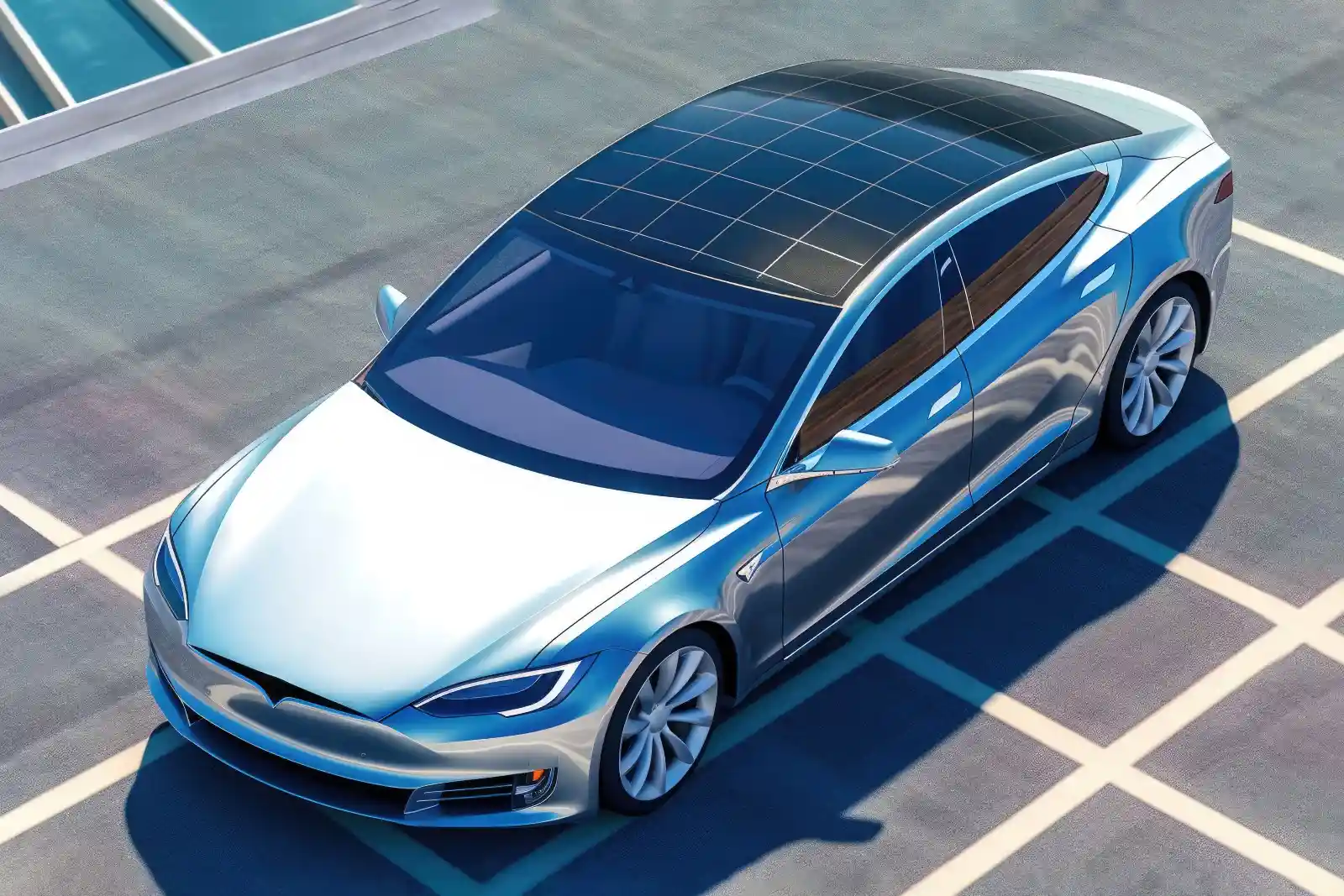
Oxford PV, a UK-based specialist in perovskite photovoltaic technology, has joined a major research initiative aimed at integrating solar capabilities directly into electric vehicles. The move represents a significant step toward redefining how EVs generate and use energy, with the potential to reduce reliance on external charging infrastructure and improve overall efficiency.
As electric vehicles become more widespread, one of the key challenges remains how to extend range and reduce dependency on charging networks. Integrating solar technology directly into the vehicle offers a complementary solution, enabling cars to generate small amounts of power during normal operation. While not a replacement for conventional charging, this approach introduces an additional energy source that can enhance performance and convenience.
The initiative, known as the SUITE (Smart Use of Integrated Technology for EV) project, is a collaborative research and development programme bringing together expertise from across the automotive, engineering, and academic sectors. It reflects growing momentum behind the idea that EVs can evolve from being purely energy consumers into systems that can also generate and manage energy more dynamically.
At its core, the project is focused on unlocking new efficiencies in electric mobility by embedding solar technology directly into vehicle design. This approach goes beyond traditional add-on solutions, aiming instead for seamless integration that aligns with vehicle structure, performance, and aesthetics. If successfully developed, such innovations could reshape how energy is utilized in transportation and open the door to new design possibilities for future EVs.
Markets move fast; don’t get left behind. We’ve paired the Serrari Group Market Index with a curated Marketplace and a comprehensive Wealth Builder Platform to ensure you have the data—and the skills—to act on it.
A Consortium Driving Innovation in Electric Mobility
The SUITE project is supported by the Advanced Propulsion Centre UK and funded by the UK government through its broader DRIVE35 programme, a long-term initiative aimed at accelerating the transition to zero-emission vehicles and strengthening the country’s automotive innovation ecosystem.
The consortium includes Nissan Technical Centre UK, alongside specialist engineering firms and leading universities. This combination of industry expertise and academic research is designed to fast-track both the development and eventual commercialization of solar-integrated EV technologies, ensuring that innovations move beyond theory and into practical application.
By bringing together multiple stakeholders, the project is able to address a wide range of challenges simultaneously. These include material science, energy efficiency, system integration, vehicle design, and manufacturability. Each partner contributes a specific area of expertise, creating a multidisciplinary environment that is well-suited to tackling complex technological problems.
This collaborative model is increasingly important in the development of next-generation mobility solutions, where breakthroughs often depend on the convergence of different fields. Through SUITE, the consortium is working to accelerate innovation while ensuring that solutions are viable for real-world deployment.
Perovskite Technology at the Core
At the center of Oxford PV’s contribution is its expertise in perovskite-on-silicon tandem solar cells—an advanced form of photovoltaic technology known for its high efficiency and lightweight characteristics. These next-generation solar cells represent a significant advancement over traditional photovoltaic technologies, offering improved performance without substantially increasing weight.
Unlike conventional silicon-based solar cells, perovskite-based solutions deliver higher power output per unit area, making them particularly well-suited for applications where space is limited. This is especially relevant for electric vehicles, where available surface area is constrained and additional weight can negatively impact range and efficiency.
Oxford PV’s role within the project will focus on adapting its technology for automotive use, ensuring that it meets the durability, flexibility, and performance standards required for integration into vehicle surfaces. This includes addressing factors such as exposure to varying weather conditions, mechanical stress, and long-term reliability.
The company’s technology is already among the closest to commercialization in the perovskite sector, with production underway at its facility in Germany. Its partnerships with major solar manufacturers further support its position within the industry, providing a pathway for scaling production and expanding applications.
By applying this advanced photovoltaic technology to electric vehicles, Oxford PV is helping to bridge the gap between solar energy and mobility—demonstrating how innovations in one sector can drive progress in another.
How Solar Integration Could Transform EV Performance
Vehicle-integrated solar technology offers a fundamentally different approach to energy use in electric vehicles, introducing the possibility of generating power directly from the vehicle itself. Instead of relying entirely on external charging infrastructure, EVs equipped with integrated solar panels can produce supplementary energy during normal operation, adding a new layer of efficiency to electric mobility.
This additional energy can contribute to improving overall vehicle performance by supporting core systems and extending driving range. In conditions where vehicles are exposed to sunlight for extended periods—such as during parking or long-distance travel—this supplementary generation can accumulate over time, offering incremental but meaningful gains.
While solar integration is unlikely to fully replace traditional charging methods, it can play a valuable supporting role in reducing overall energy consumption and enhancing convenience for drivers. For instance, it could help offset the energy demands of auxiliary systems such as climate control or onboard electronics, thereby preserving battery capacity for propulsion. Over time, even small efficiency gains can translate into noticeable improvements in range and reduced charging frequency.
The key challenge, however, lies in achieving sufficient power output without compromising critical aspects of vehicle design, including weight, aerodynamics, and overall performance. This is where high-efficiency, lightweight photovoltaic solutions—such as perovskite-based cells—offer a promising pathway, enabling solar integration without significantly altering vehicle dynamics.
Context is everything. While you follow today’s updates, use the Serrari Group Market Index and Marketplace to spot emerging shifts. Need to sharpen your edge? Our Wealth Builder Platform turns these insights into a professional-grade strategy.
Balancing Performance, Weight, and Design
One of the central challenges in integrating solar technology into vehicles is maintaining a careful balance between performance and practicality. Unlike stationary solar installations, vehicles operate under strict constraints, requiring components to be lightweight, durable, and capable of delivering meaningful energy output within limited surface areas.
Solar panels used in this context must therefore meet a unique set of requirements. They need to withstand varying environmental conditions, including temperature fluctuations, vibration, and exposure to the elements, while still maintaining consistent performance. At the same time, they must not add excessive weight, which could negatively impact the efficiency and range of the vehicle.
Perovskite-based solar cells are particularly well suited to this challenge due to their high power density and flexibility. These characteristics allow them to be integrated into different parts of a vehicle’s surface without significantly affecting structural integrity or overall weight. Their adaptability also opens up new possibilities for design, enabling more seamless incorporation into the vehicle’s exterior.
However, technical performance alone is not sufficient. The integration process must also align with established automotive design standards, ensuring that solar components do not interfere with safety systems, aesthetics, or user experience. Achieving this requires close collaboration between material scientists, engineers, and automotive designers, each contributing their expertise to ensure that the final solution is both functional and visually cohesive.
The SUITE project is specifically designed to address these complex challenges. By combining expertise from across disciplines, it aims to develop solutions that are not only technically viable but also scalable for commercial production, bridging the gap between innovation and real-world application.
Accelerating Toward Commercial Viability
A key objective of the SUITE programme is to move beyond early-stage research and toward commercially viable solutions that can be adopted within the automotive industry. While the concept of solar-integrated vehicles has been explored before, the focus here is on creating systems that can be realistically manufactured, deployed, and integrated into existing vehicle platforms.
By emphasizing real-world applications and manufacturability, the project aims to bridge the gap between laboratory innovation and market-ready products. This includes ensuring that technologies can be produced at scale, meet industry standards, and deliver consistent performance under everyday conditions.
According to David Ward, CEO of Oxford PV, the collaboration represents an important step toward unlocking the full potential of solar-integrated vehicles. By combining advanced photovoltaic technology with automotive-grade engineering and manufacturing expertise, the project is expected to open up new possibilities for improving EV efficiency and performance.
More broadly, the initiative aligns with ongoing efforts to accelerate innovation within the automotive sector, particularly in areas related to electrification and sustainability. As the industry continues to evolve, projects like SUITE highlight how cross-sector collaboration can help drive the development of next-generation solutions that are both practical and impactful.
Expanding the Role of Solar in Clean Energy Systems
Oxford PV’s participation in the SUITE project reflects a broader ambition to expand the application of perovskite solar technology beyond traditional energy generation.
While the company’s technology has primarily been used in utility-scale solar applications, vehicle integration represents a new frontier. By adapting its solutions for mobile use, Oxford PV is exploring how solar energy can be embedded into everyday systems in more dynamic ways.
This shift highlights the growing versatility of solar technology and its potential to contribute to a wider range of energy solutions, from buildings and infrastructure to transportation.
Supporting the UK’s Net Zero Ambitions
The SUITE project is part of a broader effort to support the UK’s transition to a net-zero economy. Through the DRIVE35 programme, the government is investing in collaborative research initiatives that aim to strengthen the automotive supply chain and accelerate the adoption of zero-emission vehicles.
By focusing on next-generation technologies such as vehicle-integrated solar, the programme is addressing key challenges in EV performance and sustainability. These efforts are intended to enhance the competitiveness of the UK’s automotive sector while contributing to long-term environmental goals.
The involvement of companies like Oxford PV further underscores the importance of innovation in achieving these objectives, particularly in areas where breakthroughs can deliver meaningful improvements in efficiency and performance.
Outlook: A New Layer of Efficiency for Electric Vehicles
The development of solar-integrated EVs represents a potentially significant evolution in electric mobility. While the technology is still in the development phase, projects like SUITE are laying the groundwork for future applications that could redefine how vehicles generate and use energy.
In the near term, the focus will remain on refining the technology, improving efficiency, and ensuring that integration can be achieved without compromising vehicle performance. If successful, these advancements could lead to the introduction of solar-assisted EVs that offer incremental but meaningful improvements in range and energy efficiency.
Over the longer term, the integration of solar technology into vehicles could become a standard feature, particularly as materials and efficiency continue to improve. This would add a new dimension to electric mobility, reducing reliance on charging infrastructure and enhancing overall sustainability.
For now, the collaboration between Oxford PV and its partners signals a clear direction of travel—one where innovation in solar technology and electric mobility converge to create more efficient, adaptable, and sustainable transportation solutions.
Your financial future isn’t something you wait for—it’s something you build.
The real question is: when do you begin?
Move beyond simply staying informed.
Navigate the markets with clarity—track trends through the Serrari Group Market Index, uncover opportunities in the Serrari Marketplace, and build practical knowledge with our Curated Wealth Builder Platform.
Stay connected to what truly matters.
Get daily insights on macro trends and financial movements across Kenya, Africa, and global markets—delivered through the Serrari Newsletter.
Growth opens doors.
Advance your career through professional programs including ACCA, HESI A2, ATI TEAS 7 , HESI EXIT , NCLEX – RN and NCLEX – PN, Financial Literacy!🌟—designed to move you forward with confidence.
See where money is flowing—clearly and in real time.
Track Money Market Funds, Treasury Bills, Treasury Bonds, Green Bonds, and Fixed Deposits, alongside global and African indexes, key economic indicators, and the evolving Crypto and stablecoin landscape—all within Serrari’s Market Index.