China is preparing to significantly scale up its clean energy capacity, with plans to double its supply of non-fossil fuel energy by 2035. The move marks a notable escalation in the country’s long-term energy strategy and is widely seen by analysts as a strong signal of Beijing’s commitment to accelerating its transition away from fossil fuels.
The announcement builds on broader policy direction outlined in China’s latest planning framework and reflects a growing sense of urgency to expand renewable energy sources at scale. As the world’s largest energy consumer and one of the largest emitters, China’s trajectory in clean energy development carries global significance, influencing not only domestic energy markets but also global supply chains, investment flows, and climate progress.
By setting a clear doubling target over the next decade, China is moving beyond incremental progress toward a more aggressive expansion of non-fossil energy sources. This shift suggests a stronger focus on both scaling generation capacity and increasing actual consumption of clean energy, pointing to a more integrated approach to the energy transition. It also signals that policymakers are increasingly prioritizing long-term structural change in the energy mix, rather than relying solely on gradual improvements.
Markets move fast; don’t get left behind. We’ve paired the Serrari Group Market Index with a curated Marketplace and a comprehensive Wealth Builder Platform to ensure you have the data—and the skills—to act on it.
A Clearer Roadmap Toward 2035 Targets
According to Wang Changlin, vice chairman of the National Development and Reform Commission, China will “significantly increase” its supply of non-fossil energy by 2030 before doubling it by 2035, using 2025 levels as the baseline.
This clarification provides greater detail on a 10-year action plan that was first referenced in the country’s 15th Five-Year Plan. At the time, the proposal lacked specificity, leaving key uncertainties around the timeline, the metrics being used, and whether the target referred to installed capacity or actual energy generation and consumption.
The updated comments help define the trajectory more clearly, pointing to a phased and structured approach. Early-stage efforts are likely to focus on expanding infrastructure and building capacity, while later stages could see accelerated deployment and utilization as projects come online and systems mature. This sequencing suggests a deliberate strategy aimed at ensuring both scale and sustainability in implementation.
Such a roadmap provides greater confidence to investors, developers, and policymakers by offering clearer signals on direction and timing. It also reduces uncertainty around execution, indicating that China is not only setting ambitious long-term targets but also outlining a more practical pathway for achieving them over time.
Hydropower and Desert Renewables to Drive Growth
A key component of China’s strategy will be the expansion of large-scale renewable energy infrastructure, with a strong emphasis on projects capable of delivering significant and sustained increases in clean energy output.
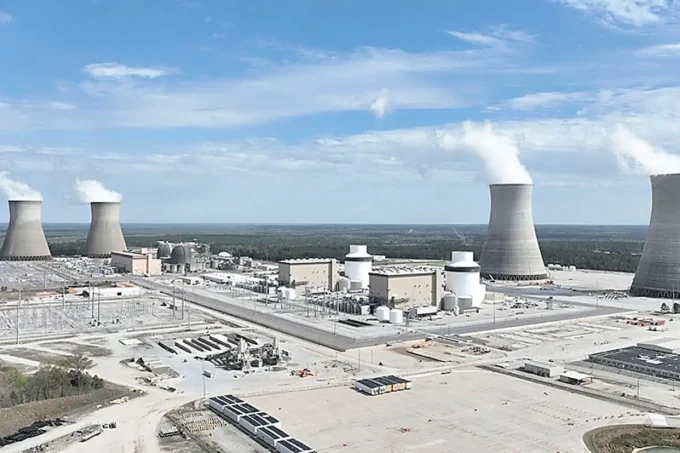
Among the flagship initiatives highlighted are a major hydropower project in Tibet and the development of large-scale renewable energy hubs in desert regions. These projects are designed to capitalize on China’s diverse natural resource base, enabling the country to generate renewable energy at scale while optimizing geographic advantages.
Desert-based renewable hubs are particularly significant in this context. These regions offer vast land availability combined with strong solar irradiation and wind resources, making them ideal for large-scale renewable deployment. By concentrating infrastructure in these areas, China can generate substantial volumes of clean energy while reducing constraints related to land use and population density. This approach also supports the creation of integrated energy systems, where solar, wind, and storage solutions can be developed in tandem.
Hydropower, meanwhile, continues to play a central and stabilizing role in China’s energy mix. As a reliable and dispatchable source of renewable electricity, it helps balance the variability associated with solar and wind generation. This makes it a critical component in maintaining grid stability as the share of intermittent renewable energy increases.
Together, these initiatives form the backbone of China’s strategy to rapidly expand non-fossil energy supply. By combining large-scale renewable hubs with established hydropower capacity, the country is building a diversified and resilient clean energy system capable of supporting its long-term transition goals.
More Ambitious Than Previous Targets
The new target is widely viewed as more ambitious than China’s earlier clean energy goals, marking a clear shift in the scale and pace of its energy transition strategy. Previously, the country aimed to have non-fossil energy account for 25% of total consumption by 2025 and 30% by 2035—targets that already required significant expansion of renewable capacity.
In contrast, the plan to double non-fossil energy supply over a decade represents a more aggressive and accelerated approach. Rather than focusing solely on percentage shares within the overall energy mix, the new goal emphasizes absolute growth in clean energy supply, which must be achieved alongside rising total energy demand.
Analysts suggest that if total energy demand increases at an annual rate of around 2.5%, doubling non-fossil consumption could push its share to approximately 29% as early as 2029. This would effectively bring forward progress toward long-term targets and potentially exceed earlier projections, indicating a faster-than-expected shift in the energy mix.
Such a shift suggests that China may be accelerating its clean energy transition more rapidly than previously anticipated. It reflects both domestic priorities—such as energy security and economic transformation—and increasing global pressure to reduce emissions and expand renewable energy deployment.
Context is everything. While you follow today’s updates, use the Serrari Group Market Index and Marketplace to spot emerging shifts. Need to sharpen your edge? Our Wealth Builder Platform turns these insights into a professional-grade strategy.
Analysts See Stronger Policy Momentum
According to analysts Lauri Myllyvirta and Belinda Schäpe from the Centre for Research on Energy and Clean Air, the implications of the plan depend largely on how the doubling target is interpreted in practice.
If the target refers to total consumption of non-fossil energy between 2025 and 2035, it could represent a significant step-up in ambition compared to existing benchmarks. This interpretation would imply not only an expansion in capacity but also a substantial increase in the actual use of clean energy across sectors.
Their analysis suggests that achieving this level of growth would require sustained investment, rapid deployment of renewable technologies, and continued scaling of infrastructure. It would also necessitate improvements in grid systems, transmission networks, and energy storage solutions to effectively integrate higher levels of renewable generation.
The fact that such targets are being discussed and clarified at a policy level highlights growing momentum behind clean energy within China’s planning framework. It signals a shift toward more defined and potentially more ambitious pathways, reinforcing the country’s role as a key driver of global energy transition trends.
Balancing Growth with Rising Energy Demand
One of the central challenges facing China’s energy transition is balancing the rapid expansion of clean energy with continued growth in overall energy demand. As the economy expands and industrial activity increases, total energy consumption is expected to rise steadily, creating additional pressure on the energy system.
This dynamic makes the goal of doubling non-fossil energy supply particularly significant. It requires not only scaling renewable energy capacity, but doing so at a pace that outstrips overall demand growth. In practical terms, this means that clean energy must account for a larger share of incremental energy supply, rather than simply keeping pace with rising consumption.
If demand continues to grow without a corresponding acceleration in clean energy deployment, gains in the energy mix could be diluted. This underscores the importance of both speed and scale in implementing renewable projects and integrating them into the broader energy system.
Achieving this balance will be critical in determining how quickly China can shift its overall energy mix and reduce reliance on fossil fuels. It will also play a key role in shaping the effectiveness of its long-term climate and energy strategies, as well as its ability to meet both domestic and international commitments.
Outlook: Accelerating the Clean Energy Transition
China’s plan to double its non-fossil energy supply by 2035 signals a stronger and more accelerated push toward clean energy, reinforcing its long-term commitment to transforming its energy system. By combining large-scale infrastructure projects—such as hydropower developments and desert-based renewable hubs—with clearer policy direction, the country is laying the groundwork for sustained and scalable growth in renewable energy capacity.
In the coming years, the pace of progress will depend heavily on execution. This includes not only how quickly projects are deployed, but also how effectively they are integrated into the national grid and supported by transmission networks and storage solutions. Continued clarity around targets, timelines, and implementation mechanisms will be essential in maintaining investor confidence, ensuring policy consistency, and sustaining momentum across the energy sector.
If successfully implemented, the plan could significantly reshape China’s energy mix, accelerating the shift away from fossil fuels and increasing the share of clean energy in overall consumption. It would also contribute meaningfully to global efforts to reduce emissions, given China’s scale and influence in the energy landscape.
At the same time, the strategy reinforces China’s position as a central player in the global energy transition. Its policy direction, investment patterns, and technological deployment are likely to influence trends far beyond its borders, shaping how other economies approach the transition to cleaner energy systems.
Your financial future isn’t something you wait for—it’s something you build.
The real question is: when do you begin?
Move beyond simply staying informed.
Navigate the markets with clarity—track trends through the Serrari Group Market Index, uncover opportunities in the Serrari Marketplace, and build practical knowledge with our Curated Wealth Builder Platform.
Stay connected to what truly matters.
Get daily insights on macro trends and financial movements across Kenya, Africa, and global markets—delivered through the Serrari Newsletter.
Growth opens doors.
Advance your career through professional programs including ACCA, HESI A2, ATI TEAS 7 , HESI EXIT , NCLEX – RN and NCLEX – PN, Financial Literacy!🌟—designed to move you forward with confidence.
See where money is flowing—clearly and in real time.
Track Money Market Funds, Treasury Bills, Treasury Bonds, Green Bonds, and Fixed Deposits, alongside global and African indexes, key economic indicators, and the evolving Crypto and stablecoin landscape—all within Serrari’s Market Index.