Serbia has authorised oil companies to use operational diesel reserves to stabilise domestic fuel supplies after historically low water levels on the Danube River sharply reduced fuel imports. The temporary measure aims to prevent shortages while the government works to maintain refinery operations and strengthen long-term energy security.
Key Overview
- Serbia approved the use of operational diesel reserves to support fuel supply.
- Low Danube water levels have reduced fuel imports to 30–40% of normal capacity.
- The government is seeking to maintain operations at the Pančevo refinery.
- Reduced river transport and seasonal demand are increasing supply pressures.
- Low river flows are also threatening electricity generation across the region.
Serbia Releases Diesel Reserves to Ease Fuel Supply Pressure
Serbia has approved requests from oil companies to access operational Eurodiesel reserves after exceptionally low water levels on the Danube River disrupted fuel imports and increased pressure on the country’s energy supply.
The decision, announced by Energy Minister Dubravka Đedović Handanović, is intended to ensure stable fuel availability while avoiding the use of the country’s strategic state fuel reserves.
The temporary measure comes as Serbia faces a combination of reduced import capacity, seasonal demand growth and growing uncertainty in global energy markets.
Low Danube Water Levels Hit Fuel Imports
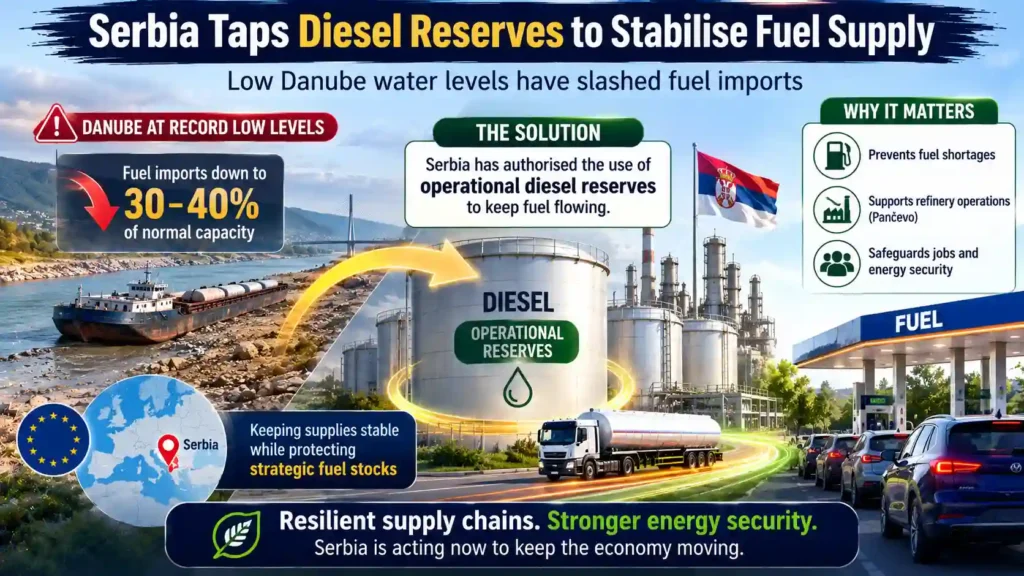
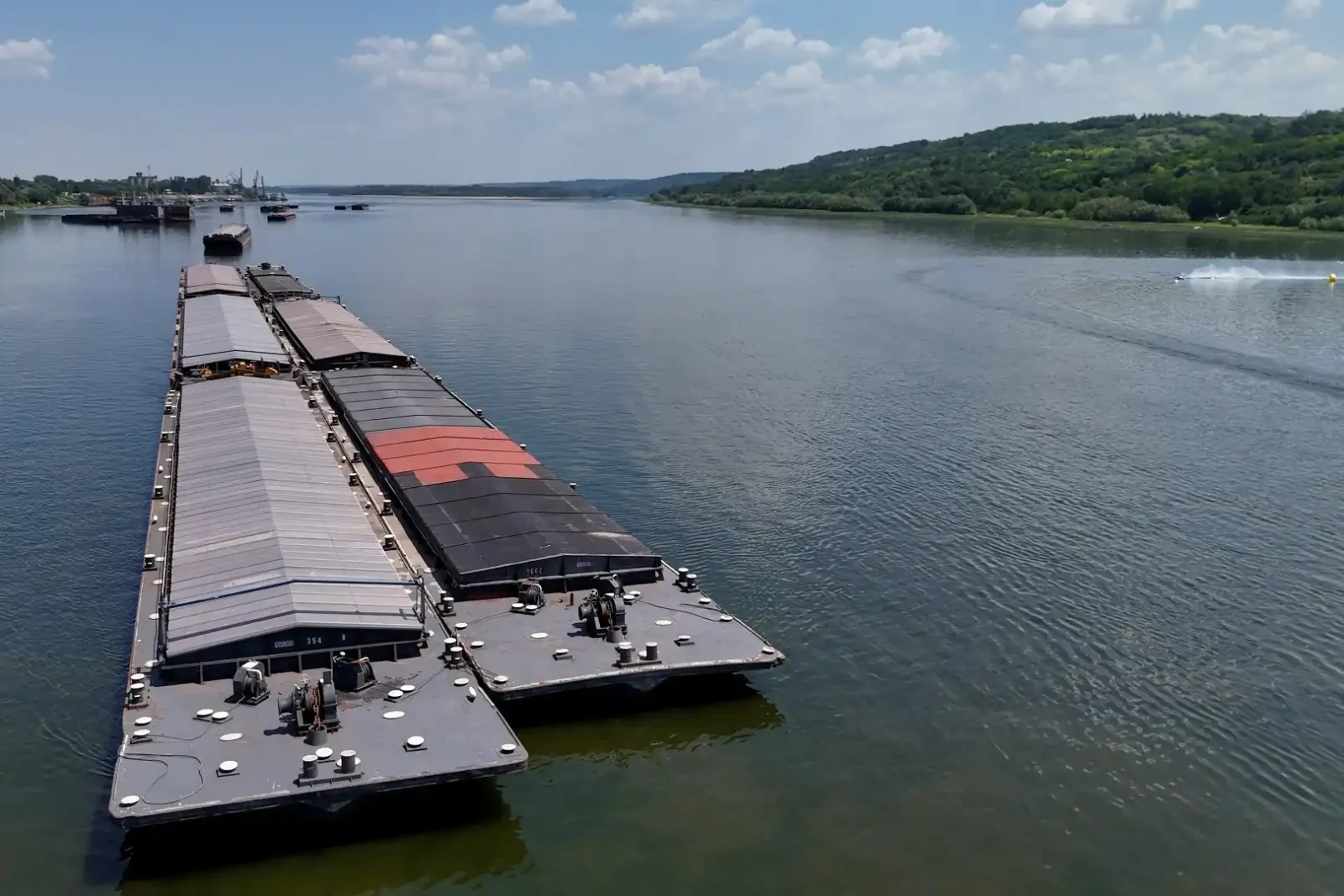
The Danube River is one of Serbia’s most important transport corridors for petroleum products.
However, unusually low water levels have forced barges to operate at only 30 – 40% of capacity, significantly reducing planned fuel imports.
The government said alternative transport options, including rail and road freight, cannot fully compensate for the reduced river shipments, creating short-term supply constraints across the domestic market.
To bridge the gap, oil companies will temporarily draw from legally required operational fuel reserves, which must later be replenished once imports return to normal.
Operational Reserves Protect Strategic Fuel Stocks
The Ministry of Mining and Energy stressed that operational reserves differ from the country’s strategic emergency reserves.
By allowing companies to access their own operational stocks, Serbia can maintain market stability without reducing government-controlled emergency fuel inventories.
The ministry said the reserves will be restored within an agreed timeframe after import conditions improve.
The government will also allow NIS, Serbia’s largest oil company, to make part of its operational reserves available to other fuel suppliers experiencing shortages due to reduced imports.
Pančevo Refinery Remains Critical
Officials emphasised that continued operation of the Pančevo refinery is essential for maintaining Serbia’s long-term fuel security.
The government is working to extend the refinery’s operating licence, which is due to expire on July 31, allowing NIS to continue importing crude oil and maximise domestic fuel production.
Maintaining refinery output is expected to help offset lower imported fuel volumes and support rising summer demand.
To further ease pressure on consumers and businesses, the Serbian government has also reduced excise duties on petroleum products by 20 per cent.
Context is everything. Stay ahead of shifting trends with today’s market updates, and uncover emerging opportunities using the Serrari Group Market Index and Marketplace. Then, take control of your own financial future by exploring our Money & Life Reset Transformation Blueprint ™ to build stronger habits, create better systems, and design a path toward lasting wealth.
Energy Challenges Extend Beyond Fuel
The low water levels affecting fuel imports are also creating wider energy challenges.
Historically low river flows are threatening electricity generation, particularly for hydropower facilities that depend on adequate river volumes.
At the same time, Serbia continues to navigate uncertainty surrounding the ownership of NIS.
Hungary’s MOL Group and Russia’s Gazprom Neft are working to finalise the sale of a 56.15 per cent majority stake in the company, a transaction that requires approval from the U.S. Treasury Department.
Meanwhile, Serbia has agreed to acquire an additional 5 per cent stake in NIS once the ownership transaction is completed.
Broader Implications for Energy Security
The current disruption highlights the vulnerability of fuel supply chains to climate-related events such as prolonged drought and declining river levels.
As inland waterways become less reliable during periods of extreme weather, governments may need to diversify fuel transport routes, strengthen storage capacity and improve domestic refining capabilities.
For Serbia, maintaining refinery operations while protecting strategic fuel reserves has become central to ensuring uninterrupted energy supplies during periods of logistical disruption.
The situation also underscores the growing link between climate impacts and energy security across Europe, where lower river levels increasingly affect both fuel transport and electricity generation.
Outlook
Serbia’s decision to release operational diesel reserves provides a short-term solution to fuel supply disruptions caused by low Danube water levels. However, the situation highlights broader challenges facing Europe’s energy sector as climate-related droughts increasingly disrupt transport and power generation. Continued investment in resilient fuel infrastructure, diversified logistics networks and secure domestic refining capacity will be essential to strengthening long-term energy security.
FAQs
1. Why is Serbia releasing diesel reserves?
Low water levels on the Danube have significantly reduced fuel imports, prompting the government to allow companies to use operational diesel reserves to maintain domestic supply.
2. How much have fuel imports been affected?
River transport is operating at only 30% to 40% of normal capacity because barges cannot carry full loads in shallow water.
3. What is the difference between operational and state fuel reserves?
Operational reserves are fuel stocks that companies are legally required to hold for commercial operations, while state reserves are strategic emergency supplies controlled by the government.
4. Why is the Pančevo refinery important?
The refinery is Serbia’s main domestic fuel production facility, and keeping it operating at full capacity helps offset reduced imports and strengthen national energy security.
Sources: Balkan Green Energy News, SeeNews, CEEnergynews
Your financial future isn’t something you wait for—it’s something you build.
The real question is: when do you begin?
Move beyond simply staying informed.
Navigate the markets with clarity—track trends through the Serrari Group Market Index, uncover opportunities in the Serrari Marketplace, and build practical knowledge with our Curated Wealth Builder Platform.
Stay connected to what truly matters.
Get daily insights on macro trends and financial movements across Kenya, Africa, and global markets—delivered through the Serrari Newsletter.
Growth opens doors.
Advance your career through professional programs including ACCA, HESI A2, ATI TEAS 7 , HESI EXIT , NCLEX – RN and NCLEX – PN, Financial Literacy!🌟—designed to move you forward with confidence.
See where money is flowing—clearly and in real time.
Track Money Market Funds, Treasury Bills, Treasury Bonds, Green Bonds, and Fixed Deposits, alongside global and African indexes, key economic indicators, and the evolving Crypto and stablecoin landscape—all within Serrari’s Market Index.