Morocco is currently dealing with the aftermath of a devastating earthquake that struck on Friday, with initial assessments indicating that the nation’s Gross Domestic Product (GDP) could face damage equivalent to 8 percent according to the United States Geological Survey (USGS). The survey has expressed serious concerns about the widespread destruction and extensive economic losses caused by the quake.
Based on Morocco’s 2022 GDP estimate of $134.18 billion, the potential economic losses are estimated at around $10.7 billion. The USGS, utilizing its Prompt Assessment of Global Earthquakes for Response (Pager) system, issued a red alert, emphasizing the substantial economic losses Morocco could incur.
The Pager system, a highly sophisticated automated tool, evaluates earthquake impacts by analyzing population exposure to varying levels of shaking intensity. It employs models to forecast economic and fatality losses, utilizing historical earthquake data specific to each region.
For Morocco, the prospect of such significant economic losses is a serious concern. Strong earthquakes can paralyze economic activities and lead to substantial reconstruction costs. A stark example is the earthquake that struck Turkey and Syria in February, resulting in an estimated $5.1 billion in direct physical damages in Syria alone, as reported by the World Bank. Turkey faced economic losses exceeding $25 billion, with recovery efforts expected to span several years.
To provide context, the cost of reconstruction following the devastating 7.8-magnitude tremor in February, which claimed over 50,000 lives, surpassed $100 billion, according to the United Nations. This earthquake ranked fifth in terms of economic impact, trailing behind seismic events in California (1994, $44 billion), Sichuan in China (2008, $85 billion), Hyogo in Japan (1995, $100 billion), and Tohoku in Japan (2011, $210 billion), based on data from Statista.
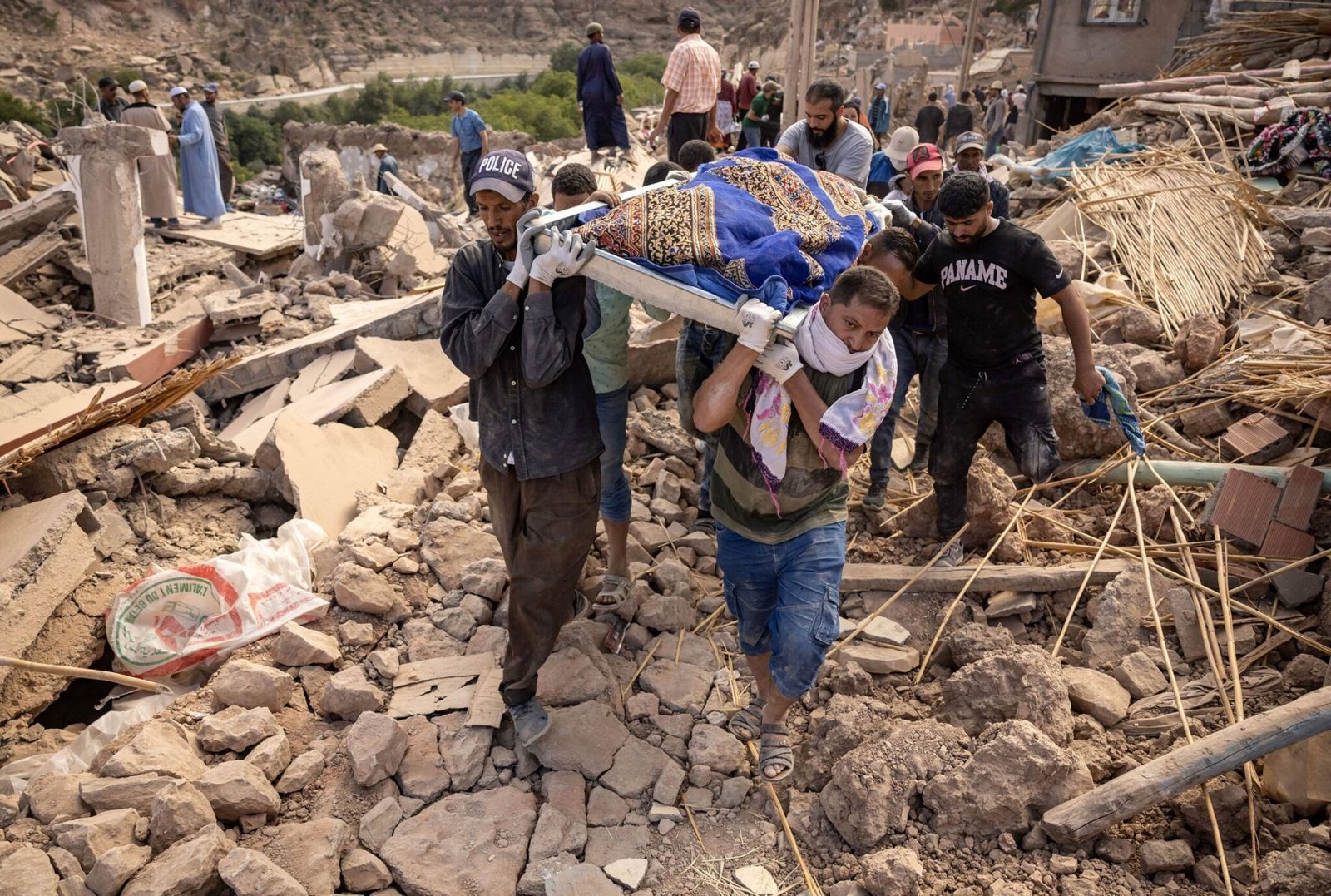
The epicenter of Morocco’s recent 6.8-magnitude earthquake was located at a depth of 18.5 kilometers in the Atlas Mountains, approximately 72 kilometers southwest of Marrakesh. Tragically, the quake has claimed more than 2,000 lives, according to the country’s Interior Ministry, with fatalities reported in Marrakesh and surrounding areas.
Morocco is no stranger to seismic risks, with two key areas of concern: the economically vital north and the Agadir Region, a prominent tourism center. The Organisation for Economic Co-operation and Development (OECD) has highlighted these areas as particularly susceptible to earthquakes.
In a show of solidarity, the International Monetary Fund (IMF), the World Bank, the European Commission, France, India, and the African Union issued a joint statement vowing to support Morocco in its recovery efforts. They committed to providing urgent short-term financial assistance and contributing to reconstruction endeavors, affirming their steadfast partnership with Morocco during these challenging times.
Morocco’s economy was already under strain due to domestic and international shocks, including a drought and surging commodity prices, as reported by the World Bank. The nation’s real GDP growth plummeted from 7.9 percent between 2021 and 2022 to a mere 1.2 percent, resulting in core inflation reaching 8.5 percent in February 2023, disproportionately affecting vulnerable households.
To combat these economic challenges, authorities have implemented measures such as untargeted subsidies, price regulations, and moderate monetary tightening, though these efforts have placed significant pressure on public finances.
Morocco’s status as a major tourist destination, boasting numerous UNESCO World Heritage sites, adds another layer of uncertainty. The extent of the earthquake’s impact on the tourism sector remains unclear. Tourism accounts for 7 percent of Morocco’s economic activity and employs over half a million people, according to Mordor Intelligence. The nation’s ability to rebuild and recover from this tragedy will depend on the combined efforts of both domestic and international partners.
As Morocco faces the immense task of rebuilding and healing, it is evident that the road ahead will be fraught with challenges, requiring steadfast cooperation and support from the global community.
Photo: Fadel Senna/AFP/Getty Images
By: Montel Kamau
Serrari Financial Analyst
12th September, 2023