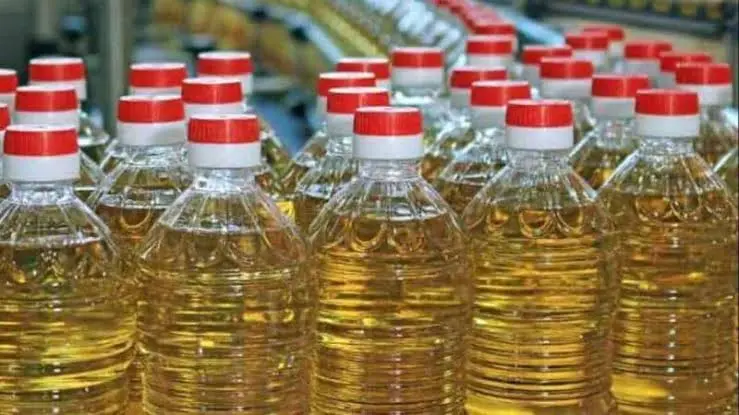
India’s edible oil imports rose to an estimated 1.49 million metric tons in July 2026, reaching their highest monthly level in 10 months. Refiners sharply increased purchases of palm oil and soyoil to rebuild depleted inventories before the country’s festival season, when demand for cooking oils typically strengthens.
Key Overview
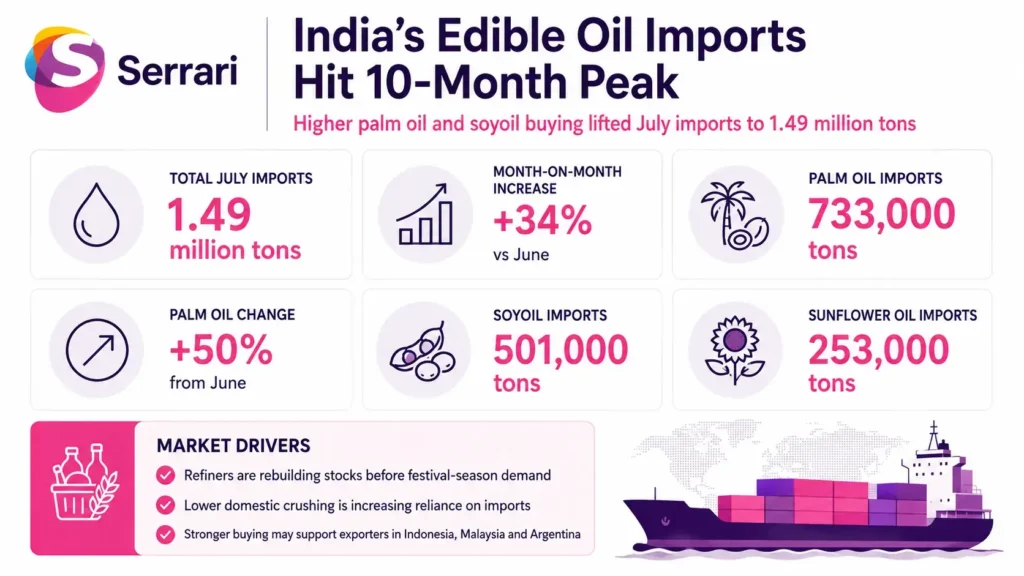
- Total edible oil imports increased 34% from June to 1.49 million metric tons.
- Palm oil imports jumped 50% to 733,000 metric tons.
- Soyoil purchases climbed 32% to 501,000 metric tons.
- Sunflower oil imports increased 4% to 253,000 metric tons.
- The figures exclude duty-free shipments entering India by land from Nepal.
- Official July import data is expected to be released by mid-August.
Palm and Soyoil Purchases Drive July Import Surge
India’s edible oil imports climbed to their highest level since September 2025 as refiners accelerated overseas purchases of the three main cooking oils used in the country.
According to average estimates from five dealers, palm oil imports surged 50% from the previous month to approximately 733,000 metric tons. This was the highest palm oil import volume recorded in five months.
Soyoil imports rose by 32% to around 501,000 metric tons, their highest level in seven months. Sunflower oil shipments increased more moderately, rising 4% to approximately 253,000 metric tons.
Combined imports of the three oils reached an estimated 1.49 million metric tons, representing a 34% month-on-month increase. The estimates exclude duty-free edible oil shipments arriving overland from neighbouring Nepal.
Palm oil remained the largest component of the import basket, accounting for almost half of the estimated July total. Soyoil represented approximately one-third, while sunflower oil accounted for most of the remaining volume.
Context is everything. Stay ahead of shifting trends with today’s market updates, and uncover emerging opportunities using the Serrari Group Market Index and Marketplace. Then, take control of your own financial future by exploring our Money & Life Reset Transformation Blueprint ™ to build stronger habits, create better systems, and design a path toward lasting wealth.
Festival Demand Prompts Refiners to Rebuild Stocks
The sharp increase followed several months of comparatively lower imports, which reduced inventories held by refiners and traders.
Indian refiners are now rebuilding stocks before a series of religious and cultural festivals between August and November. Household consumption, food manufacturing and commercial catering activity typically increase during this period, raising demand for cooking oils.
An earlier industry forecast projected that India could import an average of 1.5 million metric tons of edible oil each month between July and October. That would be higher than the monthly average of approximately 1.3 million metric tons recorded during the first eight months of the 2025/26 marketing year.
The forecast placed full-year imports at about 16.3 million metric tons, compared with 16 million metric tons during the previous marketing year.
Lower domestic crushing has also contributed to the renewed demand for imported oils. Supplies of soybeans and rapeseed from the previous harvest have been declining, reducing the amount of domestically produced oil available to refiners.
Competitive Prices Lift Soyoil Demand
Competitive international soyoil prices encouraged Indian buyers to increase purchases during July. Traders expect monthly soyoil imports to remain above 500,000 metric tons in both August and September if the current price advantage continues.
Palm oil is normally preferred by many Indian refiners because it is competitively priced, widely available and suitable for use in processed food, commercial kitchens and household cooking. However, refiners frequently switch between palm oil, soyoil and sunflower oil based on relative prices and refining margins.
The changing price relationship between the three oils therefore plays a major role in determining India’s monthly import composition.
Government figures show that imported oils supplied 56.25% of India’s edible oil requirements during 2023/24. Although domestic oilseed production has increased, consumption growth continues to leave the country heavily reliant on international suppliers.
India produced an estimated 40.99 million metric tons of nine cultivated oilseeds during 2025/26, according to the government’s edible oil sector assessment. However, domestic production and crushing remain insufficient to meet total national demand.
Higher Buying Could Support Global Oil Markets
India is one of the world’s largest buyers of vegetable oils, meaning changes in its purchasing volumes can influence international prices and exporter inventories.
The country sources most of its palm oil from Indonesia and Malaysia. Soyoil and sunflower oil are purchased mainly from Argentina, Brazil, Russia and Ukraine, although trading patterns can change depending on availability, freight costs and geopolitical conditions.
The rise in Indian purchases could help Indonesia and Malaysia reduce palm oil stocks while supporting benchmark palm oil futures. Increased soyoil demand could similarly benefit exporters in Argentina and Brazil and provide support to international soyoil prices.
Earlier in 2026, Indian buyers had reduced purchases as elevated vegetable oil prices weakened refining margins. The pullback in import activity contributed to the inventory decline that refiners are now attempting to reverse.
Official Industry Data Still Pending
The July volumes remain provisional because they are based on estimates collected from market dealers. The Solvent Extractors’ Association of India, which publishes the industry’s closely followed monthly import statistics, is expected to release its official July report by mid-August.
Its latest available vegetable oil import report covers the period from November 2025 to June 2026.
Official figures could differ slightly from dealer estimates because of shipment timing, port clearances and the classification of cargoes. Nevertheless, the estimated July increase supports expectations that Indian edible oil imports will remain elevated as refiners prepare for stronger festival-season consumption.
Sources: Reuters / Solvent Extractors’ Association of India / Government of India
Your financial future isn’t something you wait for—it’s something you build.
The real question is: when do you begin?
Move beyond simply staying informed.
Navigate the markets with clarity—track trends through the Serrari Group Market Index, uncover opportunities in the Serrari Marketplace, and build practical knowledge with our Curated Wealth Builder Platform.
Stay connected to what truly matters.
Get daily insights on macro trends and financial movements across Kenya, Africa, and global markets—delivered through the Serrari Newsletter.
Growth opens doors.
Advance your career through professional programs including ACCA, HESI A2, ATI TEAS 7 , HESI EXIT , NCLEX – RN and NCLEX – PN, Financial Literacy!🌟—designed to move you forward with confidence.
See where money is flowing—clearly and in real time.
Track Money Market Funds, Treasury Bills, Treasury Bonds, Green Bonds, and Fixed Deposits, alongside global and African indexes, key economic indicators, and the evolving Crypto and stablecoin landscape—all within Serrari’s Market Index.