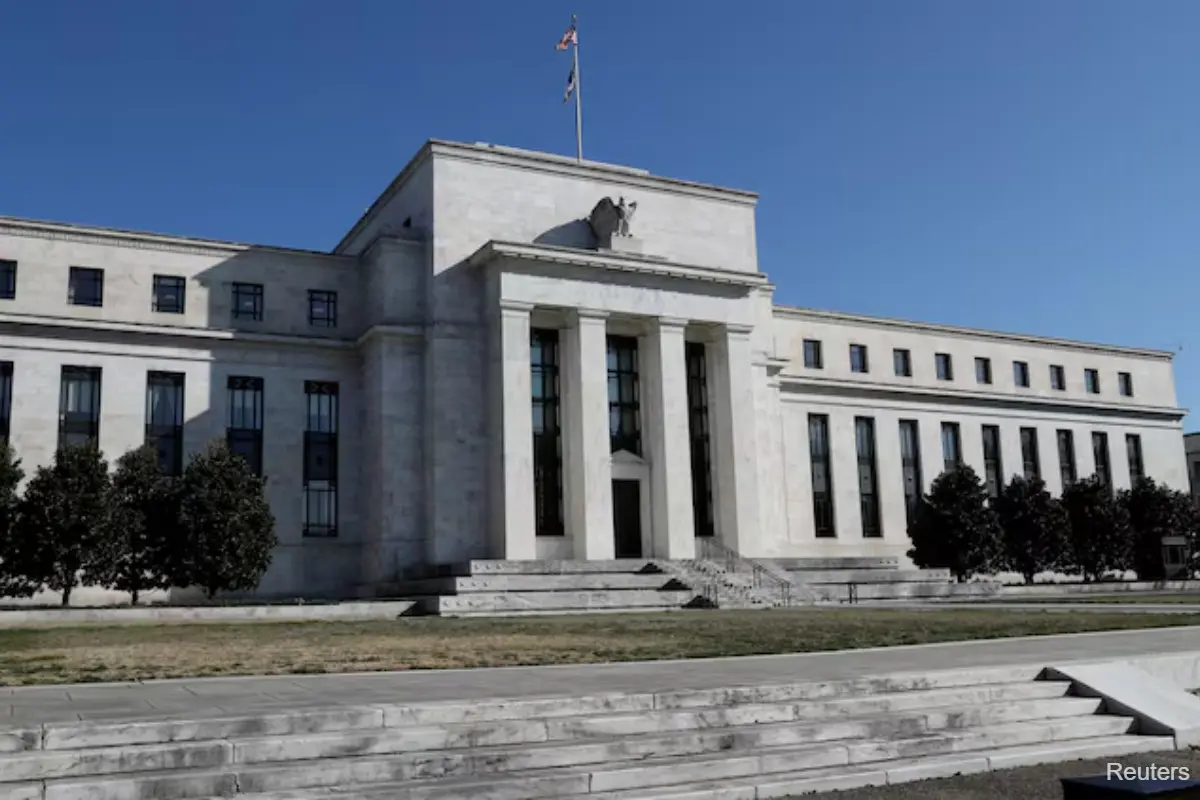
Goldman Sachs and JPMorgan now expect the US Federal Reserve to raise interest rates by 25 basis points at its September 15–16 meeting after stronger inflation data and surging energy prices sharply shifted expectations for monetary policy.
The change represents a significant reversal in the outlook for US interest rates. Investors had previously expected the Fed to remain on hold, but markets were pricing roughly a 90% probability of a September hike by September 14, up from about 70% before the latest inflation reports were released.
A quarter-point increase would lift the federal funds target range from 3.50%–3.75% to 3.75%–4.00%, reinforcing expectations that borrowing costs could remain elevated for longer.
Key Overview
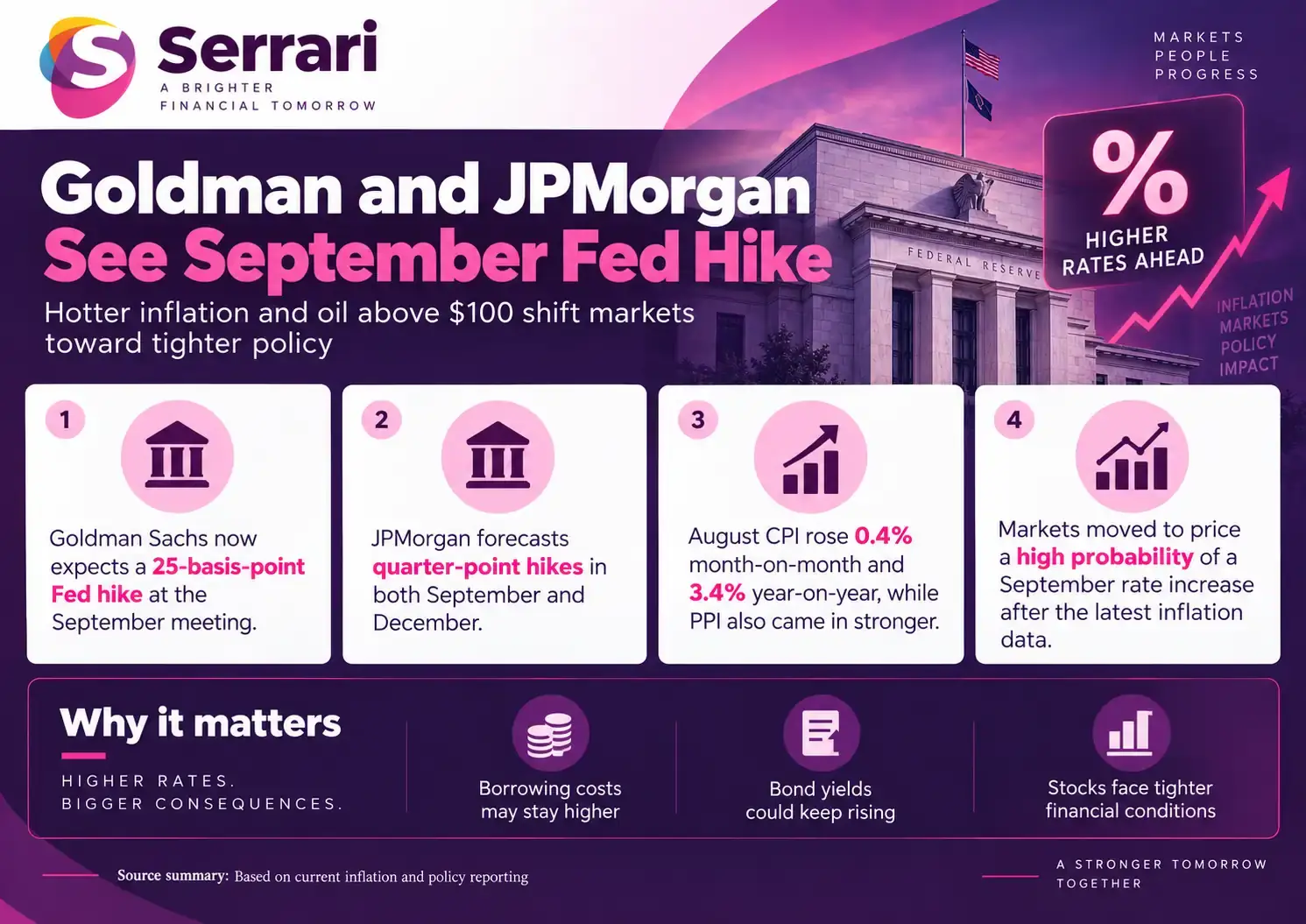
- Goldman Sachs now expects a 25-basis-point Fed rate hike in September.
- JPMorgan forecasts quarter-point increases in both September and December.
- August consumer prices rose 0.4% from July and 3.4% from a year earlier.
- Producer prices climbed 0.4% monthly and 5.4% annually.
- Oil prices above $100 a barrel are creating additional inflation pressure.
- Markets now see a September rate increase as the overwhelmingly likely outcome.
Inflation Data Changes the Fed Outlook
The latest shift in expectations followed two inflation reports that complicated the argument that US price pressures were steadily easing.
The Consumer Price Index increased 0.4% in August, compared with a 0.1% increase in July, while headline inflation accelerated to 3.4% over the previous 12 months.
Core inflation, which excludes food and energy, rose 0.3% during August and 2.4% year-on-year. Gasoline prices alone increased 3.9% during the month and accounted for more than one-third of the rise in headline consumer prices.
Pressure was also visible earlier in the production chain. The Producer Price Index rose 0.4% during August, while final-demand prices were 5.4% higher than a year earlier.
Taken together, the figures increased concern that businesses could continue passing higher input costs to consumers, complicating the Fed’s attempt to return inflation sustainably toward its 2% goal.
Goldman and JPMorgan Turn More Hawkish
Goldman Sachs had previously expected policymakers to leave rates unchanged. It has now shifted to a quarter-point increase in September as the probability of a hike became increasingly embedded in financial markets.
JPMorgan has gone further, forecasting a second 25-basis-point increase in December. The bank also raised its estimate of the long-run policy rate to 3.25% after concluding that recent data had weakened the case for a sustained disinflationary trend.
Goldman still sees the latest move somewhat differently. While expecting a hike this week, the bank continues to forecast rate reductions in 2027, although those cuts are now expected later than previously anticipated.
The growing hawkish consensus extends beyond the two banks. A survey of economists found 85% expected a September increase, highlighting how quickly expectations have changed following the latest inflation figures.
Context is everything. Stay ahead of shifting trends with today’s market updates, and uncover emerging opportunities using the Serrari Group Market Index and Marketplace. Then, take control of your own financial future by exploring our Money & Life Reset Transformation Blueprint ™ to build stronger habits, create better systems, and design a path toward lasting wealth.
Oil Above $100 Adds Another Inflation Risk
Energy markets have become another major challenge for policymakers.
Renewed conflict in the Middle East has pushed Brent crude above $100 a barrel amid disruptions to regional production and shipping. Oil traders remain cautious about how quickly normal flows can return through key transport routes.
The surge in crude prices has intensified inflation concerns because energy costs eventually feed into transport, manufacturing, logistics and household expenses.
That creates a difficult policy environment. Raising rates cannot produce more oil or directly resolve geopolitical supply disruptions, but the Fed may tighten policy to prevent an energy shock from spreading into broader inflation expectations and wages.
Fed Was Already Divided in July
The September debate did not emerge suddenly.
At its July meeting, the Fed held its target range at 3.50%–3.75%, but three policymakers dissented and preferred an immediate 25-basis-point increase.
The central bank said economic activity was expanding at a solid pace and inflation remained above its 2% objective, partly because of supply shocks affecting energy and other sectors.
That earlier division now looks increasingly important. Stronger August inflation and another rise in oil prices have strengthened the case made by policymakers who wanted tighter monetary policy in July.
What a September Hike Would Mean for Markets
A quarter-point increase would probably have consequences beyond short-term interest rates.
Treasury yields have already moved sharply higher, with the 10-year yield crossing 5% as investors price a prolonged period of restrictive monetary policy and renewed inflation risks.
Higher policy rates can also raise financing costs for households and businesses through credit cards, corporate debt, car loans and other borrowing products.
For equity markets, the challenge is twofold. Higher interest rates increase the discount rate applied to future corporate profits while government bonds become more attractive relative to riskier assets.
The September 15–16 meeting therefore represents more than another routine rate decision. Policymakers must decide whether persistent inflation and a new energy shock warrant renewed tightening after holding rates steady through much of 2026.
If the Fed raises rates as markets now expect, attention will quickly turn to whether September represents a one-off insurance move or the beginning of another tightening cycle stretching into December and potentially 2027.
Sources: Reuters / U.S. Bureau of Labor Statistics / Federal Reserve
Your financial future isn’t something you wait for—it’s something you build.
The real question is: when do you begin?
Move beyond simply staying informed.
Navigate the markets with clarity—track trends through the Serrari Group Market Index, uncover opportunities in the Serrari Marketplace, and build practical knowledge with our Curated Wealth Builder Platform.
Stay connected to what truly matters.
Get daily insights on macro trends and financial movements across Kenya, Africa, and global markets—delivered through the Serrari Newsletter.
Growth opens doors.
Advance your career through professional programs including ACCA, HESI A2, ATI TEAS 7 , HESI EXIT , NCLEX – RN and NCLEX – PN, Financial Literacy!🌟—designed to move you forward with confidence.
See where money is flowing—clearly and in real time.
Track Money Market Funds, Treasury Bills, Treasury Bonds, Green Bonds, and Fixed Deposits, alongside global and African indexes, key economic indicators, and the evolving Crypto and stablecoin landscape—all within Serrari’s Market Index.