



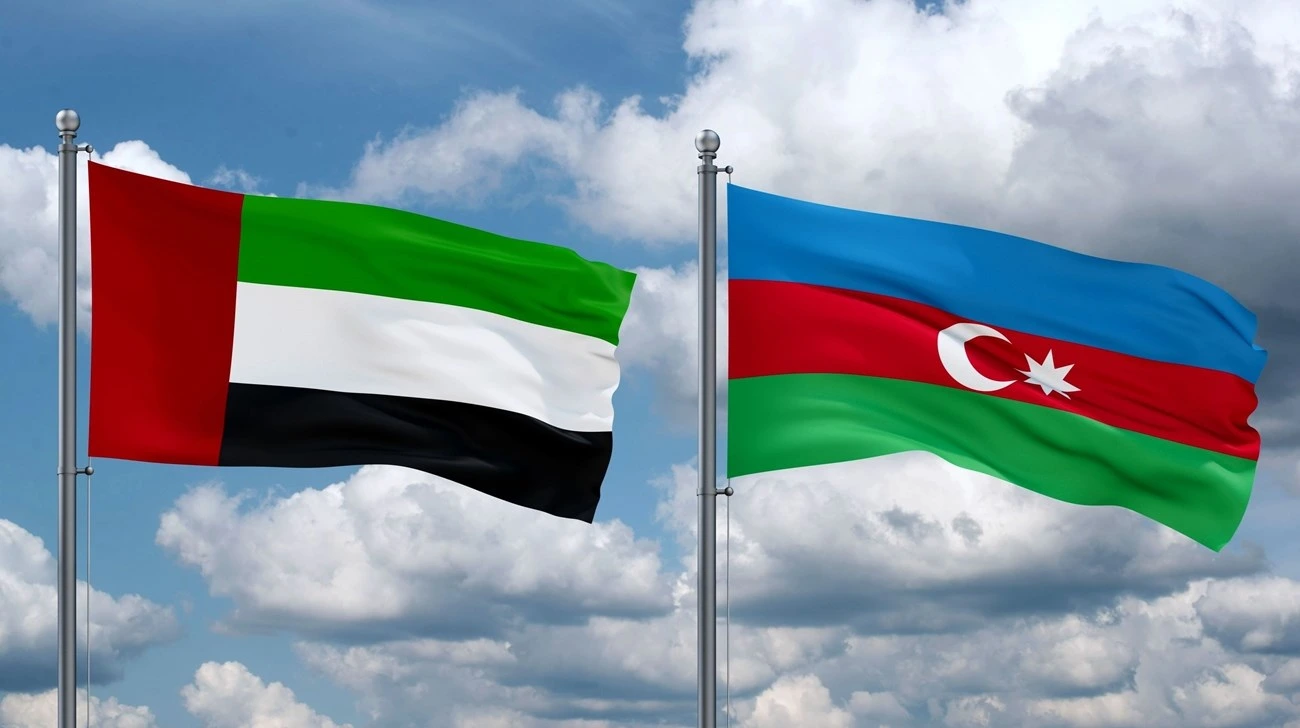
The Comprehensive Economic Partnership Agreement (CEPA) between the United Arab Emirates and Azerbaijan has officially entered into force, and while the deal is primarily structured around trade, tariffs, and investment, its clearest near-term impact is being felt in tourism. Officials in Abu Dhabi and Baku have framed travel, hospitality, and cultural exchange as priority pillars of the partnership, launching joint tourism exhibitions and coordinated promotional campaigns that aim to position the two countries as a combined multi-destination hub linking the Middle East, the Caucasus, and Europe. With more than 185 monthly flights already connecting the two nations and bilateral non-oil trade surpassing $2.2 billion in 2025, the tourism implications of the agreement extend well beyond a routine post-signing announcement — they signal a deliberate pivot to use a trade deal as connective tissue for a broader Eurasian visitor economy.
Key Overview
- The UAE-Azerbaijan CEPA officially entered into force in mid-April 2026, cutting tariffs on most goods and introducing Azerbaijan’s first ever dedicated services chapter in a trade deal.
- Tourism, hospitality, aviation, and cultural exchange have been named explicit priority sectors under the partnership.
- More than 185 monthly direct flights already connect Dubai and Baku, operated by Azerbaijan Airlines, flydubai, Air Arabia, and others.
- Non-oil bilateral trade has crossed $2.2 billion, with the UAE remaining Azerbaijan’s largest Arab trading partner and the leading Arab investor, with investments exceeding $1 billion.
- Independent analysis estimates the CEPA will add roughly $680 million to UAE GDP and $300 million to Azerbaijan’s economy by 2031.
- Both governments have agreed to run joint tourism exhibitions, events, and conferences to market themselves as complementary multi-destination offerings.
Markets move fast; don’t get left behind. We’ve paired the Serrari Group Market Index with a curated Marketplace and a comprehensive Wealth Builder Platform to ensure you have the data—and the skills—to act on it.
For all the focus trade-deal coverage tends to put on tariff schedules, the UAE-Azerbaijan CEPA is being rolled out with an unusually explicit travel-and-tourism narrative. The agreement officially entered into force on Tuesday, according to the UAE Ministry of Foreign Trade, opening the door to lower tariffs, easier market access and fresh investment opportunities for businesses in the Emirates. UAE President Sheikh Mohamed bin Zayed Al Nahyan and Azerbaijani President Ilham Aliyev witnessed the original signing in July 2025, setting the stage for the implementation phase that has now arrived.
What makes this particular CEPA more than a standard tariff reduction exercise is the way its services component has been packaged around travel. The CEPA is notable as Azerbaijan’s first trade agreement to include a dedicated services chapter, expected to generate significant opportunities in sectors such as finance, consulting, construction, and professional services — with tourism, hospitality, and aviation sitting squarely in that services envelope. Industry analysts quoted around the entry-into-force milestone noted that tourism stands to benefit disproportionately because the sector has historically been constrained more by regulatory friction and bilateral coordination than by raw demand.
That demand-side case is strong. On the day the agreement came into effect, Minister of Foreign Trade Thani bin Ahmed Al Zeyoudi framed the deal as a “transformative milestone,” highlighting logistics, renewable energy, advanced manufacturing and services alongside tourism as priority corridors. The explicit tourism framing has also filtered down into industry-level reporting, with sector publications describing the CEPA as a catalyst that places travel and cultural exchange at the centre of bilateral cooperation between Abu Dhabi, Dubai, and Baku.
Aviation: The 185-Flight Head Start
If the CEPA is the legal scaffolding of the new travel corridor, the aviation relationship between the two countries is the working engine that makes it viable on day one. The Dubai-Baku route is already one of the most densely served emerging-market pairs in the wider region. According to aggregated airline schedule data, the two cities are connected by 186 direct flights per week, with the most popular carriers including Azerbaijan Airlines, flydubai, Air Arabia, flynas, and Turkish Airlines on connecting routes. Google Flights data further confirms that flydubai alone operates 22 direct flights per week from Dubai to Baku, with Azerbaijan Airlines adding another 11 and Air Arabia 10.
That depth of connectivity matters for tourism in two practical ways. First, it creates competitive price points — one-way direct flights from Dubai to Baku routinely start below $160, putting the trip well within the discretionary-travel budget for mid-market Gulf and expatriate travellers. Second, it provides the frequency inbound tour operators need to build packaged itineraries that combine a Dubai or Abu Dhabi city-and-beach stay with a Baku cultural or ski add-on. Under a CEPA that explicitly welcomes joint tourism exhibitions, events and conferences to showcase cultural heritage, that kind of multi-destination product now has an official tailwind.
Azerbaijan has been openly targeting Gulf demand for several years, and the aviation base reflects that. Heydar Aliyev International Airport in Baku now serves more than 14 international destinations with 10 operating airlines, and demand from UAE-based travellers has been part of a broader Gulf inbound story that saw Azerbaijan welcome more than 2.6 million arrivals in 2024, according to the country’s State Tourism Agency — a 26% year-on-year rise.
The Demand Base: Real Numbers Behind the Corridor
The economics behind the tourism narrative are not speculative. Between January and May 2025, roughly 979,900 tourists travelled to Azerbaijan, a 1.5% year-on-year increase, with the UAE ranked among the top 10 source markets at around 2% of total arrivals. More importantly, growth from the UAE and Saudi Arabia accelerated by 17.5% over that period, one of the fastest expansions of any source-market segment. Gulf visitors tend to be higher-spending, multi-night travellers, which explains why Azerbaijan’s tourism authorities have been aggressive in courting the region.
For the UAE, Azerbaijan is a nimble test-bed for an increasingly outbound-ready domestic population and expatriate base. The ticket price, the 3-hour flight time, the visa-friendly architecture, and the Caucasus climate are all structural advantages that Dubai and Abu Dhabi’s tourism ecosystem is well-positioned to package. As both governments coordinate promotion, the CEPA offers a policy umbrella under which the commercial push can take place without each new marketing initiative requiring a bespoke bilateral discussion.
Azerbaijan itself has put significant weight on tourism as a diversification pillar away from oil and gas. For reference, international tourism receipts for the country peaked at more than $3.2 billion in 2017 before the pandemic, and the sector is now rebuilding with a clearer multi-market thesis — including UAE-backed Gulf demand.
Context is everything. While you follow today’s updates, use the Serrari Group Market Index and Marketplace to spot emerging shifts. Need to sharpen your edge? Our Wealth Builder Platform turns these insights into a professional-grade strategy.
The Economic Engine: Why the Tourism Push Has Teeth
The tourism optimism rests on a wider economic relationship that is already well beyond experimental. Non-oil trade between the UAE and Azerbaijan reached $2.4 billion in 2024, up 43% year-on-year, and has now “topped $2.2 billion in 2025,” according to Gulf News reporting on the CEPA milestone. The UAE is the top Arab investor in Azerbaijan, with cumulative investments of more than $1 billion, and it accounts for roughly 40% of Azerbaijan’s trade with the wider MENA region.
That scale translates into tourism in two ways. First, business travel tracks business activity — as more UAE companies set up operations in renewable energy, logistics, and construction in Azerbaijan, the flow of executives, engineers, and support staff in both directions grows naturally. Second, sovereign and private-sector capital flowing into the Baku hospitality and real estate sectors lays down the physical inventory — hotels, service apartments, resort projects — that leisure tourism then depends on.
Independent analysis of the deal estimates the CEPA will contribute around $680 million to the UAE’s GDP and $300 million to Azerbaijan’s economy by 2031. While those projections are not tourism-specific, the sector’s weight within both economies’ services export mixes means a sizable share of the incremental activity will land in travel-adjacent industries: hotels, tour operators, aviation services, and the broader retail footprint that serves inbound visitors.
Baku as a Multi-Destination Gateway
One of the more interesting strategic pivots inside the CEPA narrative is the framing of Azerbaijan not as a standalone destination but as a gateway. Officials have repeatedly positioned the country as a “crucial juncture” where Europe, Central Asia, and the Middle East intersect — the sort of geographic pitch that is well-suited to stopover and multi-city products aimed at travellers who are already going somewhere else.
That positioning aligns with Azerbaijan’s national tourism branding, which leans heavily on the idea of the country as a place where east meets west, the sea meets the mountains, and old coexists with new. Baku itself has become a year-round city-break destination, supported by UNESCO-listed sites such as the Walled City and the Gobustan Rock Art Cultural Landscape, a growing high-end dining scene, and an international events calendar that now routinely includes Formula 1, jazz and film festivals, and international conferences.
For UAE travellers in particular, the CEPA’s multi-destination angle matters because the Gulf’s outbound market has been rebuilding around longer, more differentiated trips. Mountain resorts such as Shahdag and Tufandag, the Caspian coastline, and the increasingly accessible wine regions of Ganja and Shamakhi give Azerbaijan a portfolio of product that Dubai’s leisure market cannot replicate domestically. In the other direction, Dubai, Abu Dhabi, and Ras Al Khaimah offer Azerbaijanis a premium beach, retail, and entertainment ecosystem that is entirely complementary rather than competitive.
The CEPA Programme Context
The UAE-Azerbaijan agreement does not exist in isolation. It is part of a dense and still-expanding programme of Comprehensive Economic Partnership Agreements the UAE has been signing since 2021, with the aim of lifting non-oil foreign trade to $1.1 trillion by 2031. By early 2026, the UAE had signed 27 CEPAs — including deals with Turkey, India, Indonesia, Israel, Cambodia, Colombia, Kenya, Ukraine, Chile, the Philippines, Nigeria, Serbia, and New Zealand — creating a network of preferential access points across five continents.
Tourism has been a consistent theme across the CEPA portfolio, but the Azerbaijan deal is one of the first where tourism has been publicly named as a priority sector for joint promotion in the immediate post-implementation phase. That matters because it signals a maturing of the CEPA template: where earlier agreements focused heavily on goods tariffs and investment protection, the newer iterations are clearly designed to leverage the UAE’s globally recognised tourism brand — and the international reach of its hub carriers, Emirates, Etihad, flydubai, Air Arabia and Wizz Air Abu Dhabi — as a distribution engine for partner destinations.
Risks and What to Watch
The tourism pitch also has to be read against a more complicated 2025 backdrop. Azerbaijan’s full-year 2025 arrival data is expected to show only a marginal change versus 2024, with industry analysis noting a 2% drop in tourist flow for the January-November period compared with the same stretch the year before. Gulf country arrivals in particular dipped by 2.8% to 380,800 over that period, even as European arrivals grew. The CEPA, in that sense, is arriving at exactly the moment Azerbaijan needs a structural boost to its inbound demand.
There are several variables to watch. First, how quickly the two governments operationalise the joint promotion plans — whether that means a formal joint tourism board, co-branded campaigns in key third markets, or visa and e-gate simplification that matches the tariff simplification happening on the trade side. Second, whether UAE-based hotel groups — from Jumeirah and Rotana to emerging mid-market brands — use the CEPA’s investment framework to enter the Baku and Shahdag markets at scale. Third, the extent to which aviation capacity grows; while 185+ monthly flights is strong, sustained double-digit passenger growth will eventually require widebody deployments and new seasonal routes into secondary UAE airports such as Sharjah, Abu Dhabi, and Ras Al Khaimah.
Outlook: A Measurable Test of Trade-Driven Tourism
The UAE-Azerbaijan CEPA has been framed by its architects as more than the sum of its tariff lines. If the tourism narrative holds, the deal will be remembered less for any single chapter of the agreement and more for being an early, clean example of a trade pact that explicitly used policy alignment, aviation connectivity, and coordinated marketing to generate measurable tourism gains.
The preconditions are in place: a dense flight network, a proven UAE outbound market, a clear Gulf demand uplift for Azerbaijan, over a billion dollars of UAE investment already on the ground, and an agreement that — for the first time in Azerbaijan’s trade history — formally recognises services as a discrete chapter. What remains is execution. If joint tourism boards, shared exhibition calendars, and reciprocal hospitality investment follow through over the next 12 to 18 months, the CEPA will quietly become one of the more interesting policy case studies of the current wave of bilateral trade deals — a reminder that, done well, trade agreements can move people as effectively as they move goods.
Your financial future isn’t something you wait for—it’s something you build.
The real question is: when do you begin?
Move beyond simply staying informed.
Navigate the markets with clarity—track trends through the Serrari Group Market Index, uncover opportunities in the Serrari Marketplace, and build practical knowledge with our Curated Wealth Builder Platform.
Stay connected to what truly matters.
Get daily insights on macro trends and financial movements across Kenya, Africa, and global markets—delivered through the Serrari Newsletter.
Growth opens doors.
Advance your career through professional programs including ACCA, HESI A2, ATI TEAS 7 , HESI EXIT , NCLEX – RN and NCLEX – PN, Financial Literacy!🌟—designed to move you forward with confidence.
See where money is flowing—clearly and in real time.
Track Money Market Funds, Treasury Bills, Treasury Bonds, Green Bonds, and Fixed Deposits, alongside global and African indexes, key economic indicators, and the evolving Crypto and stablecoin landscape—all within Serrari’s Market Index.















Comments are closed.