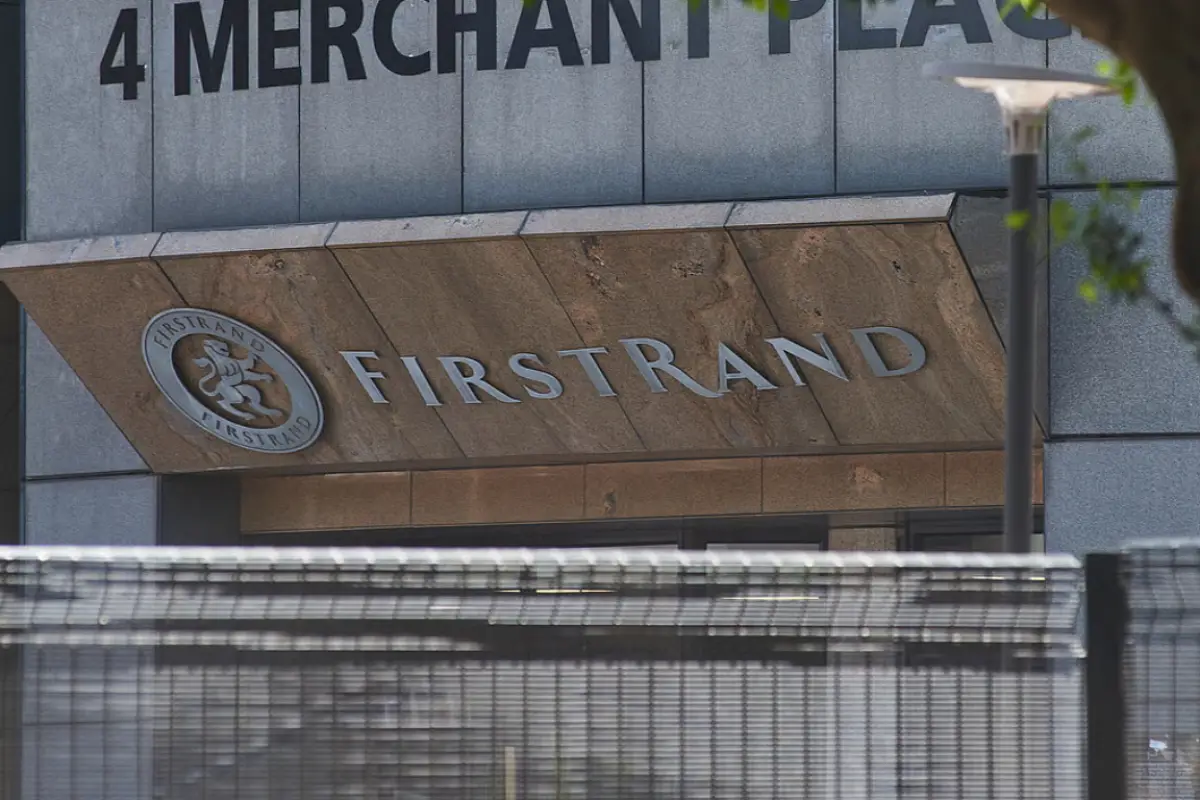
FirstRand Ltd. has completed the sale of a 2.5 billion rand bond — approximately $149 million — that links investor returns directly to environmental outcomes in a Cape Town water catchment, in what represents one of the most innovative nature-linked financing structures to emerge from the African continent. Arranged by Rand Merchant Bank, a FirstRand subsidiary, the bond attracted anchor investment from the International Finance Corporation, which subscribed for 1.6 billion rand, and FSD Africa Investments, which purchased 234 million rand. The bond’s payouts are tied to the removal of invasive alien vegetation in the Western Cape — plant species that restrict water flow through catchment areas and meaningfully reduce the volume of water reaching Cape Town’s reservoirs. The structure is supported by The Nature Conservancy, one of the world’s leading conservation organisations, which provides the ecological methodology underpinning the bond’s outcome measurement framework. In a city that came within weeks of running out of water during the 2018 “Day Zero” crisis, the bond represents both a financial innovation and a direct investment in one of South Africa’s most critical pieces of natural infrastructure.
Key Overview
- Issuer: FirstRand Ltd., arranged by Rand Merchant Bank
- Bond Size: R2.5 billion (approximately $149 million)
- Bond Type: Nature-linked bond — investor returns tied to environmental outcomes
- Environmental Target: Removal of invasive alien vegetation in the Western Cape water catchment areas supplying Cape Town
- Outcome: Improved water inflows to Cape Town’s reservoirs by restoring the natural water-yielding capacity of catchment ecosystems
- Anchor Investors: IFC (R1.6 billion); FSD Africa Investments (R234 million)
- Conservation Partner: The Nature Conservancy — providing ecological methodology and outcome verification support
- Broader Significance: One of the largest and most structurally sophisticated nature-linked bonds issued in Africa to date
Financing Nature to Secure Water
There are financial instruments that raise capital, and there are financial instruments that change the conversation about what capital can do. FirstRand’s 2.5 billion rand nature-linked bond sits firmly in the second category. By tying investor returns directly to the removal of invasive alien vegetation in Cape Town’s water catchment areas, Rand Merchant Bank has structured a transaction that does something genuinely novel: it makes the health of a natural ecosystem a bankable outcome — one that investors can fund, measure, and be rewarded for improving.
The mechanics of the bond are as elegant as they are purposeful. Invasive alien plant species — predominantly fast-growing shrubs and trees introduced to South Africa from other continents — consume vastly more water than the indigenous fynbos and grassland vegetation they displace. When these plants colonise catchment areas, the water that would otherwise flow into rivers and ultimately into reservoirs is instead absorbed by the invasive vegetation and lost to transpiration. The result is a measurable reduction in water inflows to Cape Town’s supply system — a reduction that, in a city that has already experienced one of the most severe urban water crises in modern history, carries enormous practical consequences.
Removing invasive vegetation restores the natural water-yielding capacity of catchment ecosystems. Studies conducted in the Western Cape have consistently demonstrated that clearing invasive species from catchment areas increases water inflows — in some cases by volumes equivalent to the output of significant new infrastructure. This makes invasive plant removal one of the highest-return water security interventions available to Cape Town, at a fraction of the cost of constructing new dams or desalination plants. FirstRand’s bond channels capital directly into this intervention, creating a financial structure in which investor returns are contingent on the environmental outcomes being achieved — a design that aligns the incentives of capital markets with the requirements of ecological restoration in a way that few previous instruments have managed.
Markets move fast; don’t get left behind. We’ve paired the Serrari Group Market Index with a curated Marketplace and a comprehensive Wealth Builder Platform to ensure you have the data—and the skills—to act on it.
Historical Context: Cape Town’s Water Crisis and the Cost of Environmental Neglect
To fully appreciate the urgency and significance of FirstRand’s bond, it is essential to understand the context of Cape Town’s relationship with water — and specifically, the crisis that brought the city to the brink of catastrophic supply failure in 2018.
Cape Town’s water supply has always been shaped by the unique ecology of the Western Cape. The region’s fynbos biome — one of the world’s six floral kingdoms and a UNESCO World Heritage Site — is the ecological foundation of the catchment system that captures rainfall from the Cape mountains and channels it into the city’s reservoirs. The fynbos is extraordinarily biodiverse and, critically for water security, highly efficient in its water use: its low, scrubby vegetation allows rainfall to penetrate the soil and flow into streams and rivers rather than being absorbed by deep-rooted plants.
The introduction of invasive alien species — primarily Australian acacias, eucalyptus, and pine trees brought to South Africa in the nineteenth and twentieth centuries for timber production, sand dune stabilisation, and ornamental planting — began to undermine this system over many decades. These fast-growing, deep-rooted species outcompeted fynbos vegetation, spread across catchment areas, and consumed water at rates far exceeding those of the indigenous plants they displaced. Research by the South African government’s Working for Water programme, established in 1995, estimated that invasive alien plants were reducing South Africa’s total water runoff by billions of litres annually — a staggering figure that represents one of the most significant, yet least visible, threats to the country’s water security.
The consequences became catastrophically visible during Cape Town’s Day Zero crisis of 2017 and 2018. A combination of three consecutive years of below-average rainfall and the long-term reduction in catchment yields caused by invasive vegetation brought Cape Town’s reservoir levels to below 20% of capacity. The city faced the prospect of having to shut off municipal water supply entirely — an event unprecedented in any major modern city. Strict water restrictions, intensive public awareness campaigns, and a remarkable reduction in per capita consumption averted the immediate crisis, but the episode exposed the fragility of Cape Town’s water security in a way that has fundamentally shaped the city’s approach to infrastructure planning and environmental management ever since.
The role of invasive vegetation in exacerbating the crisis was well documented. Studies conducted before and after the Day Zero period confirmed that restoring catchment areas by removing invasive species could add meaningful volumes of water to Cape Town’s supply — estimates suggested that clearing invasive plants from priority catchment areas could increase inflows by amounts equivalent to a significant fraction of the city’s annual water demand. This evidence base is what makes the FirstRand bond not merely an environmental initiative but a genuine water infrastructure investment — one whose returns are as tangible as those from a new dam or pipeline, but delivered through ecological restoration rather than civil engineering.
The Working for Water programme — which employs thousands of workers to clear invasive vegetation across South Africa’s catchment areas — demonstrated that the intervention is operationally feasible at scale. What it has historically lacked is a financing mechanism that can attract private capital at the volume required to accelerate the clearing effort beyond what government budgets alone can support. FirstRand’s bond is designed to fill precisely this gap.
The Structure: How a Nature-Linked Bond Works
The nature-linked bond that FirstRand has issued represents an evolution of the sustainability-linked bond model that has become increasingly prevalent in global capital markets over the past five years. Understanding the structural mechanics is essential for appreciating both the innovation and the challenges inherent in this type of instrument.
In a conventional green bond, proceeds are allocated to specific environmentally beneficial projects — renewable energy installations, energy-efficient buildings, sustainable transport — and the bond’s green credentials depend on the use of proceeds rather than on any measurable environmental outcome. The issuer commits to spending the money on qualifying projects, but the investor’s return is not directly affected by whether those projects achieve their intended environmental impact. This structure has attracted significant criticism for enabling “greenwashing” — the labelling of financial instruments as environmentally beneficial without rigorous accountability for actual outcomes.
Sustainability-linked bonds address this weakness by tying the financial terms of the bond — typically the coupon rate — to the achievement of specific, pre-defined sustainability targets. If the targets are met, the coupon may be reduced; if they are missed, the coupon increases as a penalty on the issuer. This structure creates a direct financial incentive for environmental performance, but it still relies on the issuer’s own operations and commitments rather than on outcomes in the natural world.
FirstRand’s nature-linked bond goes further. By tying investor returns to the removal of invasive vegetation in a specific geographic catchment — a real-world ecological outcome that is measurable, verifiable, and directly connected to a critical public good — the structure creates an accountability framework that is more rigorous than either green bonds or standard sustainability-linked bonds. The Nature Conservancy’s involvement in providing the ecological methodology and outcome verification framework is essential to this rigour: it ensures that the definition of success is grounded in credible conservation science rather than in metrics that issuers can manipulate or that bear only a tenuous relationship to actual environmental impact.
The IFC’s subscription of R1.6 billion — representing 64% of the total issuance — is the transaction’s most significant structural feature. The IFC, as a member of the World Bank Group and one of the world’s most respected development finance institutions, does not subscribe to bonds of this size without conducting rigorous due diligence on both the financial structure and the environmental methodology. Its participation serves a dual function: it validates the bond’s design for other investors and the broader market, and it provides the scale of institutional capital that makes the underlying environmental programme viable at the level required to produce meaningful water security outcomes.
FSD Africa Investments — a development finance institution focused on building financial systems in sub-Saharan Africa — contributed a further R234 million, bringing the development finance contribution to approximately R1.834 billion of the R2.5 billion total. The composition of the investor base reflects the current reality of nature-linked finance: development finance institutions, with their dual mandate of financial return and development impact, are the primary market for instruments of this kind, providing the proof-of-concept capital that is essential for attracting mainstream institutional investors to new and complex structures.
The Role of The Nature Conservancy: Science Meets Finance
The Nature Conservancy’s involvement in the FirstRand bond transaction is more than a reputational endorsement — it is a substantive scientific and methodological contribution that is integral to the instrument’s integrity and credibility.
Founded in 1951 and now operating in more than 70 countries, The Nature Conservancy has spent decades developing the scientific frameworks for measuring and valuing ecosystem services — the benefits that natural systems provide to human communities, including clean water, clean air, carbon sequestration, flood protection, and biodiversity. Its work in South Africa has included extensive research on the relationship between invasive alien vegetation and water catchment yields in the Western Cape, providing the empirical foundation for the claim that invasive plant removal generates measurable increases in water inflows.
For the FirstRand bond, The Nature Conservancy has contributed the ecological methodology that defines what constitutes a qualifying removal event, how the water yield impact of that removal is calculated, and how outcomes are verified and reported to investors. This methodology is the bond’s most critical piece of intellectual infrastructure — it is what makes the connection between investor returns and real-world environmental outcomes credible and auditable.
The involvement of a credible third-party conservation organisation in this role also addresses one of the most fundamental challenges in nature-linked finance: the risk of greenwashing. Without rigorous, independent methodology for measuring and verifying environmental outcomes, nature-linked bonds risk becoming instruments that offer the appearance of environmental impact without the substance. The Nature Conservancy’s participation is a signal to the market that this bond has been designed to the highest available standard of ecological rigour.
Why Invasive Alien Vegetation Is a Financial Problem
The framing of invasive alien vegetation removal as a financial instrument — rather than purely an environmental programme — reflects a growing recognition that the degradation of natural ecosystems creates quantifiable economic losses that can, in principle, be addressed through market mechanisms.
In the Western Cape, the economic cost of invasive alien plants is most directly felt through reduced water supply. Cape Town’s water is sourced entirely from surface catchments — there is no significant groundwater or desalination contribution to the primary supply system at current scale. Every litre of water consumed by invasive vegetation is a litre that does not flow into the city’s reservoirs, creating a supply deficit that must be addressed either through demand reduction (expensive and socially disruptive) or supply augmentation (requiring significant infrastructure investment).
The cost comparison between invasive plant clearing and alternative water supply augmentation options — additional reservoir capacity, desalination, water recycling — consistently favours clearing as the lower-cost intervention per unit of water yield recovered. Research conducted by the South African government and independent academics has estimated that targeted clearing of priority catchment areas can deliver water at a cost per kilolitre that is a fraction of the equivalent cost from desalination or reservoir construction.
This cost advantage is the financial logic underlying the FirstRand bond. By paying for invasive plant clearing through a bond structure that links investor returns to clearing outcomes, the transaction essentially monetises the water yield benefit of ecological restoration — creating a revenue stream (in the form of avoided infrastructure costs and improved water security) that justifies the capital investment and provides the basis for investor returns.
Context is everything. While you follow today’s updates, use the Serrari Group Market Index and Marketplace to spot emerging shifts. Need to sharpen your edge? Our Wealth Builder Platform turns these insights into a professional-grade strategy.
Risks to Consider
The FirstRand nature-linked bond, while innovative and impactful, carries a set of risks that investors and market observers should assess carefully.
Outcome measurement risk is the most fundamental challenge in nature-linked finance. The relationship between invasive plant removal and water yield improvement, while well-established in the scientific literature, involves natural variability that can make precise attribution difficult in any given year. Rainfall variability, catchment complexity, and the lag between clearing activity and measurable water yield improvement all create challenges for the annual or periodic outcome measurement that bond structures typically require. Robust methodology — of the kind that The Nature Conservancy is providing — can manage but not eliminate this measurement uncertainty.
Ecological risk is an inherent feature of any programme that depends on natural systems. The Western Cape’s fynbos ecosystem is sensitive to disturbance, and clearing operations must be conducted in ways that minimise damage to indigenous vegetation while maximising the removal of invasive species. Poorly executed clearing can damage the catchment ecosystem it is intended to restore, undermining both the environmental outcome and the financial returns tied to it.
Reinvasion risk is a particularly significant concern for programmes of this kind. Invasive alien species are, by definition, aggressive colonisers — left unmanaged, cleared areas will be reinvaded by the same species, eroding the water yield gains achieved through initial clearing. Sustainable outcomes require ongoing maintenance clearing, which adds to the long-term cost of the programme and requires a financing model that extends beyond a single bond issuance.
Liquidity risk is a characteristic of this bond’s investor base that warrants acknowledgment. With the majority of the issuance held by development finance institutions — the IFC and FSD Africa Investments — the secondary market for the bond is likely to be thin, limiting the options available to investors who need to exit their positions before maturity.
Challenges Ahead
Several structural challenges will shape the development of nature-linked finance in South Africa and across the African continent in the coming years.
Scaling beyond development finance is the most critical challenge. The current investor base for nature-linked bonds — dominated by institutions with explicit development mandates — represents a small fraction of the capital available in global fixed income markets. Attracting mainstream institutional investors — pension funds, insurance companies, asset managers — requires a track record of successful outcomes, standardised methodologies, and a regulatory environment that recognises and incentivises nature-linked investments. The FirstRand bond is an important proof-of-concept, but proof-of-concept is not the same as mainstream adoption.
Policy and regulatory support will be essential for scaling the market. Governments and regulators in South Africa and across Africa will need to develop frameworks that classify nature-linked bonds appropriately, provide tax incentives for qualifying investments, and create the public sector demand signals — through water tariff structures, conservation payment frameworks, and environmental regulation — that make the economics of nature-linked finance viable for a broader range of issuers and investors.
Data and monitoring infrastructure is a prerequisite for credible outcome measurement at scale. The ecological data systems required to measure catchment yields, track clearing activities, and verify water yield improvements across large geographic areas require sustained investment in monitoring technology, remote sensing capability, and scientific expertise. Building this infrastructure — and making it accessible to bond issuers and investors — is a public good that requires collaborative investment from governments, conservation organisations, and the private sector.
Looking Ahead: A Blueprint for Nature-Linked Finance in Africa
FirstRand’s R2.5 billion nature-linked bond is a landmark transaction — not because of its size, which is modest by global capital market standards, but because of what it demonstrates about the possibility of aligning financial returns with ecological restoration at scale in an African context.
The instrument addresses one of the most fundamental challenges in conservation finance: how to attract private capital to the restoration of natural systems that provide public goods — clean water, biodiversity, carbon storage — whose value is real but whose monetisation through conventional market mechanisms has historically been elusive. By structuring the bond’s returns around a measurable, verifiable, and economically valuable environmental outcome — increased water inflows to Cape Town’s supply system — Rand Merchant Bank has created a template that other issuers, in other contexts, can adapt and build upon.
The potential applications are significant. South Africa’s broader water security challenges — which extend well beyond Cape Town to include the Vaal system serving Johannesburg and the agricultural water systems of the country’s farming regions — could in principle be addressed through similar instruments. Across the African continent, where natural resource degradation threatens both ecological and economic stability in multiple countries, nature-linked finance offers a mechanism for channeling the depth of global capital markets into restoration programmes that have historically been funded only by government budgets and philanthropy.
Cape Town’s Day Zero experience was a warning. The FirstRand bond is, in part, a response to that warning — a recognition that the city’s water security depends not only on the infrastructure of pipes, pumps, and reservoirs, but on the health of the natural systems that capture and deliver the water that infrastructure depends on. Investing in those natural systems through the mechanisms of capital markets is both a financial innovation and an act of profound practical wisdom.
Your financial future isn’t something you wait for, it’s something you build.
The real question is: when do you begin?
Move beyond simply staying informed.
Navigate the markets with clarity—track trends through the Serrari Group Market Index, uncover opportunities in the Serrari Marketplace, and build practical knowledge with our Curated Wealth Builder Platform.
Stay connected to what truly matters.
Get daily insights on macro trends and financial movements across Kenya, Africa, and global markets—delivered through the Serrari Newsletter.
Growth opens doors.
Advance your career through professional programs including ACCA, HESI A2, ATI TEAS 7 , HESI EXIT , NCLEX – RN and NCLEX – PN, Financial Literacy!🌟—designed to move you forward with confidence.
See where money is flowing—clearly and in real time.
Track Money Market Funds, Treasury Bills, Treasury Bonds, Green Bonds, and Fixed Deposits, alongside global and African indexes, key economic indicators, and the evolving Crypto and stablecoin landscape—all within Serrari’s Market Index.