Ethiopia is rapidly emerging as Africa’s leading electric vehicle market as soaring fuel prices, supply shortages, and energy security concerns accelerate the country’s transition toward electric mobility. Africa imported 44,358 EVs from China in 2025, more than double the previous year, with Ethiopia accounting for roughly one-third of those imports following its 2024 ban on new gasoline and diesel vehicle imports.
More than 115,000 EVs are now operating on Ethiopian roads, representing around 8% of the country’s vehicle fleet. The transition is being driven by rising fuel costs linked to geopolitical disruptions in the Middle East, as well as Ethiopia’s broader effort to reduce its massive fuel import bill and strengthen energy security through domestically generated renewable electricity.
While challenges around affordability and charging infrastructure remain significant, Ethiopia’s EV push is increasingly being viewed as a model for how African countries can use electrification to reduce exposure to volatile global oil markets while advancing clean energy development.
Key Overview
- Africa imported 44,358 EVs from China in 2025
- Ethiopia accounted for roughly one-third of imports
- More than 115,000 EVs now operate in Ethiopia
- EVs represent around 8% of Ethiopia’s vehicle fleet
- Ethiopia spends about $4.2B annually on fuel imports
- Fuel subsidies cost up to $128M per month
- Over 90% of Ethiopia’s electricity comes from renewables
- Government plans up to 60 EV assembly plants by 2030
Fuel Crisis Accelerates Ethiopia’s EV Transition
Ethiopia is rapidly accelerating its transition toward electric mobility as soaring fuel prices and supply disruptions expose the country’s dependence on imported oil and gas. The ongoing conflict in the Middle East, combined with disruptions linked to the Strait of Hormuz, has intensified fuel shortages across multiple African countries and reinforced Ethiopia’s push toward cleaner and cheaper transportation alternatives.
The country has emerged as Africa’s leading EV growth market following its 2024 decision to ban new imports of gasoline- and diesel-powered vehicles. Since then, electric vehicle adoption has surged dramatically.
According to data from China’s Commerce Ministry:
- Africa imported 44,358 electric vehicles from China in 2025
- This compares with 19,386 EV imports in 2024
- Shipments were valued at more than $200 million
- Ethiopia accounted for approximately one-third of all African imports from China
The country now has more than 115,000 EVs on the road, representing roughly 8% of the national vehicle fleet.
The rapid growth reflects both economic necessity and long-term energy strategy. Ethiopia currently spends approximately $4.2 billion annually on fuel imports, placing major pressure on its foreign currency reserves.
At the same time, government fuel subsidies reportedly cost as much as $128 million per month, while disruptions to global oil shipments have worsened supply shortages.
Officials stated that fuel imports recently fell short by more than 180,000 metric tons, highlighting the growing vulnerability of countries heavily dependent on imported petroleum products.
Markets move fast; don’t get left behind. We’ve paired the Serrari Group Market Index with a curated Marketplace and a comprehensive Wealth Builder Course to ensure you have the data—and the skills—to act on it.
Renewable Energy Gives Ethiopia a Strategic Advantage
One of Ethiopia’s biggest advantages in the EV transition is its electricity mix. More than 90% of the country’s electricity generation comes from renewable sources, primarily hydropower and solar energy.
This gives Ethiopia a unique opportunity to replace expensive imported fuel with domestically produced clean electricity, strengthening both economic and energy security.
The country’s long-term strategy is closely linked to the expansion of the Grand Ethiopian Renaissance Dam, Africa’s largest hydroelectric project, which is expected to significantly increase national electricity generation capacity once fully operational.
Energy and mobility experts say this creates a strong foundation for large-scale transport electrification.
“By replacing imported fuel with domestically generated electricity, Ethiopia is strengthening its energy security position,” said Hiten Parmar, executive director of The Electric Mission.
Experts also note that the transition could help redirect billions of dollars currently spent on imported fuel toward broader development priorities, infrastructure investment, and industrial growth.
Globally, the International Energy Agency estimates that electric vehicles displaced more than 1 million barrels of oil demand per day in 2024, highlighting the growing impact of electrification on global energy markets.
Lower Costs Drive Consumer Adoption
For consumers and transport operators, the economic benefits of EV adoption are becoming increasingly clear.
According to mobility experts:
- A private EV owner in Ethiopia now spends roughly $4 per month on charging
- Previously, fuel costs averaged around $27 per month for comparable gasoline-powered vehicles
For public transport operators, the savings are even more significant due to:
- Lower energy costs
- Reduced maintenance requirements
- Greater price stability compared with volatile fuel markets
These financial advantages are helping accelerate EV adoption among commuters, fleet operators, and businesses seeking protection from rising fuel prices and supply uncertainty.
Experts say the transition is already beginning to reduce exposure to global oil market volatility.
“That’s over 100,000 vehicle owners who are no longer directly exposed to pump price shocks,” said Bob Wesonga of the Africa E-Mobility Alliance.
Over time, lower transport operating costs could also help reduce the price of goods and improve access to economic opportunities across the country.
Infrastructure Challenges Remain Significant
Despite rapid adoption growth, Ethiopia’s EV transition still faces major structural and infrastructure challenges.
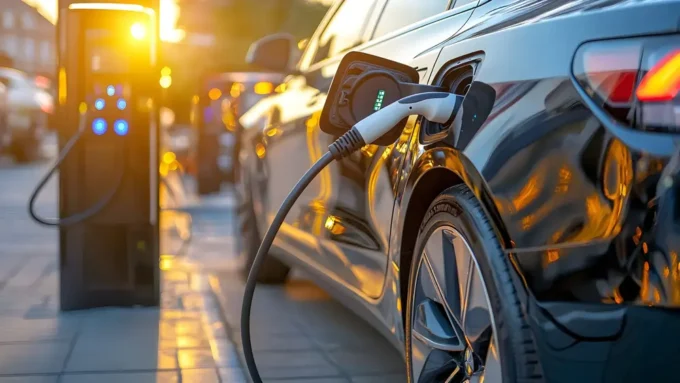
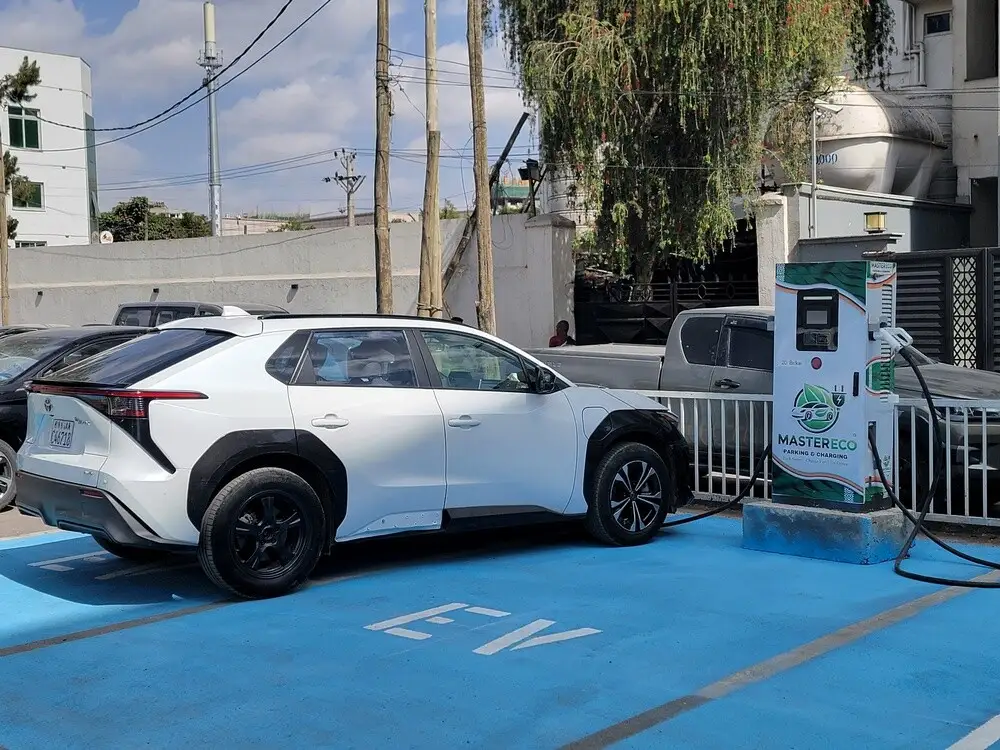
The government has begun deploying ultra-fast charging hubs in the capital, Addis Ababa, but expanding charging infrastructure nationwide will require significant investment and grid upgrades.
Key challenges include:
- Limited charging infrastructure outside major urban areas
- Frequent power outages and grid reliability issues
- Delays connecting high-capacity charging stations
- Weak last-mile electricity distribution networks
Experts note that while Ethiopia has relatively strong electricity generation capacity, delivering reliable power to charging locations—particularly outside Addis Ababa—remains a major bottleneck.
“Charging infrastructure is still heavily concentrated in the capital and along a few corridors,” Wesonga said. “That limits e-mobility to specific areas and creates a bottleneck as adoption grows.”
Affordability also remains a major barrier. Although EV operating costs are much lower, purchase prices remain high relative to average incomes, limiting broader consumer access.
Context is everything. While you follow today’s updates, use the Serrari Group Market Index and Marketplace to spot emerging shifts. Need to sharpen your edge? Our Wealth Builder Course turns these insights into a professional-grade strategy.
Building a Domestic EV Industry
Beyond accelerating electric vehicle adoption, Ethiopia is also pursuing a broader industrial strategy aimed at developing a domestic EV manufacturing and assembly ecosystem. Policymakers increasingly view electric mobility not only as a transportation solution, but also as an opportunity to strengthen industrial capacity, reduce import dependence, and create new economic growth sectors.
Official data show that:
- 17 EV assembly plants are currently planned or under development
- The government aims to expand that number to 60 assembly facilities by 2030
The long-term objective is to gradually localize more of the EV value chain, moving beyond simple vehicle imports toward domestic assembly, component production, and eventually broader manufacturing capabilities.
The strategy is designed to:
- Localize EV production and reduce reliance on imported vehicles
- Lower vehicle prices over time through domestic assembly
- Reduce pressure on foreign currency reserves
- Create industrial, technical, and manufacturing jobs
- Build local expertise in emerging clean transport technologies
Officials believe that expanding domestic production could help make EVs more affordable for Ethiopian consumers while strengthening the country’s broader industrial development agenda.
The government is also studying international models from countries such as China and Norway, where strong policy support, infrastructure investment, and financial incentives played a major role in accelerating EV adoption and market growth.
China’s experience is particularly influential due to its success in scaling EV manufacturing through:
- Domestic industrial policy
- Large-scale infrastructure investment
- Supply chain localization
- Government incentives for producers and consumers
At the same time, Ethiopia hopes to leverage its renewable energy advantage to create a cleaner and more cost-efficient transport system powered largely by domestically generated electricity.
If successful, the strategy could position Ethiopia as one of Africa’s leading EV manufacturing and assembly hubs, while helping the country reduce long-term dependence on imported fossil fuels and traditional combustion vehicles.
Outlook: Ethiopia Emerges as Africa’s EV Leader
Ethiopia’s rapid EV expansion highlights how external economic shocks can accelerate clean energy transitions, particularly in emerging markets that remain heavily exposed to imported fuel costs and global oil price volatility. Rising fuel prices, supply disruptions, and growing energy security concerns are increasingly pushing governments to view electric mobility not only as an environmental solution, but also as a long-term economic strategy.
In the near term, the country is expected to focus on:
- Expanding charging infrastructure nationwide
- Improving electricity distribution reliability
- Scaling local EV assembly capacity
- Making EVs more affordable for consumers
- Strengthening policy support for electric mobility adoption
Over the longer term, Ethiopia’s strategy could position it as one of Africa’s leading electric mobility and clean transport markets, particularly as investment in renewable energy and domestic EV manufacturing continues to grow.
The country’s experience also demonstrates how electrification can serve multiple strategic goals simultaneously:
- Reducing fuel import dependence
- Strengthening energy security
- Lowering transportation and operating costs
- Supporting renewable energy development
- Advancing climate and sustainability objectives
- Encouraging industrial and manufacturing growth
Ultimately, Ethiopia’s EV transition reflects a broader global trend: as fossil fuel markets become increasingly volatile, electric mobility is evolving not only into a climate solution, but also into a major economic, industrial, and energy security strategy for developing economies seeking greater resilience and long-term sustainability.
Your financial future isn’t something you wait for—it’s something you build.
The real question is: when do you begin?
Move beyond simply staying informed.
Navigate the markets with clarity—track trends through the Serrari Group Market Index, uncover opportunities in the Serrari Marketplace, and build practical knowledge with our Curated Wealth Builder Course.
Stay connected to what truly matters.
Get daily insights on macro trends and financial movements across Kenya, Africa, and global markets—delivered through the Serrari Newsletter.
Growth opens doors.
Advance your career through professional programs including ACCA, HESI A2, ATI TEAS 7 , HESI EXIT , NCLEX – RN and NCLEX – PN, Financial Literacy!🌟—designed to move you forward with confidence.
See where money is flowing—clearly and in real time.
Track Money Market Funds, Treasury Bills, Treasury Bonds, Green Bonds, and Fixed Deposits, alongside global and African indexes, key economic indicators, and the evolving Crypto and stablecoin landscape—all within Serrari’s Market Index.