Dangote Petroleum Refinery has begun pricing petrol, diesel and aviation fuel for the Nigerian market in US dollars, marking a significant change in how one of the country’s most important fuel suppliers conducts domestic sales.
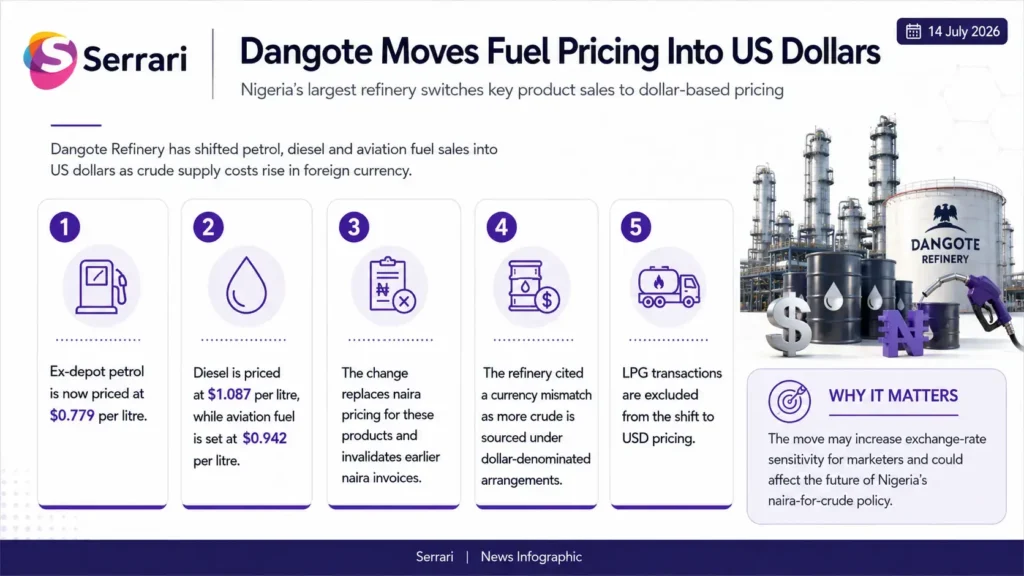
The refinery set its ex-depot petrol price at $0.779 per litre, diesel at $1.087 per litre and aviation fuel at $0.942 per litre. The shift follows difficulties obtaining enough crude oil through Nigeria’s naira-for-crude programme, forcing the refinery to source more crude in dollars while previously selling much of its refined output in naira. (Reuters)
Key Overview
- Dangote Refinery has moved petrol, diesel and aviation fuel pricing into US dollars.
- Petrol is priced at $0.779 per litre, diesel at $1.087 and aviation fuel at $0.942.
- Liquefied Petroleum Gas transactions are excluded from the dollar-pricing change.
- Limited crude allocations under the naira-for-crude programme contributed to the currency mismatch.
- The move could make domestic fuel costs more sensitive to movements in the naira-dollar exchange rate.
Dangote Reprices Key Fuels in US Dollars
The new pricing template took effect on July 13, 2026, with petrol priced at $0.779 per litre, diesel at $1.087 per litre and aviation fuel at $0.942 per litre.
Coastal petrol supplies were also priced at $1,044.62 per metric tonne, while the change does not apply to Liquefied Petroleum Gas transactions. Previously issued naira-denominated proforma invoices and deal recaps for affected products were invalidated as part of the transition. (Punch Newspapers)
The shift represents a major departure from the naira-based transactions encouraged through the Federal Government’s naira-for-crude programme, which began in October 2024.
Under that initiative, domestic refiners were allowed to purchase Nigerian crude in naira rather than dollars, with the policy intended to reduce foreign exchange pressure and support domestic refining. Nigeria’s government had previously presented the naira-for-crude framework as an important tool for improving local fuel security and reducing exposure to foreign currency pressures. (State House)
Limited Local Crude Supply Creates a Currency Mismatch
The main issue behind the pricing change is the currency used to buy crude oil.
Dangote Group Vice President Devakumar Edwin said the refinery had been absorbing a mismatch created by purchasing significant volumes of crude in dollars while selling much of its refined fuel in naira.
Although the Nigerian National Petroleum Company increased Dangote’s crude allocation to seven cargoes in May, the refinery says it requires approximately 13 to 15 cargoes each month. The shortfall has forced it to import or otherwise source additional crude at international, dollar-denominated prices. (Reuters)
That structure creates foreign exchange risk. If the refinery buys crude in dollars but receives naira from local fuel sales, exchange-rate movements can affect its margins between the time crude is purchased and refined products are sold.
The new dollar pricing model therefore aligns the sales currency more closely with the currency used to acquire much of the refinery’s feedstock.
What the Shift Means for Nigeria’s Fuel Market
The pricing change does not automatically determine the final amount motorists will pay at filling stations.
Retail petrol prices will still depend on the exchange rate used by marketers, transportation costs, distribution expenses, regulatory charges and commercial margins. However, dollar-denominated refinery prices could make domestic fuel costs more directly exposed to naira depreciation.
The shift may also increase demand for foreign currency among marketers buying directly from the refinery, particularly if they are required to obtain dollars before purchasing products. According to reporting on the new pricing system, the change could increase the sensitivity of Nigerian fuel prices to movements in the exchange rate. (Reuters)
This is particularly important because Dangote has become a major supplier to Nigeria’s domestic fuel market. An assessment cited by the company said the refinery supplied nearly 80% of domestic petrol demand in April as operations expanded. (Dangote Industries)
Context is everything. Stay ahead of shifting trends with today’s market updates, and uncover emerging opportunities using the Serrari Group Market Index and Marketplace. Then, take control of your own financial future by exploring our Money & Life Reset Transformation Blueprint ™ to build stronger habits, create better systems, and design a path toward lasting wealth.
Questions Grow Over the Naira-for-Crude Programme
The transition also raises questions about the effectiveness and future scope of Nigeria’s naira-for-crude arrangement.
The policy was introduced partly to reduce pressure on foreign exchange reserves by allowing local refiners to purchase domestic crude in naira. Dangote itself had previously argued that the programme should be expanded because of its potential benefits for currency stability and domestic refining. (Channels Television)
However, the latest pricing change highlights a practical limitation: the system can only significantly reduce foreign exchange exposure if refiners receive enough crude through naira-denominated supply arrangements.
Where local allocations fall short, refiners must source additional feedstock in international markets or through dollar-linked transactions. That weakens the ability to maintain a fully naira-based domestic pricing model.
The Nigerian Midstream and Downstream Petroleum Regulatory Authority had not immediately commented on the shift when the new pricing system was reported. (Reuters)
Fuel Prices Now Face Greater Exchange-Rate Exposure
Dangote’s transition to dollar-denominated pricing reflects the financial realities of operating a large refinery while sourcing a substantial share of crude in foreign currency.
The immediate benchmark is now clear: $0.779 per litre for petrol, $1.087 for diesel and $0.942 for aviation fuel. What remains less certain is how the new structure will affect pump prices, foreign exchange demand and competition among Nigerian fuel marketers.
The development also places renewed attention on domestic crude supply. The more Nigerian crude Dangote can secure under naira-based arrangements, the less exposed the refinery may be to the currency mismatch that contributed to the latest change.
For consumers and businesses, the central issue is now whether greater exchange-rate exposure will translate into more volatile fuel prices in an already deregulated downstream market.
Sources: Reuters / Nigerian Tribune / Punch / State House Nigeria / Channels Television / Dangote Industries
Your financial future isn’t something you wait for—it’s something you build.
The real question is: when do you begin?
Move beyond simply staying informed.
Navigate the markets with clarity—track trends through the Serrari Group Market Index, uncover opportunities in the Serrari Marketplace, and build practical knowledge with our Curated Wealth Builder Platform.
Stay connected to what truly matters.
Get daily insights on macro trends and financial movements across Kenya, Africa, and global markets—delivered through the Serrari Newsletter.
Growth opens doors.
Advance your career through professional programs including ACCA, HESI A2, ATI TEAS 7 , HESI EXIT , NCLEX – RN and NCLEX – PN, Financial Literacy!🌟—designed to move you forward with confidence.
See where money is flowing—clearly and in real time.
Track Money Market Funds, Treasury Bills, Treasury Bonds, Green Bonds, and Fixed Deposits, alongside global and African indexes, key economic indicators, and the evolving Crypto and stablecoin landscape—all within Serrari’s Market Index.