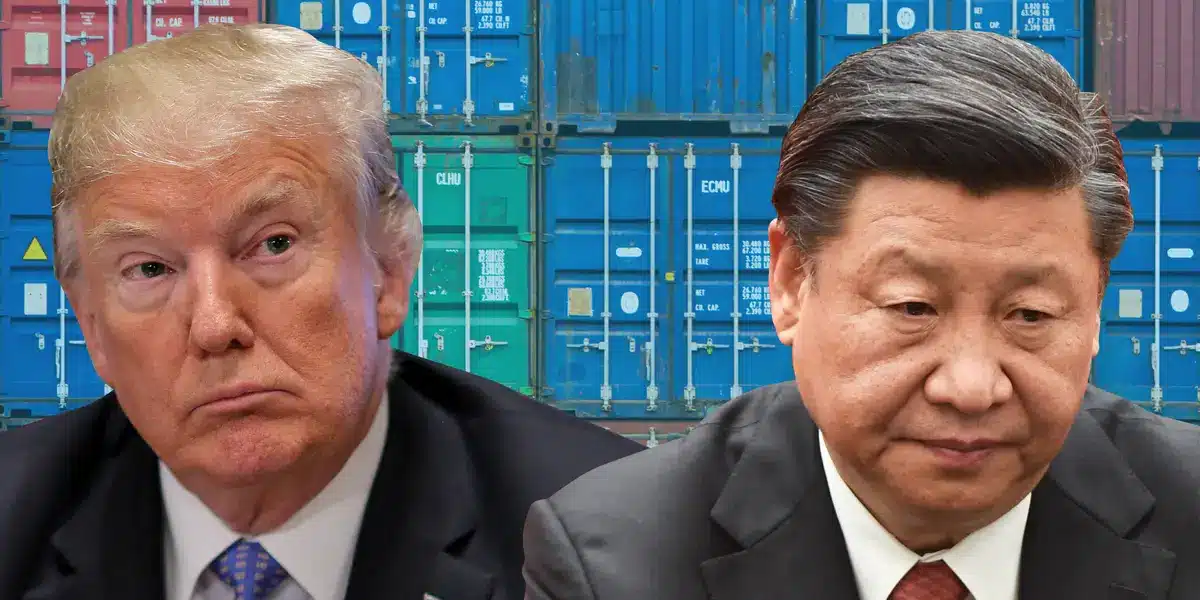
Much of the debate surrounding the implications of a possible second U.S. presidential term for Republican Donald Trump has focused on what may happen to the U.S. and global economies. Trump’s plan to impose tariffs of 10% on virtually all imports into the United States, and as much as 50% on those from top trading partner China, have raised the specter of higher inflation and interest rates, and a less competitive market.
The Global Economic Impact of Potential Tariffs
The potential imposition of tariffs by Trump is a major point of concern for economists and market analysts. Tariffs generally lead to higher costs for imported goods, which can result in increased prices for consumers and businesses alike. This can trigger inflationary pressures as companies pass on the higher costs to consumers. Furthermore, higher tariffs can make imported goods less competitive, which can disrupt supply chains and lead to inefficiencies in the market.
Retaliation from Trading Partners
For commodities, the bigger risk of a Trump return to the White House is the response the rest of the world is likely to have to the imposition of U.S. trade tariffs. Political leaders across the globe will be unable to sit idly by if Trump places barriers on their exports to the United States. Any unilateral action by Trump is thus likely to be met by retaliation from U.S. trading partners, even if they are erstwhile political allies, such as countries in Europe and some in Asia, such as Japan, South Korea, and even India.
The Impact on U.S. Commodity Exports
If it’s inevitable that U.S. trading partners respond to Trump’s proposed actions by putting tariffs on imports from the United States, the main question is then what form will they take? While major U.S. exporting companies such as airplane maker Boeing will have cause for concern, a far easier target for retaliation is likely to be U.S. commodity exports. The United States is the world’s biggest exporter of liquefied natural gas (LNG) and ranks fourth globally for exports of crude oil and all grades of coal.
A major buyer of U.S. commodities is China. If Trump were to impose tariffs of 50% on its exports, Beijing could effectively ban all commodity imports from the United States, either formally or informally. U.S. exports of crude oil to China were 10 million barrels in July, according to commodity analysts Kpler, and that figure is expected to rise to 16.58 million barrels in August, which would be the most since April 2023. For the first eight months of this year, U.S. crude exports to China are tracking at about 309,000 barrels per day (bpd), which represents only about 3% of China’s total imports but accounts for about 7.5% of total U.S. shipments. In other words, it would likely be fairly easy for China to stop buying U.S. crude and find alternative suppliers, such as Angola and Brazil.
Challenges for U.S. Oil Producers
But how easy would it be for U.S. oil producers to replace the loss of Chinese buyers? Much will depend on whether other countries place tariffs on U.S. commodity exports. Imagine if the European Union, Japan, and South Korea all put a 10% tariff on U.S. crude in retaliation for Trump putting a similar impost on their exports to the United States. The European Union, Japan, and South Korea typically account for about 60% of U.S. crude exports. By putting tariffs on U.S. crude, LNG, and coal, the rest of the world could keep U.S. energy exports in the market but force U.S. companies to either offer discounts to keep their prices competitive or lower output.
Vulnerability of U.S. LNG Exporters
U.S. LNG exporters may be more vulnerable than crude producers, given they have no alternative markets other than exports. For China, replacing U.S. LNG would be more challenging than replacing U.S. crude but still likely doable, given the fairly small proportion of U.S. LNG in its total imports. In July, China’s imports of U.S. LNG were 670,000 metric tons, or about 10.5% of the monthly total of 6.39 million. For the United States, exports to China represent only about 8% of its total LNG shipments. But if Japan and South Korea are added in as well, then exports to the three main Asian buyers rise to about a quarter of the total, based on U.S. shipments in June of this year. If tariffs were placed on U.S. LNG by the North Asian importers, it would put pressure on U.S. companies to lower prices to compensate.
U.S. Coal Exports: Diverse Yet Risky
U.S. coal exports have averaged about 7.5 million tons a month for the first seven months of the year, but there is no dominant buyer. Rather there is a broad range of importers that all purchase relatively small volumes. This means that buyers of U.S. coal could probably find alternative suppliers for the small volumes involved, but U.S. exporters may struggle to find new markets should a majority of its existing buyers impose retaliatory tariffs. Overall, the picture that emerges is one of significant vulnerability for U.S. energy exporters if we do see another trade war, given how countries could respond to the tariffs currently being proposed by the former president’s camp.
Political and Economic Uncertainty
Of course, Trump still has to overcome likely Democratic candidate and current vice president, Kamala Harris, in the November election, and then actually follow through on what is likely to be a widely-criticized trade policy. But the risk remains meaningful. In 2022, Russia’s invasion of Ukraine showed us what can happen when a political event roils energy markets. If Trump is elected and does embark on a trade war, the disruption may not be quite on that scale. But commodity flows – and thus a large part of the global economy – could be impacted if the market has to adapt to an unpredictable political dynamic once again.
Broader Economic Implications
The potential for a trade war under a Trump administration extends beyond commodities. The broader economic implications could include disrupted supply chains, increased costs for consumers and businesses, and heightened uncertainty in global markets. The interconnected nature of today’s global economy means that trade policies in one country can have far-reaching effects, influencing everything from manufacturing to retail to services.
The Role of Multilateral Trade Agreements
Multilateral trade agreements, such as the North American Free Trade Agreement (NAFTA) and the Trans-Pacific Partnership (TPP), have been designed to facilitate trade and reduce barriers between member countries. However, the imposition of unilateral tariffs by the United States could undermine these agreements and lead to a breakdown in international trade relations. This could prompt affected countries to seek new alliances and trade partners, potentially reshaping the global trade landscape.
Potential for Global Trade Realignment
In response to U.S. tariffs, countries may seek to strengthen trade ties with other nations, bypassing the United States. This could lead to a realignment of global trade networks, with new partnerships and agreements emerging. For instance, China could increase its trade with Europe, Africa, and other Asian countries, while the European Union might deepen its economic relations with countries in Latin America and Asia.
The Impact on Global Supply Chains
Global supply chains, which are already under strain due to factors like the COVID-19 pandemic and geopolitical tensions, could face additional disruptions from a trade war. Companies may need to reconfigure their supply chains to adapt to new trade barriers, leading to increased costs and delays. This could also accelerate the trend toward regionalization, where companies seek to source materials and components closer to their production facilities to reduce reliance on international supply chains.
The Human Element: Jobs and Livelihoods
At the heart of these economic and political maneuvers are the jobs and livelihoods of millions of people. Trade wars can lead to job losses in industries that rely on international trade, as companies struggle to cope with higher costs and reduced market access. Workers in manufacturing, agriculture, and energy sectors could be particularly vulnerable to the economic fallout of a trade war.
Environmental Considerations
The environmental impact of a trade war should not be overlooked. Changes in trade patterns can influence the environmental footprint of industries, as companies may shift production to countries with different environmental regulations. Additionally, the reconfiguration of supply chains could lead to increased transportation emissions as goods are moved over longer distances.
Conclusion: Navigating an Uncertain Future
As the world watches the unfolding political drama in the United States, the potential for a trade war under a second Trump administration looms large. The implications for global commodity flows, economic stability, and international relations are significant. Stakeholders, from policymakers to business leaders to everyday workers, must navigate this uncertain future with caution and resilience.
While the outcome of the November election remains uncertain, the discussions and preparations for potential trade policies and their impacts continue. The global community must remain vigilant and proactive in addressing the challenges and opportunities that lie ahead, ensuring that the benefits of global trade are shared widely and equitably, even in the face of political and economic turbulence.
Photo source: Google
By: Montel Kamau
Serrari Financial Analyst
31st July, 2024