China’s coal-fired electricity generation accounted for less than half of total power output during the first six months of 2026 for the first time. According to the National Energy Administration (NEA), coal generated 49.7% of electricity while renewable energy supplied 41.2%, with wind and solar contributing almost a quarter of total power output. The figures highlight continued growth in renewable energy generation alongside increased investment in electricity grids and energy storage, even as coal remains a key component of China’s power system.
Key Overview
- Coal accounted for 49.7% of China’s electricity generation in the first half of 2026.
- Renewable energy supplied 41.2% of total electricity generation.
- Wind and solar generated almost 25% of total power output.
- Renewable electricity generation increased by about 9% year on year.
- Grid infrastructure investment rose 14%, while energy storage investment increased 74%.
Coal’s Share Drops Below Half for the First Time
China recorded a significant milestone in its electricity generation during the first half of 2026, with coal-fired power accounting for 49.7% of electricity output between January and June. According to data released by the National Energy Administration, this is the first time coal has contributed less than half of the country’s electricity generation during the first six months of the year.
The figures reflect continued growth in renewable electricity generation while coal remains an important source of power for the country. China has spent years expanding renewable energy capacity while maintaining coal-fired generation to help avoid electricity shortages and ensure the reliability of its power system.
Although the latest data show coal’s share falling below 50%, the country’s electricity mix continues to rely on coal alongside rapidly expanding renewable energy sources.
Renewable Energy Supplies More Than 40% of Electricity
Renewable energy generated 41.2% of China’s total electricity during the first half of 2026, according to the NEA.
Within that total, wind and solar power together generated almost 25% of the total power output, reflecting continued expansion of renewable generation across the country.
The NEA also reported that electricity generation from renewable energy increased by about 9% from a year earlier.
China’s official news agency Xinhua said the latest figures underscore the country’s continued expansion of renewable energy capacity while reducing its reliance on coal.
The steady increase in renewable electricity generation comes as China continues investing in renewable energy projects while integrating larger volumes of wind and solar power into its electricity system.
Wind and Solar Capacity Continues to Expand
The NEA data showed that China’s installed wind and solar capacity reached a combined 1.95 billion kilowatts by the end of June, representing an increase of 16.8 percent from a year earlier.
As installed capacity expanded, renewable electricity generation continued to grow.
According to the data, renewable energy generation reached nearly 2 trillion kWh during the first half of the year.
Combined wind and solar power generation exceeded 1.2 trillion kWh, accounting for roughly one-quarter of China’s total electricity consumption during the period.
The figures illustrate the increasing contribution of wind and solar energy to the country’s electricity supply as renewable capacity continues to expand.
Grid and Energy Storage Investment Accelerates
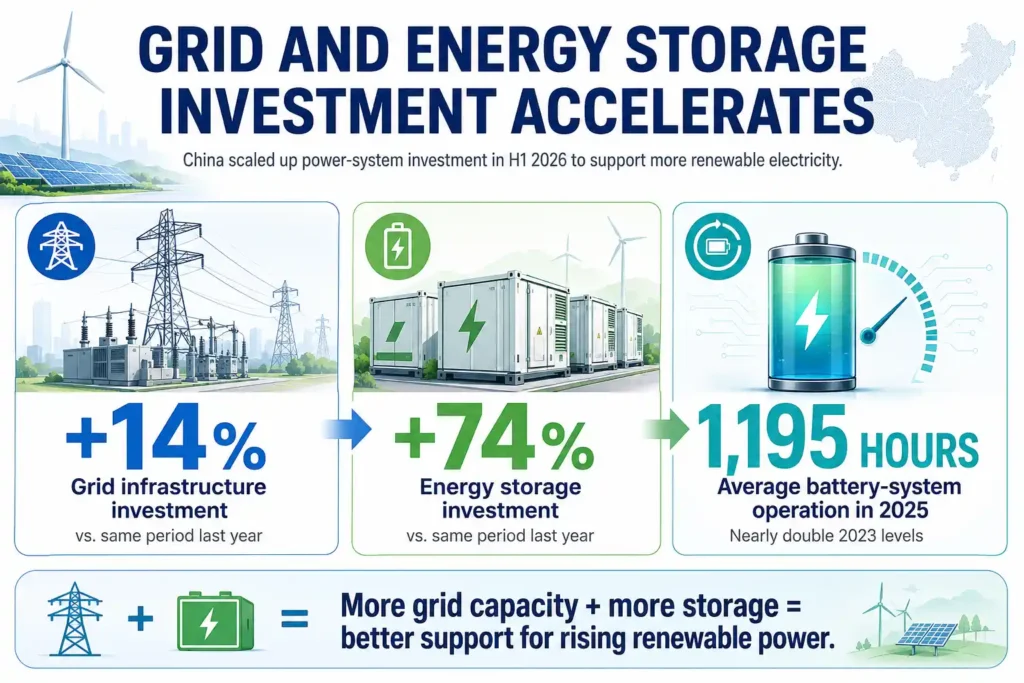
China is also increasing investment in electricity infrastructure to support the growing share of renewable energy.
According to the NEA, investment in grid infrastructure rose 14% in the first half of the year compared with the same period last year.
At the same time, investment in energy storage climbed 74%, reflecting efforts to strengthen the power system as renewable generation expands.
Battery energy storage systems are also being used more frequently.
The NEA said battery systems averaged 1,195 hours of operation in 2025, nearly double the level recorded in 2023.
These investments are intended to help ease grid bottlenecks while supporting the integration of larger volumes of renewable electricity into the power system.
Context is everything. Stay ahead of shifting trends with today’s market updates, and uncover emerging opportunities using the Serrari Group Market Index and Marketplace. Then, take control of your own financial future by exploring our Money & Life Reset Transformation Blueprint ™ to build stronger habits, create better systems, and design a path toward lasting wealth.
Renewable Utilization Declines
Despite continued growth in renewable generation, utilization rates for both solar and wind declined during the first half of the year.
According to the NEA, solar utilization fell to 91.4% in the first half from 94.3% a year earlier.
Wind utilization also declined to 90.9% from 93.5% during the same period last year.
The figures were presented by Pan Huimin, Deputy Director of the NEA’s Renewable Energy Department, during a press briefing.
Coal Continues to Support Energy Security
Although renewable energy continues to expand, coal remains central to China’s electricity system.
The country continues to rely on coal to supply electricity for industry and maintain the reliability of power grids, particularly when renewable generation declines.
Chinese authorities are not restricting coal power growth under the country’s new five-year energy plan. Instead, Beijing continues to describe coal as a “bottom-line guarantee” for the electricity system.
The plan expects renewable energy to increase its share of electricity supply by 2031, while wind and solar are expected to become the “mainstay” of the electricity mix.
At the same time, coal will continue to grow and increasingly act as a flexible backstop to strengthen energy security and support the electricity system.
The source also notes that Beijing continues to rely on coal to meet electricity demand and fill supply gaps whenever renewable generation falls, including during periods when wind power weakens or during heat waves affecting large parts of the country.
China Maintains Long-Term Clean Energy Goals
The latest electricity data come as China continues pursuing its long-term climate objectives.
According to the source, China has pledged to peak carbon dioxide emissions before 2030 and achieve carbon neutrality before 2060.
The latest NEA figures show renewable energy continuing to increase its contribution to electricity generation while coal remains an important part of the country’s energy system.
Outlook
The first-half figures mark a symbolic milestone, with coal accounting for less than half of China’s electricity generation for the first time during the January-to-June period. At the same time, renewable energy supplied 41.2% of electricity generation, while wind and solar contributed almost one-quarter of total power output. China continues to expand renewable energy capacity, increase investment in electricity grids and energy storage, and grow renewable electricity generation. However, the country’s latest energy plan also confirms that coal will continue serving as a “bottom-line guarantee” for maintaining electricity system reliability while renewable energy plays a larger role in the country’s power mix.
FAQs
1. How much of China’s electricity came from coal in the first half of 2026?
Coal-fired power plants generated 49.7% of China’s electricity from January through June 2026.
2. What share of electricity came from renewable energy?
Renewable energy accounted for 41.2% of China’s total electricity generation during the first half of 2026.
3. How much electricity did wind and solar generate?
Combined wind and solar power generated more than 1.2 trillion kWh, accounting for roughly one-quarter of China’s total electricity consumption.
4. How is China supporting renewable energy expansion?
According to the NEA, grid infrastructure investment increased 14% and energy storage investment rose 74% during the first half of the year, while installed wind and solar capacity reached 1.95 billion kilowatts by the end of June.
Sources: Energy Connects, Crude Oil Prices Today, China Daily, chinadailyhk, Forbes
Your financial future isn’t something you wait for—it’s something you build.
The real question is: when do you begin?
Move beyond simply staying informed.
Navigate the markets with clarity—track trends through the Serrari Group Market Index, uncover opportunities in the Serrari Marketplace, and build practical knowledge with our Curated Wealth Builder Platform.
Stay connected to what truly matters.
Get daily insights on macro trends and financial movements across Kenya, Africa, and global markets—delivered through the Serrari Newsletter.
Growth opens doors.
Advance your career through professional programs including ACCA, HESI A2, ATI TEAS 7 , HESI EXIT , NCLEX – RN and NCLEX – PN, Financial Literacy!🌟—designed to move you forward with confidence.
See where money is flowing—clearly and in real time.
Track Money Market Funds, Treasury Bills, Treasury Bonds, Green Bonds, and Fixed Deposits, alongside global and African indexes, key economic indicators, and the evolving Crypto and stablecoin landscape—all within Serrari’s Market Index.