
















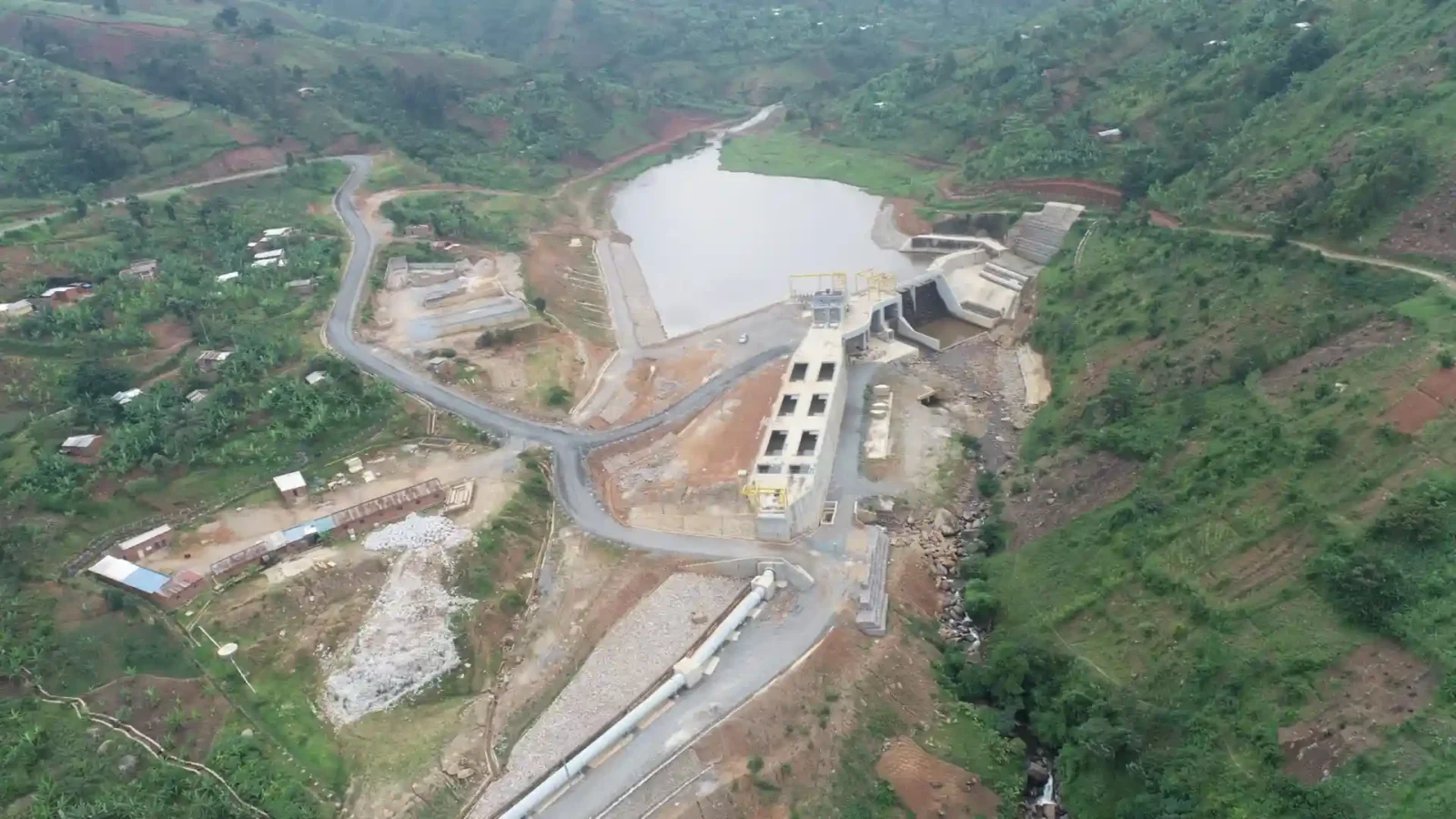
Burundi has completed its Jiji and Mulembwe hydropower programme with the inauguration of a 17MW run-of-river power station, bringing the country’s national electricity generation capacity to 109MW. Together, the Jiji and Mulembwe stations have a combined capacity of 49.5MW and are expected to generate 239GWh annually, supplying electricity to businesses, industrial facilities and households. The approximately $320 million programme also includes 80km of 110kV transmission lines connecting the power generated to Bujumbura and the national and regional grids.
Key Overview
- The 17MW hydropower plant was inaugurated on 16 June by Prime Minister Nestor Ntahontuye.
- The project completes the Jiji and Mulembwe programme, which took nearly 12 years to develop and construct.
- The two hydropower stations have a combined capacity of 49.5MW.
- Together, they are expected to produce 239GWh annually.
- The programme is designed to serve 7,000 businesses, 1,700 industrial facilities and 15,000 households.
- Around 80km of 110kV transmission line connects the output to Bujumbura and the national grid.
- The programme cost approximately $320 million.
- The projects were financed by the African Development Bank, European Investment Bank, European Union and World Bank Group.
- The programme has contributed to Burundi’s national electricity capacity reaching 109MW.
Burundi Completes Major Hydropower Programme
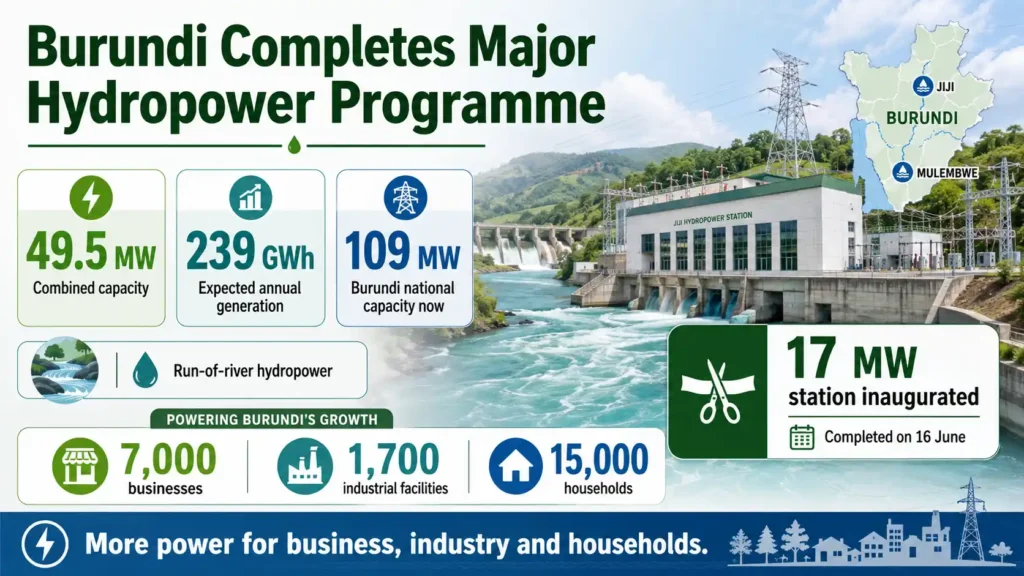
Burundi has completed the Jiji and Mulembwe hydropower programme following the inauguration of a 17-megawatt power plant on 16 June by Prime Minister Nestor Ntahontuye.
The plant was developed over nearly twelve years and completes a programme that began supplying electricity when the 32.5MW Jiji station was inaugurated by President Évariste Ndayishimiye in June last year.
The two run-of-river stations are located around three and a half kilometres apart in the southwest of Burundi.
Together, the stations have a combined capacity of 49.5MW and are expected to produce approximately 239GWh of electricity per year.
The electricity is intended to serve around 7,000 businesses and 1,700 industrial facilities alongside 15,000 households.
Transmission Infrastructure Connects New Power to the Grid
An important component of the programme is the construction of approximately 80km of 110kV transmission line.
The transmission infrastructure will carry electricity generated by the hydropower stations to Bujumbura, where it connects to the national grid and the wider regional network.
The transmission system is particularly important because the additional generation capacity must be connected to the grid to reach the businesses and industrial customers targeted by the programme.
$320 Million Investment in Burundi’s Energy Infrastructure
The hydropower complex cost approximately $320 million and was delivered through Burundi’s national water and electricity utility REGIDESO, working with the Ministry of Hydraulics, Energy and Mines.
Financing was provided by the African Development Bank, the European Investment Bank, the European Union and the World Bank Group.
Construction also created employment opportunities. The programme employed an average of around 1,000 workers, with approximately 80 per cent recruited locally.
Skills development programmes were also included in the project, with the aim of leaving technical capacity in Burundi after construction contractors complete their work.
Development Partners Highlight Reliable Electricity
Ndiamé Diop, the World Bank’s vice president for Eastern and Southern Africa, said commissioning the plant represents a step towards providing households, businesses and public services with access to reliable electricity.
He described the project as aligned with Mission 300 and the priorities Burundi has adopted through its National Energy Compact.
Juliette Besnard, senior energy specialist at the World Bank, described the inauguration as the conclusion of years of collaboration between government agencies, development partners and project teams.
Officials at the opening also highlighted the importance of reliable operation and maintenance in ensuring that the 49.5MW of installed capacity continues delivering electricity in the years ahead.
Context is everything. Stay ahead of shifting trends with today’s market updates, and uncover emerging opportunities using the Serrari Group Market Index and Marketplace. Then, take control of your own financial future by exploring our Money & Life Reset Transformation Blueprint ™ to build stronger habits, create better systems, and design a path toward lasting wealth.
Supporting Economic Development
Increasing electricity availability can have a direct impact on businesses, manufacturing, agriculture and public services.
More reliable power can help businesses reduce their dependence on costly backup generation while allowing industries to expand production.
Improved electricity access can also support digital connectivity, healthcare, education and other essential services.
For Burundi, the increase to 109MW of national capacity represents a major improvement, although continued investment will be required to meet rising electricity demand and expand access across the country.
Clean Energy and Sustainable Development
The hydropower programme also supports Burundi’s broader sustainable development and energy-transition goals.
Renewable electricity can contribute to lower-carbon economic growth while strengthening national energy security. Expanding hydropower capacity could therefore play an important role in supporting industrialisation and improving living standards.
The development aligns particularly with SDG 7 (Affordable and Clean Energy) and SDG 9 (Industry, Innovation and Infrastructure), while reliable electricity can contribute indirectly to poverty reduction and economic growth.
Outlook
The completion of the Jiji and Mulembwe hydropower programme represents a significant expansion of Burundi’s electricity generation infrastructure, taking national capacity to 109MW. The combined 49.5MW from the two stations is expected to provide 239GWh annually for businesses, industrial facilities and households, supported by new transmission infrastructure connecting the projects to Bujumbura and the national grid. With the programme now complete, reliable operation and maintenance will be important in ensuring the additional generation capacity continues to support Burundi’s economic development, industrial activity and wider energy-access goals.
FAQs
1. What is the combined capacity of the Jiji and Mulembwe hydropower stations?
The two stations have a combined capacity of 49.5MW.
2. How much electricity are the two hydropower stations expected to generate?
The stations are expected to produce approximately 239GWh annually.
3. Who is expected to benefit from the hydropower programme?
The electricity is intended to reach approximately 7,000 businesses, 1,700 industrial facilities and 15,000 households.
4. What is the significance of the programme for Burundi?
The programme has helped increase Burundi’s national electricity capacity to 109MW, while supporting businesses, industry, households and wider energy-access goals.
Sources: Energy News Network, Aggregate Global, Ecofin Agency
Your financial future isn’t something you wait for—it’s something you build.
The real question is: when do you begin?
Move beyond simply staying informed.
Navigate the markets with clarity—track trends through the Serrari Group Market Index, uncover opportunities in the Serrari Marketplace, and build practical knowledge with our Curated Wealth Builder Platform.
Stay connected to what truly matters.
Get daily insights on macro trends and financial movements across Kenya, Africa, and global markets—delivered through the Serrari Newsletter.
Growth opens doors.
Advance your career through professional programs including ACCA, HESI A2, ATI TEAS 7 , HESI EXIT , NCLEX – RN and NCLEX – PN, Financial Literacy!🌟—designed to move you forward with confidence.
See where money is flowing—clearly and in real time.
Track Money Market Funds, Treasury Bills, Treasury Bonds, Green Bonds, and Fixed Deposits, alongside global and African indexes, key economic indicators, and the evolving Crypto and stablecoin landscape—all within Serrari’s Market Index.